
• KZT/USD = 0.00221
  • TJS/USD = 0.10820
  • UZS/USD = 0.00008
  • TMT/USD = 0.29850
  • KZT/USD = 0.00221
  • TJS/USD = 0.10820
  • UZS/USD = 0.00008
  • TMT/USD = 0.29850
  • KZT/USD = 0.00221
  • TJS/USD = 0.10820
  • UZS/USD = 0.00008
  • TMT/USD = 0.29850
  • KZT/USD = 0.00221
  • TJS/USD = 0.10820
  • UZS/USD = 0.00008
  • TMT/USD = 0.29850
  • KZT/USD = 0.00221
  • TJS/USD = 0.10820
  • UZS/USD = 0.00008
  • TMT/USD = 0.29850
  • KZT/USD = 0.00221
  • TJS/USD = 0.10820
  • UZS/USD = 0.00008
  • TMT/USD = 0.29850
  • KZT/USD = 0.00221
  • TJS/USD = 0.10820
  • UZS/USD = 0.00008
  • TMT/USD = 0.29850
  • KZT/USD = 0.00221
  • TJS/USD = 0.10820
  • UZS/USD = 0.00008
  • TMT/USD = 0.29850
14 October 2026

Viewing results 1 - 6 of 2

White Tiger Cubs Born at Ashgabat Zoo

Two white tiger cubs have been born in the Ashgabat zoo and will be shown to the public starting in the spring of next year, according to a Turkmen news report. Digital news outlet Takyk reported this week that the male and female cubs are under close veterinary monitoring alongside their mother at the zoo, whose formal name is the National Museum of Living Nature. The cubs were born to a tiger named Taymaz and a tigress named Narin, according to Takyk. Many people are drawn to the striking appearance of white tigers, but several international conservation groups have said the animals don’t serve any conservation purpose and are primarily bred for entertainment and profit. White tigers are believed to be extinct in the wild, according to the IFAW group. The WWF, another conservation organization, has said that white tigers are not a separate subspecies of tiger and that those in captivity exist due to inbreeding. “The white tiger is a result of a rare genetic mutation and the most efficient way to breed them is by using two tigers who have the recessive genes needed to produce offspring with a white coat,” said the WWF, adding that white tigers suffer from significant health problems. The Ashgabat zoo encompasses about 40 hectares and is located on the slopes of the Kopetdag mountains, just west of the capital. The zoo opened in the city center in 1932 but conditions became cramped, prompting authorities to move it to the more spacious outskirts in 2010.
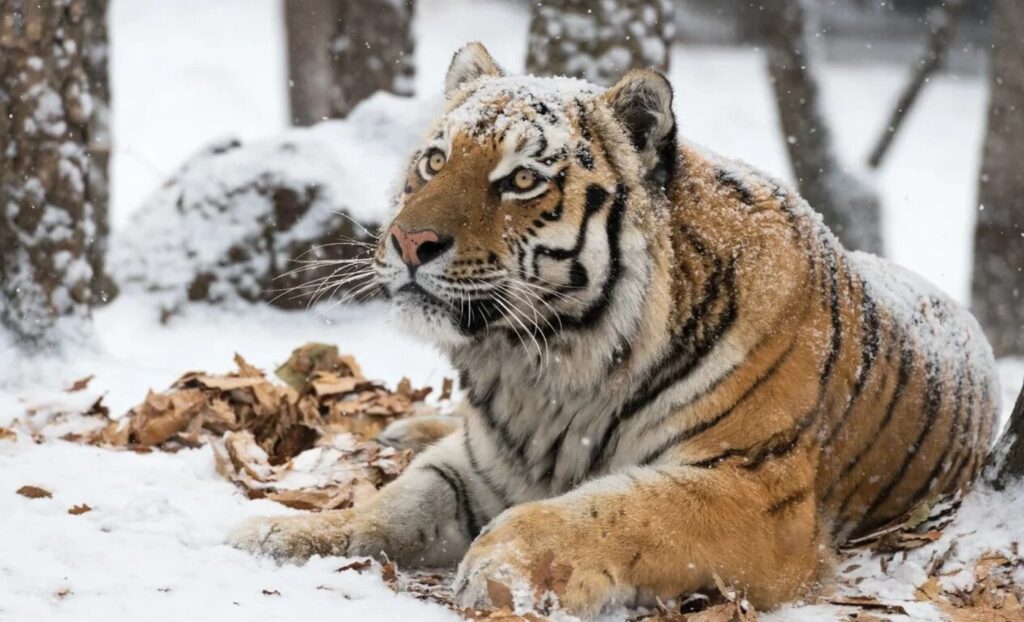

Turanian Tigers From the Netherlands Survive First Winter in Kazakhstan

Two Turanian tigers brought from the Netherlands last year have successfully completed their first winter in Kazakhstan’s Ile-Balkhash State Nature Reserve. The tigers are housed in spacious enclosures, each exceeding 0.5 hectares. Their adaptation is progressing well, with the predators actively hunting small game, including birds such as magpies and crows that venture into their feeding areas. Historically, Turanian tigers thrived in the reed beds and forests at the mouth of the Ili River near Lake Balkhash. However, the species was last sighted in the region in 1948, and subsequently declared extinct. Revival Program for Turanian Tigers Kazakhstan is undertaking an ambitious program to restore the Turanian tiger population. In addition to the two Amur tigers brought to the Ile-Balkhash Reserve for captive breeding, three or four more wild tigers are expected to arrive from Russia in 2025. Efforts to establish a sustainable ecosystem for these predators have been ongoing since 2018. To create a natural prey base, the reserve has introduced 205 riparian deer and over 100 kulans. Additionally, populations of roe deer and wild boars have been bolstered to support the tigers' dietary needs. This marks a significant step in Kazakhstan's conservation journey, reviving an iconic species that once roamed its landscapes.