
• KGS/USD = 0.01144 0%
  • KZT/USD = 0.00206 0%
  • TJS/USD = 0.10699 -0.19%
  • UZS/USD = 0.00008 0%
  • TMT/USD = 0.28571 0%
  • KGS/USD = 0.01144 0%
  • KZT/USD = 0.00206 0%
  • TJS/USD = 0.10699 -0.19%
  • UZS/USD = 0.00008 0%
  • TMT/USD = 0.28571 0%
  • KGS/USD = 0.01144 0%
  • KZT/USD = 0.00206 0%
  • TJS/USD = 0.10699 -0.19%
  • UZS/USD = 0.00008 0%
  • TMT/USD = 0.28571 0%
  • KGS/USD = 0.01144 0%
  • KZT/USD = 0.00206 0%
  • TJS/USD = 0.10699 -0.19%
  • UZS/USD = 0.00008 0%
  • TMT/USD = 0.28571 0%
  • KGS/USD = 0.01144 0%
  • KZT/USD = 0.00206 0%
  • TJS/USD = 0.10699 -0.19%
  • UZS/USD = 0.00008 0%
  • TMT/USD = 0.28571 0%
  • KGS/USD = 0.01144 0%
  • KZT/USD = 0.00206 0%
  • TJS/USD = 0.10699 -0.19%
  • UZS/USD = 0.00008 0%
  • TMT/USD = 0.28571 0%
  • KGS/USD = 0.01144 0%
  • KZT/USD = 0.00206 0%
  • TJS/USD = 0.10699 -0.19%
  • UZS/USD = 0.00008 0%
  • TMT/USD = 0.28571 0%
  • KGS/USD = 0.01144 0%
  • KZT/USD = 0.00206 0%
  • TJS/USD = 0.10699 -0.19%
  • UZS/USD = 0.00008 0%
  • TMT/USD = 0.28571 0%

Viewing results 1 - 6 of 2

Kazakhstan Central Bank Chief Sees No Pressure on Tenge After Rate Cut

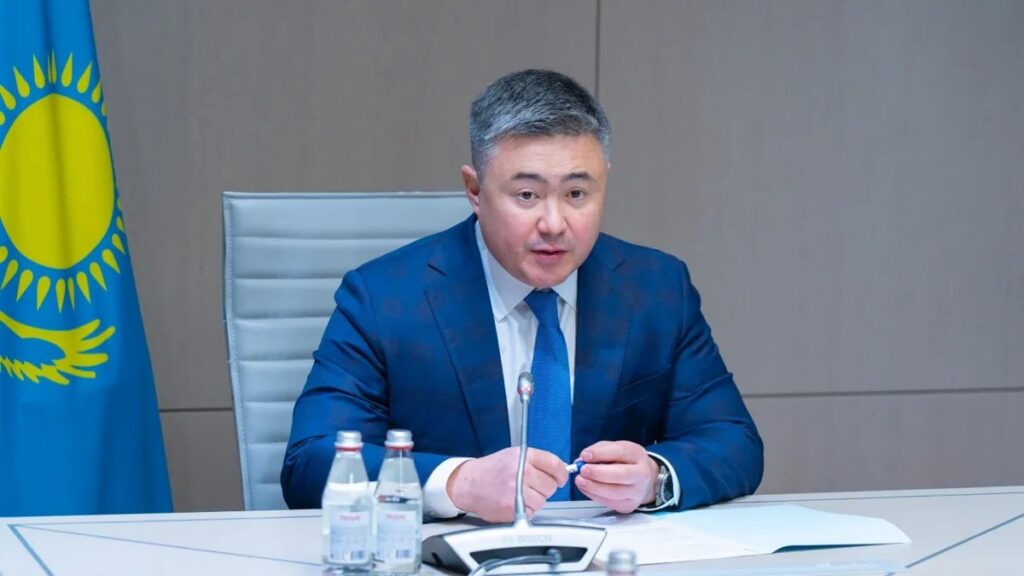
Kazakhstan’s central bank governor has sought to calm concerns over the tenge after the National Bank cut its base rate for the first time since October 2025, saying demand for local-currency assets should remain stable despite lower returns. The National Bank of Kazakhstan lowered its base rate to 17% from 18% on June 5, citing slowing inflation and an improved economic outlook. The decision was based on updated assessments of inflation risks and key macroeconomic indicators, the bank said. Annual inflation slowed to 10.4% in May from a peak of 12.9% recorded in September last year. The central bank also raised its oil price assumption for the remainder of 2026 to $90 per barrel for Brent crude. National Bank Governor Timur Suleimenov said the rate cut would lower returns on tenge-denominated deposits but would not trigger a significant shift into foreign-currency assets. “Interest rates on tenge deposits remain substantially higher than returns on foreign-currency deposits,” Suleimenov told reporters. “A one-percentage-point reduction will not fundamentally change the attractiveness of deposits or other tenge-denominated assets such as corporate bonds and government securities.” Suleimenov said demand for local-currency assets is expected to remain stable, limiting pressure on the exchange rate. He acknowledged that the tenge could face seasonal pressure during the summer because of increased demand for foreign currency linked to overseas travel and dividend payments by Kazakhstani companies listed on international exchanges. However, he said Kazakhstan’s economic fundamentals remain supportive of the national currency. “Oil prices are rising, while metal prices have increased by an average of around 17%, with some commodities gaining as much as 40%,” Suleimenov said. “If there are no major external shocks, I see no reason for any significant weakening of the tenge.” The central bank also revised its inflation forecast for 2026 downward to a range of 9%-11%, compared with a previous estimate of 9.5%-11.5%. Its inflation forecast for 2027 remains unchanged at 5.5%-7.5%. Suleimenov said the bank expects inflation to approach its long-term target of 5% by 2028 as external inflationary pressures ease and government and central bank measures take effect. “The slowdown in inflation during April and May gave us room to lower the base rate,” he said. “But it would be premature to say inflation has been defeated. Future decisions will depend on incoming data and our assessment of risks.” The official exchange rate stood at 487.4 tenge per U.S. dollar on June 7. The outlook remains cautious. As previously reported by The Times of Central Asia, S&P Global Ratings forecast that the tenge would average around 540 per dollar in 2026, reflecting expectations of a weaker currency over the medium term.


Kazakhstan Adopts Pragmatic AI Regulation in Financial Sector

As of early 2026, the global financial market faces a strategic choice: impose tighter restrictions on artificial intelligence or allow the technology to evolve within existing regulatory frameworks. While the European Union has opted for comprehensive regulation, Kazakhstan has adopted a more pragmatic approach. According to the National Bank of Kazakhstan, approximately 75% of the country’s banks already use AI technologies— a share that has risen steadily over the past year — and 88% plan to expand their use. This indicates that AI integration is no longer experimental but systemic within the financial sector. Banks are increasingly deploying AI in credit underwriting, fraud detection, and anti-money-laundering transaction screening Madina Abylkasymova, Chair of the Agency for Regulation and Development of the Financial Market, articulated the principle of technological neutrality as early as 2025: the regulator does not intend to introduce artificial constraints until uniform global standards for AI are established. In her view, existing regulatory frameworks remain sufficient. Cybersecurity requirements, data protection standards, and risk management rules continue to apply regardless of whether decisions are made by humans or algorithms. Accountability and oversight remain unchanged. Infrastructure Before Regulation At the same time, the market faces significant structural barriers. These include a shortage of specialists at the intersection of finance and data science, the absence of unified data standards, and the high cost of computing infrastructure. The introduction of additional “European-style” restrictions could disproportionately burden smaller market participants and potentially force them out of the sector. Over the past twelve months, discussions have shifted from pilot experimentation to operational scaling across core banking functions. Some market participants have privately expressed concern that regulatory lag could eventually create supervisory blind spots as AI models grow more complex. Recognizing the high cost of entering the AI ecosystem, the state is assuming an infrastructural role. Timur Suleimenov, Governor of the National Bank of Kazakhstan, operating within the broader digital modernization agenda supported by President Kassym-Jomart Tokayev has outlined a strategic objective: to establish secure and scalable infrastructure to support AI development in the financial sector. This includes the launch of domestic data centers and the expansion of partnerships with global technology companies. The stated goal is to strengthen technological sovereignty and ensure the protection of citizens’ personal data. In practical terms, the regulator aims to create a sovereign “sandbox” in which fintech companies can test algorithms without transferring sensitive information to foreign servers. Supervisory Modernization The rapid expansion of AI also requires a transformation of supervisory practices. Currently, 39% of financial organizations in Kazakhstan use neural networks in some capacity. Over the past year, the number of companies that have progressed from pilot projects to partial implementation has nearly doubled. International institutions, including the Bank for International Settlements and the International Monetary Fund, argue that AI does not generate fundamentally new categories of risk. Rather, it accelerates and amplifies existing risks, credit, market, and operational. This suggests that regulators do not need to rewrite foundational rules but must enhance the speed, scale, and depth of...