• KGS/USD = 0.01143 -0%
  • KZT/USD = 0.00198 -0%
  • TJS/USD = 0.10899 0.65%
  • UZS/USD = 0.00008 -0%
  • TMT/USD = 0.28490 -0.28%
  • KGS/USD = 0.01143 -0%
  • KZT/USD = 0.00198 -0%
  • TJS/USD = 0.10899 0.65%
  • UZS/USD = 0.00008 -0%
  • TMT/USD = 0.28490 -0.28%
  • KGS/USD = 0.01143 -0%
  • KZT/USD = 0.00198 -0%
  • TJS/USD = 0.10899 0.65%
  • UZS/USD = 0.00008 -0%
  • TMT/USD = 0.28490 -0.28%
  • KGS/USD = 0.01143 -0%
  • KZT/USD = 0.00198 -0%
  • TJS/USD = 0.10899 0.65%
  • UZS/USD = 0.00008 -0%
  • TMT/USD = 0.28490 -0.28%
  • KGS/USD = 0.01143 -0%
  • KZT/USD = 0.00198 -0%
  • TJS/USD = 0.10899 0.65%
  • UZS/USD = 0.00008 -0%
  • TMT/USD = 0.28490 -0.28%
  • KGS/USD = 0.01143 -0%
  • KZT/USD = 0.00198 -0%
  • TJS/USD = 0.10899 0.65%
  • UZS/USD = 0.00008 -0%
  • TMT/USD = 0.28490 -0.28%
  • KGS/USD = 0.01143 -0%
  • KZT/USD = 0.00198 -0%
  • TJS/USD = 0.10899 0.65%
  • UZS/USD = 0.00008 -0%
  • TMT/USD = 0.28490 -0.28%
  • KGS/USD = 0.01143 -0%
  • KZT/USD = 0.00198 -0%
  • TJS/USD = 0.10899 0.65%
  • UZS/USD = 0.00008 -0%
  • TMT/USD = 0.28490 -0.28%
07 December 2025

Viewing results 1 - 6 of 7

Kazakhstan’s Emerging Role in Global Rare-Earth Supply Chains

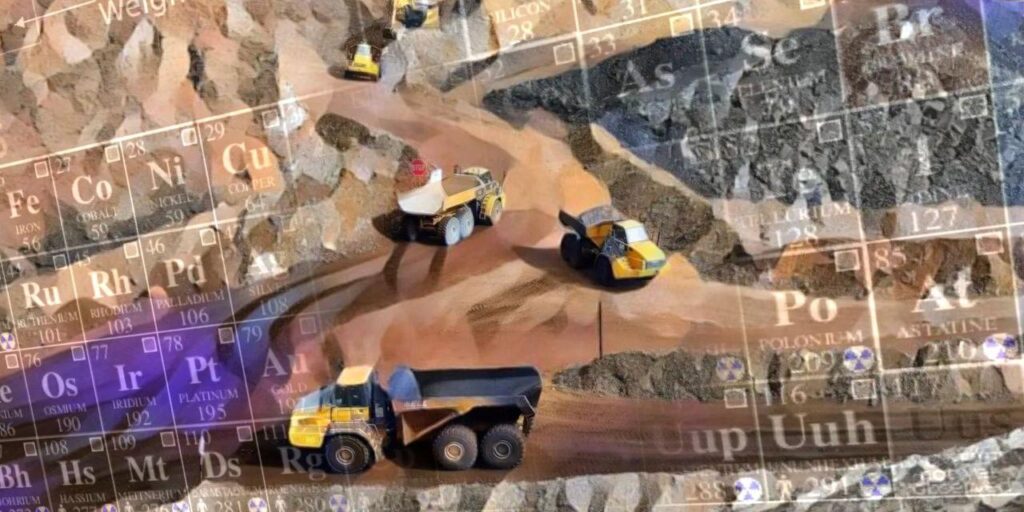
October 10 was one of the most consequential days for global trade policy and one of the most volatile for world markets since the U.S.–China tariff conflict first reignited. After China announced tighter export controls on rare earths, U.S. President Donald J. Trump first posted on Truth Social that “there seems to be no reason” anymore for him to meet with the Chinese leader Xi Jinping at the APEC summit in two weeks' time. Several hours later, the official White House account on X posted a message from Trump that he had learned that "effective November 1st, 2025, [China will] impose large-scale Export Controls [sic] on virtually every product they make, and some not even made by them." He then followed with the declaration that the U.S. will impose a 100% tariff on Chinese imports starting November 1, "or sooner," and launch export controls on critical software. As Washington and Beijing escalate their economic confrontation, the scramble for stable rare-earth supply chains has broadened beyond East Asia. Attention is shifting to Central Asia, where mineral potential and trade corridors align with the broader effort to reduce dependence on China. Kazakhstan has drawn particular attention, not as a single solution, but as a state seeking to leverage its Soviet-era industrial base and access to the Caspian to help meet emerging supply chain needs. Although Kazakhstan has made the most progress in translating its mineral reserves into a functioning mining industry, it remains part of a broader regional effort to diversify away from a single external partner, most notably China. Other Central Asian states are testing their own capabilities to meet global supply chain demands, though most remain constrained by infrastructure, financing, or lack of processing capability. Kazakhstan’s Position in the Emerging Supply Realignment On reserves, Kazakhstan’s rare-earth potential is rooted as much in continuity as it is in discovery. Decades of geological mapping under Soviet administration established its mineral profile, and recent joint surveys by Kazgeology and private firms have both confirmed and expanded those earlier findings. New delineated deposits in the east and center of the country, including the Zhana Kazakhstan site in Karagandy, have reinforced its status as a prospective non-Chinese source of critical materials, with verified concentrations of neodymium, praseodymium, dysprosium, terbium, and samarium. If current resource estimates are validated, the Zhana Kazakhstan deposit could rank among the largest rare-earth reserves in the world. These elements are essential inputs for high-efficiency magnets used in electric vehicles, wind turbines, and advanced defense systems. The U.S. Department of Defense classifies these rare earths as “critical defense materials,” a designation that underscores their strategic relevance rather than any immediate shift in supply. Both the Pentagon and the Defense Logistics Agency have begun increasing stockpiles and exploring alternative processing sources, but for now, the question in Kazakhstan is not geological endowment, which is established, but the terms under which that endowment can be brought to market. On processing capacity, Kazakhstan’s experience in large-scale mining of uranium, copper, and other critical minerals has...

Trump’s Tariffs May Hurt Kazakhstan’s Economy, Expert Warns

On July 7, U.S. President Donald Trump informed Kazakh President Kassym-Jomart Tokayev that Washington will impose a 25% tariff on goods from Kazakhstan, effective August 1, 2025. Tokayev responded on July 10, affirming Kazakhstan’s commitment to "developing fair, predictable, and mutually beneficial trade relations" with the United States. He emphasized Kazakhstan’s readiness for “constructive dialogue aimed at finding a rational solution to trade issues,” expressing his hope that a compromise will be reached. While officials and analysts in Kazakhstan have downplayed the potential economic impact, citing limited trade volume and the exclusion of key exports such as oil and metals, economist Olzhas Baidildinov has challenged this optimism. In an interview with The Times of Central Asia, he outlines the potential long-term damage to Kazakhstan's economy and investment climate. TCA: What is the situation following the announcement of the increased tariffs? Baidildinov: The immediate damage is minimal, which is why many in the media and expert circles remain optimistic. Kazakhstan exports about $2 billion in goods to the U.S., of which $1.8 billion are raw materials, oil, metals, rare earth elements, silver, and precious metals, all previously exempt from duties. The remaining $200 million, mostly manufactured goods and agricultural products, will now be subject to the 25% tariff. Though small in macroeconomic terms, this is a significant blow to exporters and a deterrent for future investors. TCA: What are the broader implications of these tariffs for Kazakhstan? Baidildinov: The most serious consequence will be on investment. Domestic experts often lack a long-term view, rarely looking beyond a few months. But consider this: if you were an investor planning to produce in Kazakhstan and export to the U.S., would you proceed under these conditions? A 25% tariff today could become 50% or 100% tomorrow. This unpredictability will scare off potential investors. Trump’s message is clear: produce in the U.S. or face penalties. For Kazakhstan, there is little upside. The country’s oil and gas sector has made strides in localizing production of goods that could replace Western imports, but these products will now face higher entry barriers into the U.S. market. American companies may also become more cautious about engaging with Kazakh suppliers. More broadly, this signals that the U.S. does not regard Kazakhstan as a partner in high-tech manufacturing. Even American firms considering setting up production in Kazakhstan to benefit from low costs would now find the economics less favorable. Other countries, including EU members, may follow the U.S. example, reinforcing the perception of Kazakhstan as merely a source of raw materials. TCA: Do you expect further pressure from the U.S. or its allies? Baidildinov: This marks the beginning of a global tariff war. Other countries will likely adopt similar protectionist policies to defend their industries, especially in light of escalating U.S.-China trade tensions. European manufacturers, for example, may pressure their governments to implement similar tariffs. This trend could shape global trade for years to come, with Kazakhstan potentially caught in the crossfire. TCA: In your opinion, is the U.S. tariff increase...

Kazakhstan Seeks to Mitigate Impact of U.S. Tariffs

Kazakhstan is working to minimize the economic damage from newly imposed U.S. tariffs, the highest levied on any Central Asian country. The government is assessing the scope of potential losses and pursuing diplomatic efforts to reverse or reduce the trade measures. A New Front in the Trade War On April 2, U.S. President Donald Trump announced sweeping new tariffs on imports from over 180 countries. Kazakhstan was subjected to a 27% tariff rate. In contrast, most other post-Soviet countries, including Uzbekistan, Kyrgyzstan, Armenia, and Tajikistan, were assigned a 10% tariff, described by the U.S. administration as the “base rate” for countries that “trade fairly” with the United States. Russia and Belarus, whose trade with the U.S. is effectively suspended due to sanctions, were exempt from the increase. Only Moldova, which reportedly imposes a 61% duty on U.S. goods, received a higher rate than Kazakhstan. According to Washington, Kazakhstan applies a 54% tariff on U.S. imports, prompting a reciprocal response, though the methodology behind the administration’s calculations has been questioned by many analysts. Moldova’s higher rate of 61% led to a 31% U.S. tariff. Limited Exposure for Key Exports U.S. President Trump announced a 90-day reprieve for affected countries on April 9, allowing time for negotiations to take place. While the move signals potential flexibility, the economic impact remains uncertain. Kazakh Trade Ministry representative Serik Ashitov stated on April 29 that only 4.8% of Kazakhstan’s exports to the U.S. would be affected by the tariffs. Crucially, major exports, such as oil, uranium, silver, and ferroalloys stand to remain untouched. These commodities account for approximately 90% of Kazakh shipments to the U.S. Despite fears of a broader economic fallout, Kazakhstan's stock market showed resilience in the first quarter of 2025, according to financial news channels. However, the trade conflict has had a deflationary effect on key exports. Oil prices have dropped below projected baselines amid concerns about declining global demand driven by slowing industrial activity, especially in Asia. “We’re observing falling oil prices and reduced global trade. The tariffs are cutting into industrial output in China and other key consumers of raw materials, which affects oil demand directly,” noted a representative of the Kazakhstan Stock Exchange. As of late April, Brent crude was trading at approximately $64 per barrel. Negotiations and Constraints In response, Kazakhstan has initiated diplomatic talks with the United States and plans to raise the issue at the World Trade Organization (WTO). “At present, there is no reason to believe these measures will significantly affect our exports. Nonetheless, we will continue working with American counterparts to mitigate the consequences of these unilateral measures,” Ashitov said during a press briefing. However, analysts caution that Kazakhstan may face structural limits in attempting to resolve this dispute. As a member of the Eurasian Economic Union (EAEU), Kazakhstan does not set its tariff policy independently. “Our customs duties are EAEU duties,” economist Almas Chukin explained. “If we wanted to unilaterally lower tariffs for the U.S., as Israel did, it would require the approval...

Trump Tariffs: A Barrier for Kyrgyzstan, or an Opportunity?

Akylbek Japarov, former head of Kyrgyzstan’s Cabinet of Ministers, has described the United States’ newly imposed trade duties as an "economic earthquake" already reshaping global markets. However, he sees an opportunity for Kyrgyzstan, which faces a comparatively low U.S. tariff rate of just 10%. A Regional Advantage Japarov argues that China has been hit hardest by the new U.S. tariffs. “Following the introduction of duties, Chinese goods are 20-35 percent less competitive, not due to the nominal tariff alone, but because of higher overall costs, disrupted logistics, contract renegotiations, and increased risk premiums,” he explained in a Facebook post. “Part of that market is being freed up, for someone else.” Kyrgyzstan, along with Uzbekistan and Tajikistan, faces a 10% U.S. tariff rate. In contrast, Kazakhstan’s goods are subject to 27% duties. Japarov sees this as a competitive edge that Kyrgyzstan could leverage to integrate into new supply chains, especially while global players are adjusting to the new trade landscape. The former prime minister believes the country is well-positioned geographically, situated between China, the Eurasian Economic Union (EAEU), and South Asia, with low production costs and access to regional markets. While Kyrgyzstan’s total trade turnover stands at around $16 billion, the U.S. accounts for only 4% of that figure. Key exports to the U.S. include shoes, tobacco products, animal-derived goods, and pharmaceuticals. Japarov suggests Kyrgyz businesses focus on re-exports, product localization, and packaging. He calls for investments in logistics and customs certification, and for the government to craft a new export strategy. “While some see a threat, others are building export channels. While some are calculating losses, others are increasing production,” he said. An Opening for Business, Not Policy In an interview with The Times of Central Asia, Sergei Ponomarev, president of the Kyrgyz Association of Markets, Trade and Services, said the new tariffs should be viewed as part of a larger negotiation process. “The trade war has begun. China, the European Union, and other countries are already responding. But the duties have also triggered a wave of global inflation. These are high risks but also great opportunities,” he said. Ponomarev noted that Kyrgyzstan’s limited integration with the global economy means it will likely experience only indirect effects. Still, he pointed to past examples of adaptive trade strategies. Before joining the EAEU, Kyrgyz entrepreneurs often re-labeled Chinese products as “Made in Kyrgyzstan” for resale in Russia. In some cases, Chinese producers even falsely labeled their goods as Kyrgyz to benefit from preferential access to the Russian market. He suggested similar tactics could re-emerge under the current trade environment. “Some businesses may exploit the 10% duty. Chinese goods could be repackaged in Kyrgyzstan or processed through joint ventures,” Ponomarev said. “For example, a sweater could arrive from China, sleeves sewn on in Kyrgyzstan, and the product re-exported as local.” Such methods, he noted, may be feasible in low-tech sectors like apparel, but Kyrgyzstan lacks the skilled labor force needed to replicate this in high-tech manufacturing. Ponomarev concluded that while Japarov’s ideas are...

How Trump’s Trade War on China Affects Central Asia

When elephants fight, it is the grass that suffers. U.S. President Donald Trump’s decision to impose tariffs on China and the European Union could have severe consequences not only for Brussels and Beijing, but also for economies around the world. Central Asia is no exception, as it could easily be caught in the crossfire. Although no country in Central Asia sees the United States as its major economic partner, Trump’s trade war with the EU and China is expected to impact all Central Asian nations in one way or another. Their strong economic ties with China and the growing EU presence in the region were once seen as a strategic advantage. Now, it seems to represent a double-edged sword.  As a result of the Russian invasion of Ukraine, all Central Asian states have sought to strengthen economic relations with Beijing and Brussels. Their partnerships with China and the EU have grown through trade and investments, but Washington’s tariffs on Chinese and European goods could result in a reduction in demand for various items in Central Asia.  Trump’s tariff policy could also give Beijing certain leverage over Washington in the strategically important region. According to Mark Temnycky, Nonresident Fellow at the Atlantic Council Eurasia Center, as a way to counter the impact of U.S. tariffs, the Chinese could increase their trade and energy relations with the countries of Central Asia. “This would further accelerate China’s relationship with Central Asia, and it could result in the regional states becoming more dependent on the Chinese for trade. Given the proximity of China to Central Asia, this may also result in the regional nations reducing their trade relations with the European Union as well as with the United States, as they favor Chinese prices,” Temnycky told The Times of Central Asia in an interview.  U.S. bilateral trade in the region has never been particularly strong. The exception is Kazakhstan – the region’s largest economy – which is the only country in Central Asia whose trade with the U.S. exceeds one billion dollars. According to official statistics, in 2024 America’s total goods trade with Kazakhstan was estimated at $3.4 billion. Uzbekistan, Kyrgyzstan, Tajikistan, and Turkmenistan combined have a lower trade volume with the United States than Kazakhstan. But all that is just a drop in the ocean compared to the $89.4 billion trade China reached with Central Asian in 2023. “Trump’s tariff policy could lead to an even greater Central Asian states’ dependency on China, potentially creating a Chinese monopoly on Central Asian trade and energy. In other words, regional countries would no longer have a diversified economy and market, thus tightening China's control over the area,” Temnycky stressed. That, however, does not necessarily mean that Beijing will, in the long term, benefit from Washington’s tariff policy. According to Tyler Schipper, an economist and Associate Professor at the University of St. Thomas, China is “arguably at one of its economically weakest points in the last several decades,” which means that any trade war with the...