• KZT/USD = 0.00218
  • TJS/USD = 0.10800
  • UZS/USD = 0.00008
  • TMT/USD = 0.29850
  • KZT/USD = 0.00218
  • TJS/USD = 0.10800
  • UZS/USD = 0.00008
  • TMT/USD = 0.29850
  • KZT/USD = 0.00218
  • TJS/USD = 0.10800
  • UZS/USD = 0.00008
  • TMT/USD = 0.29850
  • KZT/USD = 0.00218
  • TJS/USD = 0.10800
  • UZS/USD = 0.00008
  • TMT/USD = 0.29850
  • KZT/USD = 0.00218
  • TJS/USD = 0.10800
  • UZS/USD = 0.00008
  • TMT/USD = 0.29850
  • KZT/USD = 0.00218
  • TJS/USD = 0.10800
  • UZS/USD = 0.00008
  • TMT/USD = 0.29850
  • KZT/USD = 0.00218
  • TJS/USD = 0.10800
  • UZS/USD = 0.00008
  • TMT/USD = 0.29850
  • KZT/USD = 0.00218
  • TJS/USD = 0.10800
  • UZS/USD = 0.00008
  • TMT/USD = 0.29850
27 November 2026

Viewing results 1 - 6 of 2

Uzbekistan Car-Free Days Test Public Transport as Traffic Problems Persist

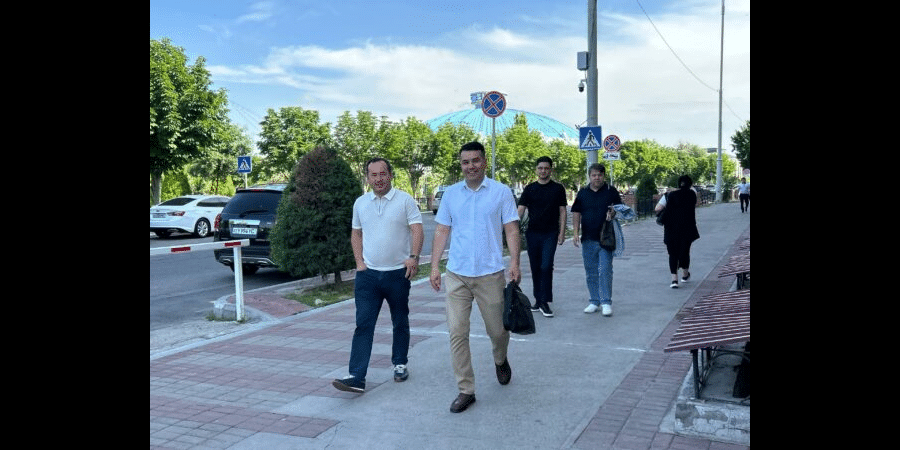
Since May 2026, civil servants in Uzbekistan have been taking part in an experiment aimed at reducing traffic and air pollution in the country’s cities. On the 10th and 25th of each month, officials must leave their government cars behind and are encouraged to travel to work by public transportation. Over the past six months, the National Committee on Ecology and Climate Change has provided the most detailed account of the initiative, reporting that its employees have kept more than 1,730 official and personal vehicles off the roads on campaign days. Yet approximately 770,000 vehicles use Tashkent’s main roads every day. The restrictions form part of the national Clean Air project. Drivers of official vehicles continue to receive their salaries on campaign days that fall on working days. Officials who violate the ban on government vehicles may face disciplinary action. Officials Leave Their Cars Behind Tashkent participated in World Car-Free Day as early as 2021. In 2024, heads of government institutions were encouraged to commute by public transportation once a month. Authorities predicted that the campaign would reduce the number of cars on the capital’s roads by approximately 200,000, or one-quarter. During the first campaign on March 29, 2024, several ministers arrived at work by metro and electric bus. Traffic congestion persisted, as did the shortage of buses. By late 2024, the monthly campaign was also being held in Nukus, the capital of Uzbekistan’s autonomous Republic of Karakalpakstan, and the administrative centers of all regions. The committee also encourages officials to leave their personal cars at home. In August, it warned that civil servants using cars on campaign days could face penalties. The presidential decree, however, specifically prohibits the use of official vehicles. The agency estimated that its employees’ participation had reduced emissions by 17.37 metric tons. It cited the same vehicle and emissions figures in reports published in different months. Other government organizations generally limited their reporting to photographs of employees participating in the campaign. For example, Uzkimyosanoat, the state company overseeing Uzbekistan’s chemical industry, published ten such photographs from a car-free day. On September 22, World Car-Free Day, committee Chairman Aziz Abdukhakimov cycled to work, while agency employees used buses and the metro. The government reports reviewed do not say whether any officials have been penalized for violating the restrictions. Buses Struggle to Keep Up With Demand Tashkent’s public transportation system is carrying increasing numbers of passengers. In September, the metro set several new daily ridership records, carrying more than 1.2 million passengers on September 28. During the first nine months of 2026, metro ridership rose by nearly 10%, while bus passenger numbers rose by 15% year over year during the first 22 days of September. In 2021, Tashkent’s metro carried approximately 280,000 to 300,000 passengers a day. In an October survey of approximately 3,000 people conducted through social media, 85.4% of respondents complained about overcrowded buses and metro trains during rush hour. The city’s transportation department acknowledged that traffic congestion had pushed intervals between buses on some...

Opinion: Overcrowding on Almaty Buses – A Man-Made Transit Crisis

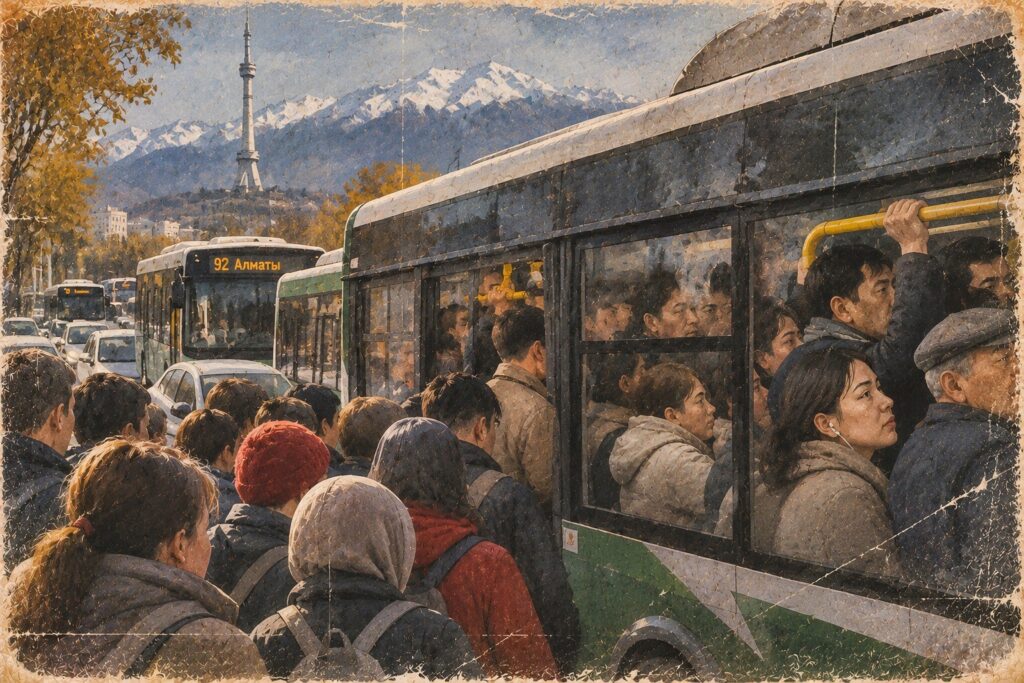
The Kazakh authorities' grand plans to turn Almaty and its picturesque surroundings into Central Asia's next tourist mecca have run headlong into a public transportation crisis this fall. Almaty residents have been flooding social media with photos and videos of overcrowded buses and trolleybuses, saying they have not seen anything like this since the 1990s. But a closer look at the problem suggests that the current chaos is largely man-made. Almaty is a university city, so residents have long been accustomed to several months of crowded conditions each year. Public spaces, inexpensive cafés, and public transportation all become noticeably busier. For years, however, people in Almaty have generally avoided blaming newcomers for the city's infrastructure problems, preferring to put up with the inconvenience. This year, though, that tolerance has been put to a serious test. By October, residents had realized that ignoring the elephant in the room was becoming increasingly absurd. Journalists began picking up complaints from social media and amplifying residents' grievances. One of the most widely circulated images in mid-October showed a young woman's leg trapped in a bus door as she tried to squeeze aboard. City officials responded like firefighters trying to contain a blaze of public outrage. They blamed traffic congestion for throwing buses off schedule and acted as though the problem was limited to just one or two routes. Roadwork commissioned by the Almaty authorities themselves has added to the disruption. Officials have also pointed to fare evasion, claiming that more than 30% of passengers during rush hour were not paying their fares. [caption id="attachment_60039" align="aligncenter" width="1816"] Buses are often full to capacity.[/caption] "Fare payments are also used to calculate how many buses are needed on a route. Currently, 3,238 public transportation vehicles operate in Almaty every day," Almaty's Department of Road Traffic and Public Transport Management explained. On November 5, officials insisted that the number of buses in service had not fallen, although they acknowledged cutting the number of journeys by 20–30% during off-peak hours. They again blamed traffic congestion and claimed that more than 40% of passengers were not paying their fares. These explanations failed to satisfy Almaty residents who regularly pay their fares. They had already uncovered a document that had previously escaped public attention. It turned out to be the city's public transportation tariff commission minutes, published on the department's website. They record meetings through August 7, 2026, and the commission's approval of reductions in planned bus deployments and journeys across city routes "in accordance with consultants' recommendations." "The reductions were made in accordance with international practices. The number of vehicles deployed on city routes was reduced by up to 20% on weekdays, 10% on Saturdays, 25% on Sundays, and 35% on public holidays. The number of round trips on city routes was reduced by 10–20% on weekdays, 5–10% on Saturdays, 12.5–25% on Sundays, and 17.5–35% on public holidays," the document states. As if that were not enough, another revealing document surfaced: an October 22, 2026, publication by the Committee of...