


Opinion: A Deeper Understanding of Transshipment
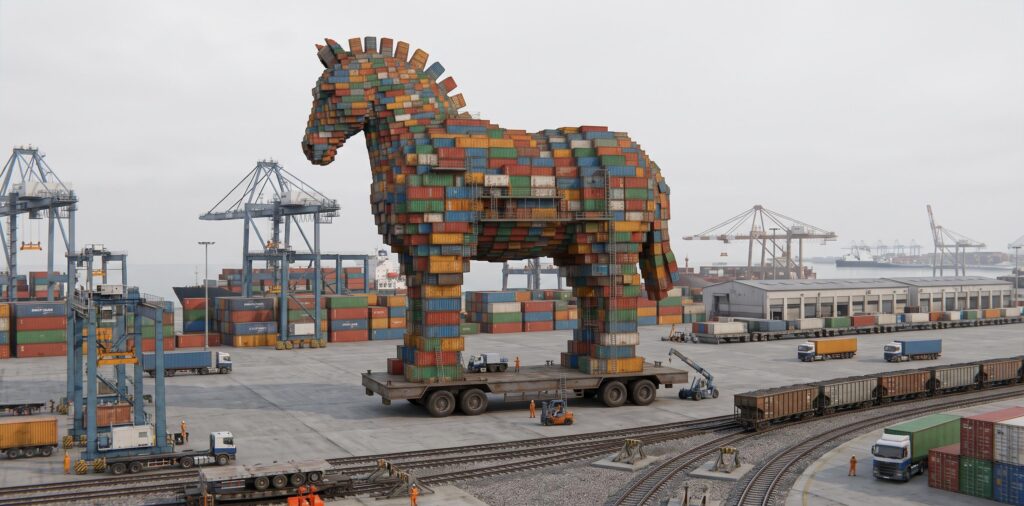
The White House recently issued a report on the transshipment of goods. It focuses on allegations that some countries with lower tariffs seek to evade U.S. tariffs on China by exporting goods that are really produced in China and only slightly modified, if at all, before further export to the U.S. The report groups more than 40 countries in what it terms a “shadow transshipment network” into three different categories based on how much it estimates the risk of transshipment and the integration of the economy into supply chains involving China. The first tier, mostly advanced countries, are larger economies where transshipment can show up in otherwise “broadly legitimate” trade. The second tier are a few larger developing countries, which have close links with the Chinese economy. The third tier the report terms “small, opportunistic Chinese targets” with “specific weak-link advantages” that increase transshipment risk. To be clear, transshipment is a risk in some economies. There is also legitimate transshipment (for instance, through normal supply chains and logistics channels) and illegal transshipment (where an exporter files a false certification as to the origin, character, or value of goods). False certifications are punishable by civil and criminal penalties in the U.S. and in most other countries. The World Customs Organization also has international standards on transshipment. So there are reasons to be vigilant about the risk of illegal transshipment. But to see why the report also misses the mark, consider the example of a country increasingly important to the U.S. with a fast-growing economy. To top it off, the country borders China. It’s Kazakhstan. First, the report is wrong to call Kazakhstan “small.” It’s 49th in the world by GDP – quite an accomplishment for a country which was formerly part of the Soviet Union. Second, to term Kazakhstan an “opportunistic Chinese target” is simply not accurate. There is strong trade and investment between China and Kazakhstan, as one would expect from large neighboring countries. And Kazakhstan, particularly at its Khorgos border cooperation center, plays a vital role in the rapidly growing Middle Corridor of trade between China and Europe. But this is legitimate transshipment of goods, and it is deeply unfair to suggest that Kazakhstan may not be fulfilling its duties. Let’s also not forget why the Middle Corridor is growing: because the West sought another route for Chinese goods after the Russian invasion of Ukraine made shipment through Russia impractical or subject to sanctions. Kazakhstan is a regional and even global leader in digitalization of both tax and Customs systems. The “smart border” policy is a success in facilitating legal trade while maintaining vigilance and security: in the first half of 2026, about 60% of declarations of goods were automatic, and 80% of transit declarations were completed without the need for Customs control forms. Deepening digital exchange protocols with regional partners including China, Uzbekistan, and Azerbaijan will speed legal trade even further. Digitalization builds honest systems, free from corruption – and by definition lowering the risk of transshipment. Kazakhstan...
