• KGS/USD = 0.01144 0%
  • KZT/USD = 0.00191 -0%
  • TJS/USD = 0.10838 0.37%
  • UZS/USD = 0.00008 0%
  • TMT/USD = 0.28571 0.28%
  • KGS/USD = 0.01144 0%
  • KZT/USD = 0.00191 -0%
  • TJS/USD = 0.10838 0.37%
  • UZS/USD = 0.00008 0%
  • TMT/USD = 0.28571 0.28%
  • KGS/USD = 0.01144 0%
  • KZT/USD = 0.00191 -0%
  • TJS/USD = 0.10838 0.37%
  • UZS/USD = 0.00008 0%
  • TMT/USD = 0.28571 0.28%
  • KGS/USD = 0.01144 0%
  • KZT/USD = 0.00191 -0%
  • TJS/USD = 0.10838 0.37%
  • UZS/USD = 0.00008 0%
  • TMT/USD = 0.28571 0.28%
  • KGS/USD = 0.01144 0%
  • KZT/USD = 0.00191 -0%
  • TJS/USD = 0.10838 0.37%
  • UZS/USD = 0.00008 0%
  • TMT/USD = 0.28571 0.28%
  • KGS/USD = 0.01144 0%
  • KZT/USD = 0.00191 -0%
  • TJS/USD = 0.10838 0.37%
  • UZS/USD = 0.00008 0%
  • TMT/USD = 0.28571 0.28%
  • KGS/USD = 0.01144 0%
  • KZT/USD = 0.00191 -0%
  • TJS/USD = 0.10838 0.37%
  • UZS/USD = 0.00008 0%
  • TMT/USD = 0.28571 0.28%
  • KGS/USD = 0.01144 0%
  • KZT/USD = 0.00191 -0%
  • TJS/USD = 0.10838 0.37%
  • UZS/USD = 0.00008 0%
  • TMT/USD = 0.28571 0.28%
11 November 2025

Viewing results 1 - 6 of 2

South Caucasus Peace Push Faces Political and Regional Roadblocks

This past weekend, discussion of the “historic joint declaration for peace” was nearly impossible to avoid. Optimism ran high, with many expressing hope that peace and cooperation might finally take hold in the South Caucasus. But how realistic is that vision? What was signed in Washington on August 8, 2025, was not a binding treaty but a declaration of intent. That is a meaningful step, but for now it remains a symbolic document. Turning it into lasting peace will require a full treaty with specific commitments. One major hurdle is Armenia’s constitution, which still contains territorial claims to land recognized as part of Azerbaijan. Amending this will be politically difficult. The day after the signing, the opposition Armenian Revolutionary Federation (ARF) issued a sharply critical statement. It accused the declaration of harming Armenia’s sovereignty, legitimizing an Azerbaijani-favored corridor, and violating Armenia’s territory. The ARF demanded the withdrawal of Azerbaijani forces, the release of Artsakh’s political prisoners, and guarantees for the safe return of displaced Armenians. Of the 69 seats in Armenia’s parliament, 28 belong to the “Armenia” faction, 15 of them held by ARF members, giving the party significant influence over this debate. Azerbaijani President Ilham Aliyev has also said that the wording of Armenia’s constitution blocked the signing of a treaty in Washington. Alongside the declaration, the leaders of Armenia and Azerbaijan signed economic agreements with the United States to boost trade, transit, energy, infrastructure, and technology in the South Caucasus. Yet these too face obstacles. Iranian official Ali Akbar Velayati vowed to prevent the creation of an “American corridor” in the region and rejected reports of a US-Armenian lease deal for land along Iran’s border, warning it would become “a graveyard for the mercenaries of Donald Trump.” Proponents argue that if such a corridor opens, it could strengthen the Trans-Caspian International Transport Route. However, no study has yet confirmed whether the 43-kilometer stretch in question could handle a major traffic increase. After a weekend of high expectations, political realities have brought a more cautious mood. The week ahead promises further developments. President Trump has  announced a meeting with Russian President Vladimir Putin in Alaska. Some reports claim Putin has proposed a Ukraine ceasefire in exchange for significant territorial concessions and recognition of Russia’s claims. In response, European leaders issued a joint statement affirming Ukraine’s right to decide its own future, calling for robust security guarantees, and insisting that any peace process must begin with a ceasefire or reduced hostilities. Ukrainian President Zelensky reiterated that the constitution already answers the territorial question and that no land will be surrendered. Diplomatic exchanges have been intense. Kazakh President Kassym-Jomart Tokayev spoke with both Zelensky and Aliyev, urging a balanced approach and recalling the saying that “a bad peace is better than a good war.” Putin called the president of Tajikistan, and Zelensky spoke again with Aliyev. Behind the brief official readouts lies a broader search for ways forward. International politics is a delicate process, and disputes built over decades or centuries...

XI Jinping’s Five Points: How China Is Looking To Reshape Central Asia

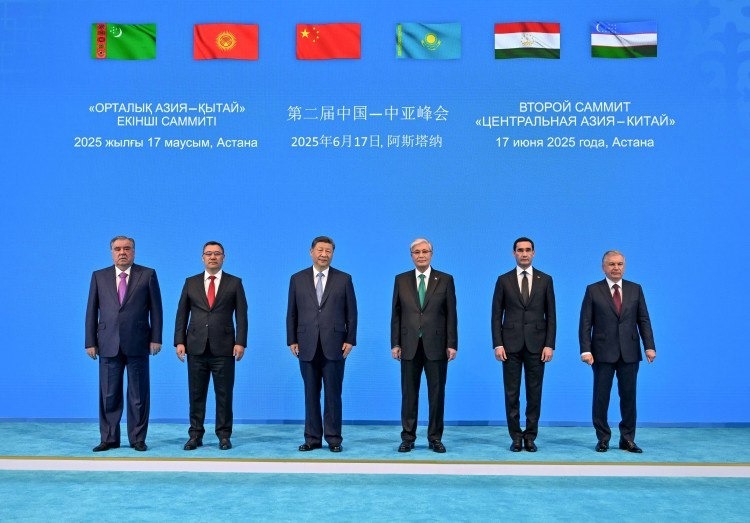
The second China-Central Asia summit on June 17, held in Astana, Kazakhstan, underscored the strengthening ties between China and the region. This event marked a significant milestone in solidifying the China-Central Asia cooperation framework with the signing of the Treaty on Eternal Good-Neighborliness, Friendship, and Cooperation. Experts note that Central Asian countries, once unable to adopt an intra-regional treaty, collectively reached this broader agreement with China. The summit also featured a range of side events, including the Energy Forum “Energy of Central Asia - China,” the Forum on Humanitarian Exchange, the Second Forum on Industrial and Investment Cooperation, and the Central Asia-China Business Council meeting, among others. These gatherings highlighted cooperation in energy, trade, and cultural exchange, reflecting China’s deepening influence in the region. Kazakh President Kassym-Jomart Tokayev praised China’s approach to equal partnership, stating that relations between the two nations are “stable and free from the negative impacts of geopolitical challenges and shocks as well as the international circumstances. China has never imposed any political conditions regarding cooperation with Kazakhstan.” “This is a very important point, Kazakhstani Sinologist Adil Kaukenov explained, “as the head of state, being at the forefront of Kazakhstan's foreign and domestic policies, faces political games, manipulation, and pressure at various levels, which require considerable restraint, experience as a statesman, and popular support to overcome.” During the summit, the heads of the Central Asian states articulated their priorities for cooperation with China. Kazakhstan emphasized projects like the creation of a joint cargo terminal in the port of Kuryk on the Caspian Sea, cooperation in the fields of nuclear energy and artificial intelligence, and counteracting international cybercrime. Kyrgyzstan focused on security, transport, e-commerce, energy, and tourism. Tajikistan prioritized industrial development, trade, food security, and green economy initiatives. Uzbekistan, meanwhile, sought the further integration of Afghanistan into the region, and proposed an “Electronic Silk Road” trade platform, and the development of a long-term strategy called the “Central Asia-China Industrial and Infrastructure Belt.” Chinese President Xi Jinping used his address to outline five key points that shape China’s vision for the future of its relationship with Central Asia. “Our cooperation is rooted in more than two thousand years of friendly relations, consolidated by the solidarity and mutual trust that has been established for 30 years since the establishment of diplomatic relations, and has made great progress thanks to mutually beneficial cooperation in the new era,” Xi stated in his keynote speech. According to Xi, China considers Central Asia one of the priorities of its foreign policy, and this building of peaceful, inclusive partnerships was marked by the historical milestone of the signing of the treaty at the summit. “We will improve the architecture of cooperation, which is characterized by pragmatism, efficiency, and deep integration,” the Chinese president said, adding that 2025–2026 have been declared the Years of High-Quality Development of China-Central Asia Cooperation. This initiative will focus on trade, transport connectivity, green energy, agriculture, and technology. Notably, China pledged 1.5 billion yuan ($208 million) in grants for projects aimed...