• KGS/USD = 0.01144 0%
  • KZT/USD = 0.00191 -0%
  • TJS/USD = 0.10838 0.37%
  • UZS/USD = 0.00008 0%
  • TMT/USD = 0.28571 0.28%
  • KGS/USD = 0.01144 0%
  • KZT/USD = 0.00191 -0%
  • TJS/USD = 0.10838 0.37%
  • UZS/USD = 0.00008 0%
  • TMT/USD = 0.28571 0.28%
  • KGS/USD = 0.01144 0%
  • KZT/USD = 0.00191 -0%
  • TJS/USD = 0.10838 0.37%
  • UZS/USD = 0.00008 0%
  • TMT/USD = 0.28571 0.28%
  • KGS/USD = 0.01144 0%
  • KZT/USD = 0.00191 -0%
  • TJS/USD = 0.10838 0.37%
  • UZS/USD = 0.00008 0%
  • TMT/USD = 0.28571 0.28%
  • KGS/USD = 0.01144 0%
  • KZT/USD = 0.00191 -0%
  • TJS/USD = 0.10838 0.37%
  • UZS/USD = 0.00008 0%
  • TMT/USD = 0.28571 0.28%
  • KGS/USD = 0.01144 0%
  • KZT/USD = 0.00191 -0%
  • TJS/USD = 0.10838 0.37%
  • UZS/USD = 0.00008 0%
  • TMT/USD = 0.28571 0.28%
  • KGS/USD = 0.01144 0%
  • KZT/USD = 0.00191 -0%
  • TJS/USD = 0.10838 0.37%
  • UZS/USD = 0.00008 0%
  • TMT/USD = 0.28571 0.28%
  • KGS/USD = 0.01144 0%
  • KZT/USD = 0.00191 -0%
  • TJS/USD = 0.10838 0.37%
  • UZS/USD = 0.00008 0%
  • TMT/USD = 0.28571 0.28%
11 November 2025

Viewing results 1 - 6 of 6

RC Cola Launches Production Facility in Southern Kazakhstan

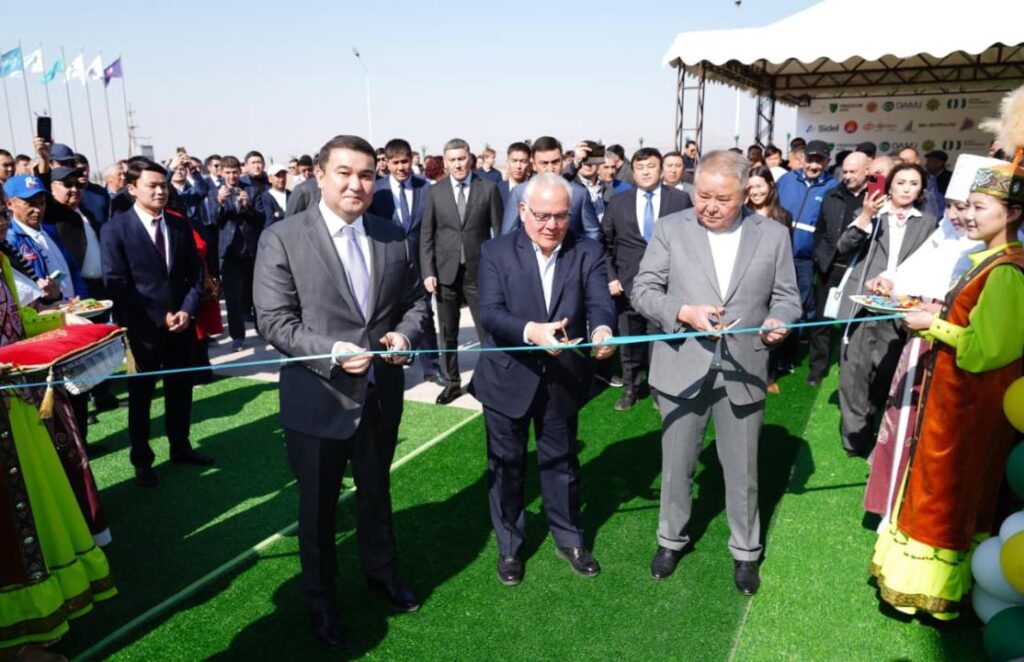
A beverage production plant under the global RC Cola brand has officially opened in the Turkestan region of Kazakhstan. Operated by Beibars Bottlers, the facility is located in the village of Kumisbastau in the Tulkubas district and is designed to produce up to 120,000 tons of beverages annually, according to the regional administration. The product line includes RC Cola carbonated drinks, bottled water, and other non-alcoholic beverages. The project attracted $16.7 million in investment, with plans to supply both the domestic market and neighboring Central Asian countries. “The new plant features production lines based on advanced German and Italian technologies, along with an environmentally friendly, multi-stage water purification system,” the local mayor’s office said. “Water is drawn from wells 170 meters deep and tested in leading laboratories in the US and Italy.” The facility has created 100 new jobs and contributed to local infrastructure development. As part of the project, more than 6 kilometers of 35 kV power lines, a new $1.3 million substation, a gas pipeline, and treatment facilities have been constructed. The opening ceremony was attended by RC Cola International General Manager Francis Lampera and project investor Amangeldy Nurov, founder of Beibars Bottlers LLP. They stated that the launch will boost RC Cola’s presence in Central Asia and solidify its footprint in the Kazakh market. RC Cola (Royal Crown Cola) was founded in 1905 by American pharmacist Claude A. Hatcher. It was the first brand to introduce canned soda and a caffeine-free diet cola. The brand is now owned by Keurig Dr Pepper and distributed internationally through RC Cola International. As previously reported by The Times of Central Asia, RC Cola competitor The Coca-Cola Company recently inaugurated a new production plant in Uzbekistan, which is also part of the company’s expansion strategy in the Turkestan region.

Woosong University Kazakhstan Campus Officially Opens

On September 25, Woosong University launched its new branch, Woosong University Kazakhstan, which will initially offer a program in AI and Big Data, with plans to expand into broader technology and software engineering fields. At the opening ceremony, former Deputy Prime Minister Yermek Kusherbayev, who assumed the post of Minister of Foreign Affairs the following day, highlighted the significance of the event: "To date, 40 strategic partnerships of various formats have been implemented, including 33 branches of foreign universities. Today, we are witnessing a historic event, the opening of a branch of one of the leading universities of the Republic of Korea in the spiritually rich and ancient Turkestan. This university will become not just an educational platform but also a center for international cooperation, innovation, and the training of highly qualified specialists who will shape the intellectual capital of our country." Minister of Science and Higher Education Sayasat Nurbek added that Kazakhstan aspires to become Central Asia’s leading educational hub, with foreign university branches playing a central role in this transformation. Expanding Kazakh-Korean Cooperation Several higher education partnerships are already underway between Kazakhstan and South Korea: Dong-Eui University is collaborating with Akhmet Baitursynov University to train engineers for automobile manufacturing in Kostanay. Korkyt Ata University in Kyzylorda has launched dual-degree programs with the Seoul National University of Science and Technology (SeoulTech). Satbayev University in Almaty is working with the Korea Advanced Institute of Science and Technology (KAIST) to establish a center for rare earth metals processing. Kazakhstan as an International Education Hub As previously reported by The Times of Central Asia, Kazakhstan is attracting an increasing number of prestigious foreign institutions: On September 3, Cardiff University (Wales) opened Cardiff University Kazakhstan in Astana Germany’s Anhalt University of Applied Sciences launched a branch in Almaty Italy’s Marche Polytechnic University, based in Ancona, has opened a branch campus at Zhetysu University in Taldykorgan. Looking ahead, two additional institutions are set to establish campuses in 2026: Grenoble INP-Phelma, UGA, France’s premier engineering school in physics, electronics, and materials science, will open a branch in Almaty. The Colorado School of Mines will open its first international campus in Zhezkazgan, specializing in geology and mining.

Central Asia’s First Rowing Canal Opens in Kazakhstan

Kazakhstan has inaugurated Central Asia’s first-ever rowing canal in the southern city of Turkestan. Opened on September 15, the facility is the only one of its kind in the region and meets the standards of both the International Canoe Federation (ICF) and the International Rowing Federation (FISA). Spanning 100 hectares, the canal stretches 2.5 kilometers and is equipped to host international competitions, including World Cup and Asian Cup events in rowing and canoeing. It will also serve as a dedicated training base for athletes. The complex includes spectator grandstands, a one-kilometer city beach, and an on-site hotel. In addition to its sporting function, the canal will contribute to environmental sustainability by supplying water for irrigating Turkestan’s green belt. According to the Ministry of Tourism and Sports, more than 6,000 people in Kazakhstan regularly participate in rowing and canoeing. Officials highlight rowing as one of the most “medal-rich” sports, with 14 medal sets awarded at the Olympic Games and more than 20 at the World Rowing Championships, offering strong opportunities for national athletic achievement. Authorities expect the new facility to significantly advance the development of rowing in Kazakhstan and to strengthen Turkestan’s profile as a regional hub for both culture and sports.

Chinese Investor to Launch $400 Million Cotton Cluster in Southern Kazakhstan

Chinese company Xinjiang Lihua (Group) Co., Ltd. plans to invest nearly $400 million to establish a cotton-textile cluster in Kazakhstan’s Turkestan region. The announcement was made by Zhang Qihai, Chairman of the Board of Directors of Xinjiang Lihua, during a meeting with Kazakhstan’s Prime Minister Olzhas Bektenov. The large-scale investment project will be implemented within the TURAN Special Economic Zone, located in southern Kazakhstan. It envisions a vertically integrated cotton agro-industrial complex, from cultivation to the production of finished textile goods, including yarn, fabric, and clothing. More than 50,000 hectares of land have been allocated for cotton cultivation. The project also includes the construction of ten factories. Two of these will manufacture drip irrigation systems using modern water-saving technologies. Four others will handle the primary processing of cotton near the fields. The remaining four facilities, including garment, dyeing, and finishing factories, will produce the final textile products. The total investment exceeds 200 billion tenge (approximately $398 million), and the cluster is expected to create 3,000 permanent jobs in the region. To support the project’s needs, a plant for producing polyvinyl chloride (PVC) pipes has already been launched, and construction of the textile factories is underway. Xinjiang Lihua is also developing an irrigation system, including a canal network fed by a dedicated pumping station. Chairman Zhang Qihai praised Kazakhstan’s favorable investment climate and the region’s suitable agricultural conditions. He noted that the first finished products from the cluster are scheduled for release by October this year. “The creation of a cotton-textile cluster in Turkestan Region contributes to increasing the added value of domestic products, promoting agricultural development through processing, and enhancing the country’s export potential,” said Prime Minister Olzhas Bektenov. “The government will provide all necessary support for this initiative.” As previously reported by The Times of Central Asia, China also plans to support the establishment of a Scientific and Technical Innovation Center for Hydrogen Energy in Kazakhstan.