
• KGS/USD = 0.01144 0%
  • KZT/USD = 0.00204 0%
  • TJS/USD = 0.10422 -0.1%
  • UZS/USD = 0.00008 0%
  • TMT/USD = 0.28571 0%
  • KGS/USD = 0.01144 0%
  • KZT/USD = 0.00204 0%
  • TJS/USD = 0.10422 -0.1%
  • UZS/USD = 0.00008 0%
  • TMT/USD = 0.28571 0%
  • KGS/USD = 0.01144 0%
  • KZT/USD = 0.00204 0%
  • TJS/USD = 0.10422 -0.1%
  • UZS/USD = 0.00008 0%
  • TMT/USD = 0.28571 0%
  • KGS/USD = 0.01144 0%
  • KZT/USD = 0.00204 0%
  • TJS/USD = 0.10422 -0.1%
  • UZS/USD = 0.00008 0%
  • TMT/USD = 0.28571 0%
  • KGS/USD = 0.01144 0%
  • KZT/USD = 0.00204 0%
  • TJS/USD = 0.10422 -0.1%
  • UZS/USD = 0.00008 0%
  • TMT/USD = 0.28571 0%
  • KGS/USD = 0.01144 0%
  • KZT/USD = 0.00204 0%
  • TJS/USD = 0.10422 -0.1%
  • UZS/USD = 0.00008 0%
  • TMT/USD = 0.28571 0%
  • KGS/USD = 0.01144 0%
  • KZT/USD = 0.00204 0%
  • TJS/USD = 0.10422 -0.1%
  • UZS/USD = 0.00008 0%
  • TMT/USD = 0.28571 0%
  • KGS/USD = 0.01144 0%
  • KZT/USD = 0.00204 0%
  • TJS/USD = 0.10422 -0.1%
  • UZS/USD = 0.00008 0%
  • TMT/USD = 0.28571 0%

Viewing results 1 - 6 of 4

Uzbek Scholar Proposes Unified Writing System for Turkic Languages

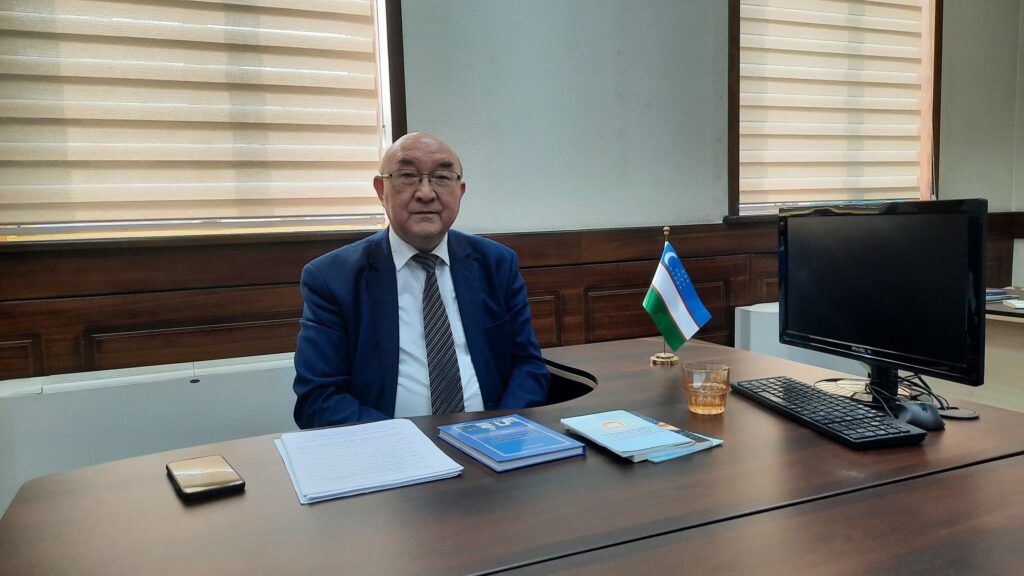
Across the Turkic-speaking world, debates over language policy and writing systems are gaining renewed importance. More than 300 million people across Eurasia speak Turkic languages, yet they use different scripts, Cyrillic, Latin, and Arabic. Uzbek scholar Bakhtiyor Karimov argues that this diversity of alphabets weakens cultural and intellectual connections among Turkic societies. Karimov, a linguist and professor who helped develop the pan-Turkic auxiliary language Ortaturk, is an academician of the Turon Academy of Sciences and director of its Ortaturk Language Research Institute. Together with Shoahmad Mutalov, he developed the concept of the Ortaturk language. In this interview, he discusses the challenges posed by alphabet diversity, his proposal for a new writing model, and his view that language policy is closely linked to political and geopolitical developments. A fragmented writing landscape Karimov describes alphabet diversity as one of the most serious challenges facing Turkic-speaking communities. “Roughly thirty Turkic languages exist,” he said. “About twenty use the Cyrillic alphabet, three use the Latin alphabet, two are transitioning toward Latin, and many communities still rely on the Arabic script. In numerical terms, around 100 million Turkic speakers use Arabic, another 100 million use Latin, and another 100 million use Cyrillic.” The situation has deep historical roots. Over the past century, shifting political systems and state policies have shaped the writing traditions of Turkic languages. As a result, speakers of closely related languages often find it difficult to read each other’s texts. For example, Uyghurs in China write using the Arabic script, while Uzbeks in Afghanistan also rely on Arabic-based writing. In Uzbekistan, both Cyrillic and Latin scripts are used. Azerbaijani communities in Iran use the Arabic script, whereas Azerbaijan employs a Latin-based alphabet. Most Turkic languages within Russia continue to use Cyrillic. Karimov also notes legal constraints. He points to Russian legislation requiring languages used in official contexts to employ the Cyrillic alphabet, arguing that this limits the ability of Turkic-speaking communities in Russia to adopt Latin scripts even if they wish to do so. “About twenty Turkic peoples living in Russia are effectively restricted to Cyrillic,” he said. Meanwhile, Turkey, Azerbaijan, and Turkmenistan have fully adopted Latin alphabets. Uzbekistan and Kazakhstan are gradually transitioning, although the process has been uneven. Kyrgyzstan continues to rely primarily on Cyrillic. “All of this means that the Turkic world is linguistically connected but graphically divided,” Karimov said. Efforts toward a common alphabet Recognizing this challenge, the Organization of Turkic States established a working group of linguists to explore the creation of a unified Turkic alphabet. Experts from Uzbekistan, Azerbaijan, Kazakhstan, Kyrgyzstan, Turkmenistan, and Turkey participated in the initiative. “They worked together for about two years and produced a draft proposal,” Karimov said. “However, the project remains under discussion and has not yet been formally adopted. Ultimately, political leaders must reach a consensus.” Karimov believes the draft proposal contains technical shortcomings, particularly in how certain sounds are represented. “In some cases, a single phoneme is represented by more than one graphic symbol,” he said. “From a computational...

Building a Bridge of Tongues: One Uzbek Linguist’s Pursuit of Turkic Unity

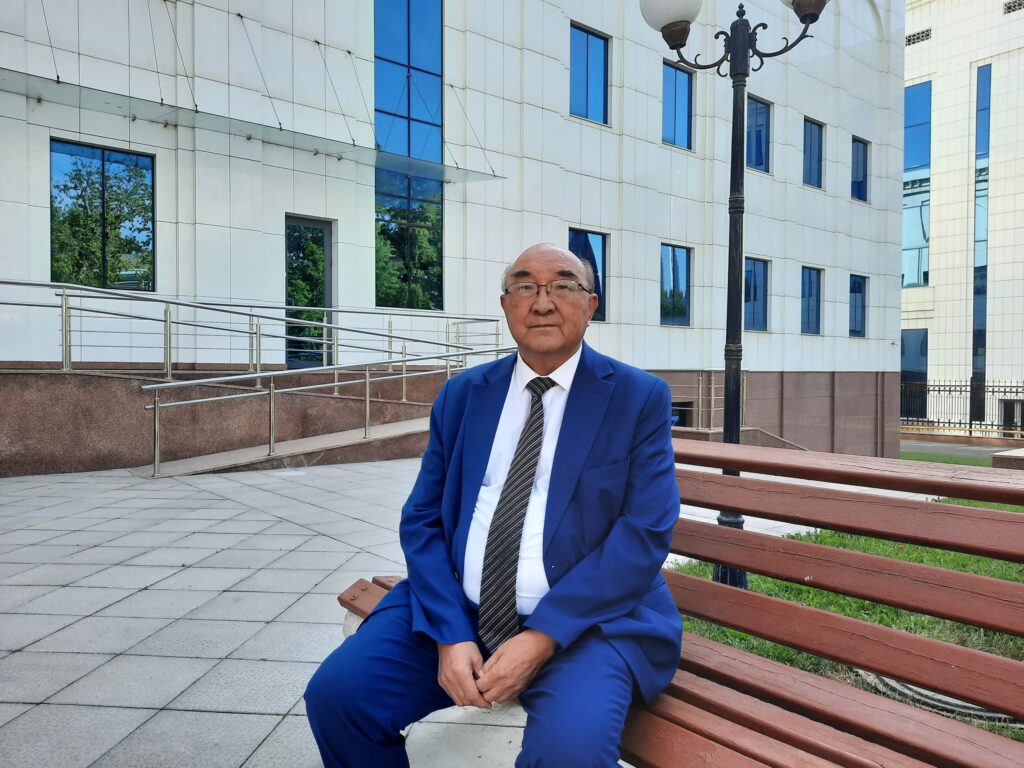
For nearly five decades, Uzbek linguist Dr. Bakhtiyor Karimov has worked quietly on an ambitious vision: the creation of a shared, auxiliary language for Turkic-speaking nations. What began as a spark of inspiration on a trolleybus in 1974 became a lifelong intellectual project shaped by history, hardship, and support from prominent regional figures. Karimov’s idea, what he calls the “Averaged Turkic Language”, was born not from political ideology but from a desire to preserve and connect cultures. “If our children cannot access the world’s knowledge in their own tongue, how can they innovate?” he once asked. A Lifelong Vision Conceived in Silence The concept took shape in the shadows of the Soviet Union, where Pan-Turkic ideas were taboo. Karimov and his colleague Shoahmad Mutalov developed their theories discreetly, using mathematical models to explore linguistic convergence. They coined the term “Eesopic” to mask their proposals, likening it to Aesop’s allegories. In 1980, Karimov presented his formulas at a Turkology conference in Tashkent, illustrating affinities among Turkic languages. The room, initially confused by the mathematical display, fell silent when the implications became clear: this was about regional unity through language. The session was cut short. Still, in 1982, their paper was quietly published under the title Language Policy Solutions for Developing Countries, disguised as a study on African and Asian contexts. This allowed Karimov’s ideas to survive Soviet censorship and enter academic circulation. From Perestroika to Independence The late 1980s gave Karimov space to speak more openly. He published theoretical sketches under allegorical titles and refined his proposals, ranging from grammar convergence to script reform. After Uzbekistan’s independence in 1991, he carried his vision to Kazakhstan, where he helped establish a Turkology Center and spoke of reviving Chagatai, the classical literary language once shared across Central Asia. Despite early support, funding dried up. At one point, he suffered heart trouble during a meeting and was left unattended in a hospital corridor until a local cultural leader intervened. “I owe my heart to the Averaged Turkic Language,” he later said, reflecting on how the project had shaped every corner of his life. Digital Revival and Regional Interest In recent years, interest in Karimov’s ideas has quietly revived. In 2022, a Kazakh team led by Dr. Miriyev launched OzTurk, a simplified digital prototype that uses linguistic inputs from various Turkic languages to create a common vocabulary. Though limited in scope, the program demonstrated the feasibility of Karimov’s concept. The idea has even reached Turkish media, with headlines celebrating “A Bridge of Tongues for a New Era.” Yet formal institutional backing has remained elusive. Karimov estimates that establishing an Averaged Turkic Language Institute would require just $3 million, $500,000 from each of six Turkic states. “That’s a small price to pay for preserving our languages,” he argues. A Broader Vision Karimov’s ambitions extend beyond the Turkic world. In 1992, he presented a similar proposal for an Averaged Iranian Language, drawing on shared roots among Persian, Dari, Tajik, Pashto, Kurdish, and other languages. His papers were...