• KGS/USD = 0.01143 0%
  • KZT/USD = 0.00212 0%
  • TJS/USD = 0.10823 0.19%
  • UZS/USD = 0.00008 0%
  • TMT/USD = 0.28571 0%
  • KGS/USD = 0.01143 0%
  • KZT/USD = 0.00212 0%
  • TJS/USD = 0.10823 0.19%
  • UZS/USD = 0.00008 0%
  • TMT/USD = 0.28571 0%
  • KGS/USD = 0.01143 0%
  • KZT/USD = 0.00212 0%
  • TJS/USD = 0.10823 0.19%
  • UZS/USD = 0.00008 0%
  • TMT/USD = 0.28571 0%
  • KGS/USD = 0.01143 0%
  • KZT/USD = 0.00212 0%
  • TJS/USD = 0.10823 0.19%
  • UZS/USD = 0.00008 0%
  • TMT/USD = 0.28571 0%
  • KGS/USD = 0.01143 0%
  • KZT/USD = 0.00212 0%
  • TJS/USD = 0.10823 0.19%
  • UZS/USD = 0.00008 0%
  • TMT/USD = 0.28571 0%
  • KGS/USD = 0.01143 0%
  • KZT/USD = 0.00212 0%
  • TJS/USD = 0.10823 0.19%
  • UZS/USD = 0.00008 0%
  • TMT/USD = 0.28571 0%
  • KGS/USD = 0.01143 0%
  • KZT/USD = 0.00212 0%
  • TJS/USD = 0.10823 0.19%
  • UZS/USD = 0.00008 0%
  • TMT/USD = 0.28571 0%
  • KGS/USD = 0.01143 0%
  • KZT/USD = 0.00212 0%
  • TJS/USD = 0.10823 0.19%
  • UZS/USD = 0.00008 0%
  • TMT/USD = 0.28571 0%

Viewing results 1 - 6 of 24

SelectUSA Investment Summit: U.S.-Kazakhstan Trade and Investment Relations on the Rise

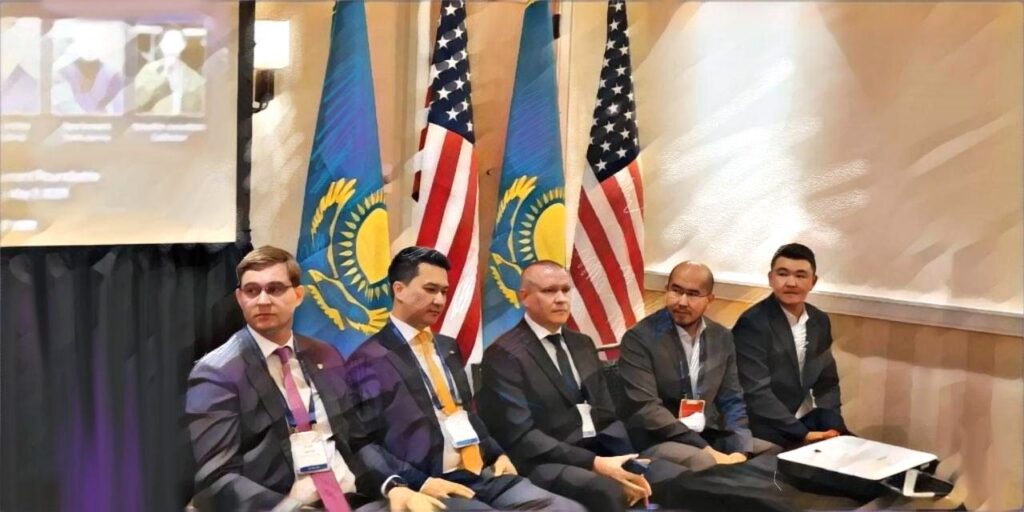
Despite global economic headwinds and ongoing conflict in the Middle East, Kazakhstan is doubling down on its efforts to deepen commercial ties with the United States, an ambition on full display at this year’s SelectUSA Investment Summit in National Harbor, Maryland, near Washington, D.C. The annual forum, organized by the U.S. Department of Commerce, serves as the U.S. government’s flagship platform for attracting foreign direct investment. While SelectUSA is designed to attract foreign direct investment into the United States, Kazakhstan’s presence also reflects a broader shift: Kazakhstani companies are increasingly looking for ways to enter and scale in the U.S. market. [caption id="attachment_48403" align="aligncenter" width="1280"] Magzhan Ilyassov, Ambassador of Kazakhstan to the U.S. - image: TCA[/caption] “Kazakhstan views the United States not only as a strategic partner, but as an emerging priority destination for long-term investment and technological collaboration,” said Magzhan Ilyassov, Kazakhstan’s ambassador to the United States. “One of our missions is to facilitate collaboration for Kazakh companies to enter the American market while strengthening bilateral trade and innovation ties.” That vision is being driven in large part by Kazakhstan’s private sector. “We already have a significant number of companies operating in the U.S. market, including in fintech and construction,” said Timur Turlov, founder and CEO of Freedom Holding Corp. “We have learned how to meet international standards, and the products being developed within our ecosystems today are becoming truly global. I genuinely believe that our competitiveness has grown, and our business culture has matured. We are now going to see many more success stories of our companies expanding beyond Kazakhstan.” SelectUSA says its investment summit has helped generate more than $250 billion in new U.S. investment projects, supporting more than 125,000 jobs across the United States and its territories. This year marked a milestone in that evolving relationship. Kazakhstan became the first country from Central Asia and the South Caucasus to host an investment and trade roundtable at SelectUSA. The roundtable, focused on “Strategic Sectors and U.S. Market Entry Opportunities,” brought together government officials, investors, and business leaders, underscoring Kazakhstan’s transition from participant to initiative-taking player within SelectUSA. [caption id="attachment_48401" align="aligncenter" width="833"] U.S. Ambassador to Kazakhstan, Julie Stufft - image: TCA[/caption] U.S. Ambassador to Kazakhstan Julie Stufft said that a delegation of 30 Kazakhstani firms representing various business sectors has come to the U.S. for the summit to pursue trade and investment prospects. "This is a historic event for our relations and for Kazakhstani business - one that truly demonstrates the level of development Kazakhstani companies and investors have achieved, enabling them to enter the world's largest market: the United States," Ambassador Stufft stated. The roundtable highlighted a clear trend: Kazakhstani firms are increasingly looking outward. Companies from sectors including manufacturing, agri-tech, healthcare, food production, and digital platforms presented plans for entering or expanding in the U.S. market, while also outlining the challenges of regulatory compliance, localization, and competition. Support from institutions like SelectUSA and the U.S. Commercial Service remains critical in navigating these complexities. Economic conditions are...

U.S.-Kazakhstan Tungsten Venture Advances as Critical Minerals Cooperation Deepens

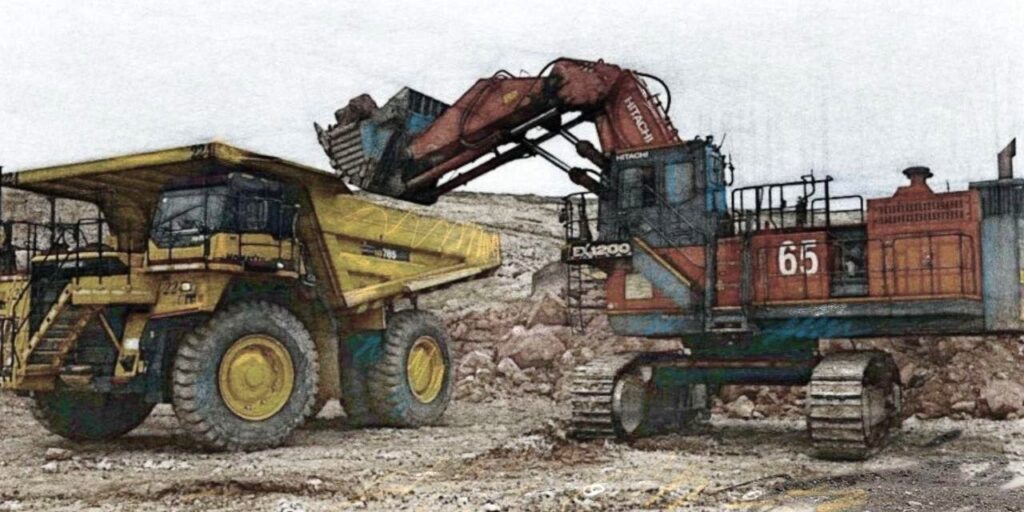
A U.S.-linked critical minerals venture in Kazakhstan is moving forward with plans to develop one of the world’s largest undeveloped tungsten resources, strengthening cooperation between Washington and Astana at a time of growing demand for secure mineral supply chains and greater Western interest in Central Asia’s strategic minerals base. Skyline Builders Group Holding Ltd. and Cove Kaz Capital Group LLC have announced a merger agreement that would create Kaz Resources Inc., a Nasdaq-listed company focused on tungsten, rare earths, and other critical minerals. The combined company is expected to trade under the ticker symbol “KAZR,” subject to shareholder and regulatory approvals and other closing conditions. The transaction builds on cooperation between Cove Kaz Capital and Kazakhstan’s national mining company, Tau-Ken Samruk. Cove Kaz has acquired a majority interest in Severniy Katpar LLP, which holds licenses for the Northern Katpar and Upper Kairakty tungsten projects in Kazakhstan’s Karaganda mining district, while Tau-Ken Samruk retains a minority stake, giving Kazakhstan’s state mining sector continued participation in the project. The Financial Times has reported that Donald Trump Jr. and Eric Trump held indirect stakes in Skyline Builders, the Nasdaq-listed company that has agreed to combine with Cove Kaz Capital. The reported investments were made through a Dominari-affiliated vehicle before the business combination. The report has drawn scrutiny because of the project’s connection to U.S. critical minerals policy and potential U.S. government-backed financing. The report cites no evidence that the Trump sons influenced the project award or the financing process. A spokesperson for Donald Trump Jr. said he is a passive investor, has no operational role, and does not engage with the federal government on behalf of companies in which he invests or advises. Eric Trump did not respond to requests for comment reported by the Financial Times. The Export-Import Bank of the United States and the U.S. International Development Finance Corporation have issued letters of interest indicating potential financing support for the project. Such letters are preliminary expressions of interest, not final loan approvals, binding commitments, or government contracts, and any financing would remain subject to due diligence, agency approvals, and other conditions. The projects are strategically significant because tungsten is widely used in defense, aerospace, industrial manufacturing, and advanced technologies. The United States has identified tungsten as a critical mineral and has sought to diversify supply chains amid heavy global dependence on China. Kazakhstan’s tungsten deposits hold significant potential, but many remain at an early stage of development, requiring substantial investment and time before production can scale. Even so, the country has begun to emerge as a meaningful producer, with public and industry estimates pointing to Kazakhstan becoming a top-three producer in 2025 after the launch of the Boguty deposit, behind China and Vietnam. The Association of Mining and Metallurgical Enterprises has cited production of around 2,400 tons of tungsten in 2025. The country’s rising role in the global market coincides with a sharp increase in tungsten prices. Following export restrictions imposed by China in February 2025, prices rose sharply through 2025...

Tokayev’s U.S. Visit Advances Kazakhstan’s Economic Agenda

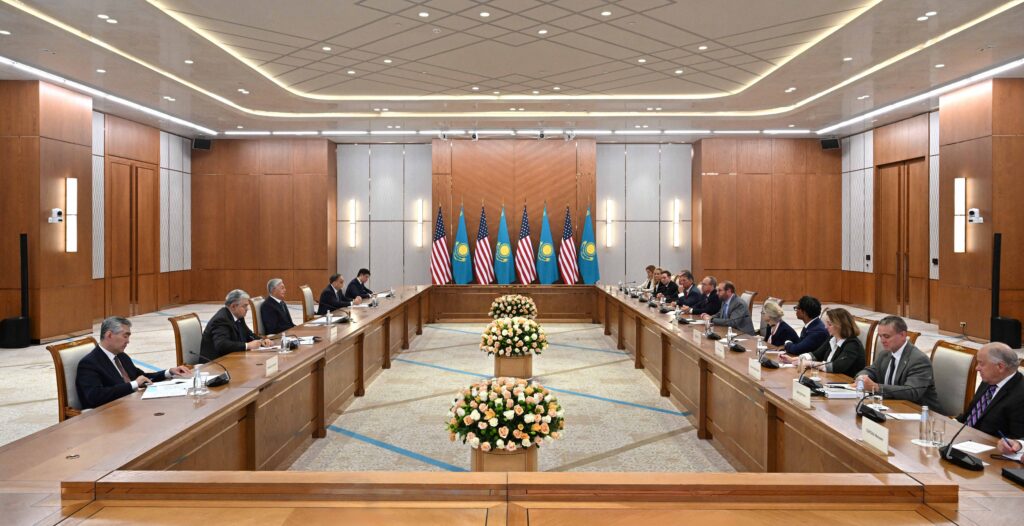
The visit of Kazakh President Kassym-Jomart Tokayev to the United States provided an opportunity for targeted negotiations with major international corporations and financial institutions, centered on long-term investment, production localization, and Kazakhstan’s integration into global value chains. One of the key outcomes was the signing of an investment agreement worth approximately $180 million between Kazakhstan’s Ministry of Agriculture and Mars, Incorporated. The company plans to build a pet food production plant in the city of Alatau. The project will focus on the deep processing of agricultural raw materials and the production of high-value-added goods. Mars CEO Poul Weihrauch noted that the Kazakhstan facility will serve as a base for expanding the company’s presence in Central Asia and neighboring regions. A separate round of negotiations focused on healthcare. During talks with Ashmore Group, discussions centered on a proposal to build an international clinic in partnership with Ashmore Healthcare International and Samruk-Kazyna Invest, with the involvement of the Mount Sinai Health System as the operator. The initiative aligns with Kazakhstan’s strategy to develop medical infrastructure and medical tourism, as well as the Open Investment Partnership program targeting high-tech sectors of the economy. Aviation was another major component of the visit. At a meeting with Boeing executives, Tokayev confirmed the interest of Kazakh carriers Air Astana, SCAT Airlines, and VietJet Qazaqstan in expanding cooperation. Air Astana expects to receive Boeing 787 Dreamliner aircraft in the second half of 2026, which could pave the way for the launch of direct flights between Kazakhstan and the U.S. SCAT, meanwhile, is considering both the acquisition of additional aircraft and the establishment of its first maintenance and repair center at Shymkent Airport in partnership with an American company. The visit concluded with negotiations involving the U.S. International Development Finance Corporation (DFC). Its CEO, Ben Black, said Washington views Kazakhstan as a key partner in Eurasia. The discussions focused on projects in the mining sector and the development of transport and transit infrastructure critical for regional and interregional trade. According to the World Investment Report 2025 (UNCTAD), Kazakhstan overwhelmingly dominates foreign direct investment (FDI) in Central Asia. In 2024, Kazakhstan’s inward FDI stock stood at about $151 billion, far exceeding Turkmenistan (about $45 billion), Uzbekistan (about $17 billion), and Kyrgyzstan and Tajikistan (around $4 billion each). The negotiations in Washington point to Kazakhstan’s focus on building long-term institutional partnerships rather than pursuing isolated investment deals, a signal intended to reassure international investors about the stability and openness of the market. As previously reported by The Times of Central Asia, Tokayev also took part in the inaugural meeting of the Board of Peace in Washington, where Kazakhstan signaled its willingness to contribute to Gaza’s reconstruction and broader stabilization efforts, including potential financial support and participation in peacekeeping initiatives.

Kazakhstan Elevates U.S. Ties to Presidential-Level

Kazakhstan’s relationship with the United States is entering a more explicitly strategic phase under Kassym-Jomart Tokayev, marked by a shift in how Astana manages its most consequential external partnerships. As economic ties deepen and geopolitical coordination expands across energy, investment, and Eurasian connectivity, engagement with Washington is increasingly being treated as a presidential priority rather than a routine diplomatic file. In this context, Kazakhstan has formally elevated its engagement with the United States by appointing a presidential representative to steer bilateral negotiations on priority issues. By presidential decree, Ambassador Yerzhan Kazykhan—Kazakhstan’s Permanent Representative to the United Nations Office in Geneva and a veteran diplomat with prior postings as ambassador to the United States and the United Kingdom—has been designated as the President’s Representative for negotiations with Washington. The appointment places key aspects of the U.S. relationship under direct presidential oversight from the Akorda, the presidential office. Kazykhan has previously served as foreign minister and assistant to the president, and has held senior roles within both the Foreign Ministry and the presidential administration. His experience in Washington and in multilateral settings provides institutional continuity as the bilateral agenda broadens to encompass investment, energy security, and regional connectivity, while day-to-day execution remains within established diplomatic channels. Drivers Behind the Elevation of U.S.–Kazakhstan Engagement The decision reflects how rapidly the scope of U.S.–Kazakhstan engagement has expanded and how Kazakhstan is positioning itself as a major investment and strategic connectivity hub. The United States is Kazakhstan’s largest source of foreign direct investment, with hundreds of American companies operating across the economy. Chevron, Kazakhstan’s single largest foreign investor, has invested more than $50 billion over time, anchoring long-term U.S. corporate presence in the country’s energy sector. This investment relationship gained further momentum in 2025. At the C5+1 leaders’ summit in Washington, Kazakhstan and U.S. partners announced nearly $17 billion in new commercial agreements and investment commitments across energy, transport, and industrial cooperation. The package was publicly highlighted by U.S. Commerce Secretary Howard Lutnick, underscoring senior-level U.S. political backing for deeper economic engagement with Kazakhstan. Beyond investment, the bilateral agenda has expanded into strategic and geopolitical domains. Kazakhstan’s decision to join the Abraham Accords marked a notable political alignment with a U.S.-led diplomatic initiative, extending the framework’s reach beyond its original Middle Eastern focus. Connectivity has become central to U.S. policy thinking. The Middle Corridor is increasingly viewed as an eastward extension of the post-Azerbaijan–Armenia Caucasus transit framework, also called the ‘Trump Route for International Peace and Prosperity’, aimed at reopening and securing east–west routes across the South Caucasus. Extending it through Kazakhstan links Central Asia to Europe while reducing reliance on Russia or Iran. Trade and energy ties reinforce this trajectory. Kazakhstan is the world’s largest uranium producer and a major supplier to the United States, making the U.S. one of its most important export markets for nuclear fuel. As U.S. policy places greater emphasis on secure and diversified supply chains, Kazakhstan’s role in critical energy inputs and transit infrastructure has taken on added strategic...

U.S. and Kazakhstan Expand Civil Nuclear Cooperation With Focus on Small Modular Reactors

The United States and Kazakhstan have expanded cooperation on civil nuclear energy, placing small modular reactors at the center of a new phase in bilateral engagement. In late December 2025, the U.S. Embassy in Kazakhstan announced two initiatives under the U.S. State Department’s Foundational Infrastructure for Responsible Use of Small Modular Reactor Technology program, known as FIRST. The measures focus on workforce training and technical evaluation as Kazakhstan prepares to reintroduce nuclear power generation. Kazakhstan is the first country in Central Asia to participate in the FIRST program, which was launched by the U.S. State Department in 2021 to help partner countries prepare regulatory frameworks, workforce capacity, and infrastructure for advanced nuclear technologies. The first initiative provides for the installation of a classroom-based SMR (small modular reactor) simulator at the Kazakhstan Institute of Nuclear Physics in Almaty. The simulator is intended to train specialists in reactor operations, safety systems, and emergency response. On January 6, 2026, the American Nuclear Society reported that the simulator will be supplied by U.S. companies Holtec International and WSC Inc., a simulation technology company that operates as part of the Curtiss-Wright group. The project is designed to build domestic technical capacity prior to licensing or construction decisions. The International Science and Technology Center is supporting implementation in Kazakhstan. The second initiative is a feasibility study examining which U.S.-designed SMRs could be technically and economically suitable for Kazakhstan. According to the American Nuclear Society, the study is being conducted under FIRST, with U.S. engineering firm Sargent & Lundy. The assessment is expected to cover grid integration, siting considerations, cooling requirements, and indicative deployment timelines. The study does not authorize construction or commit Kazakhstan to a specific reactor technology; rather, the feasibility study is intended to produce a shortlist of U.S. SMR designs that could be compatible with Kazakhstan’s grid, geography, and projected electricity demand. These initiatives follow Kazakhstan’s decision to return to nuclear power. On October 6, 2024, voters approved the construction of nuclear power plants in a national referendum. Official results published by the Central Referendum Commission showed 71.12% voting in favor, with turnout at 63.66%. Kazakhstan has not generated nuclear electricity since the BN-350 fast reactor at Aktau was shut down in 1999. Government energy planners have warned that Kazakhstan faces growing electricity shortfalls as early as the mid-2020s, driven by aging coal plants and rising consumption. Kazakhstan’s interest in nuclear energy reflects structural pressures in the power sector. Coal-fired plants still supply most electricity, particularly in northern regions, but much of that capacity is aging. Electricity demand continues to rise alongside industrial output and urban growth, while the government has set targets to reduce emissions intensity. Nuclear power is being positioned as a source of stable, low-carbon baseload generation that can complement renewable energy. Kazakhstan also occupies a central position in the global nuclear fuel market. The country accounts for about 40% of global uranium mine production and holds roughly 14% of identified recoverable uranium resources. Despite that role, the country has relied...

Opinion: Abraham Accords Can Help Kazakhstan Reshape Its Energy Future

On 6 November 2025, after speaking with Kazakhstan’s President Kassym-Jomart Tokayev and Israel’s Prime Minister Benjamin Netanyahu, U.S. President Donald Trump announced that Kazakhstan would join the Abraham Accords. Astana and Jerusalem have maintained full diplomatic relations since 1992, but Kazakhstan’s entry pushes the Accords beyond the Middle East and North Africa and into the Eurasian heartland. This matters at a time when Washington wants to re-energize the initiative and deepen its C5+1 engagement with the region. Kazakhstan’s decision fits its multi-vector policy. The decision also builds on the country’s role as a key component of the Trans-Caspian International Transport Route (TITR, “Middle Corridor”), which links Chinese production to European markets. Cargo volumes reached about 4.5 million tons in 2024 and are expected to rise to around 5.2 million tons in 2025. A recent report by Boston Consulting Group expects rail freight through the Middle Corridor to quadruple by the decade’s end. The Accords do not change Kazakhstan’s formal status with Israel. The question is, rather, whether they unlock deeper economic cooperation. The Times of Central Asia has already reported on clear opportunities for cooperation in sectors such as water and agricultural efficiency, grid and industrial productivity, and cybersecurity and administrative modernization. In the energy sector, like the others, the Accords give Israeli companies a clearer political and legal framework for working with Kazakhstan’s energy and infrastructure sectors. Gulf Cooperation Council states, and the United Arab Emirates (UAE) in particular, could provide project finance as well. Hard Energy, Nuclear Fuel, and Israeli Technology Astana’s principal concern in the energy sector is how to raise net revenue: the goal here is to make the sector more resilient to external pressure without incurring prohibitive capital costs. Israeli firms can address that problem at an operational level. The PrismaFlow sensing system developed by Prisma Photonics is a proven technology that uses existing optical fiber as a sensing system. Thousands of kilometers of pipeline can be monitored in real time for leaks, third-party interference, and attempted theft, without having to install physical sensors along the route. KazTransOil and Prisma Photonics could develop a program through an Abraham Accords framework to overlay this technology on selected trunk network segments and on the systems that deliver crude to export pipelines. Energy-sector cybersecurity is another area where Israeli companies can help Kazakhstan’s hard-energy system. The Israeli firm Radiflow specializes in operational-technology (OT) cybersecurity for oil and gas installations, tailored to pipeline and production environments. Its systems provide continuous network visibility and better anomaly detection. Its risk-based threat management reduces both the likelihood and the cost of cyber incidents that might interrupt flows or force precautionary shutdowns. KazMunayGas, KazTransOil, and their joint ventures could implement a structured audit and remediation program with Radiflow as a strategic partner. The uranium sector presents another opportunity for Kazakhstan–Israel cooperation, potentially a more strategic one. OT security systems can provide monitoring and control layers for uranium mining, in-situ leaching fields, and logistics chains. Kazakhstan accounts for over 40% of the world's uranium...