
• KGS/USD = 0.01144 0%
  • KZT/USD = 0.00207 0%
  • TJS/USD = 0.10407 -0.29%
  • UZS/USD = 0.00008 0%
  • TMT/USD = 0.28571 0%
  • KGS/USD = 0.01144 0%
  • KZT/USD = 0.00207 0%
  • TJS/USD = 0.10407 -0.29%
  • UZS/USD = 0.00008 0%
  • TMT/USD = 0.28571 0%
  • KGS/USD = 0.01144 0%
  • KZT/USD = 0.00207 0%
  • TJS/USD = 0.10407 -0.29%
  • UZS/USD = 0.00008 0%
  • TMT/USD = 0.28571 0%
  • KGS/USD = 0.01144 0%
  • KZT/USD = 0.00207 0%
  • TJS/USD = 0.10407 -0.29%
  • UZS/USD = 0.00008 0%
  • TMT/USD = 0.28571 0%
  • KGS/USD = 0.01144 0%
  • KZT/USD = 0.00207 0%
  • TJS/USD = 0.10407 -0.29%
  • UZS/USD = 0.00008 0%
  • TMT/USD = 0.28571 0%
  • KGS/USD = 0.01144 0%
  • KZT/USD = 0.00207 0%
  • TJS/USD = 0.10407 -0.29%
  • UZS/USD = 0.00008 0%
  • TMT/USD = 0.28571 0%
  • KGS/USD = 0.01144 0%
  • KZT/USD = 0.00207 0%
  • TJS/USD = 0.10407 -0.29%
  • UZS/USD = 0.00008 0%
  • TMT/USD = 0.28571 0%
  • KGS/USD = 0.01144 0%
  • KZT/USD = 0.00207 0%
  • TJS/USD = 0.10407 -0.29%
  • UZS/USD = 0.00008 0%
  • TMT/USD = 0.28571 0%

Viewing results 1 - 6 of 2

Trump Confirms New U.S. Tariffs on Kazakhstan Starting August 1

Starting August 1, 2025, the United States will impose a 25 percent customs duty on exports from Kazakhstan. The decision was announced by U.S. Secretary of Commerce Wilbur Ross and later confirmed in an official letter from President Donald Trump to Kazakh President Kassym-Jomart Tokayev. The move has prompted mixed reactions, although analysts say the actual economic impact is likely to be limited. Tariffs and Diplomacy In a letter published on Truth Social, President Trump stated that the United States was “forced to correct years of distortions caused by Kazakhstan’s tariff and non-tariff policies.” He added that the 25 percent tariff remains “significantly less than what is needed” to address the ongoing trade imbalance between the two countries. Commerce Secretary Wilbur Ross clarified that the tariffs were originally scheduled to take effect on July 9 but have been postponed to August 1. Official notifications are already being sent to affected countries, with Kazakhstan’s notice  scheduled for delivery on July 7 at 12 p.m. Eastern Time. President Trump also outlined a possible exemption: Kazakhstani companies that relocate production to the United States would not be subject to the new tariffs. Impact on Kazakhstan Earlier this year, Washington announced a 27% tariff on Kazakhstani goods, which was quickly suspended for 90 days pending negotiations. The revised 25% duty now stands as the highest imposed on any Central Asian country. Despite this, Kazakh political analyst Gaziz Abishev points out that the overwhelming majority of Kazakhstan’s exports to the U.S., including oil, uranium, ferroalloys, and silver, are excluded from the new measures. “These commodities represent more than 95% of total shipments and are included in the list of exemptions,” he said. As a result, the tariffs are unlikely to significantly impact trade volumes or foreign investment. Economist Eldar Shamsutdinov added that similar letters were sent to other nations, including Vietnam (40%), Malaysia (25%), Myanmar (40%), and South Africa (30%), framing the move as a continuation of existing trade policy rather than a new set of sanctions. Geopolitical Context The tariffs are part of a sweeping review of trade agreements under Trump’s administration. In April 2025, tariffs were applied to goods from 185 countries, and formal notices began rolling out in July. The administration has prioritized correcting what it deems “unfair trade imbalances.” In 2024, Kazakhstan exported $2.3 billion worth of goods to the U.S., while U.S. exports to Kazakhstan totaled $1.1 billion. Trump has cited this trade deficit as justification for the increased duties. Countries receiving similar letters include Japan, South Korea, Laos, Serbia, Tunisia, Bangladesh, and Indonesia, with tariffs reaching as high as 40%, underscoring the strategic and systematic nature of the U.S. policy shift. Kazakhstan’s Response Kazakhstan’s Ministry of Trade and Integration has announced plans to issue an official response but ruled out reciprocal measures. “In connection with the introduction of a 25% duty on goods from Kazakhstan by the U.S., the Ministry of Trade and Integration is preparing an official response. There is no question of retaliatory measures,” the ministry stated....

Trump’s Tariff Blitz Targets Global Imports, Kazakhstan Faces Harshest Impact in Central Asia

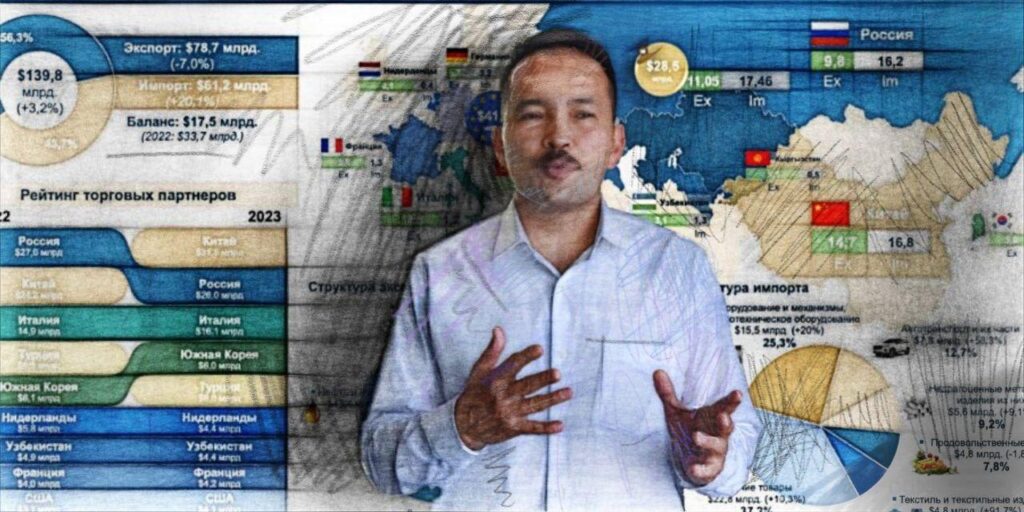
U.S. President Donald Trump has announced sweeping new tariffs on all goods imported into the United States, citing the need to protect American industry and jobs. Speaking at a White House press conference, Trump outlined a base tariff rate of 10% that will apply to 185 countries. However, several nations and blocs face significantly higher rates: China will see a 34% tariff, the European Union 20%, Switzerland 31%, and Israel 17%. The steepest tariffs were imposed on Vietnam (46%), Cambodia (49%), and Laos (48%). Notably absent from the list are Russia, Belarus, Mexico, Iran, Canada, and Belarus. Ukraine, however, will face the base 10% rate. Kazakhstan Hit with 27% Tariff The new U.S. duties also target Central Asian nations. According to a comparative chart published by the White House, Uzbekistan, Turkmenistan, Tajikistan, and Kyrgyzstan will face 10% tariffs on their exports to the U.S. Meanwhile, Kazakhstani goods will be subject to a much higher rate of 27%. The White House document notes that Kazakhstani imports currently face a 54% tariff in Kazakhstan, figures that surprised local analysts, who have questioned the methodology behind the calculations. The rationale for the elevated rate on Kazakhstan remains unclear. However, the country's Ministry of Trade and Integration has initiated consultations with his U.S. counterparts to explore options for exempting certain goods. According to a preliminary analysis, many of Kazakhstan’s key exports fall under exceptions outlined in U.S. regulations. “In 2024, trade turnover between Kazakhstan and the United States amounted to $4.2 billion,” the ministry stated. “Kazakhstan's primary exports to the U.S. - crude oil, uranium, silver, and ferroalloys - constitute 92% of total exports and are included in the exemption list under the U.S. President’s decree on reciprocal tariffs.” Turning Tariffs Into Opportunities Despite the steep new tariffs, some experts believe the impact on Kazakhstan will be limited. Financial analyst Rasul Rysmambetov argues that Kazakhstan’s marginal role in global trade dynamics shields it from major economic fallout. “The real battle is between the U.S. and the world’s largest economies, China and the EU,” Rysmambetov wrote on his Telegram channel. “Our trade with the U.S. accounts for less than 1% of Kazakhstan’s total foreign trade. Even with a 27% tariff, the effect will be negligible.” Rysmambetov noted that Kazakhstan exported over $2 billion worth of goods to the U.S. in 2024, while imports totaled $1 billion, maintaining a trade surplus for the tenth consecutive year. “We’re on the tariff list, but it’s mostly symbolic,” he added, emphasizing that Kazakhstan’s exports largely consist of strategic materials. Rysmambetov also sees potential upsides: countries facing new duties may seek alternative markets, possibly offering Kazakhstan better terms on imports such as equipment, metals, vehicles, and construction materials. “Global trade tensions can open windows of opportunity, for strategic borrowing, better equipment deals, and expanded exports. But quick action is key,” he concluded. International Backlash The U.S. move drew swift condemnation from European Commission President Ursula von der Leyen, who called the policy a “severe blow to the global economy.” “Uncertainty will...