• KGS/USD = 0.01144 0%
  • KZT/USD = 0.00212 0%
  • TJS/USD = 0.10543 -0.09%
  • UZS/USD = 0.00008 0%
  • TMT/USD = 0.28530 0%
  • KGS/USD = 0.01144 0%
  • KZT/USD = 0.00212 0%
  • TJS/USD = 0.10543 -0.09%
  • UZS/USD = 0.00008 0%
  • TMT/USD = 0.28530 0%
  • KGS/USD = 0.01144 0%
  • KZT/USD = 0.00212 0%
  • TJS/USD = 0.10543 -0.09%
  • UZS/USD = 0.00008 0%
  • TMT/USD = 0.28530 0%
  • KGS/USD = 0.01144 0%
  • KZT/USD = 0.00212 0%
  • TJS/USD = 0.10543 -0.09%
  • UZS/USD = 0.00008 0%
  • TMT/USD = 0.28530 0%
  • KGS/USD = 0.01144 0%
  • KZT/USD = 0.00212 0%
  • TJS/USD = 0.10543 -0.09%
  • UZS/USD = 0.00008 0%
  • TMT/USD = 0.28530 0%
  • KGS/USD = 0.01144 0%
  • KZT/USD = 0.00212 0%
  • TJS/USD = 0.10543 -0.09%
  • UZS/USD = 0.00008 0%
  • TMT/USD = 0.28530 0%
  • KGS/USD = 0.01144 0%
  • KZT/USD = 0.00212 0%
  • TJS/USD = 0.10543 -0.09%
  • UZS/USD = 0.00008 0%
  • TMT/USD = 0.28530 0%
  • KGS/USD = 0.01144 0%
  • KZT/USD = 0.00212 0%
  • TJS/USD = 0.10543 -0.09%
  • UZS/USD = 0.00008 0%
  • TMT/USD = 0.28530 0%

Viewing results 1 - 6 of 27

Kazakhstan and the UAE Elevate Strategic and Economic Partnership

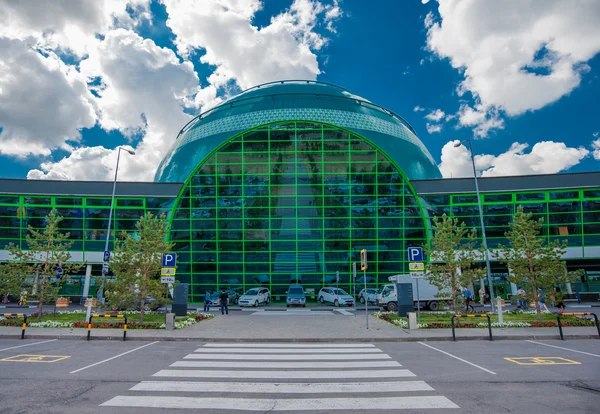
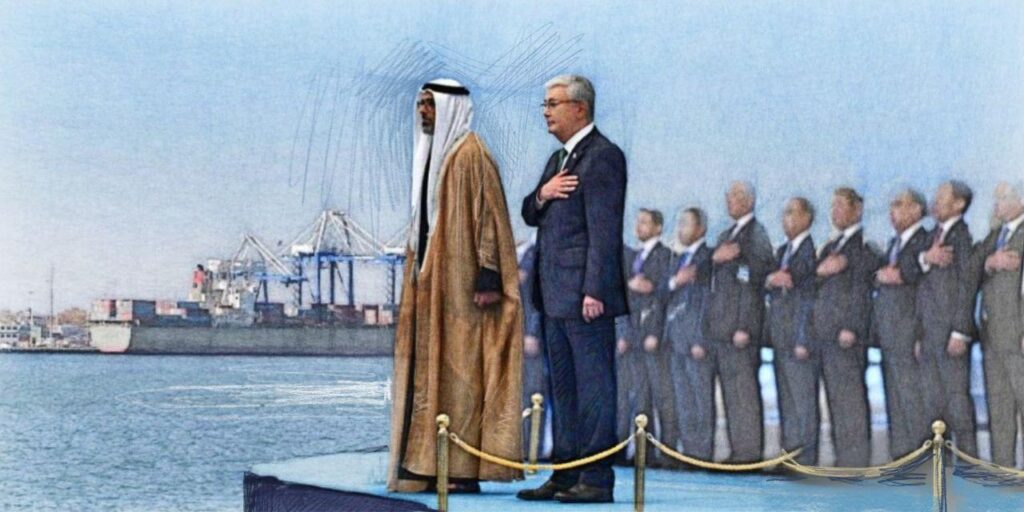
Kazakhstan and the United Arab Emirates (UAE) are taking their long-standing partnership to new heights. President Kassym-Jomart Tokayev hosted Abu Dhabi Crown Prince Sheikh Khalid bin Mohammed bin Zayed Al Nahyan at the Akorda presidential residence, underscoring the deepening ties between the two nations. A Key Middle Eastern Partner Sheikh Khalid’s official visit was marked by a ceremonial welcome and substantive high-level talks. President Tokayev emphasized the growing breadth of the Kazakh-Emirati relationship, which now extends well beyond economics into sectors such as energy, transport, digital technologies, and education. “The UAE is among Kazakhstan’s top ten foreign investors,” Tokayev noted, citing a more than twofold increase in Emirati direct investment in 2024, a record high. During the Crown Prince’s visit, over 20 commercial agreements were signed, totaling approximately $5 billion. These projects are expected to further catalyze bilateral cooperation and open new avenues for mutual investment. Strategic Agreements Following the talks, an official document exchange ceremony was held. Key agreements included: Transport Cooperation - A memorandum between the Kazakh Ministry of Transport and the UAE Ministry of Energy and Infrastructure; Judicial Cooperation - A memorandum between the respective Ministries of Justice; Energy Infrastructure - An agreement between Samruk-Kazyna JSC and Masdar for continuous power supply (up to 500 MW) and energy storage (up to 2,000 MW); Digital Transformation - Agreements between Samruk-Kazyna JSC and AIQ, and QazaqGaz and AIQ, focusing on oil and gas sector digitalization; Financial Collaboration - A memorandum between Samruk-Kazyna JSC and Abu Dhabi Commercial Bank; High-Performance Computing - An agreement to establish a supercomputer cluster with Pre-sight; Maritime Expansion - A protocol between KazMunayGas and Abu Dhabi Ports Group on developing Kazakhstan’s merchant fleet; Healthcare Investment - A memorandum on financing and constructing a maternity hospital in Turkestan; Aviation Infrastructure - An agreement on investing in the Nursultan Nazarbayev International Airport and its surroundings; Green Energy - Announcement of the ratified agreement for a major wind power project. Expanding Cooperation Horizons President Tokayev and Sheikh Khalid also participated in the Kazakhstan-UAE Business Forum, where Tokayev reiterated the significance of expanding trade, economic, and investment ties. He highlighted the UAE’s role as Kazakhstan’s top partner in the Gulf, with cumulative Emirati investment exceeding $4.3 billion. Tokayev underscored his administration’s economic reforms aimed at fostering a more attractive investment climate, including the establishment of the Investment Promotion Council to support foreign businesses. He identified energy, logistics, finance, high technology, and agriculture as priority areas for future cooperation. Institutional and Cultural Engagement During the visit, the leaders toured the Astana International Financial Centre (AIFC), where they were briefed on the operations of the Financial Services Regulatory Committee, the stock exchange, and the International Arbitration Center. Currently, 46 UAE companies are registered residents at the AIFC. The delegation also visited the Sheikh Khalifa bin Zayed Al Nahyan Lyceum No. 84, where they observed students’ progress in Arabic language studies. Later, they attended the Ethnoaul exhibition, showcasing Kazakh cultural heritage. The visit highlighted the shared commitment of Kazakhstan and the UAE...

Visa-Free Deal Under Review After Arrests of Uzbek Citizens in Dubai

The visa-free arrangement between Uzbekistan and the United Arab Emirates could be in jeopardy because of the increase in alleged violations by Uzbek citizens in the emirates, according to Uzbekistan’s Ministry of Foreign Affairs. The leadership of the Dubai Criminal Investigation Department told Uzbek diplomats in a meeting that 15 Uzbek nationals had been detained in an incident and an investigation was underway, Akhror Burkhanov, spokesman for the Uzbek ministry, said on Telegram. Several Uzbek media outlets have reported that two groups of Uzbeks clashed in a street brawl this month and that some of them were stabbed. Some reports said one person was killed. In the meeting between Uzbek and UAE officials, it was noted “that the recent increase in violations committed by Uzbek citizens could affect the visa-free regime between the two countries,” Burkhanov said in the post on Friday. He said the foreign ministry is working with law enforcement agencies on the matter and urged Uzbek citizens “to refrain from actions that tarnish the honor of our compatriots abroad.” In March, a court in Abu Dhabi sentenced three Uzbek citizens to death after they were convicted of abducting and murdering Zvi Kogan, an Israeli-Moldovan rabbi whose body was discovered in the Emirati city of Al Ain in November 2024. A fourth person convicted in the killing was sentenced to life in prison. An emissary for the ultra-Orthodox Chabad Hasidic movement in the UAE, Kogan also served as an aide to his brother-in-law, Levi Duchman, the Chief Rabbi of the UAE, who normalized ties with Israel in late 2020, a move met with skepticism in the UAE and across the wider Muslim world. Israel said the killing of Kogan was an act of terror. Some Uzbek citizens, meanwhile, have encountered problems trying to enter the United Arab Emirates. The visa-free regime between Uzbekistan and the United Arab Emirates started early last year. Citizens can travel to each other´s countries without a visa if they don’t stay any longer than 30 days. “This measure is considered an important step towards enhancing joint cooperation in the fields of politics, economics, culture, education and other areas of common interest,” the UAE’s Ministry of Foreign Affairs said.

Lawyers Challenge Death Sentences of Uzbeks Convicted of UAE Rabbi Murder

Three Uzbek citizens sentenced to death in the United Arab Emirates are at the center of growing international concern over the fairness of their trial and the potential political influences behind the case. On March 30, the Abu Dhabi Federal Court of Appeal handed down death sentences to Olimboy Tohirovich (29), Mahmudjon Abdurahim (29), and Azizbek Komilovich (34), after convicting them of the murder of Zvi Kogan, an Israeli-Moldovan dual national whose body was discovered in the Emirati city of Al Ain in November 2024. A fourth individual received a life sentence for aiding the accused. UAE authorities have linked the case to terrorism. Following the verdict, the Worldwide Lawyers Association (WOLAS), established by lawyers and academics working in Turkiye with the aim of conducting activities in the international arena, raised alarm about potential violations of international legal standards. In a statement, WOLAS cited possible political pressure, opaque legal proceedings, and concerns that confessions may have been obtained under duress. WOLAS has sent formal appeals to the governments of the UAE and Uzbekistan, the UN Office of the High Commissioner for Human Rights, and several UN Special Rapporteurs, including those on extrajudicial executions and torture. The group’s demands include: A comprehensive, impartial review of the case Commutation of the death sentences Assurance of fair trial standards, including access to legal counsel and medical care An independent investigation into allegations of torture The group also urged Uzbekistan to take more robust measures in defending the rights of its nationals abroad. Their recommendations include enhanced consular engagement, legal aid, and proactive diplomatic efforts to mitigate harsh sentences and prevent future incidents. Under UAE law, all death sentences must be reviewed by the Federal Supreme Court and require final approval from the country’s president, providing a potential avenue for clemency or sentence reduction. Uzbekistan’s Ministry of Foreign Affairs confirmed to Kun.uz that it is closely monitoring the case. Ministry spokesperson Akhror Burhonov stated that consular support, legal assistance, and discussions with UAE authorities are ongoing. He emphasized that protecting the rights of Uzbek citizens abroad remains a top government priority. Israeli media have reported that Mossad suspects links between the convicted men and an Iranian organization, though no conclusive evidence has been made public. While WOLAS is not directly representing the defendants, it asserts its role as an international legal watchdog advocating for due process and human rights. The organization has asked the UN to conduct an inquiry, delay any execution until all legal reviews are exhausted, and document the case in upcoming reports on global human rights issues.

Three Uzbeks Sentenced to Death in UAE for Murder of Israeli-Moldovan Rabbi

A court in the United Arab Emirates (UAE) has sentenced three Uzbek nationals to death for the murder of Rabbi Zvi Kogan, a dual citizen of Israel and Moldova. The verdict, issued on March 30, has not yet been publicly confirmed by UAE authorities, according to The Times of Israel. Reports of the sentencing began circulating on social media, including an audio recording purportedly featuring one of the convicted men informing his family of the court’s decision. In the recording, the man urges his mother and sister to trust in Allah, ask for forgiveness on their behalf, and remain patient. The recording’s authenticity has not been independently verified. Israeli diplomatic sources, however, have confirmed that the UAE has indeed imposed the death penalty. The three convicts, Olympi Tohirovich, 28; Makhmodjon Abdulraheem, 28; and Azizbek Kamilovich, 33, were arrested in Turkey shortly after the crime and later extradited to the UAE. Uzbekistan’s Ministry of Foreign Affairs has acknowledged the sentencing but noted that the legal process is still underway. “This is not yet the final verdict. In the UAE, the death penalty is automatically appealed and sent to the Criminal Chamber of the Federal Supreme Court,” ministry spokesperson Ahror Burhonov told Kun.uz. The government of Uzbekistan has not publicly commented on the case’s merits or the broader diplomatic implications. Rabbi Kogan, 28, was a member of the Chabad-Lubavitch movement and had been living in the UAE for several years. He was reported missing in Dubai in November 2024, and his body was later found in Al Ain, near the Omani border. According to The Wall Street Journal, the suspects attempted to kidnap Kogan and transport him to Oman. Some of the perpetrators reportedly fled to Turkey following the incident. The Israeli government has denounced the killing as an “anti-Semitic terrorist attack.” Rabbi Kogan had played a key role in fostering Jewish life in the UAE following the 2020 Abraham Accords, which normalized relations between Israel and several Arab states. He was instrumental in establishing kosher food services and founding the country’s first Jewish education center.

Kazakhstan and the UAE Are Building a Geoeconomic Powerhouse Spanning Asia and the Gulf

Kazakhstan President Kassym-Jomart Tokayev’s recent mid-January visit to the United Arab Emirates (UAE), to attend the Abu Dhabi Sustainability Week (ADSW) Summit, underscores the strategic importance both nations place on their bilateral ties. ADSW is a prominent global platform dedicated to accelerating sustainable development and promoting international cooperation on the global environmental agenda. The 2025 summit — with the theme, “Nexus of Next: Supercharging Sustainable Progress” — was designed specifically to explore advanced technologies such as artificial intelligence, renewable energy, and innovative sustainability solutions. As leader of the most dynamic of the Central Asian economies, President Tokayev’s presence signaled his country’s ambition to play a more prominent role in addressing environmental challenges at an international level. In his keynote speech, Tokayev addressed environmental issues that are particularly critical for Kazakhstan, including desertification, biodiversity loss, water scarcity, and food security. He emphasized his country’s multifaceted approach to these challenges, which includes digital technologies, large-scale infrastructure projects, and the development of nuclear energy as a low-carbon solution. Kazakhstan has recently launched initiatives, such as expanding solar and wind farms and implementing advanced irrigation systems to combat desertification. Tokayev also highlighted Kazakhstan’s commitment to meeting its renewable energy targets, aiming to generate 15% of its electricity from renewables by 2030, in partnership with global leaders in green technology. Overall, the ADSW Summit provided a platform for Kazakhstan to engage with international partners, share its vision for sustainable development, and explore collaborative opportunities to address global environmental challenges. Kazakhstan’s efforts include the development of the Mohammed bin Rashid Al Maktoum Solar Park, which will have a capacity of 5,000 megawatts (MW) by 2030, and participation in the Space-D programme, which enhances operational performance through nano-satellites. In particular, President Tokayev met with UAE President Sheikh Mohamed bin Zayed Al Nahyan to discuss bilateral relations. The two leaders agreed to focus on a specific economic agenda — focused on trade, investment, and sustainable development — to create positive bilateral trade dynamics. Their Joint Declaration on Strategic Investment Projects in these fields was also highlighted. Kazakhstan and the UAE have developed a dynamic and multifaceted partnership over the past three decades. Since establishing diplomatic relations in 1993, the UAE has become Kazakhstan’s leading strategic partner in the Arab world. Early cooperation focused on trade and investment but has since expanded to include sectors such as petrochemicals, energy, transport, logistics, agriculture, and aerospace. Key milestones include the establishment of direct flight routes between the two countries and the signing of long-term investment agreements in the mid-2000s. Tokayev noted that direct investment from the UAE into Kazakhstan more than doubled from 2023 to 2024, placing the country among the top ten largest foreign investors in Kazakhstan. A focal point of their discussion was the goal of increasing bilateral trade turnover to $1 billion. In this context, the Dubai International Chamber has established a representative office in Kazakhstan to boost trade and investment opportunities further still. For several years, the UAE has been expanding its cooperation with the Greater Caspian...

Mirziyoyev: Central Asia Can Become a Global Green Energy Hub

President Shavkat Mirziyoyev of Uzbekistan delivered a keynote address at the Sustainability Week Summit in Abu Dhabi on January 14. The event, hosted by UAE President Sheikh Mohammed Al Nahyan, gathered global leaders, including the presidents of Azerbaijan and Kazakhstan, the prime ministers of Italy, Malaysia, and Finland, as well as heads of international organizations and financial institutions. The Urgency of Transitioning to a Green Economy In his speech, Mirziyoyev emphasized the critical need for a green economic transition, stating: “The diversification of energy sources and a drastic reduction of hydrocarbons are now critical conditions for mitigating climate change and ensuring global security.” Mirziyoyev noted that Uzbekistan has declared 2025 as the “Year of Environmental Protection and Green Economy.” The country’s strategic goal, under the "New Uzbekistan" framework, is to achieve sustainable economic growth through environmental sustainability and resource conservation. Low-Carbon Development Goals Outlining Uzbekistan’s low-carbon development strategy, Mirziyoyev announced plans to integrate green finance into 50% of investment projects over the next five years; reduce greenhouse gas emissions by 35% by 2030; "Green" at least 30% of urban areas; and ensure that 100% of agricultural lands adopt water-saving technologies. Mirziyoyev also highlighted Uzbekistan’s achievements in renewable energy, stating: “In the past five years, we have attracted almost $20 billion in foreign investments, commissioning modern energy capacities of 9.6 gigawatts. This includes 14 solar and wind power plants with a total capacity of 3.5 gigawatts.” Uzbekistan is currently collaborating with foreign partners on over 50 major energy projects worth $26 billion, aiming to reach a total energy capacity of 24 gigawatts by 2030. By that time, renewable energy is expected to account for 54% of the country’s total energy generation. Regional Collaboration and Global Ambitions Mirziyoyev underscored the importance of regional cooperation, saying: “We aim to turn Central Asia into one of the global centers for green economy and clean energy.” He highlighted a multilateral agreement with Kazakhstan and Azerbaijan to export green energy to Europe and restore the Great Silk Road through energy connectivity. The president shared success stories of partnerships with companies like Masdar, which have generated 1.5 gigawatts of renewable energy in Uzbekistan. Additional projects are underway to create 1.6 gigawatts of generating capacity and build energy storage systems with a capacity of about 520 megawatts per hour. He also noted Uzbekistan’s untapped renewable energy potential, citing the ability to produce 500 gigawatts of solar, 100 gigawatts of wind, and 10 gigawatts of hydro energy. Advancing Green Research and Innovation Mirziyoyev referenced the establishment of the Green University in Tashkent - which will serve as a hub for global scientific collaboration - and proposed creating an international research network focused on combating land degradation and desertification. He also reiterated Uzbekistan’s initiatives introduced at COP-28 and COP-29, including the creation of an International Center for Damage and Loss Assessment and a regional hub for water-saving technologies. “We are ready to begin practical work in these areas with all our partners,” he stated. A Nationwide Green Movement Concluding his address,...