
• KGS/USD = 0.01144 0%
  • KZT/USD = 0.00201 0%
  • TJS/USD = 0.10470 -0.19%
  • UZS/USD = 0.00008 0%
  • TMT/USD = 0.28490 0%
  • KGS/USD = 0.01144 0%
  • KZT/USD = 0.00201 0%
  • TJS/USD = 0.10470 -0.19%
  • UZS/USD = 0.00008 0%
  • TMT/USD = 0.28490 0%
  • KGS/USD = 0.01144 0%
  • KZT/USD = 0.00201 0%
  • TJS/USD = 0.10470 -0.19%
  • UZS/USD = 0.00008 0%
  • TMT/USD = 0.28490 0%
  • KGS/USD = 0.01144 0%
  • KZT/USD = 0.00201 0%
  • TJS/USD = 0.10470 -0.19%
  • UZS/USD = 0.00008 0%
  • TMT/USD = 0.28490 0%
  • KGS/USD = 0.01144 0%
  • KZT/USD = 0.00201 0%
  • TJS/USD = 0.10470 -0.19%
  • UZS/USD = 0.00008 0%
  • TMT/USD = 0.28490 0%
  • KGS/USD = 0.01144 0%
  • KZT/USD = 0.00201 0%
  • TJS/USD = 0.10470 -0.19%
  • UZS/USD = 0.00008 0%
  • TMT/USD = 0.28490 0%
  • KGS/USD = 0.01144 0%
  • KZT/USD = 0.00201 0%
  • TJS/USD = 0.10470 -0.19%
  • UZS/USD = 0.00008 0%
  • TMT/USD = 0.28490 0%
  • KGS/USD = 0.01144 0%
  • KZT/USD = 0.00201 0%
  • TJS/USD = 0.10470 -0.19%
  • UZS/USD = 0.00008 0%
  • TMT/USD = 0.28490 0%

Viewing results 1 - 6 of 10

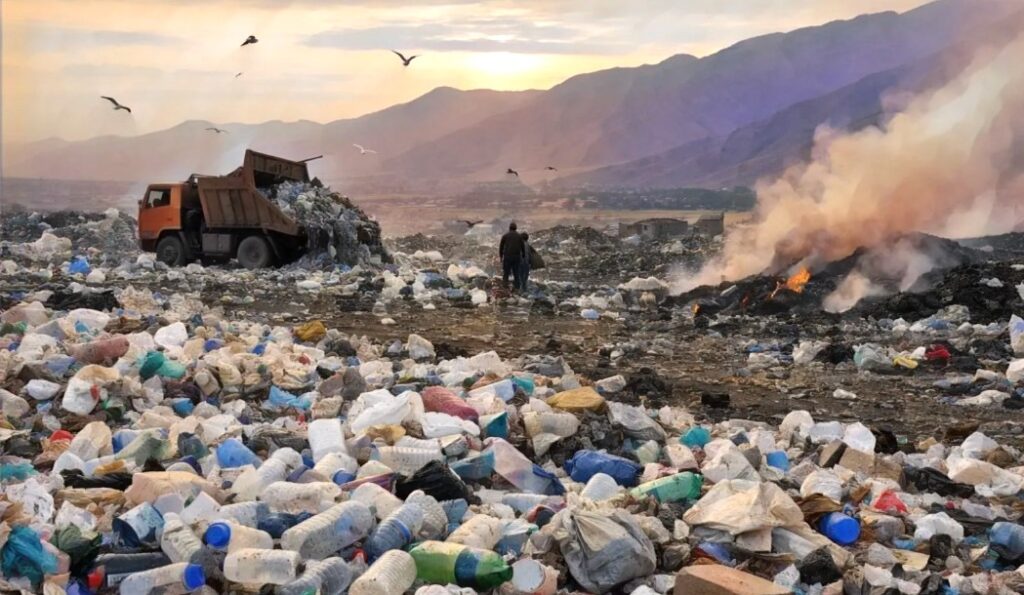
Tajikistan Is Drowning in Plastic: Inside a Waste System Under Strain

According to domestic sector-specific sources, more than nine million tonnes of municipal solid waste (MSW) are generated annually in Tajikistan, of which around 322,000 tonnes is plastic. The key feature of plastic waste is its extreme resistance to decomposition; it can persist in natural environments for decades or even centuries, accumulating in soil and water bodies. However, estimates of total waste generation vary widely depending on the source, with international organizations offering more conservative figures. The United Nations Environment Programme (UNEP), for instance, reports approximately two million tonnes of formally collected municipal waste generated annually in Tajikistan. This discrepancy is likely due to differing accounting methodologies. National statistics typically include waste from unauthorized dumps and the informal sector, while international estimates often rely on formally collected and officially documented waste. Still, even the most conservative figures highlight the significant environmental burden posed by Tajikistan’s waste-management system. Tajikistan’s Position in International Waste Rankings Waste accumulation and limited recycling capacity are reflected in global assessments. According to domestic reporting citing the 2024 Mismanaged Waste Index (MWI), 87.1% of Tajikistan’s waste is either not collected through organized systems or is disposed of in violation of environmental standards. This would place the country among those with the most vulnerable waste-management systems. In practice, this means waste is often dumped at unauthorized sites, openly burned, or dispersed into the environment. These practices place pressure on soil, water resources, and air quality, while also posing long-term risks to public health. This crisis is unfolding amid a global plastic-waste emergency. Even in countries with advanced recycling systems, the proportion of recycled plastic remains low. UNEP estimates that only around 9% of all plastic ever produced has been recycled; the rest remains in the environment. Regional Disparities: Cities vs. Rural Areas Tajikistan’s domestic statistics divide the country into three groups based on waste generation. The “Mega” group includes the largest cities and adjacent areas (e.g., Dushanbe, Khujand), home to roughly 4.2 million people. Average daily waste generation here is 1.013 kg per person, resulting in up to an estimated 148,000 tonnes of plastic waste annually. The “Medium” group comprises 10 mid-sized cities (e.g., Bokhtar, Kulob, Kanibadam), with a combined population of 1.99 million. Daily per capita waste generation in this group averages 0.902 kg, leading to an estimated 62,000 tonnes of plastic annually. In rural areas and smaller districts, with over 4 million residents, waste generation averages 0.79 kg per person per day. While the plastic share here is less precise, these regions still generate an estimated 100,000 tonnes of plastic waste per year. It is in these smaller settlements that waste-management infrastructure is most deficient. While cities have basic municipal services and landfills, many rural areas lack even waste-collection containers. As a result, waste is often dumped in ravines, rivers, or burned in backyards, meaning much of it goes unrecorded in official statistics and may significantly exceed documented levels. Where the Plastic Goes: Disposal, Loss, and Recycling Most plastic waste in Tajikistan is either buried or left in...


Tashkent Launches Emergency Measures as Air Pollution Worsens

Tashkent is experiencing a significant decline in air quality, prompting President Shavkat Mirziyoyev to sign a decree on November 25 implementing urgent environmental measures. According to the presidential press service, the decree establishes a special commission to take immediate steps to stabilize the situation. The decision follows a high-level meeting on November 24 chaired by Saida Mirziyoyeva, head of the Presidential Administration, to discuss “urgent measures to improve the ecological situation in Tashkent.” Experts at the meeting presented a series of short, medium, and long-term proposals, ranging from immediate restrictions to structural reforms aimed at preventing future pollution spikes. The new plan includes enhanced environmental monitoring, stricter controls on major polluters, tighter regulations for construction sites, and citywide greening initiatives. Authorities also intend to develop a modern air quality assessment system supported by new scientific infrastructure. A key component of the initiative is the establishment of a specialized laboratory under the State Committee for Ecology to analyze sources of PM2.5 pollution, one of the primary contributors to the current smog. To expedite the process, the decree exempts a broad range of imported equipment from customs duties. These exemptions apply to automated monitoring stations, dust-gas filtration systems, localized water-treatment devices, and thousands of quartz filters required for sampling. The measure also extends to household air purifiers brought into the country by individuals and businesses, as demand for such devices has surged. In response to the prolonged dry conditions, the Muslim Board of Uzbekistan announced the performance of istisqo, a traditional Islamic prayer for rain, to be held on November 28 following Friday prayers in mosques nationwide. “In Islamic history, istisqo has been performed during periods of drought, and its benefits have been noted in hadith literature,” the Board stated. Teachers and students from Islamic institutions will also recite the entire Sahih of Imam al-Bukhari before the prayer. This call for collective prayer comes as climate change continues to intensify environmental stress in Uzbekistan. According to a newly released Atlas of Environmental Change by the UN Environment Programme (UNEP), Uzbekistan’s average annual temperature has risen by 1.6°C over the past 60 years, nearly three times the global average of 0.6°C. In the Aral Sea region, warming has reached 1.8 to 2.5°C, contributing to more frequent droughts, particularly in summer and autumn, and placing further strain on already limited water resources. UNEP describes Uzbekistan’s water resources as “among the country’s most valuable and vulnerable,” noting that they depend almost entirely on sources located outside its borders. The atlas highlights the increasing importance of integrated water-resource management and cross-border cooperation, which officials say have already helped address local water-security issues. The agency also points to the adoption of water-saving technologies such as drip irrigation, which are critical to sustaining the country’s irrigated agricultural sector, the backbone of many rural economies. Despite demographic and environmental pressures, the report finds that Uzbekistan has achieved near self-sufficiency in food production. Reforestation is also a national priority. UNEP praises the Yashil Makon (Green Space) initiative, launched in 2021...

Central Asia Faces Billions in Climate Adaptation Costs, UNEP Warns

Central Asia ranks among the most climate-vulnerable regions in the world and will require tens of billions of dollars to adapt to the accelerating effects of global warming, according to a new report by the United Nations Environment Programme (UNEP). The report identifies Central Asia as one of the fastest-warming areas globally. However, current adaptation funding remains drastically insufficient to meet the growing threat. A Region Under Threat Developing countries worldwide, including those in Central Asia, will need up to $310 billion annually by 2035 to adapt to climate change. UNEP highlights the region’s specific challenges: rapidly melting glaciers, widespread soil degradation, worsening water scarcity, and increasing aridity, all of which endanger food security and energy sustainability. “If we don't start investing in adaptation now, we will face increasing costs every year,” said UNEP Executive Director Inger Andersen. Tajikistan and Kyrgyzstan are particularly exposed, with more than 70% of their populations employed in agriculture, which depends heavily on mountain rivers fed by glacial runoff. According to UNEP, glacier volumes in the region have shrunk by over 30% in the past decade. The changing flow of the Amu Darya and Syr Darya rivers threatens not only agriculture but also the hydropower sectors in both countries. Diminished access to water could lead to socio-economic instability in vulnerable communities. Funding Gap Widens UNEP estimates that developing countries in Europe and Central Asia need roughly $51 billion annually for adaptation. Yet, only a fraction of that figure is currently being met. Tajikistan, for example, has outlined total climate financing needs of $8 billion by 2030 and $17 billion by 2050. In Uzbekistan, the cost of modernizing irrigation and water management systems alone is expected to approach $10 billion by 2030. UNEP has urged governments in the region to accelerate the updating of national adaptation plans, many of which have not been revised in over a decade, and to enhance cooperation in the Amu Darya and Syr Darya basins. Priority areas include investment in irrigation infrastructure, early warning systems, and flood control. From Glaciers to Farms In response to UNEP’s findings, international organizations have begun to fund targeted adaptation initiatives. The Green Climate Fund, for instance, has approved $250 million for the From Glaciers to Farms program, spearheaded by the Asian Development Bank. The project aims to strengthen agricultural and water resilience in glacier-dependent countries in Central Asia, the South Caucasus, and parts of South Asia. It covers four major river basins: the Naryn and Panj in Central Asia, the Kura in the South Caucasus, and the Swat in Pakistan, benefiting approximately 13 million people. Funding will support the development of irrigation networks, reservoir construction, glacier monitoring, and early warning systems. The program also places a strong emphasis on empowering women entrepreneurs in agriculture and improving the financial sustainability of rural communities.

New UNEP Atlas Highlights Kyrgyzstan’s Climate Vulnerability

Amid intensifying climate impacts, the UN Environment Programme (UNEP) released its Atlas of Environmental Change for Kyrgyzstan on March 26, offering a comprehensive assessment of the country's growing environmental risks and response strategies. Warming at Twice the Global Rate According to the Atlas, average annual temperatures in Kyrgyzstan have increased by 1.2°C between 1960 and 2023, double the global average of 0.6°C. This accelerated warming has exacerbated water scarcity and the likelihood of natural disasters, a trend expected to intensify in the coming decades. While water availability declines, demand continues to rise, particularly in agriculture. The report stresses the urgent need for robust climate adaptation measures, including reducing irrigation losses, upgrading early warning systems, and improving pasture management. Currently, an estimated 70% of Kyrgyzstan’s pastures are degraded. Declining Water Resources Hydropower accounts for up to 93% of Kyrgyzstan’s electricity generation. But as the climate shifts, rainfall patterns, snow cover, and glaciers are changing, threatening the water inflows that power these systems. Water flow into the Toktogul Reservoir, which feeds the country’s largest hydroelectric plant, could decrease by as much as 18.8% by 2050. This poses a serious threat not only to energy security but also to regional cooperation, as Kyrgyzstan lies upstream of many major Central Asian rivers. The report underscores the importance of transboundary water management. Disasters on the Rise Natural disasters are also becoming more frequent and severe. On average, Kyrgyzstan experiences around 200 emergencies per year, 90% of which are linked to natural hazards such as floods, earthquakes, mudslides, rockfalls, and avalanches. In 2022 alone, nearly 150 lives were lost to natural disasters. Between 2012 and 2018, the average annual economic loss from such events reached $27 million. Conservation Achievements Despite the mounting risks, the Atlas also highlights Kyrgyzstan’s environmental progress. Forest cover has increased from 6.2% in 2000 to 6.9% in 2023, a significant feat given the country's mountainous terrain. Protected areas have expanded from 0.5 million hectares in 2000 to 1.5 million hectares, with plans to increase this to 10% of national territory by 2040, safeguarding up to 65% of species listed on the IUCN Red List. All forests in Kyrgyzstan are protected from commercial logging. Notably, the creation of the Khan Teniri Nature Park has expanded snow leopard habitat in the Central Tien Shan mountains by 40%. A Tool for Climate Policy The UNEP Atlas offers Kyrgyz policymakers a vital evidence base for sustainable environmental management and climate adaptation. It is designed to guide future strategies as the country faces mounting ecological and socio-economic pressures.