
• KGS/USD = 0.01144 0%
  • KZT/USD = 0.00201 0%
  • TJS/USD = 0.10581 0%
  • UZS/USD = 0.00008 0%
  • TMT/USD = 0.28571 0%
  • KGS/USD = 0.01144 0%
  • KZT/USD = 0.00201 0%
  • TJS/USD = 0.10581 0%
  • UZS/USD = 0.00008 0%
  • TMT/USD = 0.28571 0%
  • KGS/USD = 0.01144 0%
  • KZT/USD = 0.00201 0%
  • TJS/USD = 0.10581 0%
  • UZS/USD = 0.00008 0%
  • TMT/USD = 0.28571 0%
  • KGS/USD = 0.01144 0%
  • KZT/USD = 0.00201 0%
  • TJS/USD = 0.10581 0%
  • UZS/USD = 0.00008 0%
  • TMT/USD = 0.28571 0%
  • KGS/USD = 0.01144 0%
  • KZT/USD = 0.00201 0%
  • TJS/USD = 0.10581 0%
  • UZS/USD = 0.00008 0%
  • TMT/USD = 0.28571 0%
  • KGS/USD = 0.01144 0%
  • KZT/USD = 0.00201 0%
  • TJS/USD = 0.10581 0%
  • UZS/USD = 0.00008 0%
  • TMT/USD = 0.28571 0%
  • KGS/USD = 0.01144 0%
  • KZT/USD = 0.00201 0%
  • TJS/USD = 0.10581 0%
  • UZS/USD = 0.00008 0%
  • TMT/USD = 0.28571 0%
  • KGS/USD = 0.01144 0%
  • KZT/USD = 0.00201 0%
  • TJS/USD = 0.10581 0%
  • UZS/USD = 0.00008 0%
  • TMT/USD = 0.28571 0%
24 February 2026

Viewing results 1 - 6 of 4

Seventeenth-Century Gilded Vessel Joins Permanent Exhibition at Uzbekistan’s Islamic Civilization Center

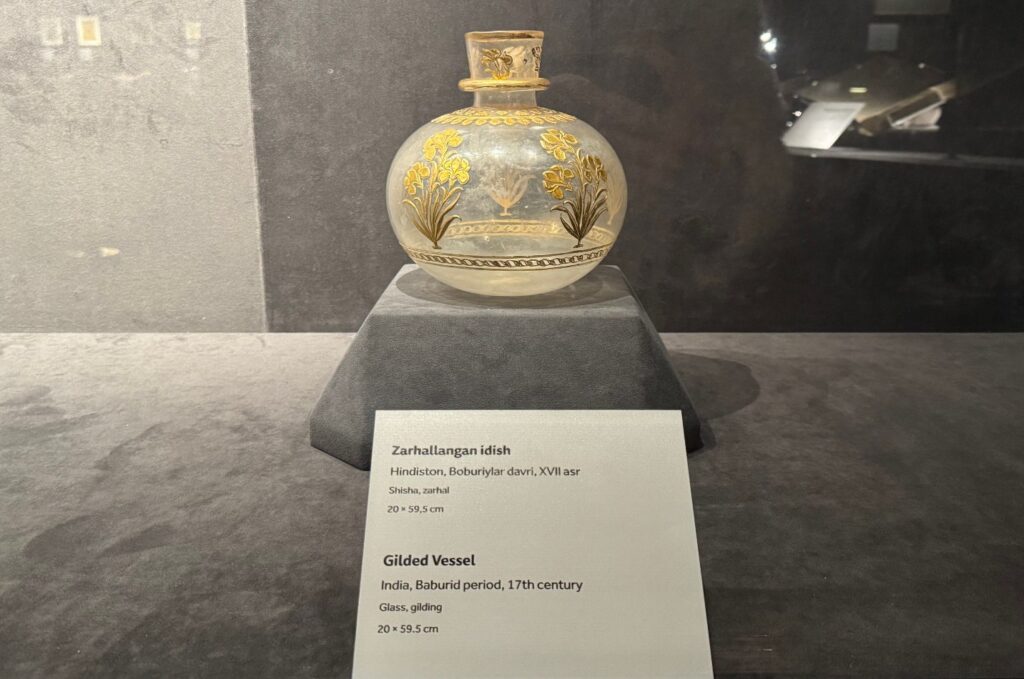
A rare gilded decorative vessel dating to the seventeenth century has been added to the permanent exhibition of the Islamic Civilization Center in Uzbekistan, the Center announced. Acquired from the British auction house Christie’s at the initiative of the president, the artifact is being presented to the public for the first time in Tashkent. According to the Islamic Civilization Center, the vessel is notable for its refined form, gold-leaf ornamentation, and exceptional craftsmanship, offering insight into the aesthetic sensibilities of its time. Experts describe it as a rare luxury object intended for elite or courtly use, rather than for everyday function. Rustam Jabborov, Scientific Secretary of the Center, said the vessel is approximately 400 years old and features a carefully balanced design. “The object has a spherical body with cylindrical workmanship. The lower section is adorned with a braided floral ornamental band, while five blooming yellow lotus flowers are arranged above it in a circular pattern to create compositional unity,” Jabborov explained. He noted that the surface of the vessel was polished and gilded, with gold-leaf decorations that have retained their artistic appeal over centuries. “The gilding enhances both the sense of splendor and the impression of antiquity. The yellow lotus flower, used as the central decorative motif, adds both symbolic and aesthetic meaning to the overall composition,” he said. According to Jabborov, the manufacturing technique, ornamental style, and state of preservation all attest to the object’s historical significance. The Islamic Civilization Center stated that the inclusion of the vessel in its exhibition reinforces its status as a rare cultural artifact recognized at the international level. In February last year, the Center announced plans to host an international exhibition in Tashkent featuring Uzbek cultural masterpieces housed in Italian museums and private collections. The event is scheduled to coincide with the opening of the Center for Islamic Civilization. As part of those preparations, a delegation led by the Center’s director, Firdavs Abdukhalikov, visited Italy, where they held talks with museum representatives and private collectors who expressed support for the project. Elmira Gul, scientific coordinator of the Cultural Heritage of Uzbekistan in the Collections of the World project, noted that collections of Uzbek artifacts in Italian museums have already been documented in published volumes, reflecting the global reach of Uzbekistan’s cultural legacy.


Uzbek Artifacts from Italian Museums and Private Collections to be Exhibited in Tashkent

A collection of Uzbek cultural heritage masterpieces housed in Italian museums and private collections will be showcased at an upcoming exhibition in Tashkent. The event coincides with the opening of the Center for Islamic Civilization in Uzbekistan. As part of the preparations, a delegation from the Center for Islamic Civilization, led by its director Firdavs Abdukhalikov, visited Italy in mid-February. During the visit, negotiations were held with representatives of several museums and private collectors, who expressed support for the international exhibition. Over the centuries, Uzbek artifacts have become part of prestigious museum and private collections worldwide. “Collections of Uzbek relics housed in Italian museums were published in the 35th volume of the multimedia project Cultural Heritage of Uzbekistan in the Collections of the World. This initiative, supported by the state and business sector, has already resulted in the publication of 80 volumes documenting Uzbek cultural monuments abroad,” said Elmira Gul, the project’s scientific coordinator. Several renowned Italian institutions have contributed artifacts to the exhibition, including: University of Bologna Library - home to a Hebrew manuscript by Abu Ali ibn Sina (Avicenna). Giuseppe Tucci National Museum of Oriental Art (Rome). Museum of Asian Art (Turin). Stibbert Museum (Florence). Mudec Museum of Cultures (Milan). Antonio Ratti Textile Foundation (Como). Private collection of Milanese collectors Alberto and Anna Levi. According to the Center for Islamic Civilization, the exhibition will feature Afrasiab ceramics with epigraphic inscriptions, Medieval metalwork from Khorasan and Maverannahr, including a legendary bowl of the Karakhanid rulers, and Uzbek textile masterpieces from the 19th and early 20th centuries. This exhibition marks a significant step in promoting Uzbekistan’s rich cultural history on the international stage.