


Put the Needle on the Record: Anvar Kalandarov on Rescuing Soviet Central Asia’s Lost Sounds
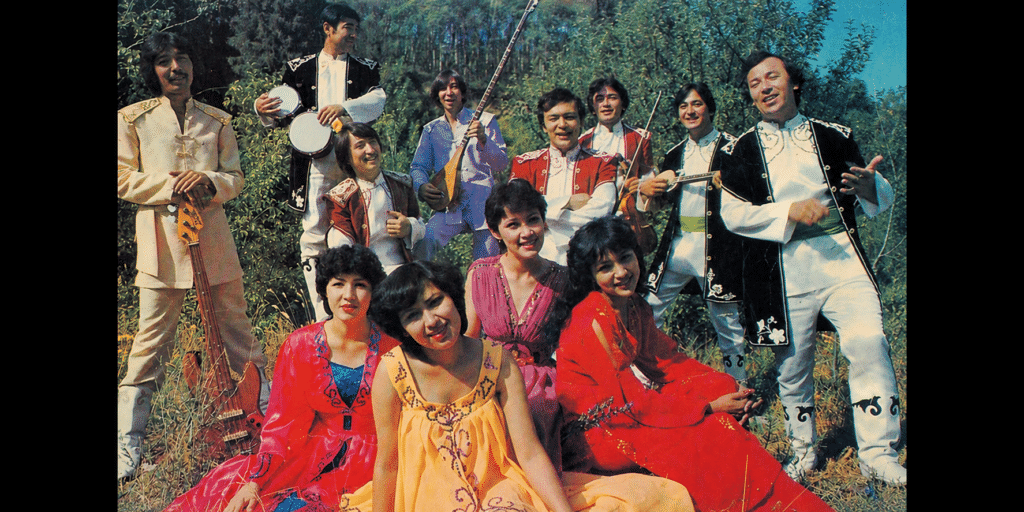
For decades, some of Soviet Central Asia’s most inventive recordings survived in an awkward limbo. The music existed, but often on ageing vinyl, scattered tapes, private collections, and copies traded amongst collectors at increasingly extortionate prices. The musicians themselves could be difficult to trace, while the legal ownership of recordings made under the Soviet system was rarely straightforward. Tashkent-based archivist, collector, and producer Anvar Kalandarov has made that ambiguity part of his work. He runs Maqom Soul Records, an Uzbek label devoted to bringing overlooked Central Asian recordings back into circulation. His work ranges from Soviet-era jazz and Uyghur folk rock to music that resists easy classification altogether. [caption id="attachment_57434" align="aligncenter" width="1740"] Anvar Kalandarov holding Synthesizing the Silk Roads; image courtesy of the subject.[/caption] Kalandarov was one of the curators behind Synthesizing the Silk Roads: Uzbek Disco, Tajik Folktronica, Uyghur Rock & Tatar Jazz from 1980s Soviet Central Asia, released by Ostinato Records in 2024. The Times of Central Asia previously traced how wartime evacuation, Soviet recording infrastructure, and Tashkent’s role as a Silk Road crossroads helped create the unusual musical environment captured on that compilation. His more recent projects include Digging Central Asia: Musical Archaeology Along the Silk Road, a collection spanning recordings from the 1970s to the early 1990s, and Maqom Soul’s reissue of Oleg Gotskozik Quintet’s Oriental Suite. Originally issued by Melodiya, the Soviet state record label, in 1979, Oriental Suite fused jazz with Central Asian modal ideas and was recorded at Tashkent’s Gramrecord studio. https://www.youtube.com/watch?v=pTQgbjMNO74 The work is a fusion of archaeology and restoration, with the twists of a mystery story. Kalandarov spoke to The Times of Central Asia about how these recordings are found and given a new lease on life decades after they were first made. TCA: When you decide to reissue a Soviet-era Central Asian recording, where does the process usually begin, and how do you locate the best surviving source material when original masters may be scattered or missing? Kalandarov: It’s different every time. Sometimes I come across the music first; it catches my attention, and only then does the real work begin - finding out who recorded it, where the musicians or their families are today, who holds the rights, and whether the original recordings still exist. In a way, every project becomes a small detective story, because you’re often looking for something that most people have already forgotten about. It’s the same with master tapes. Some recordings have survived in our state archives, while others are still with the musicians or their families, and sometimes you have to look for completely different sources. Of course, the ideal situation is to find the original master, but that isn’t always possible. Tracking down the best surviving source can become a major part of the reissue process itself. [caption id="attachment_57431" align="aligncenter" width="1460"] Anvar Kalandarov; image courtesy of the subject.[/caption] TCA: How difficult is it to establish who holds the rights to these recordings today, particularly when musicians, composers, Soviet state labels, archives, and...
