
• KGS/USD = 0.01144 0%
  • KZT/USD = 0.00204 0%
  • TJS/USD = 0.10435 0%
  • UZS/USD = 0.00008 0%
  • TMT/USD = 0.28571 0%
  • KGS/USD = 0.01144 0%
  • KZT/USD = 0.00204 0%
  • TJS/USD = 0.10435 0%
  • UZS/USD = 0.00008 0%
  • TMT/USD = 0.28571 0%
  • KGS/USD = 0.01144 0%
  • KZT/USD = 0.00204 0%
  • TJS/USD = 0.10435 0%
  • UZS/USD = 0.00008 0%
  • TMT/USD = 0.28571 0%
  • KGS/USD = 0.01144 0%
  • KZT/USD = 0.00204 0%
  • TJS/USD = 0.10435 0%
  • UZS/USD = 0.00008 0%
  • TMT/USD = 0.28571 0%
  • KGS/USD = 0.01144 0%
  • KZT/USD = 0.00204 0%
  • TJS/USD = 0.10435 0%
  • UZS/USD = 0.00008 0%
  • TMT/USD = 0.28571 0%
  • KGS/USD = 0.01144 0%
  • KZT/USD = 0.00204 0%
  • TJS/USD = 0.10435 0%
  • UZS/USD = 0.00008 0%
  • TMT/USD = 0.28571 0%
  • KGS/USD = 0.01144 0%
  • KZT/USD = 0.00204 0%
  • TJS/USD = 0.10435 0%
  • UZS/USD = 0.00008 0%
  • TMT/USD = 0.28571 0%
  • KGS/USD = 0.01144 0%
  • KZT/USD = 0.00204 0%
  • TJS/USD = 0.10435 0%
  • UZS/USD = 0.00008 0%
  • TMT/USD = 0.28571 0%

Viewing results 1 - 6 of 8

Uzbekistan and United States to Establish Investment Platform

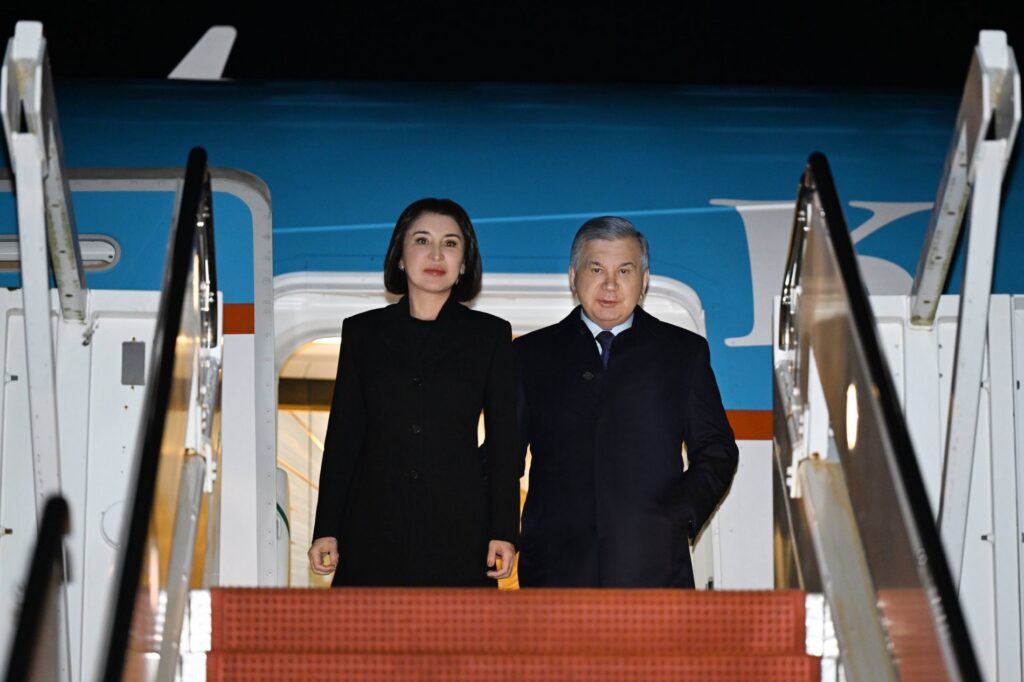
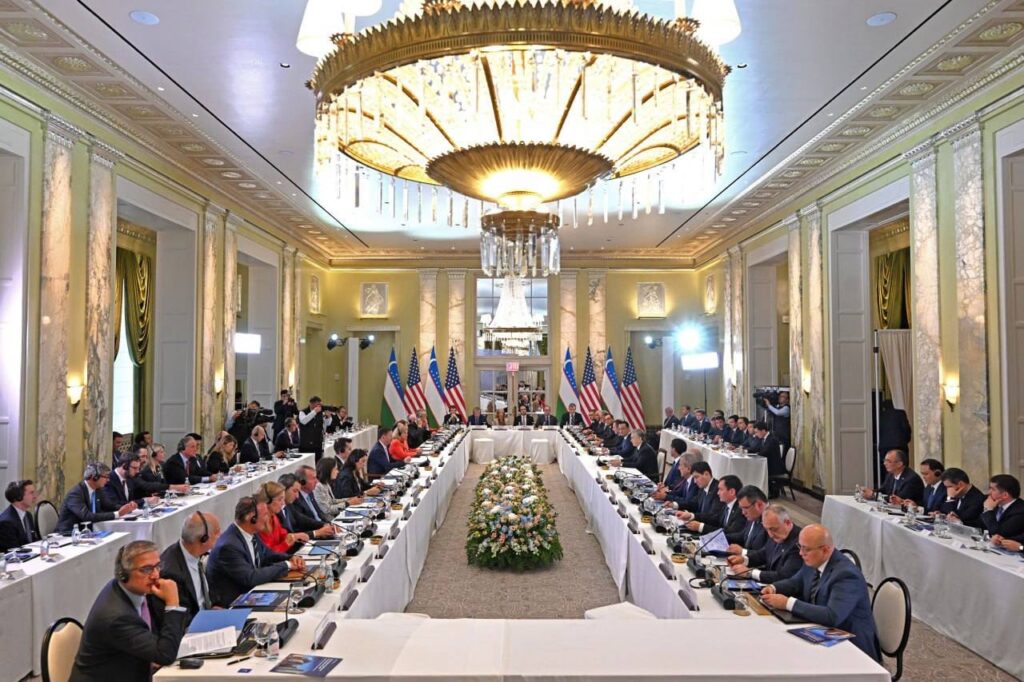
Shavkat Mirziyoyev has arrived in Washington with his spouse on a working visit that includes participation in the first summit of the Board of Peace and a series of business engagements aimed at strengthening bilateral economic ties. According to the presidential press service, the visit is focused on expanding trade, investment, and financial cooperation with U.S. partners. As part of his program in Washington, Mirziyoyev met with John Jovanovic, President and Chairman of the Export-Import Bank of the United States, and Ben Black, Chief Executive Officer of the U.S. International Development Finance Corporation. The discussions centered on expanding financial support for priority industrial and infrastructure projects in Uzbekistan. Officials noted that negotiations held last year with U.S. President Donald Trump gave new impetus to trade and investment cooperation. In particular, the two sides reviewed progress in supporting the activities of the bilateral Business Council and advancing plans to launch an Investment Platform intended to promote major projects on a systematic basis. Cooperation with the Export-Import Bank is expected to include increased financing for large-scale industrial and infrastructure initiatives, as well as assistance with the supply of high-technology equipment. During talks with the Development Finance Corporation, emphasis was placed on strengthening investment mechanisms and facilitating the corporation’s participation in national and regional projects, including the development of Uzbekistan’s financial market and energy sector. At the conclusion of the meetings, the parties exchanged an Agreement on the Establishment of an Investment Platform between Uzbekistan and the United States in the presence of the Uzbek president. The current visit builds on steps taken last November, when Uzbekistan announced the creation of the Uzbekistan-U.S. Business and Investment Council. The body was formalized by presidential decree following Mirziyoyev’s official visit to Washington within the C5+1 framework. The council is jointly chaired by senior representatives of both countries and is designed to serve as an institutional mechanism for deepening commercial cooperation. During his Washington meetings, Mirziyoyev also invited the American side to participate in the upcoming Tashkent International Investment Forum, underscoring continued efforts to attract U.S. business engagement in Uzbekistan’s economic reforms.
Washington and Tashkent Push for More Trade and Investment

Speaking at the United Nations in New York on September 23, President Mirziyoyev of Uzbekistan made it clear that he no longer adheres to his predecessors’ post-Soviet policies of isolation and ‘go-it-alone’ economic development strategy - those days are over. Uzbekistan today - or so the evidence suggests - is more open for business than at any time in its history, with the caveat that deals must be win-win, strategic, fair, and reciprocal. Though it’s unclear what that precisely entails, both Washington and Tashkent are clearly working to accelerate capital and trade flows. “[Our] top-priority goal”, Mirziyoyev said at the United Nations, “is to fundamentally transform the lives of each and every family and citizen in our country, to enhance human dignity and wellbeing.” These are not mere words, but stand at the core of Uzbekistan’s efforts to build a new nation on the back of its - until recently - entirely archaic Soviet era socio-economic institutional structures and often ossified old ways of thinking. With this in mind, the main event of Mirziyoyev’s recent New York visit - besides his meeting with President Trump - was the high-level US-Uzbekistan investment roundtable with senior executives of major U.S. corporations and financial institutions. The roundtable was more than just symbolic. Its strong turnout underscored both the U.S. and Uzbek commitment to advancing joint initiatives in key sectors, including strategic minerals, transport infrastructure, energy, and smart agriculture.  Top executives from Boeing, Citigroup, BNY Mellon, NASDAQ, Nvidia, Mastercard, Visa, General Motors, Jefferies, Oppenheimer, Cleveland Clinic, Cargill, and other U.S. corporations descended on the meetings in force, clearly eager to court the president and his team. [caption id="attachment_37146" align="aligncenter" width="1280"] Image: president.uz[/caption] At their face-to-face meeting, President Trump personally congratulated Mirziyoyev on the landmark $8 billion Boeing-Uzbekistan Airways deal, projected to generate over 35,000 U.S. jobs – that in itself is not news. Rather, the NY business roundtable appears to have signaled that the American business community is more than just sniffing around for deals. Undoubtedly, a key force behind this growing interest is Washington’s expanding engagement with Uzbekistan. Highlighting Washington’s strategic swing towards Uzbekistan, Mirziyoyev, Sergio Gor, U.S. Special Envoy for South and Central Asian Affairs, and William Kimmitt, Under Secretary of Commerce for International Trade, attended the signing ceremony of bilateral agreements, which ranged from transport, logistics and AI to mining, healthcare, and financial services. Their presence helped move discussions from initial interest to serious dealmaking. To dispel investor uncertainty related to sovereign risk and other hidden booby traps often embedded in cross-border investment agreements, Mirziyoyev declared: “I assure you, I personally guarantee the success of U.S. companies operating in Uzbekistan. At the Ministry of Investments, a dedicated Deputy Minister for U.S. Affairs has been appointed. He will accompany you 24/7.” While this makes plain Uzbekistan’s shift from aid recipient to active economic player, it’s also an attempt to shore up “investor butterflies” who are wary of corruption and shaky legal remedies in the event of contract disputes. Moreover, recognizing that companies...

Book Launch at the U.S. Capitol: New Uzbekistan: The Path of Shavkat Mirziyoyev

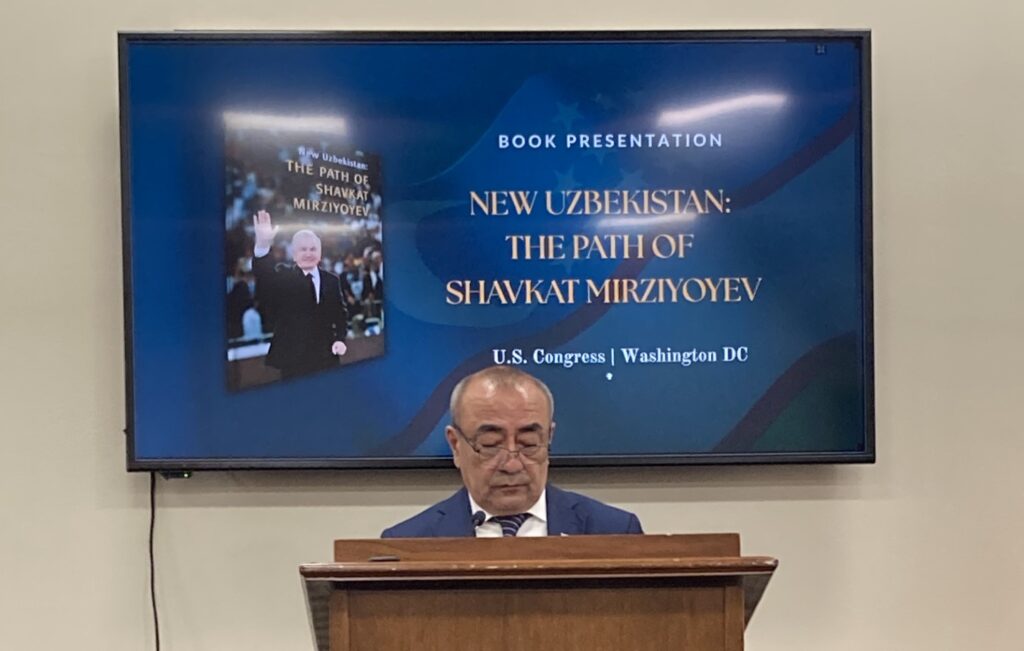
On September 16, the Embassy of Uzbekistan in Washington, D.C., hosted a book launch at the Rayburn Building on Capitol Hill for New Uzbekistan: The Path of Shavkat Mirziyoyev. The event drew diplomats, congressional staff, and representatives from companies such as General Motors and Boeing. The keynote address was delivered by Sodyq Safayev, First Deputy Chairperson of Uzbekistan’s Senate. Other speakers included Husan Ermatov, the book’s Uzbek-language editor and advisor to Uzbekistan’s Ishonch newspaper; Eldor Aripov, Director of the Institute for Strategic and Regional Studies under the President of Uzbekistan; Lisa Choate, President and CEO of American Councils; and Elena Son, Executive Director of the American-Uzbekistan Chamber of Commerce. Speakers highlighted Uzbekistan’s recent trajectory, noting shifts from a state-controlled economy and limited international engagement (1993–2016) to more market-oriented policies and broader foreign relations (2017–present). They also framed today’s Uzbekistan as shaped by historical experiences and cultural development, which some described as an “Uzbek Renaissance.” According to the speakers, President Mirziyoyev has promoted reforms in areas including governance, socio-economic development, and international outreach. Safayev remarked: “this [book signing] is not just about diplomacy but about shared values, mutual understanding, and a common vision of the future. The book before you, authored by Qudratilla Rafiqov, Uzbek scholar and political scientist, is a chronicle of change, resilience, and hope. The most difficult part of this book is a [description of the] transformation of hearts and minds. Its central message is simple and powerful: the history of Uzbekistan is written by people through their interactions and aspirations. And justice lies at the heart of reform.” By justice, he clarified, he meant fairness—ensuring that citizens have opportunities for family stability, safety, and employment. While the book presents Uzbekistan’s current government agenda in a favorable light, it also introduces new readers to the President’s stated priorities: attracting investment, promoting rule of law and fairness, liberalizing the economy, restructuring social policies, contributing to global peace efforts, and maintaining pragmatic security and foreign policy strategies. Aripov emphasized that the book is “not really about reforms, or about a leader who has been able to initiate and implement large-scale transformation in a very short period of time. It is a testimony to a new era into which Uzbekistan is entering. Today, hopes are rising in Uzbekistan, a sense of national pride is strengthened, and ambitions are being achieved that only recently seemed unattainable. These changes are being felt by ordinary citizens. They see how their lives are improving, how opportunities are expanding, and how confidence in the future is becoming a reality. That is why this book is not only a chronicle of, but also a symbol of faith that Uzbekistan can become one of the centers of sustainable development, openness and cooperation in Eurasia and the wider world. Why do I believe this to be the case? Because, under my President, the country has moved from ‘guarded isolation’ to ‘post-purposeful openness,’ from managing risks to exporting stability, and from ad hoc transactions to rules-based cooperation.” The Uzbek Embassy,...

Uzbekistan Day on Capitol Hill Highlights Deepening Ties With the U.S.

On July 23, the U.S. Capitol hosted “Uzbekistan Day,” a significant event co-organized by the Congressional Uzbekistan Caucus to reaffirm growing ties between Uzbekistan and the United States. More than a hundred participants — including lawmakers, diplomats, officials from the State Department and Pentagon, business leaders, and journalists — gathered to engage with the Uzbek delegation and explore new areas for bilateral cooperation. The forum focused on Uzbekistan’s ongoing political and socio-economic reforms and its foreign policy vision centered on regional stability and international cooperation. A central priority discussed was Uzbekistan’s accession to the World Trade Organization (WTO), with officials framing it as a vital step to ensuring long-term reform and global market integration. U.S. Lawmakers Praise Reforms At the event, Congressman Trent Kelly, Co-chairman of the Caucus on Uzbekistan, praised President Shavkat Mirziyoyev’s leadership, stating, “I want to express my gratitude to President Shavkat Mirziyoyev. He is a bold reformer, a reliable partner, and a sincere friend of the U.S. Under his leadership, Uzbekistan is confidently moving along the path of change. Human rights are being strengthened, democratic institutions expanded, and opportunities for international cooperation opened. These achievements inspire all of us.” On a more personal note, Kelly added, “I have had the opportunity to visit Uzbekistan four times, and each visit left a deep impression on me. I was moved by the kindness of the Uzbek people, the richness of their cultural heritage, and the hospitality of your country. Music, cuisine, and deep traditions — all of this makes Uzbekistan truly unique… We will soon remove the Jackson-Vanik Amendment from our agenda because Uzbekistan is doing everything right and carrying out reforms,” he concluded. Senator Steve Daines, Co-chairman of the Caucus on Central Asia, described himself as a “sincere friend of Uzbekistan.” Reflecting on his March 2024 trip to Tashkent, he said, “I felt at home and among friends. This meeting strengthened my desire to continue supporting the Central Asian countries.” [caption id="attachment_34350" align="aligncenter" width="2560"] Montana Senator Steve Daines, Co-chairman of the Caucus on Central Asia[/caption] Congresswoman Carol Miller, also part of the March delegation, spoke of her personal connection to Uzbekistan’s heritage. “Uzbekistan, with its ancient history, has long aroused my professional interest, since I am a historian by education. The opportunity to see the country’s unique historical and cultural heritage in person was an invaluable experience.” Miller emphasized that, “The conversation took place in a trusting and open atmosphere. The topics raised during the meeting were not only relevant but also extremely promising from the viewpoint of the future development of Uzbek-American relations.” [caption id="attachment_34351" align="aligncenter" width="1020"] West Virginia Congresswoman Carol Miller[/caption] Miller underscored her commitment to concrete legislative goals: “The removal of the Jackson-Vanik Amendment regarding our country and support for Uzbekistan’s accession to the WTO are priority tasks. I am currently working closely with members of Congress to accelerate these issues.” Economic Cooperation and Business Confidence The event also featured remarks from American business leaders highlighting Uzbekistan’s economic potential. Peter Flanagan, Senior Vice President...
