• KGS/USD = 0.01144 0%
  • KZT/USD = 0.00191 -0%
  • TJS/USD = 0.10839 0%
  • UZS/USD = 0.00008 -0%
  • TMT/USD = 0.28490 -0.28%
  • KGS/USD = 0.01144 0%
  • KZT/USD = 0.00191 -0%
  • TJS/USD = 0.10839 0%
  • UZS/USD = 0.00008 -0%
  • TMT/USD = 0.28490 -0.28%
  • KGS/USD = 0.01144 0%
  • KZT/USD = 0.00191 -0%
  • TJS/USD = 0.10839 0%
  • UZS/USD = 0.00008 -0%
  • TMT/USD = 0.28490 -0.28%
  • KGS/USD = 0.01144 0%
  • KZT/USD = 0.00191 -0%
  • TJS/USD = 0.10839 0%
  • UZS/USD = 0.00008 -0%
  • TMT/USD = 0.28490 -0.28%
  • KGS/USD = 0.01144 0%
  • KZT/USD = 0.00191 -0%
  • TJS/USD = 0.10839 0%
  • UZS/USD = 0.00008 -0%
  • TMT/USD = 0.28490 -0.28%
  • KGS/USD = 0.01144 0%
  • KZT/USD = 0.00191 -0%
  • TJS/USD = 0.10839 0%
  • UZS/USD = 0.00008 -0%
  • TMT/USD = 0.28490 -0.28%
  • KGS/USD = 0.01144 0%
  • KZT/USD = 0.00191 -0%
  • TJS/USD = 0.10839 0%
  • UZS/USD = 0.00008 -0%
  • TMT/USD = 0.28490 -0.28%
  • KGS/USD = 0.01144 0%
  • KZT/USD = 0.00191 -0%
  • TJS/USD = 0.10839 0%
  • UZS/USD = 0.00008 -0%
  • TMT/USD = 0.28490 -0.28%
07 November 2025

Viewing results 1 - 6 of 4

From Belt and Road to Backlash: Edward Lemon and Bradley Jardine Discuss China in Central Asia

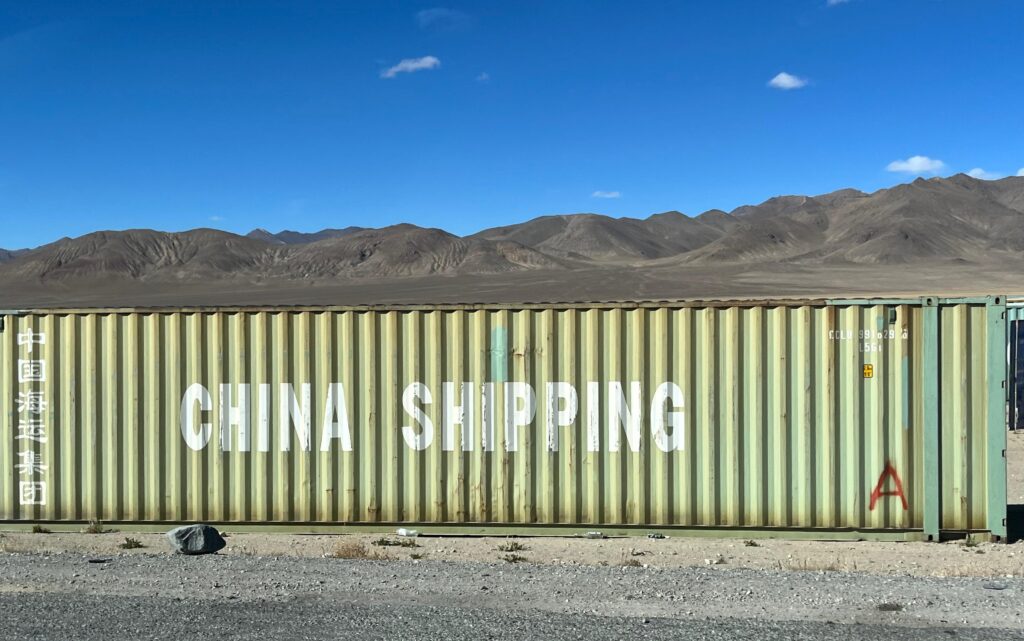
As China invests billions in Central Asian oilfields, railways, and cities, the region’s response is anything but passive. In Backlash: China’s Struggle for Influence in Central Asia, Bradley Jardine and Edward Lemon document how Central Asians – from government halls to village streets – are responding to Beijing’s expanding footprint. The book provides a nuanced look at China’s engagement in Kazakhstan, Kyrgyzstan, Tajikistan, Turkmenistan, and Uzbekistan over the three decades since these nations gained independence. Drawing on more than a decade of fieldwork, Jardine and Lemon ask a timely question: can Beijing maintain its growing influence in an environment where local voices and interests are increasingly assertive? The Times of Central Asia spoke with the authors. TCA: Central Asia has become an increasingly strategic crossroads, rich in resources, young in demographics, and positioned between major powers. Yet China’s engagement appears far more ambitious than that of Western or regional players. In your view, what accounts for this asymmetry? Is it primarily a matter of geography and financial capacity, or has China been more politically and diplomatically attuned to Central Asia’s priorities than others? J/L: China’s dominance in Central Asia stems from both geography and political attunement. As we note in Backlash, Beijing views the region as an extension of its own security frontier, as both a buffer protecting Xinjiang and a potential source of terrorism. It has built deep ties through consistent, elite-level engagement since the 1990s. Its approach blends vast financial capacity with political instincts that resonate with local elites: prioritizing sovereignty, stability, and non-interference rather than the governance conditionalities that often accompany Western aid and investment. Through the Belt and Road Initiative, which was launched in the region in 2013, the Shanghai Cooperation Organization, which was established in 2001 with four Central Asian republics as founding members, and newer platforms like the China-Central Asia (C+C5) summit, China offers infrastructure, energy investment, and regime security in ways tailored to the needs of authoritarian partners. Unlike the episodic or values-driven engagement of Western actors, and with Russia’s attention increasingly divided, China’s steady, pragmatic diplomacy, backed by proximity and resources, has allowed it to entrench itself as the region’s indispensable power. TCA: China’s expanding presence across trade, infrastructure, and finance has reshaped Central Asia’s economic landscape. To what extent do these investments remain primarily commercial, and when do they start to carry political or strategic implications? How do local governments manage the risks of dependency or debt while pursuing development gains? J/L: China’s expanding economic footprint in Central Asia may be driven by trade and infrastructure, but the lines between commerce and strategy have become increasingly blurred. As we note in Backlash, Beijing’s investments, roads, pipelines, railways, and energy grids are rarely purely commercial. They create structural dependencies that bind Central Asian economies to China’s markets, finance, and technology. By 2020, roughly 45% of Kyrgyzstan’s external debt and more than half of Tajikistan’s were owed to China, while around 75% of Turkmenistan’s exports flowed to Chinese buyers. These imbalances give Beijing...

Book Launch at the U.S. Capitol: New Uzbekistan: The Path of Shavkat Mirziyoyev

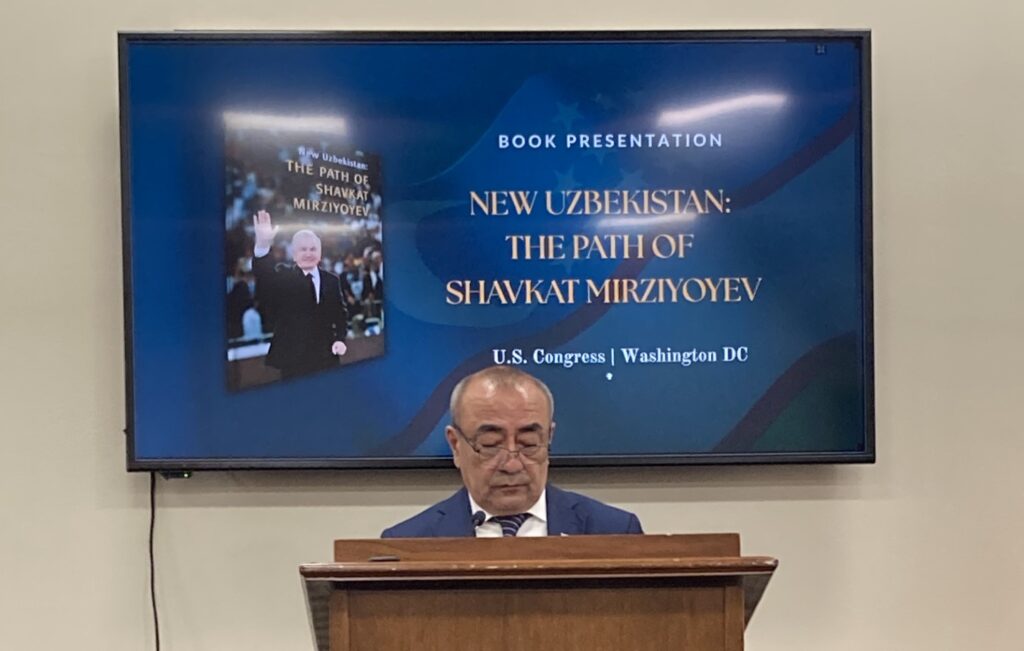
On September 16, the Embassy of Uzbekistan in Washington, D.C., hosted a book launch at the Rayburn Building on Capitol Hill for New Uzbekistan: The Path of Shavkat Mirziyoyev. The event drew diplomats, congressional staff, and representatives from companies such as General Motors and Boeing. The keynote address was delivered by Sodyq Safayev, First Deputy Chairperson of Uzbekistan’s Senate. Other speakers included Husan Ermatov, the book’s Uzbek-language editor and advisor to Uzbekistan’s Ishonch newspaper; Eldor Aripov, Director of the Institute for Strategic and Regional Studies under the President of Uzbekistan; Lisa Choate, President and CEO of American Councils; and Elena Son, Executive Director of the American-Uzbekistan Chamber of Commerce. Speakers highlighted Uzbekistan’s recent trajectory, noting shifts from a state-controlled economy and limited international engagement (1993–2016) to more market-oriented policies and broader foreign relations (2017–present). They also framed today’s Uzbekistan as shaped by historical experiences and cultural development, which some described as an “Uzbek Renaissance.” According to the speakers, President Mirziyoyev has promoted reforms in areas including governance, socio-economic development, and international outreach. Safayev remarked: “this [book signing] is not just about diplomacy but about shared values, mutual understanding, and a common vision of the future. The book before you, authored by Qudratilla Rafiqov, Uzbek scholar and political scientist, is a chronicle of change, resilience, and hope. The most difficult part of this book is a [description of the] transformation of hearts and minds. Its central message is simple and powerful: the history of Uzbekistan is written by people through their interactions and aspirations. And justice lies at the heart of reform.” By justice, he clarified, he meant fairness—ensuring that citizens have opportunities for family stability, safety, and employment. While the book presents Uzbekistan’s current government agenda in a favorable light, it also introduces new readers to the President’s stated priorities: attracting investment, promoting rule of law and fairness, liberalizing the economy, restructuring social policies, contributing to global peace efforts, and maintaining pragmatic security and foreign policy strategies. Aripov emphasized that the book is “not really about reforms, or about a leader who has been able to initiate and implement large-scale transformation in a very short period of time. It is a testimony to a new era into which Uzbekistan is entering. Today, hopes are rising in Uzbekistan, a sense of national pride is strengthened, and ambitions are being achieved that only recently seemed unattainable. These changes are being felt by ordinary citizens. They see how their lives are improving, how opportunities are expanding, and how confidence in the future is becoming a reality. That is why this book is not only a chronicle of, but also a symbol of faith that Uzbekistan can become one of the centers of sustainable development, openness and cooperation in Eurasia and the wider world. Why do I believe this to be the case? Because, under my President, the country has moved from ‘guarded isolation’ to ‘post-purposeful openness,’ from managing risks to exporting stability, and from ad hoc transactions to rules-based cooperation.” The Uzbek Embassy,...