
• KGS/USD = 0.01144 0%
  • KZT/USD = 0.00213 0%
  • TJS/USD = 0.10562 0%
  • UZS/USD = 0.00008 0%
  • TMT/USD = 0.28530 0%
  • KGS/USD = 0.01144 0%
  • KZT/USD = 0.00213 0%
  • TJS/USD = 0.10562 0%
  • UZS/USD = 0.00008 0%
  • TMT/USD = 0.28530 0%
  • KGS/USD = 0.01144 0%
  • KZT/USD = 0.00213 0%
  • TJS/USD = 0.10562 0%
  • UZS/USD = 0.00008 0%
  • TMT/USD = 0.28530 0%
  • KGS/USD = 0.01144 0%
  • KZT/USD = 0.00213 0%
  • TJS/USD = 0.10562 0%
  • UZS/USD = 0.00008 0%
  • TMT/USD = 0.28530 0%
  • KGS/USD = 0.01144 0%
  • KZT/USD = 0.00213 0%
  • TJS/USD = 0.10562 0%
  • UZS/USD = 0.00008 0%
  • TMT/USD = 0.28530 0%
  • KGS/USD = 0.01144 0%
  • KZT/USD = 0.00213 0%
  • TJS/USD = 0.10562 0%
  • UZS/USD = 0.00008 0%
  • TMT/USD = 0.28530 0%
  • KGS/USD = 0.01144 0%
  • KZT/USD = 0.00213 0%
  • TJS/USD = 0.10562 0%
  • UZS/USD = 0.00008 0%
  • TMT/USD = 0.28530 0%
  • KGS/USD = 0.01144 0%
  • KZT/USD = 0.00213 0%
  • TJS/USD = 0.10562 0%
  • UZS/USD = 0.00008 0%
  • TMT/USD = 0.28530 0%

Viewing results 1 - 6 of 3

Uzbek Trade Delegation Visits U.S. to Promote “Made in Uzbekistan” Exports

From July 23 to 29, a delegation from Uzbekistan’s Ministry of Investment, Industry and Trade (MIIT) visited the United States to promote Uzbek-produced goods, expand export channels, and strengthen bilateral trade ties, according to the ministry’s press service. As part of the mission, 25 Uzbek textile companies showcased their products under the national “Made in Uzbekistan” brand at three major trade exhibitions in New York: Texworld NYC, Apparel Sourcing USA, and Home Textiles Sourcing Expo. Delegates met with industry leaders and trade associations, including Bunzl plc, Levi Strauss & Co., PVH Corp., GIII Apparel Group, Kontoor Brands, American Eagle Outfitters, Tapestry Inc., Macy’s, the American Apparel & Footwear Association (AAFA), and the United States Fashion Industry Association (USFIA), to discuss integrating Uzbek brands into U.S. sourcing channels. In Washington, ministry representatives met with the U.S. Department of Commerce to explore opportunities for enhancing trade, reducing regulatory barriers, and increasing investment cooperation. They also engaged with the Commercial Law Development Program (CLDP) under the Commerce Department, agreeing to organize webinars and seminars aimed at helping Uzbek firms meet U.S. certification and packaging standards. A separate meeting with the U.S. Department of Agriculture and the U.S. Cotton Association addressed expanding Uzbekistan’s access to the GSM-102 export credit guarantee program, increasing credit limits, and launching a “Made from U.S. Cotton” initiative. The proposed initiative would allow processed Uzbek goods made from American cotton to carry the label in international markets. The delegation also explored ways to deepen investment cooperation with U.S. industry associations and develop mechanisms to integrate more Uzbek products into American retail and sourcing ecosystems. As previously reported by The Times of Central Asia, on April 30, U.S. Labor Secretary Lori Chavez-DeRemer announced the termination of more than $38 million in foreign aid programs during a cabinet meeting at the White House. This included funding for a labor rights initiative in Uzbekistan’s cotton sector. The program, launched in 2022 and scheduled to run through 2026, aimed to improve labor conditions and prevent forced labor. It received $2 million in its first year, with $1 million earmarked for 2025.
Uzbekistan Leads Central Asia in U.S. Visa Rejections in 2024

In 2024, the United States rejected 64.41% of B-1/B-2 visa applications submitted by citizens of Uzbekistan, the highest refusal rate among Central Asian countries, according to the U.S. State Department. B-1/B-2 visas are issued for short-term travel related to business and tourism. Uzbekistan has consistently topped the region in visa denials. In 2023, the rejection rate for Uzbek applicants stood at 59.56%. The trend reflects continued challenges faced by Uzbek travelers in securing U.S. entry permits. The refusal rates for other Central Asian countries in 2024 were also significant: Turkmenistan: 58.8% Kazakhstan: 46.29% Tajikistan: 45.24% Kyrgyzstan: 39.14% Similar patterns were observed in 2023, with Turkmenistan at 51.10%, Kazakhstan at 41.93%, Tajikistan at 54.96%, and Kyrgyzstan at 41.54%. Trade Volumes Remain Low Across the Region Trade between Central Asia and the United States remains limited. In 2024, Uzbekistan exported only $42.4 million worth of goods to the U.S., while its total foreign trade turnover reached $66 billion, highlighting the minimal share of U.S.-bound exports. Kazakhstan remains the region’s largest trading partner with the United States. Bilateral trade in 2024 reached $3.4 billion, primarily driven by exports of crude oil, uranium, and silver. Notably, only $95.2 million of Kazakhstan’s exports to the U.S. are expected to be impacted by new U.S. tariffs, a small fraction of the country's total trade volume of $141.4 billion. Other Central Asian nations also maintain modest trade flows with the U.S.: Kyrgyzstan exported $16.7 million in goods, with a total trade turnover of $16 billion. Tajikistan exported $4.6 million, out of a total trade turnover of $8.9 billion. Limited Mobility and Economic Ties The data underscores broader limitations in U.S.-Central Asia engagement both in terms of mobility and economic integration. High visa refusal rates continue to hinder travel for business and personal reasons, while trade volumes remain a marginal component of most Central Asian economies. While diplomatic and economic ties between Washington and the region have grown in recent years, the figures suggest that significant barriers to deeper cooperation remain.

Uzbek President Welcomes U.S. Officials and Business Leaders Ahead of Tashkent International Investment Forum

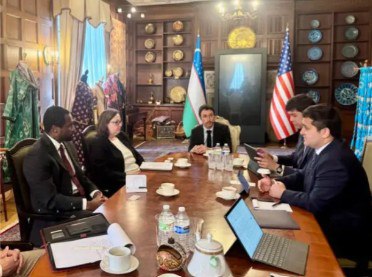
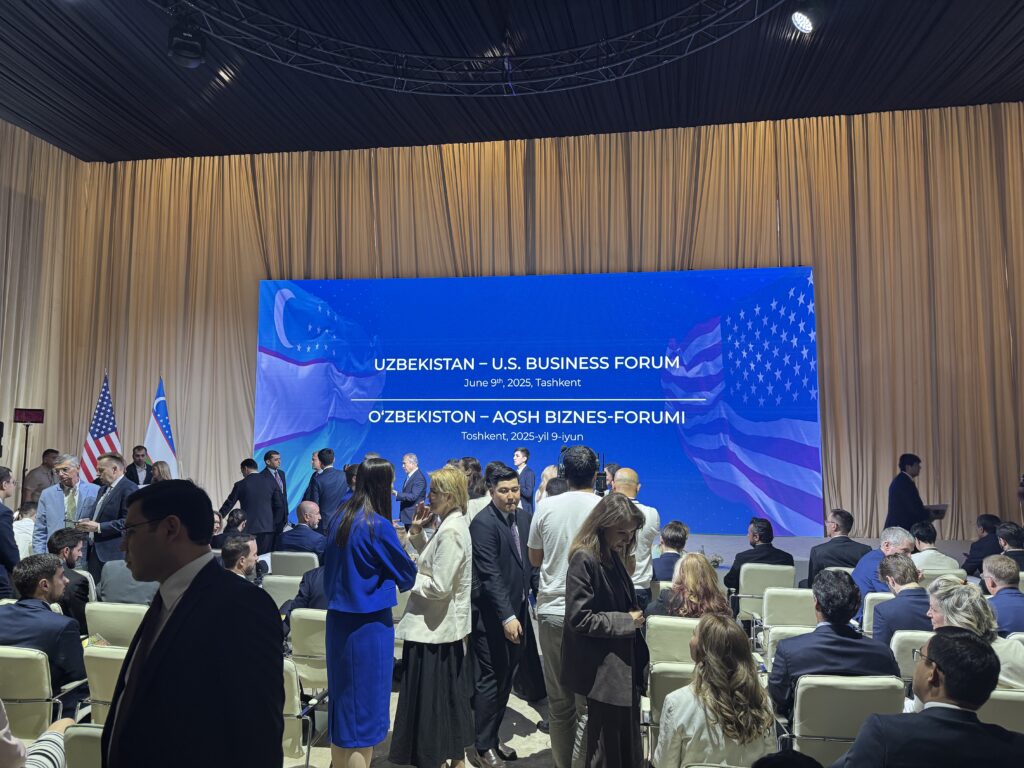
On June 9, ahead of the Tashkent International Investment Forum, President Shavkat Mirziyoyev welcomed a senior delegation of U.S. business leaders and government officials, underscoring deepening economic ties between Uzbekistan and the United States. Among the participants were U.S. Assistant Secretary of State Eric Meyer, U.S. International Development Finance Corporation (DFC) Vice President Bethany Brez, American-Uzbek Chamber of Commerce Chair Carolyn Lamm, and executives from Boeing, Visa, NASDAQ, Coca-Cola, Morgan Stanley, Franklin Templeton, FLS, Air Products, and others. Mirziyoyev noted that the meeting reflected growing U.S. interest in Uzbekistan’s reform-driven and investment-oriented economy. In 2024, bilateral trade between Uzbekistan and the U.S. reached $882 million, a 15.2% increase from 2023. Of this, Uzbek exports to the U.S. totaled $314.7 million, while imports stood at $564.3 million. Despite this growth, exports to the U.S. still account for only 1.2% of Uzbekistan’s total export volume, according to economist Mirkomil Kholboyev. During the Uzbekistan-U.S. Business Forum in Tashkent, DFC Vice President Brez led discussions on joint projects in critical minerals. The DFC, with a $60 billion mandate, supports global investment in sectors such as energy, infrastructure, and advanced manufacturing. [caption id="attachment_32862" align="aligncenter" width="2560"] Image: Uzbekistan–U.S. Business Forum[/caption] Digital innovation emerged as a key area of cooperation. According to a recent UNDP study, Uzbekistan plans to implement 100 priority artificial intelligence models by 2030 and establish supercomputing labs at major universities. USAID has previously supported this digital agenda by enabling Uzbek startups to engage with Silicon Valley investors and participate in TechCrunch Disrupt in October 2024, strengthening linkages with the U.S. tech ecosystem. Transport and energy infrastructure modernization also featured prominently in the talks. In January 2025, Uzbekistan Airways signed a memorandum with Boeing to acquire fourteen 787-8 Dreamliners, a multibillion-dollar deal with deliveries expected by 2032. Meanwhile, USAID partnered with Uzbekistan on energy sector reform, including support for drafting the “Law on the Electric Power Industry,” which introduces transparent tariff policies and facilitates private-sector entry. Tourism and small business development were additional focus areas. USAID’s five-year, $17.7 million Business Support Project has targeted key sectors such as ICT, tourism, textiles, and the green economy. Under this initiative, the Association of Private Tourism Agencies of Uzbekistan launched new training modules and classification standards for family-run guesthouses in Bukhara, Samarkand, and Tashkent, promoting sustainable, community-based tourism. Throughout the meeting, U.S. business leaders expressed support for Uzbekistan’s reform agenda and presented specific proposals, ranging from expanding fintech infrastructure to piloting AI-driven logistics platforms. The exchanges reflected a mutual commitment to strengthening the U.S.-Uzbek partnership across a wide range of strategic sectors.
