
• KGS/USD = 0.01144 0%
  • KZT/USD = 0.00205 0%
  • TJS/USD = 0.10782 0%
  • UZS/USD = 0.00008 0%
  • TMT/USD = 0.28490 0%
  • KGS/USD = 0.01144 0%
  • KZT/USD = 0.00205 0%
  • TJS/USD = 0.10782 0%
  • UZS/USD = 0.00008 0%
  • TMT/USD = 0.28490 0%
  • KGS/USD = 0.01144 0%
  • KZT/USD = 0.00205 0%
  • TJS/USD = 0.10782 0%
  • UZS/USD = 0.00008 0%
  • TMT/USD = 0.28490 0%
  • KGS/USD = 0.01144 0%
  • KZT/USD = 0.00205 0%
  • TJS/USD = 0.10782 0%
  • UZS/USD = 0.00008 0%
  • TMT/USD = 0.28490 0%
  • KGS/USD = 0.01144 0%
  • KZT/USD = 0.00205 0%
  • TJS/USD = 0.10782 0%
  • UZS/USD = 0.00008 0%
  • TMT/USD = 0.28490 0%
  • KGS/USD = 0.01144 0%
  • KZT/USD = 0.00205 0%
  • TJS/USD = 0.10782 0%
  • UZS/USD = 0.00008 0%
  • TMT/USD = 0.28490 0%
  • KGS/USD = 0.01144 0%
  • KZT/USD = 0.00205 0%
  • TJS/USD = 0.10782 0%
  • UZS/USD = 0.00008 0%
  • TMT/USD = 0.28490 0%
  • KGS/USD = 0.01144 0%
  • KZT/USD = 0.00205 0%
  • TJS/USD = 0.10782 0%
  • UZS/USD = 0.00008 0%
  • TMT/USD = 0.28490 0%

Viewing results 1 - 6 of 4

Uzbekistan Plans to Send First National Cosmonaut Into Space by 2028

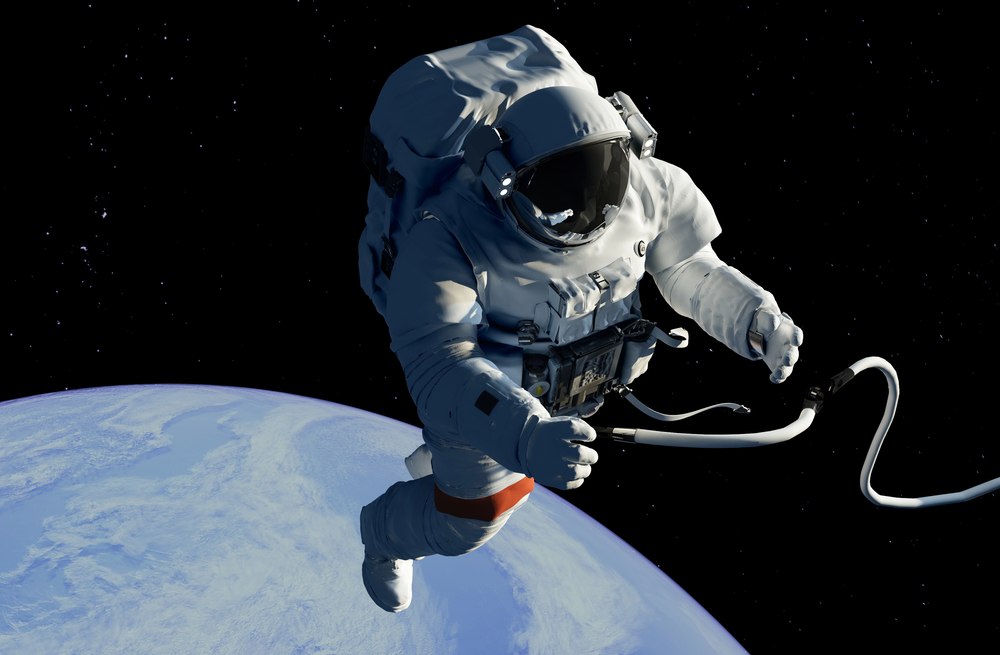
Uzbekistan plans to send its first national cosmonaut into orbit by October 2028, according to officials from the country’s space agency, as Tashkent expands its ambitions in the field of space exploration. Uzbekcosmos Deputy Director Muhiddin Ibrohimov said the mission is expected to last about 14 days and is currently under discussion with the three countries capable of conducting human spaceflights: the United States, Russia, and China. According to Ibrohimov, all three countries have expressed their readiness to cooperate with Uzbekistan on the project. He said the future Uzbek cosmonaut is expected to return from space with the results of scientific experiments carried out during the mission. The authorities are planning to establish a government commission responsible for selecting astronaut candidates and coordinating training and flight preparations. Officials said applicants must be between 27 and 40 years old, hold a university degree, and meet physical requirements, including a height between 160 and 190 centimeters and a weight between 50 and 95 kilograms. Knowledge of foreign languages will also be required. The selection process is expected to take the form of a nationwide program open to the public. The mission is expected to include a program involving experiments in medicine, biology, genetics, and other priority fields. Uzbekistan’s plans build on earlier statements from Russian officials offering support for the country’s space ambitions. The Times of Central Asia previously reported that the Russian First Deputy Prime Minister Denis Manturov had said Moscow was ready to assist Uzbekistan in preparing and sending its first national cosmonaut into orbit, as well as launching the country’s first artificial satellite. Manturov said President Shavkat Mirziyoyev had set the goal of developing Uzbekistan’s space capabilities, including human spaceflight and satellite technology. Russia has also recently expressed its willingness to support other Central Asian countries in space exploration. In April, Russian Ambassador to Turkmenistan Ivan Volynkin said Moscow was prepared to help train a Turkmen cosmonaut if Ashgabat showed interest.

Soviet-Era Spacecraft May Crash to Earth This Week, Uzbekistan Among Monitored Zones

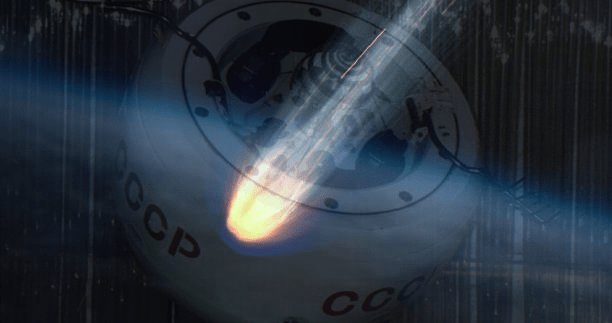
As previously reported by The Times of Central Asia, a Soviet spacecraft launched from Baikonur more than five decades ago is expected to re-enter Earth’s atmosphere between May 9 and 11, 2025. Known as Kosmos-482, the probe was part of the Soviet Union’s Venera program aimed at exploring Venus. However, due to a launch failure in 1972, it never escaped Earth’s orbit and has been circling the planet ever since. Kosmos-482 was engineered to endure the extreme conditions of Venus, making it significantly more robust than typical satellites. Its descent module, weighing around 495 kilograms (approximately 1,100 pounds), features a durable titanium shell, raising the possibility that parts of the spacecraft could survive re-entry and reach the Earth's surface. Experts estimate the spacecraft will re-enter at speeds of up to 27,000 kilometers per hour (around 17,000 miles per hour). The potential impact zone spans between 52 degrees north and south latitude, covering much of the inhabited world. Despite this wide range, the risk to human life is regarded as minimal. Most likely, the spacecraft will either disintegrate in the atmosphere or fall into the ocean. In Uzbekistan, the national space agency Uzcosmos has assessed the probability of debris landing within the country at between 0.3% and 0.5%. Ahror Agzamov, head of the New Technologies Department at Uzcosmos, stated that while the risk is low, the agency is closely monitoring the situation. “While most of the spacecraft will burn up upon re-entry, the nearly half-ton titanium sphere, designed to operate under Venus’s harsh conditions, poses a particular concern,” Agzamov explained. “It is expected to survive re-entry, and despite being equipped with a parachute, that system may not function after 53 years in space. The object could strike the Earth at speeds up to 500 kilometers per hour.” Agzamov cautioned the public against interacting with any debris. Due to the possibility of hazardous chemical residues in the spacecraft’s components, any discovered fragments should be reported immediately to local authorities, he stated. Uzbekistan’s Role in the Venera Program Uzbekistan has a historical connection to the Soviet space program. The former Tashkent Mechanical Engineering Design Bureau contributed to the later stages of the Venera missions by developing soil sampling and drilling equipment used on Venera-13 and Venera-14 (1982), and Vega-1 and Vega-2 (1985). These devices were tested at a facility in the village of Nevich in the Tashkent region. As Kosmos-482 begins its final descent, space agencies around the world continue to track its trajectory to provide timely updates and ensure public safety.