
• KGS/USD = 0.01143 0%
  • KZT/USD = 0.00202 0%
  • TJS/USD = 0.10599 -0.19%
  • UZS/USD = 0.00008 0%
  • TMT/USD = 0.28575 0%
  • KGS/USD = 0.01143 0%
  • KZT/USD = 0.00202 0%
  • TJS/USD = 0.10599 -0.19%
  • UZS/USD = 0.00008 0%
  • TMT/USD = 0.28575 0%
  • KGS/USD = 0.01143 0%
  • KZT/USD = 0.00202 0%
  • TJS/USD = 0.10599 -0.19%
  • UZS/USD = 0.00008 0%
  • TMT/USD = 0.28575 0%
  • KGS/USD = 0.01143 0%
  • KZT/USD = 0.00202 0%
  • TJS/USD = 0.10599 -0.19%
  • UZS/USD = 0.00008 0%
  • TMT/USD = 0.28575 0%
  • KGS/USD = 0.01143 0%
  • KZT/USD = 0.00202 0%
  • TJS/USD = 0.10599 -0.19%
  • UZS/USD = 0.00008 0%
  • TMT/USD = 0.28575 0%
  • KGS/USD = 0.01143 0%
  • KZT/USD = 0.00202 0%
  • TJS/USD = 0.10599 -0.19%
  • UZS/USD = 0.00008 0%
  • TMT/USD = 0.28575 0%
  • KGS/USD = 0.01143 0%
  • KZT/USD = 0.00202 0%
  • TJS/USD = 0.10599 -0.19%
  • UZS/USD = 0.00008 0%
  • TMT/USD = 0.28575 0%
  • KGS/USD = 0.01143 0%
  • KZT/USD = 0.00202 0%
  • TJS/USD = 0.10599 -0.19%
  • UZS/USD = 0.00008 0%
  • TMT/USD = 0.28575 0%
15 February 2026

Viewing results 1 - 6 of 9

The Venezuela Effect: Oil, Sanctions, and Kazakhstan’s Strategic Dilemma

The start of 2026 was marked by political upheaval across two continents: fresh protests in Iran drawing comparisons among some Kazakh analysts to the country’s own Bloody January of 2022, and a U.S. military operation described by Washington as a law-enforcement action in Venezuela. The latter led to the arrest of Venezuelan President Nicolás Maduro and what some analysts are describing as a move toward far greater U.S. influence over Venezuela’s oil sector. Beyond its immediate implications for global oil supply and pricing, the geopolitical symbolism of the Venezuela operation is resonating in unexpected places, including Central Asia. Contrary to some early reports, the American intervention in Caracas was not bloodless. At least 40 Venezuelan security and military personnel were reportedly killed during the rapid offensive. Still, Kazakh political scientist Marat Shibutov argues that the perception of a swift and decisive U.S. action, especially in contrast to Russia’s grinding war in Ukraine, is symbolically damaging for Moscow. “This comparison with Russia’s prolonged conflict is not flattering,” Shibutov noted. “It creates a sensitive political backdrop for the Kremlin.” In Kazakhstan, where debates over foreign energy contracts have been simmering for years, the events in Venezuela are being closely watched. Political analyst Daniyar Ashimbayev referenced Astana’s past discussions about reviewing oil agreements with Western companies. “The topic of revising oil contracts is becoming less and less popular. At this rate, it could even be equated with extremism,” he commented ironically, underscoring how sensitive the issue has become. Some experts are also concerned that political shifts in Venezuela and Iran could destabilize the oil market in ways that would hit Kazakhstan’s economy hard. Kazakhstan derives a substantial share of its state budget revenues from the oil sector, making sustained price declines a direct fiscal risk rather than a purely market concern, analysts note. Energy analyst Olzhas Baidildinov points out that Venezuela holds the largest proven oil reserves in the world, approximately 300 billion barrels, more than 30 times Kazakhstan’s profitable reserves. “If liberal or Western-friendly governments come to power simultaneously in Venezuela and Iran, they could supply an additional 2-3 million barrels per day to the global market within the next 3-4 years,” he warned. Even without full regime change, he noted, easing sanctions or the return of “shadow exports” could push global prices down to $50-70 per barrel. “At such prices, it will be difficult to demonstrate economic growth and maintain momentum in Kazakhstan’s oil sector,” Baidildinov added. Financial analyst Arman Beisembayev offered a more bearish view. “If production volumes increase and the U.S. begins releasing more oil onto the market, including from Venezuela, then I’m afraid prices won’t stay at $60 per barrel. The base case is a drop to $50. A worst-case scenario could see prices at $40, or even lower.” But not everyone believes Venezuela can upend the market. Askar Ismailov, a Geneva-based advisor on Central Asia at the Global Gas Centre, remains skeptical. “Venezuelan crude is extremely heavy, difficult to extract, and expensive to transport. Historically, it depended on a...
Opinion: Central Asia and the Venezuelan Crisis

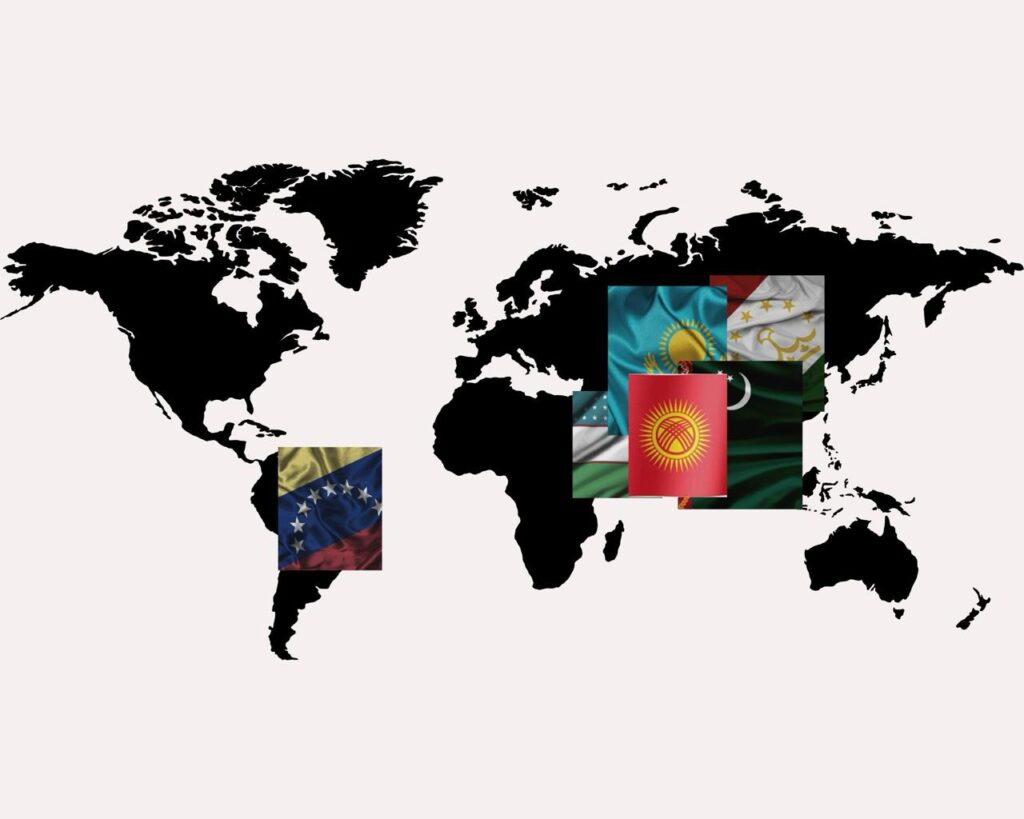
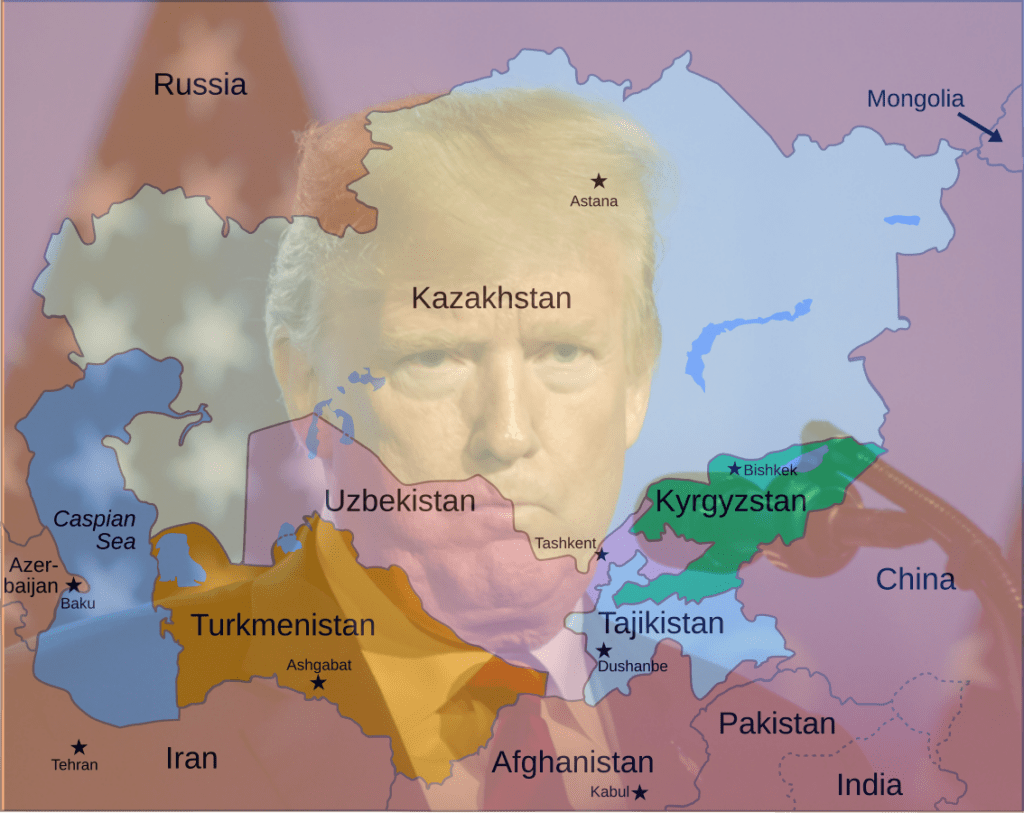
For Central Asian countries, the central challenge in international politics is no longer choosing alliances, but coping with external shocks and global turbulence that originate far beyond the region.  The unfolding crisis in Venezuela is a case in point. At first glance, the situation concerns Latin America and the global oil market, but its implications extend well beyond, directly affecting Central Asia’s strategic interests. The core issue is not oil per se, but the reemergence of force as a legitimate instrument for altering political and economic conditions. For a region positioned at the crossroads of major power interests and reliant on external stability, this shift is profoundly consequential. The Venezuelan crisis should be understood as a precedent, one that signals how global power centers may act as established norms erode. For Central Asia, this heralds a more unpredictable international environment in which regional states must navigate competing interests without the benefit of stable rules. While Venezuela is often reduced to an oil story, the broader economic stakes involve control over the architecture of strategic resource flows. This resonates with the situation in the C5, Kazakhstan, Kyrgyzstan, Uzbekistan, Tajikistan, and Turkmenistan, where resources such as oil, gas, uranium, and rare earth metals are also of significant external interest. The logistics and transit of these resources are increasingly entangled in geopolitical bargaining. The Venezuelan example reinforces a growing trend: the nexus of economics and security is tightening, and access to resources is increasingly secured through political leverage. In this context, Iran holds particular relevance. For Central Asia, Iran is not an abstraction; it represents transit routes, energy corridors, access to southern seas, and a component of regional balance. Heightened pressure on Tehran directly affects both the opportunities and risks facing the region. When viewed through the lens of Iran, developments in Venezuela serve as a psychological and political precedent, broadening what appears acceptable within Washington’s strategic calculus. While a direct replication of the Venezuelan scenario in Iran is unlikely, given the vastly different military, political, and regional risks, the mere lowering of the threshold for force-based solutions is significant. The cost of direct confrontation with Iran would be far higher, with potential repercussions for the entire Middle East security architecture. Operation Absolute Resolve has objectively increased the confidence of those who favor the use of force against Iran. This confidence is likely to grow if United States actions in Venezuela carry minimal international consequences, avoid triggering uncontrollable regional escalation, and are perceived as domestically successful. In either case, Venezuela’s “success” has already lowered psychological barriers to coercion, strengthening arguments for hardline scenarios and re-legitimizing force as a policy tool, rather than a measure of last resort. Broadly speaking, the Venezuelan crisis highlights a global shift from rules to precedents. For the five, and increasingly for the emerging six that includes Azerbaijan, the fragmentation of international norms raises costs and leaves each country more vulnerable to external pressure. In this environment, coordination and consistency on issues such as transit, security, and sanctions are...

Central Asia Watches as Venezuela Drama Unfolds  

Governments in Central Asia have not made any public comment, so far, on the U.S. military operation that captured Venezuelan President Nicolás Maduro, at a time when relations between Central Asian countries and the administration of President Donald Trump are growing closer. The operation on Saturday involved more than 150 American aircraft and extracted Maduro and his wife, Cilia Flores, from their compound in Caracas, prompting celebrations from many Venezuelan expatriates who viewed Maduro as a dictator, criticism from countries including Russia and China, and concerns that the complex attack violated international law. Additional questions about Venezuela’s sovereignty emerged after Trump said the United States will “run” the country ahead of a transition and that American oil companies will help to rebuild its oil infrastructure. The U.S. has argued that Maduro himself effectively hijacked Venezuelan sovereignty through electoral fraud, repression and by allegedly funneling illegal drugs to the U.S. Maduro, who has been indicted on narco-terrorism and other charges, denies the allegations. Countries in Central Asia are more than 10,000 kilometers away from Venezuela and their trade with the Latin American country is minimal, suggesting the uncertain and evolving situation there lies far outside their immediate area of interest. In May, Tokayev met Maduro in Moscow and invited him to visit Kazakhstan after describing Venezuela as an important partner. “However, he acknowledged that, due to objective reasons, significant achievements in bilateral cooperation have yet to be realized,” Tokayev’s office said at the time. Still, Tokayev and other Central Asian leaders have spoken in general terms of their adherence to United Nations principles of sovereignty, an issue that is being vigorously debated in some international circles after the U.S. military operation. U.N. Secretary-General António Guterres, who visited Central Asia in 2024 and 2025, has said that the U.S. military operation that extracted Maduro to New York constitutes a "dangerous precedent" and that he was concerned that the rules of international law had not been respected. The U.S. capture of the leader of oil-rich Venezuela has not had a major impact for now on global oil prices, indicating that Central Asia’s oil and natural gas producers will not see any big fallout. Even so, at a time of ongoing geopolitical tension, a major shock or event in one region could influence distant regions in ways that are difficult to discern. Russia and China, which are close trading partners with Central Asia and nurtured trade and political ties with Maduro’s government, condemned the U.S. military operation in Venezuela. But the Central Asian countries – Kazakhstan, Uzbekistan, Kyrgyzstan, Tajikistan and Turkmenistan – have not joined in the criticism, much as they have refrained from publicly supporting any side over Russia’s invasion of Ukraine. Central Asia’s balancing act reflects efforts to maintain good ties with major powers even when they are in conflict, and comes during a period of increasing trade collaboration with the United States. The five leaders from Central Asia traveled to Washington in November for a summit with Trump, who later invited...
