• KGS/USD = 0.01144 0%
  • KZT/USD = 0.00201 0%
  • TJS/USD = 0.10567 -0.09%
  • UZS/USD = 0.00008 0%
  • TMT/USD = 0.28571 0%
  • KGS/USD = 0.01144 0%
  • KZT/USD = 0.00201 0%
  • TJS/USD = 0.10567 -0.09%
  • UZS/USD = 0.00008 0%
  • TMT/USD = 0.28571 0%
  • KGS/USD = 0.01144 0%
  • KZT/USD = 0.00201 0%
  • TJS/USD = 0.10567 -0.09%
  • UZS/USD = 0.00008 0%
  • TMT/USD = 0.28571 0%
  • KGS/USD = 0.01144 0%
  • KZT/USD = 0.00201 0%
  • TJS/USD = 0.10567 -0.09%
  • UZS/USD = 0.00008 0%
  • TMT/USD = 0.28571 0%
  • KGS/USD = 0.01144 0%
  • KZT/USD = 0.00201 0%
  • TJS/USD = 0.10567 -0.09%
  • UZS/USD = 0.00008 0%
  • TMT/USD = 0.28571 0%
  • KGS/USD = 0.01144 0%
  • KZT/USD = 0.00201 0%
  • TJS/USD = 0.10567 -0.09%
  • UZS/USD = 0.00008 0%
  • TMT/USD = 0.28571 0%
  • KGS/USD = 0.01144 0%
  • KZT/USD = 0.00201 0%
  • TJS/USD = 0.10567 -0.09%
  • UZS/USD = 0.00008 0%
  • TMT/USD = 0.28571 0%
  • KGS/USD = 0.01144 0%
  • KZT/USD = 0.00201 0%
  • TJS/USD = 0.10567 -0.09%
  • UZS/USD = 0.00008 0%
  • TMT/USD = 0.28571 0%
23 February 2026

Viewing results 1 - 6 of 6

Tajikistan’s Ombudsman Criticizes Violations of Refugee Rights

Tajikistan’s Human Rights Commissioner has released a 2024 report highlighting ongoing violations of the rights of refugees and asylum seekers, including challenges in securing legal status and accessing essential services. According to the report, refugees and migrants face systemic barriers to obtaining official status and temporary registration, as well as difficulties integrating into society, finding employment, and accessing education. As of the end of 2024, 10,753 refugees and asylum seekers were registered in Tajikistan, comprising 2,670 families. Among them, 9,424 individuals (2,140 families) held refugee status, while 1,329 (530 families) were awaiting decisions on their asylum applications. The majority, 6,774 people, or 63%, were Afghan nationals. In 2024, 2,280 individuals were issued refugee certificates, and another 2,591 received temporary registration. Four applicants were denied refugee status on grounds of submitting "unfounded or false information." The report did not disclose the nationalities of those denied. The Office of the UN High Commissioner for Refugees (UNHCR) reported similar figures for 2024, citing 10,381 registered refugees and asylum seekers in Tajikistan. This marks a decline from 2022, when the UN estimated the number of Afghan asylum seekers in the country at around 14,000. The Ombudsman’s report also noted that several Afghan asylum seekers were expelled from Tajikistan in 2024 for violating residency rules. Cited reasons included wearing a beard “against the rules,” inappropriate clothing, alcohol consumption, and political discussions on social media. Interior Minister Ramazon Rakhimzoda defended the deportations, stating in the summer of 2024 that all actions were taken in accordance with national law. “Although they had legal residence, if they violate the law, they are expelled,” he said, adding that all decisions were made within the existing legal framework. Tajikistan accepted its first wave of Afghan refugees in 2021, following the Taliban’s return to power. At the time, authorities acknowledged that the lack of dedicated shelters posed a major challenge. In August 2025, the head of the Emergency Situations Committee said there was no significant threat of a new mass influx of refugees and that previously accommodated families had been resettled across the country. Most Afghan refugees are currently living in the city of Vahdat and the Jabbor Rasulov district.

Kazakhstan Considers Criminal Penalties for Dual Citizenship

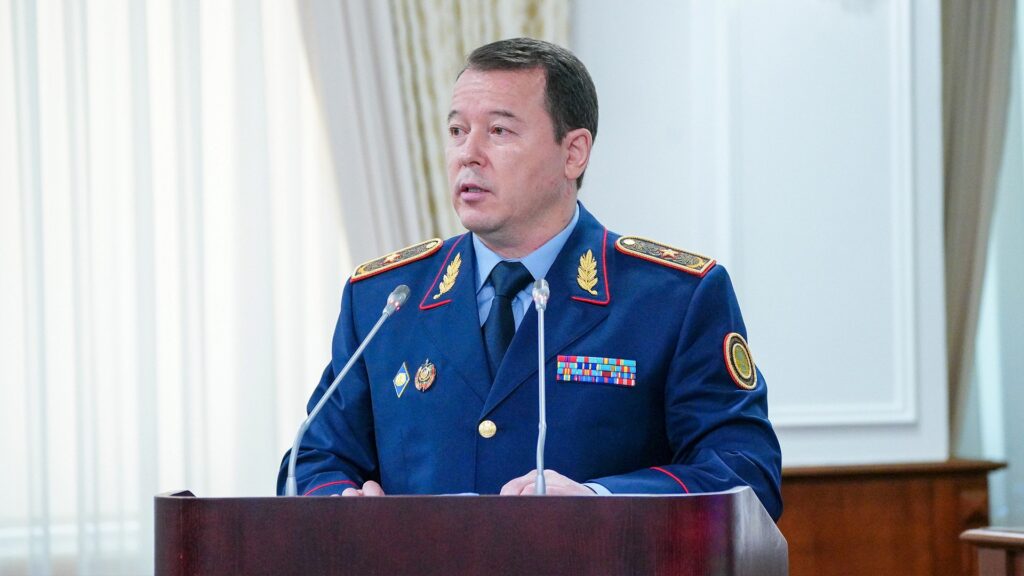
Kazakhstan may soon introduce criminal liability for holding dual citizenship, a significant escalation from the current administrative penalties. The proposal was raised by Mazhilis deputy Bolatbek Nazhmetdinuly during the opening plenary session of the lower house of parliament’s new legislative term. Under Article 10, paragraph 3 of the Constitution and Article 3 of the Law “On Citizenship of the Republic of Kazakhstan,” Kazakh citizens are prohibited from holding citizenship of another country. Currently, violations are treated as administrative offenses and are punishable by fines of up to 300 Monthly Calculation Indexes (MRP), equivalent to nearly 1.2 million tenge (approximately $2,200) or administrative expulsion. Deputy Nazhmetdinuly argued that these measures are inadequate. “Those who hold second citizenship are no longer Kazakhstani. They do not feel a part of this country; they enjoy rights without fulfilling obligations. Often, they are beyond the reach of law enforcement due to extradition restrictions. We are aware of many such cases. That is why I will advocate for tougher penalties, up to and including criminal liability. I am confident my colleagues will support this initiative. Is the Ministry of Internal Affairs ready to back it?” he asked Interior Minister Yerzhan Sadenov. Minister Sadenov responded that the ministry would act in accordance with any new legal norms adopted by parliament. According to the Border Service of the National Security Committee (NSC), 1,190 cases of dual citizenship were identified at Kazakhstan’s borders in 2024, including 91 cases in January 2025 alone. Domestically, the Ministry of Internal Affairs (MIA) held 675 individuals administratively accountable for dual citizenship in 2024. Of these, 565 had acquired Russian citizenship, while others held citizenship from Turkey (26 cases), the United States (22), and Germany (11). Of those charged, 526 paid fines, while 149 were expelled from Kazakhstan. In January 2025, another 66 individuals were penalized, including 64 for acquiring Russian citizenship and one each for German and Kyrgyz citizenship. As previously reported by The Times of Central Asia, the government continues to support the repatriation of ethnic Kazakhs. As of early 2025, 65 ethnic Kazakhs holding foreign citizenship had received "Ata Zholy" cards, which grant the right to live and work in Kazakhstan for up to ten years.

Kazakhstan Deports 10,000 Foreigners Amid Crackdown on Migration Violations

Nearly 10,000 foreign citizens have been deported from Kazakhstan since the beginning of 2025, according to First Deputy Minister of Internal Affairs Baurzhan Alenov. The announcement was made during a recent government meeting addressing migration trends and enforcement measures. Alenov noted a consistent rise in the number of foreign arrivals to the country. In the first half of 2025 alone, more than 7.5 million people entered Kazakhstan, while 7.2 million departed, a net increase of 600,000 compared to the same period in 2024. Approximately 90% of those arriving are citizens of post-Soviet states. “It is important to note that 97% of foreign citizens comply with migration laws. However, more than 200,000 individuals have faced administrative penalties,” Alenov stated. “Of these, 46,000 were fined for violating residency rules, and nearly 10,000 have been deported with a five-year ban on re-entry.” In addition, over 2,000 employers were fined for the illegal employment of foreign workers. Seven criminal cases have been opened against repeat offenders. Migration Patterns and Permanent Residency As of mid-2025, approximately 212,000 foreign nationals reside in Kazakhstan on a permanent basis. The largest concentration is in Almaty (42,000), followed by the Almaty region (32,000), and both Astana and the Karaganda region (17,000 each). Over the past three years, the number of permanent foreign residents has risen by 42%. Kazakhstan also hosts around 430,000 temporary foreign residents. Of these, 360,000 are labor migrants, 17,000 arrived for family reunification, 8,000 for educational purposes, and 44,000 for tourism or private matters. Government Response and New Initiatives Prime Minister Olzhas Bektenov emphasized the need for stricter enforcement of migration laws. He highlighted that over 7,000 violations were detected in May alone during nationwide operations. “Such incidents must be addressed promptly. We need to actively implement digital tools. The introduction of migrant ID cards, issued at border entry points, must be accelerated to improve monitoring and regulation,” Bektenov said. He instructed the Ministry of Internal Affairs to tighten administrative oversight and called on the Ministry of Labor and Social Protection to enhance regulation of private agencies involved in sending Kazakh citizens abroad for work. “These agencies currently operate without accountability or oversight. By year’s end, legislative amendments must be proposed to require licensing of such activities. Additionally, I instruct the Ministry of Labor to submit a draft Concept of Migration and Demographic Policy by October 1. This document should align with the Concept of Regional Policy being developed through 2030,” Bektenov concluded. As previously reported by The Times of Central Asia, the majority of foreign labor migrants in Kazakhstan in 2025 have come from China, Uzbekistan, Turkey, and India, working primarily in the construction sector.

U.S. Commission Again Cites Turkmenistan for Religious Freedom Violations

The U.S. Commission on International Religious Freedom (USCIRF) has once again designated Turkmenistan as a “Country of Particular Concern” (CPC), citing ongoing and systematic violations of religious freedom in its 2024 annual report. Persistent State Control and Persecution The USCIRF report emphasizes that religious freedoms in Turkmenistan remain severely restricted, with the state maintaining tight control over religious life and prosecuting individuals whose beliefs deviate from officially sanctioned interpretations. Notably, the commission highlighted the imprisonment of ten Muslims for participating in peaceful religious activities, a case that underscores the regime's repressive stance toward nonconforming Islamic practices. Turkmenistan’s legal framework continues to draw criticism. The 2016 Religion Law prohibits unregistered religious groups and heavily restricts the distribution of religious literature, instruction, and rituals. The 2015 Law on Combating Extremism also remains a concern, as its vague provisions allow for the prosecution of peaceful religious activity. Harassment of Religious Minorities The report also documents the continued harassment of Protestant Christians and Jehovah’s Witnesses. In one case, a mosque official in Lebap province reportedly threatened to "shut down" a pastor of an unregistered Protestant church, prompting a visit from the Ministry of National Security. The pastor’s relatives later received anonymous threats. In January, law enforcement officers raided a Jehovah’s Witnesses' home in the village of Sakara, detaining five individuals who were subjected to eight hours of interrogation. Restrictions on Religious Travel The Turkmen authorities also restrict international travel on religious grounds. In January 2024, Pygamberdy Allaberdyev, a lawyer and activist from Balkanabat, was barred from traveling to Iran to attend a relative’s funeral. According to USCIRF, he was informed by Department of Homeland Security officials that he was under surveillance and would be prohibited from leaving the country for five years. Religion and the Cult of Personality The commission's report also criticizes the use of religion to reinforce the cult of personality surrounding former president Gurbanguly Berdimuhamedov. Although he currently serves as chairman of the Khalk Maslahaty, his influence remains widespread. Officials in Balkanabat and Turkmenbashi reportedly interfered with wedding ceremonies, mandating the exclusive use of Turkmen music, including songs from the former president’s personal repertoire. Authorities have also targeted religious expression among civil servants. Men have been forced to shave their beards, and women have been ordered to remove their hijabs. Ahead of the Berdimuhamedov family’s vacation in Avaza, police carried out raids targeting religious symbols. In October, women in Ashgabat wearing hijabs were reportedly detained, had their belongings confiscated, and were banned from traveling abroad. They were also lectured about the secular nature of the state. Policy Recommendations In its conclusions, USCIRF recommends targeted sanctions against officials and agencies responsible for egregious violations of religious freedom, including asset freezes and visa bans. The commission also urged the U.S. Congress to take a more active role in addressing these issues through hearings and delegations to the region. Turkmenistan has consistently appeared on USCIRF’s CPC list since 2000, reflecting its entrenched policies of religious control, suppression of non-state-approved faiths, and ongoing violations against...