
• KGS/USD = 0.01143 0%
  • KZT/USD = 0.00205 0%
  • TJS/USD = 0.10724 0.09%
  • UZS/USD = 0.00008 0%
  • TMT/USD = 0.28571 0%
  • KGS/USD = 0.01143 0%
  • KZT/USD = 0.00205 0%
  • TJS/USD = 0.10724 0.09%
  • UZS/USD = 0.00008 0%
  • TMT/USD = 0.28571 0%
  • KGS/USD = 0.01143 0%
  • KZT/USD = 0.00205 0%
  • TJS/USD = 0.10724 0.09%
  • UZS/USD = 0.00008 0%
  • TMT/USD = 0.28571 0%
  • KGS/USD = 0.01143 0%
  • KZT/USD = 0.00205 0%
  • TJS/USD = 0.10724 0.09%
  • UZS/USD = 0.00008 0%
  • TMT/USD = 0.28571 0%
  • KGS/USD = 0.01143 0%
  • KZT/USD = 0.00205 0%
  • TJS/USD = 0.10724 0.09%
  • UZS/USD = 0.00008 0%
  • TMT/USD = 0.28571 0%
  • KGS/USD = 0.01143 0%
  • KZT/USD = 0.00205 0%
  • TJS/USD = 0.10724 0.09%
  • UZS/USD = 0.00008 0%
  • TMT/USD = 0.28571 0%
  • KGS/USD = 0.01143 0%
  • KZT/USD = 0.00205 0%
  • TJS/USD = 0.10724 0.09%
  • UZS/USD = 0.00008 0%
  • TMT/USD = 0.28571 0%
  • KGS/USD = 0.01143 0%
  • KZT/USD = 0.00205 0%
  • TJS/USD = 0.10724 0.09%
  • UZS/USD = 0.00008 0%
  • TMT/USD = 0.28571 0%

Viewing results 1 - 6 of 9

Kazakhstan, Tajikistan, and Uzbekistan Agree on Summer Water Releases from Bahri Tojik Reservoir

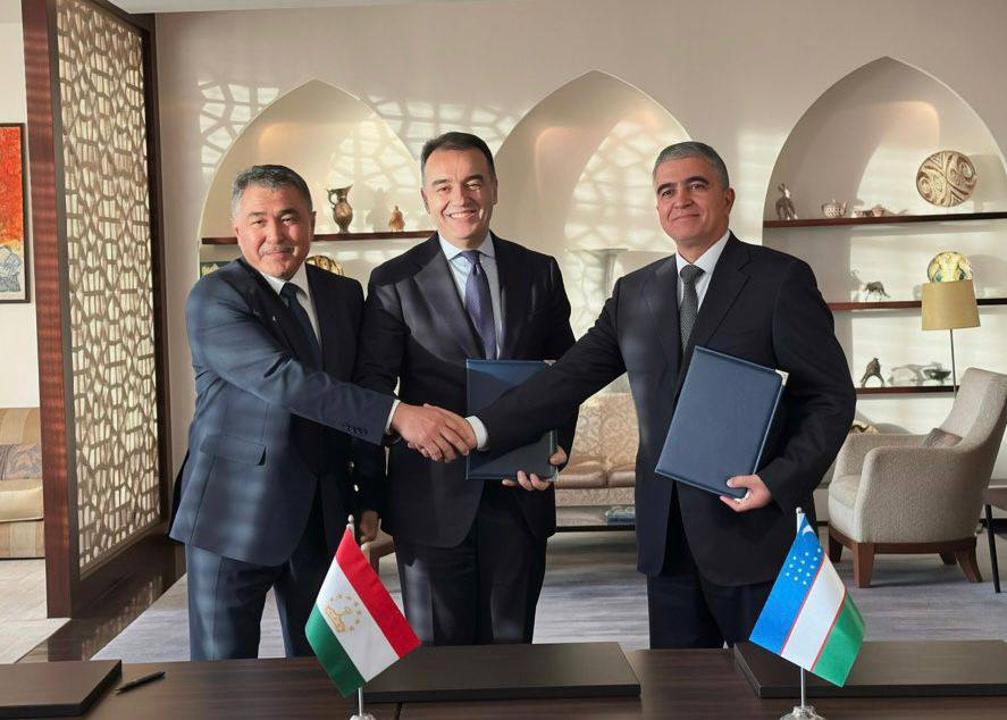
Kazakhstan, Tajikistan, and Uzbekistan have agreed on water releases from Tajikistan’s Bahri Tojik reservoir for the June-August 2026 irrigation period, Kazakhstan’s Ministry of Water Resources and Irrigation has announced. The agreement was formalized in a trilateral protocol signed by Kazakhstan’s Minister of Water Resources and Irrigation Nurzhan Nurzhigitov, Tajikistan’s Minister of Energy and Water Resources Juma Daler, and Uzbekistan’s Minister of Water Resources Shavkat Khamrayev. Under the agreed schedule, water from the Bahri Tojik reservoir will be released during the summer to support agricultural producers in Kazakhstan’s Turkestan region, particularly in the Maktaaral and Zhetysai districts, where irrigation demand rises sharply during the growing season. “The issue of supplying irrigation water to the southern regions remains under special control,” Nurzhigitov said in comments released by Kazakhstan's ministry. “The agreements reached are the result of constructive interaction and mutual support between Central Asian countries. The measures taken will help ensure a stable growing season and support domestic farmers.” The ministers also reaffirmed their intention to strengthen regional cooperation on the rational and mutually beneficial use of shared water resources, a longstanding challenge in Central Asia, where agriculture depends heavily on transboundary rivers and reservoirs. The Bahri Tojik reservoir, formerly known as the Kairakkum reservoir before being renamed in 2016, is one of Tajikistan’s largest artificial water bodies. Located in the northern Sughd region on the Syr Darya River, it has operated since 1959 and plays an important role in seasonal water distribution across the region. The latest agreement follows a similar arrangement reached in June 2025, when the three countries approved the coordinated use of reservoir water during the summer irrigation season. At the time, Kazakhstan expected to receive 491 million cubic meters of water to help offset shortages in southern farming areas.
Tajikistan Announces Water Infrastructure Drive, Urges Central Asia Cooperation

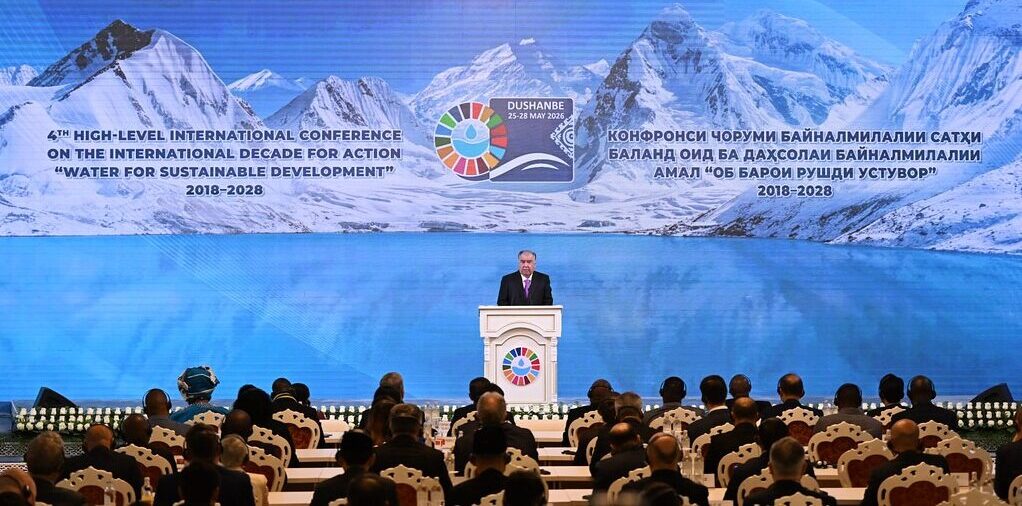
Tajikistan plans to provide at least 90% of its population with access to a centralized water supply by 2040, in a long-term infrastructure project that would reduce disparities in water services for urban and rural residents. President Emomali Rahmon spoke about Tajikistan’s water goals as well as wider collaboration in Central Asia during a speech at a Dushanbe conference that has drawn delegates from around the world for discussions on water scarcity. Tajikistan and the United Nations are co-hosting the four-day event, which ends on Thursday and is a prelude to a U.N. water conference in the United Arab Emirates in December. In 2023, the World Bank noted that Tajikistan has significant water resources, but said its infrastructure needed large-scale investment and about 55% of its population had access to “safely managed” water supplies. Only 24% of the Central Asian country’s rural population had piped water services, reflecting the big difference between urban and rural areas, according to the World Bank. It also said Tajikistan allocated a far smaller percentage of its annual budget to water supply and sanitation than in other countries in Europe and Central Asia. In his speech on Tuesday, Rahmon said “we are committed to ensuring access” to centralized water supply — a system that can promote quality of service quality and lower costs — for 90% of people in Tajikistan by 2040. “Through this measure, we are determined to guarantee access to clean drinking water for every citizen,” said the president, who has led the country for more than three decades. Tajikistan has more than 10 million people. Rahmon also described “transboundary cooperation in the water sector” as a priority and said Tajikistan will push for more dialogue in Central Asia on addressing critical water challenges. The International Fund for Saving the Aral Sea is an effective platform for promoting the “sustainable development” of water resources, according to the president. Other leaders in Central Asia have made similar comments about the fund, a collective effort to address the ecological disaster that followed the collapse of what was once one of the largest lakes in the world. The Aral Sea started shrinking decades ago after Soviet engineers diverted rivers for irrigation. Regional cooperation on water management has gained momentum in recent years, though some officials and analysts are still concerned that water shortages could stir tension between upstream and downstream countries in Central Asia.

Opinion: Can the Aral Sea Be Saved? Central Asia’s Water Cooperation Test

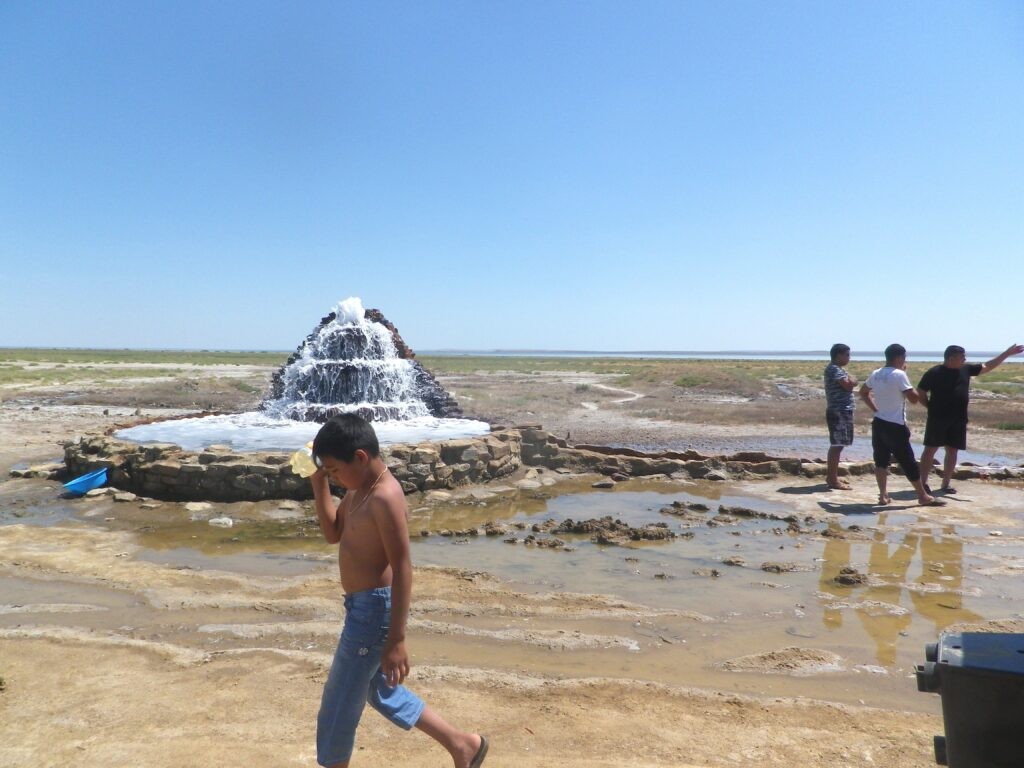
For most people, the Aral Sea is known through climate documentaries and satellite images as shorthand for ecological disaster. Once the world’s fourth-largest lake, it withered after Soviet planners diverted its two lifelines, the Amu Darya and Syr Darya, to turn Central Asia into a cotton empire. Over almost five decades, as much as three-quarters of the water in these river systems has leaked into desert soils rather than reaching the sea. NASA satellite data show that the blue inland ocean has been replaced by dusty basins. We all know that story. But the more urgent question is different: can the Aral Sea still be “saved” in any meaningful sense, in a century of climate stress and water shortages? Is it still capable of being restored to health? The honest answer is yes, but only if Central Asian states and their international partners stop treating it as a frozen symbol of Soviet failure and begin governing the entire basin as a shared, climate-vulnerable commons. Anything less is nostalgia with good drone footage. From Lake to Warning Signal The Aral Sea once covered about 68,000 square kilometers and supported fishing communities along what is now the Kazakhstan-Uzbekistan border. Before the large-scale Soviet irrigation projects of the 1960s, its level depended mainly on inflow from the Amu Darya and Syr Darya, with smaller contributions from precipitation and groundwater. In the arid climate of the basin, the sea’s stability depended on a fragile balance between river inflow and water loss through evaporation. That balance began to collapse after Soviet planners expanded irrigation for cotton and rice, diverting water from rivers that had fed the sea for centuries. Evaporation continued while river inflow fell, and the sea shrank rapidly. By the early 2000s, time-lapse images published by NASA’s Earth Observatory showed large areas of deep blue water turning into exposed seabed and dust plains within a generation. The consequences went far beyond a retreating shoreline. As the water receded, the exposed seabed became the Aralkum Desert, a source of toxic dust contaminated with salt as well as fertilizer and pesticide residues. Winds carry that dust across farms and towns, degrading soil and crops while exposing residents to serious health risks. The IFAS Agency in Uzbekistan, a working body of the International Fund for Saving the Aral Sea, coordinates projects and programs in the Aral Sea basin. The collapse of fisheries also devastated local livelihoods and food supplies. Researchers have linked the wider Aral Sea crisis to higher rates of respiratory disease and anemia. Some studies have also reported elevated cancer risks. The loss of such a large body of water has changed the local climate. Without the sea’s moderating effect, summers have become hotter and drier, while winters have become colder. These pressures are now compounded by climate change and the retreat of glaciers in the upstream mountains that feed Central Asia’s river systems. The Aral Sea is therefore more than an environmental tragedy. It is a warning of what can happen when political...
