For most people, the Aral Sea is known through climate documentaries and satellite images as shorthand for ecological disaster. Once the world’s fourth-largest lake, it withered after Soviet planners diverted its two lifelines, the Amu Darya and Syr Darya, to turn Central Asia into a cotton empire. Over almost five decades, as much as three-quarters of the water in these river systems has leaked into desert soils rather than reaching the sea. NASA satellite data show that the blue inland ocean has been replaced by dusty basins.
We all know that story. But the more urgent question is different: can the Aral Sea still be “saved” in any meaningful sense, in a century of climate stress and water shortages? Is it still capable of being restored to health?
The honest answer is yes, but only if Central Asian states and their international partners stop treating it as a frozen symbol of Soviet failure and begin governing the entire basin as a shared, climate-vulnerable commons. Anything less is nostalgia with good drone footage.
From Lake to Warning Signal
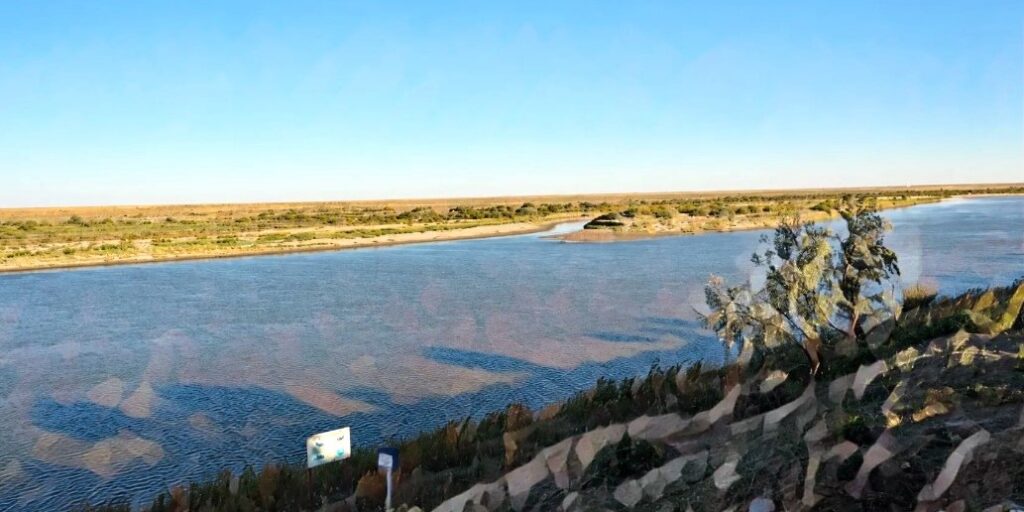
The Aral Sea once covered about 68,000 square kilometers and supported fishing communities along what is now the Kazakhstan-Uzbekistan border. Before the large-scale Soviet irrigation projects of the 1960s, its level depended mainly on inflow from the Amu Darya and Syr Darya, with smaller contributions from precipitation and groundwater. In the arid climate of the basin, the sea’s stability depended on a fragile balance between river inflow and water loss through evaporation.
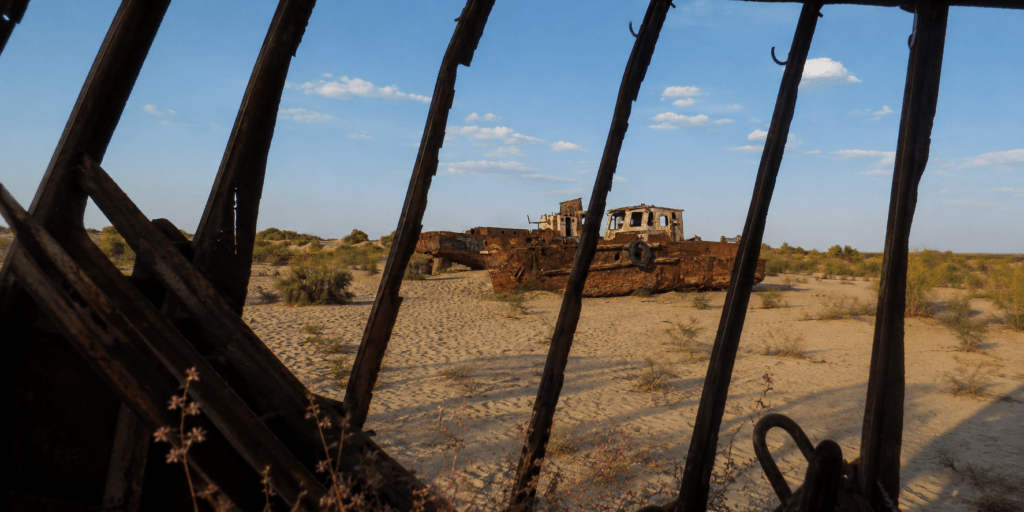
That balance began to collapse after Soviet planners expanded irrigation for cotton and rice, diverting water from rivers that had fed the sea for centuries. Evaporation continued while river inflow fell, and the sea shrank rapidly. By the early 2000s, time-lapse images published by NASA’s Earth Observatory showed large areas of deep blue water turning into exposed seabed and dust plains within a generation.
The consequences went far beyond a retreating shoreline. As the water receded, the exposed seabed became the Aralkum Desert, a source of toxic dust contaminated with salt as well as fertilizer and pesticide residues. Winds carry that dust across farms and towns, degrading soil and crops while exposing residents to serious health risks. The IFAS Agency in Uzbekistan, a working body of the International Fund for Saving the Aral Sea, coordinates projects and programs in the Aral Sea basin.
The collapse of fisheries also devastated local livelihoods and food supplies. Researchers have linked the wider Aral Sea crisis to higher rates of respiratory disease and anemia. Some studies have also reported elevated cancer risks.
The loss of such a large body of water has changed the local climate. Without the sea’s moderating effect, summers have become hotter and drier, while winters have become colder. These pressures are now compounded by climate change and the retreat of glaciers in the upstream mountains that feed Central Asia’s river systems. The Aral Sea is therefore more than an environmental tragedy. It is a warning of what can happen when political denial shapes water policy in a warming climate.
A Partial Comeback in the North
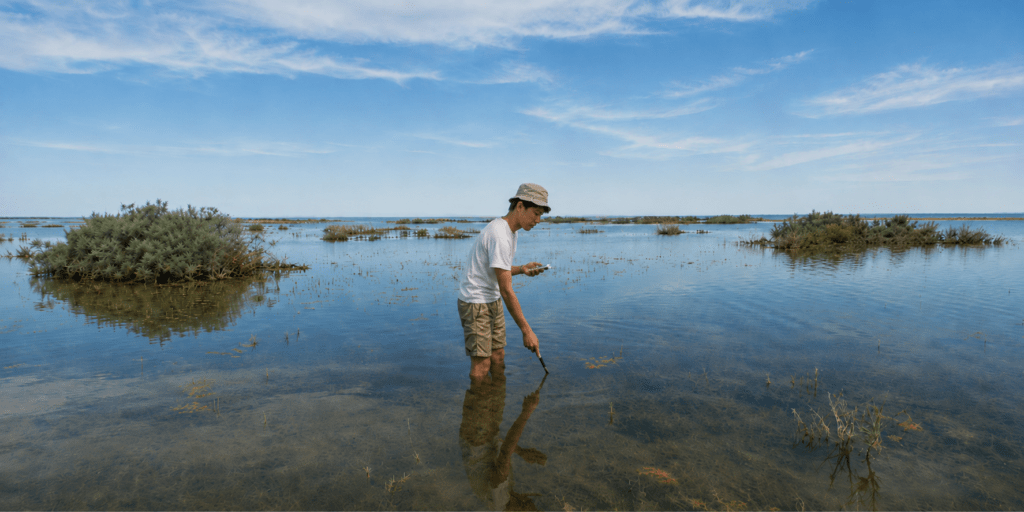
The Aral Sea is also a case study in partial recovery, where engineering and political will have aligned. In northern Kazakhstan, the Kok-Aral dam, completed in 2005 with World Bank support, was designed to hold Syr Darya water in the North Aral Sea instead of allowing it to drain into the largely desiccated south. The World Bank says the dam and related infrastructure helped raise water levels, reduce salinity, and support the return of fisheries in the northern basin. A region once widely regarded as beyond recovery again had a functioning, if much smaller, sea.
The social effects have been significant. Fish catches have returned to thousands of tons a year. That recovery has brought work back to the fishing sector and renewed activity in Aralsk, a port town that had been left far from the waterline. Kazakhstan’s authorities have discussed further work to raise the North Aral’s level and expand its surface area, while managing Syr Darya inflows more carefully. The lesson matters beyond Central Asia: targeted infrastructure can reverse even severe ecological decline, but only where governments accept long-term water management over short-term gains.
Greening a Dead Seabed in the South
In Karakalpakstan, the situation is different. Most of the South Aral Sea has vanished. Remnant water bodies and vast salt flats remain, while the exposed seabed continues to generate dust. Restoring the southern sea to its pre-1960 size is not realistic under current water use and climate conditions. That does not make restoration irrelevant. It shifts the focus to people still living in the disaster zone.
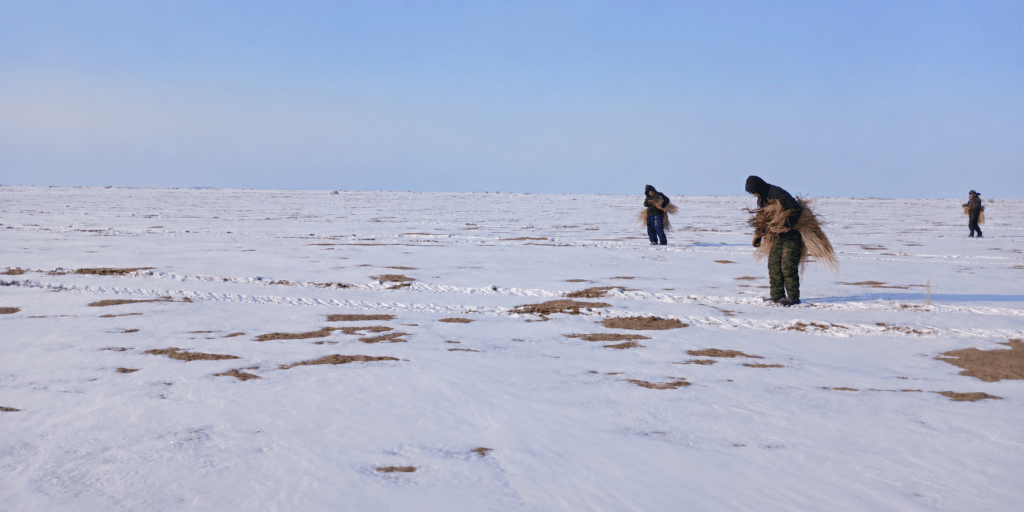
This is why projects such as the United Nations Development Programme’s (UNDP) “Green Aral Sea” initiative matter. UNDP and Uzbekistan’s authorities have supported the planting of saxaul and other hardy desert vegetation on the dried seabed to help secure loose soil and reduce dust storms. According to UNDP, the project’s next stage in March 2025 planted 80,000 saxaul seedlings on 80 hectares in Karakalpakstan’s Muynak district.
This is not a romantic “sea reborn” story. It is slow adaptation: a practical attempt to protect public health and create some local work through forestry and land rehabilitation. If “saving the Aral Sea” is defined only as putting water back, such work is overlooked. But it is central to justice for communities still living with the consequences of the disaster.
Regional Politics: The Real Barrier
Behind every dam and planting project lies a harder question: who controls the water, and for whose benefit? Since 1993, the five Central Asian states have cooperated through IFAS, created to address the environmental crisis and improve social and economic conditions in the basin. The arrangement has kept regional talks alive on water allocation, reservoir operations, and environmental programs along the Syr Darya and Amu Darya.
The arrangement has kept regional dialogue alive, but it still lacks the authority needed to manage the basin effectively. Recent policy analysis points to persistent weaknesses in Central Asia’s water and energy coordination, including weak enforcement, financial constraints, and the tendency of national priorities to override basin-wide planning. Upstream countries such as Kyrgyzstan and Tajikistan rely heavily on hydropower and often need to release more water in winter, when electricity demand is high. Downstream countries, especially Uzbekistan and Turkmenistan, need more water in summer for irrigation and continue to face pressure to reduce reliance on water-intensive agriculture.
Climate change is making these tensions harder to manage. Shrinking glaciers, rising temperatures, and more erratic river flows are expected to increase competition unless the region improves water-saving practices and gives basin-wide agreements more practical force. The greatest obstacle to saving what remains of the Aral Sea is therefore not a lack of engineering knowledge. It is the reluctance of states to accept rules that limit unilateral water use.
What “Saving” Really Means
Anyone sitting in a classroom in California or Delhi can see the Aral Sea as a distant cautionary tale of Soviet hubris. Its dynamics, however, are disturbingly familiar. The disaster began with promises of more irrigation than the rivers could sustain, while ecosystems were treated as expendable and water was assumed to be endlessly available. Similar blind spots now shape debates over the Great Salt Lake and groundwater in the American West, where human stories often come after technical arguments over supply and demand.
Historian Sarah Cameron has described the Aral Sea as “the biggest ecological catastrophe of our time.” She has also argued that it has often been discussed globally as a crime against nature, while the economic hardship, cultural erosion, and health problems faced by residents of the former sea have received less attention. That blind spot matters because “saving” the Aral cannot mean restoring a pre-1960 map. The blue expanse that once defined the region is gone, and pretending otherwise turns recovery into nostalgia.
But that does not mean there is nothing left to save. The North Aral can remain a living lake if river inflows are managed responsibly. In the south, reducing dust from the exposed seabed and supporting public health in places such as Karakalpakstan must be understood as recovery in their own right. Across the basin, governments need institutions with real authority, along with investment in water efficiency and a shift away from the most wasteful forms of agriculture.
The lesson reaches beyond one sea. In an era of climate stress, saving a place often means accepting partial recovery and protecting the people who remain. It means doing the hard work of cooperation before another lake is pushed toward the same fate.
The views expressed in this article are those of the author and do not necessarily reflect the official policy or position of the publication, its affiliates, or any other organizations mentioned.