• KGS/USD = 0.01144 0%
  • KZT/USD = 0.00205 0%
  • TJS/USD = 0.10722 0%
  • UZS/USD = 0.00008 0%
  • TMT/USD = 0.28490 0%
  • KGS/USD = 0.01144 0%
  • KZT/USD = 0.00205 0%
  • TJS/USD = 0.10722 0%
  • UZS/USD = 0.00008 0%
  • TMT/USD = 0.28490 0%
  • KGS/USD = 0.01144 0%
  • KZT/USD = 0.00205 0%
  • TJS/USD = 0.10722 0%
  • UZS/USD = 0.00008 0%
  • TMT/USD = 0.28490 0%
  • KGS/USD = 0.01144 0%
  • KZT/USD = 0.00205 0%
  • TJS/USD = 0.10722 0%
  • UZS/USD = 0.00008 0%
  • TMT/USD = 0.28490 0%
  • KGS/USD = 0.01144 0%
  • KZT/USD = 0.00205 0%
  • TJS/USD = 0.10722 0%
  • UZS/USD = 0.00008 0%
  • TMT/USD = 0.28490 0%
  • KGS/USD = 0.01144 0%
  • KZT/USD = 0.00205 0%
  • TJS/USD = 0.10722 0%
  • UZS/USD = 0.00008 0%
  • TMT/USD = 0.28490 0%
  • KGS/USD = 0.01144 0%
  • KZT/USD = 0.00205 0%
  • TJS/USD = 0.10722 0%
  • UZS/USD = 0.00008 0%
  • TMT/USD = 0.28490 0%
  • KGS/USD = 0.01144 0%
  • KZT/USD = 0.00205 0%
  • TJS/USD = 0.10722 0%
  • UZS/USD = 0.00008 0%
  • TMT/USD = 0.28490 0%

Viewing results 1 - 6 of 67

More Valuable Than Oil: Why Kazakhstan Is Overhauling Its Water Code

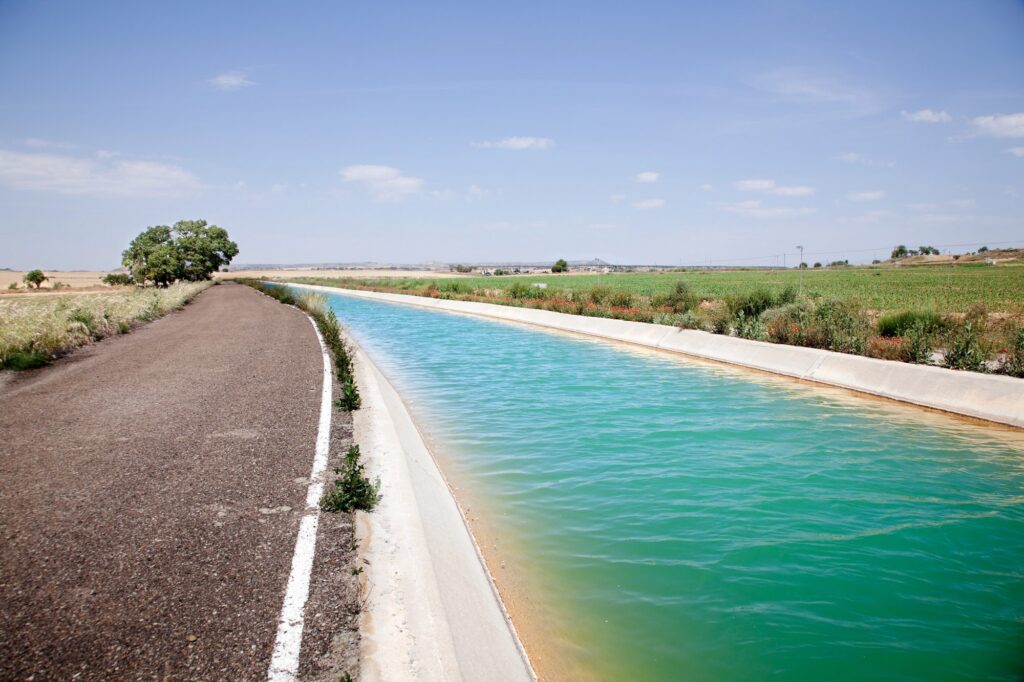
For Kazakhstan, a country with vast territory and high dependence on transboundary rivers, water is becoming an increasingly critical constraint on economic development. Amid climate change, industrial expansion, and deteriorating infrastructure, water scarcity is emerging as a strategic risk, on par with fluctuations in global commodity markets. Recognition of the issue has been growing for over three decades, but water resource management remained fragmented across environmental, agricultural, and municipal departments, with no unified decision-making center. A turning point came in 2023, when President Kassym-Jomart Tokayev signed a decree establishing the Ministry of Water Resources and Irrigation. This marked institutional recognition of the water crisis and an admission that the existing governance model no longer matched the country’s needs. The subsequent step was the drafting of a new Water Code, introducing a fundamental shift in the approach to managing water as a resource. From Natural Resource to Economic Asset The previous legislation was hampered by weak enforcement mechanisms. Fines for pollution or exceeding water usage limits were negligible for large industrial enterprises. In many cases, investing in treatment facilities or water-saving technologies was more costly than repeatedly paying fines. A further constraint was a lack of personnel: only about 70 inspectors were responsible for monitoring water use nationwide, rendering comprehensive oversight unfeasible. The new Water Code redefines the regulatory philosophy. Water is no longer treated as a near-free natural resource but is now recognized as a strategic economic asset, comparable to hydrocarbons or mineral resources. The most significant innovation is the shift from punitive measures to economic deterrents. Companies that fail to adopt water-saving technologies risk losing their special water use permits. Continued unauthorized withdrawal is then subject to a fivefold tariff increase. A Multi-Level Control System The new enforcement model introduces a tiered response to violations. The first stage includes preventive oversight, during which companies receive instructions and deadlines to address issues. Penalties follow only in cases of non-compliance. Persistent violations may result in full restriction of water access. The Ministry of Water Resources and Irrigation stresses that the primary aim is not to punish, but to incentivize water conservation and technological modernization. For many industrial enterprises, water is a vital input, making this regulatory shift especially impactful. Sector-Specific Regulatory Models The Water Code adopts differentiated approaches based on industry. Agriculture, which accounts for 60-70% of total water withdrawals, remains the largest consumer. Most of this use is non-recoverable due to outdated irrigation techniques. Farmers are offered an incentive-based framework. The state subsidizes up to 80% of the cost for adopting drip irrigation, installing metering devices, and upgrading irrigation infrastructure. Beginning in 2024, projects to repair canals and hydraulic structures, where water losses are critical, are being rolled out. Small businesses, including car washes, bathhouses, restaurants, and service providers, account for approximately 15% of consumption. These entities fall under the purview of municipal water utilities. Here, an indirect pressure mechanism is introduced: as water intake quotas are reduced, municipal utilities will be held financially accountable for excess consumption, encouraging them...

Kazakhstan Proposes Creation of UN Water Agency to Tackle Global Resource Challenges

At a forum marking the International Year of Peace and Trust and the 30th anniversary of Turkmenistan’s permanent neutrality, Kazakhstan's President Kassym-Jomart Tokayev proposed establishing a specialized United Nations body dedicated to the rational use of water resources. In his address, Tokayev emphasized the urgent need for enhanced global coordination in managing water diplomacy, noting that the current UN framework lacks a dedicated agency focused solely on water-related issues. UN-Water currently functions as a coordination mechanism rather than a specialized agency, bringing together more than 30 UN entities and dozens of international organizations involved in water and sanitation. Unlike bodies such as the World Health Organization or the Food and Agriculture Organization, it has no independent mandate, budget, or enforcement capacity, a limitation long cited by water policy experts. “Kazakhstan proposes the establishment of an International Water Organization that could consolidate all existing mandates of various UN organizations,” he said during the forum in Ashgabat. Central Asia is among the regions most exposed to water stress, with climate change, aging infrastructure, and competing national demands placing increasing pressure on shared river basins. Disputes over transboundary water use have periodically strained relations among regional states, making water diplomacy a persistent strategic concern. Tokayev suggested transforming the current UN-Water mechanism, a coordinating platform comprising 36 UN entities and 47 international organizations, into a fully-fledged UN agency with a specialized mandate on water and sanitation. “The implementation of such an initiative is fully in line with the UN’s Sustainable Development Goals and, of course, is in the interests of the entire international community,” he stated. The President also announced that Astana will host a Regional Environmental Summit in April 2026, during which Kazakhstan plans to initiate international consultations on forming the proposed global water organization. “I am confident that, with shared political will, water-related challenges can begin to be addressed systematically rather than in a piecemeal manner, as is currently the case,” he said. Tokayev stressed that in light of intensifying water scarcity, water conservation and rational usage have become critical priorities, not only for Kazakhstan but for all Central Asian nations. The Caspian Sea has experienced sustained water-level decline over recent decades, a trend scientists attribute to climate change, reduced river inflows, and rising evaporation. The issue has emerged as a growing concern for coastal states due to its implications for fisheries, energy infrastructure, and regional economic stability. He also highlighted the pressing need to address transboundary water use and the deteriorating ecological conditions of the Aral and Caspian Seas. Tokayev advocated for enhancing the effectiveness of the International Fund for Saving the Aral Sea through joint, compromise-based regional efforts and proposed that Russia be invited to join the Fund as an observer. “The current rate of the Caspian Sea’s shallowing threatens to become irreversible,” he warned, “which would trigger a chain reaction of environmental, socio-economic, and even political consequences.” Kazakhstan has already taken a leading role in regional initiatives to preserve the Caspian ecosystem. The country previously proposed a special intergovernmental...

Central Asian Countries Agree on 2026 Water Allocations from Amu Darya and Syr Darya

Central Asian states have reached an agreement on water allocations from the Amu Darya and Syr Darya rivers for 2026. The decision was made during the 91st meeting of the Interstate Coordination Water Management Commission (ICWC), held in Ashgabat on November 13, 2025, according to Kun.uz. At the meeting, the countries agreed on how water resources will be managed during the 2025–2026 non-growing season, the period when agricultural demand is low. For the Amu Darya, the total allocation from October 2025 to October 2026 is set at approximately 55.4 billion cubic meters, with 15.9 billion cubic meters designated for the cold months from October through April. Under the agreement, Tajikistan will receive 9.8 billion cubic meters, while Turkmenistan and Uzbekistan will each receive 22 billion. A key provision is that roughly 44 billion cubic meters of the Amu Darya’s flow must reach the Kerki hydrological station in Turkmenistan to sustain downstream areas. Additionally, 4.2 billion cubic meters is allocated to support the Aral Sea and the Amu Darya delta, with half to be delivered in winter and early spring. Another 800 million cubic meters will be used for irrigation in Dashoguz, Khorezm, and Karakalpakstan. These allocations are crucial for both communities living in water-scarce regions and for preserving fragile river ecosystems. For the Syr Darya, the total allocation for the non-growing season is 4.219 billion cubic meters. Of this, Uzbekistan will receive the majority share, 3.347 billion cubic meters. Kazakhstan will receive 460 million cubic meters through the “Dustlik” canal, Tajikistan 365 million, and Kyrgyzstan 47 million. These figures are based on projected river inflows, reservoir capacities, and the need to maintain ecological flows. The ICWC also approved operational plans for key reservoirs. In Tajikistan, the Nurek Reservoir is expected to enter the non-growing season with 10.5 billion cubic meters and decline to around 9.7 billion by spring. The Tuyamuyun reservoir, located on the Uzbekistan–Turkmenistan border, will start with 4.5 billion cubic meters and reduce to 3.4 billion. Both will gradually release water to support irrigation and sustain the Amu Darya’s flow. In the Syr Darya basin, total water volume in the Toktogul, Andijan, and Charvak reservoirs at the beginning of the season is approximately 10.6 billion cubic meters, slightly below average. Tajikistan’s Bahri Tojik reservoir is expected to contain 2.6 billion cubic meters, while Kazakhstan’s Chardara reservoir will hold about 1.65 billion. Collectively, the Syr Darya basin will have around 14.9 billion cubic meters of water at the start of winter, roughly 90% of the long-term seasonal average. The 92nd ICWC meeting is scheduled to take place in Dushanbe, where officials will assess reservoir performance and water usage during the 2025-2026 season. The agenda will also include strategies to strengthen regional water security in the face of escalating climate pressures.

Kazakhstan and Germany Partner on Sustainable Water Management

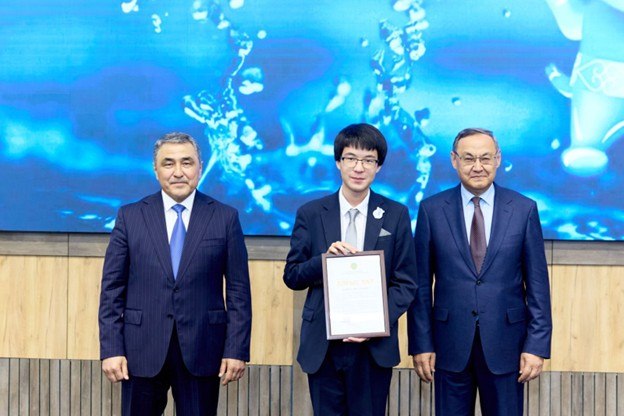
Kazakhstan’s Ministry of Water Resources and Irrigation and the German Water Partnership (GWP) signed a Strategic Partnership Agreement on October 8 aimed at enhancing bilateral cooperation in sustainable water management. The agreement will allow Kazakhstan to adopt international best practices and advanced water-saving technologies, strengthen climate resilience in the water sector, improve flood and drought response, and expand training for water-sector professionals. GWP is Germany’s leading water-sector network with a strong international focus. It brings together around 300 companies, trade associations, and institutions from business, science, and research. German expertise is already contributing to Kazakhstan’s digital projects in water resource forecasting, modeling, and accounting. German technologies are also being used in the construction of hydraulic infrastructure across the country. Following the signing, Deputy Prime Minister Kanat Bozumbayev and GWP Managing Director Boris Greifeneder discussed plans to deepen cooperation. One key proposal was the establishment of a Kazakh-German Water Innovation Hub, to be housed at the Information and Analytical Center of the Ministry of Water Resources and Irrigation, with GWP’s support. In a related initiative, the Kazakh-German University (DKU), the National Academy of Sciences of Kazakhstan, and the Kazakh National Agrarian Research University, supported by Germany’s Hanns Seidel Foundation, recently launched a new scientific and educational hub: the Kazakh-German Nexus Institute. Headquartered in Almaty, the Nexus Institute will focus on developing evidence-based policies for sustainable land and water use in Central Asia. Water resource management remains a critical priority for Kazakhstan, particularly in the country’s arid southern regions where agriculture depends heavily on efficient irrigation systems.

Kazakhstan and China Expand Cooperation in Water Management

Kazakhstan’s Ministry of Water Resources and Irrigation has signed a memorandum of cooperation with Power China to strengthen bilateral collaboration in water management. The agreement outlines plans for modernizing hydraulic infrastructure, reconstructing irrigation systems, and enhancing technical capacity through training programs and specialist exchanges. It also includes provisions for digitalization, investment in water conservation, and the efficient use of water resources. The cooperation extends to scientific research, hydrogeology, and the training of groundwater management specialists. As part of the agreement, the fourth group of Kazakh water sector professionals is currently undergoing advanced training at Power China facilities. Since the beginning of 2025, 125 specialists from Kazakhstan have been trained in China, with another 200 expected to join the program in 2026. All training expenses are being covered by the Chinese side. This follows the first-ever memorandum of understanding on water cooperation signed between the governments of Kazakhstan and China in March 2025. That agreement emphasized the rational and sustainable use of water resources, the adoption of modern technologies, alternative water sourcing, experience-sharing, and the joint training of water management personnel. The collaboration is especially significant given the shared hydrological landscape: three of Kazakhstan’s major rivers, the Irtysh, Ili, and Emel, originate in China. In the first half of 2025, Kazakhstan received 10.2 billion cubic meters of water from China via these transboundary rivers, including 4.6 billion cubic meters from the Irtysh and 5.6 billion from the Ili. Increased inflow from the Ili River enabled the Kapchagay Reservoir in the Almaty region to reach full capacity for the second consecutive year. Since the beginning of 2025, some 8.52 billion cubic meters of water have been directed downstream to Lake Balkhash, raising its water level by an average of 32 centimeters in the first half of the year. The Ili River alone contributes nearly 70% of Lake Balkhash’s total inflow, making it a critical source for maintaining the ecological balance of the region.

Kazakhstan, Kyrgyzstan, and Uzbekistan Agree on Joint Water and Energy Measures

Kazakhstan, Kyrgyzstan, and Uzbekistan have reached a landmark agreement on coordinated water and energy management, signaling a deepening commitment to cross-border cooperation amid growing seasonal and climate-related challenges. The agreement was formalized on September 7 in Cholpon-Ata, Kyrgyzstan, during a meeting of energy ministers and water management authorities from the three countries. The protocols define mutual obligations for water releases and electricity exchanges, with the goal of balancing the region’s energy needs and preserving critical water resources. Under the terms of the agreement, Kyrgyzstan will release water from the Toktogul Hydroelectric Power Plant (HPP) reservoir to downstream Kazakhstan and Uzbekistan. In return, Kyrgyzstan will receive electricity from both countries through spring 2026. According to the Kyrgyz Ministry of Energy, the arrangement is designed to optimize the use of water stored in Toktogul and to secure reliable electricity supplies for Kyrgyzstan during the 2025-2026 autumn-winter period. Regional Power Transit Agreements The protocols also include provisions for cross-border electricity transit: from Russia to Kyrgyzstan via Kazakhstan’s grid, and from Turkmenistan to Kyrgyzstan through Uzbekistan’s transmission network. The Toktogul HPP, situated on the Naryn River, a major tributary of the Syr Darya, is Kyrgyzstan’s largest power facility, generating roughly 40% of the country’s electricity. It serves a dual function: providing domestic energy and regulating water flows that are essential for irrigation in downstream Kazakhstan and Uzbekistan. In winter, Kyrgyzstan often increases power output from Toktogul to meet heating demand, but this can significantly lower reservoir levels, jeopardizing irrigation supplies the following spring. The new agreement is intended to reduce this risk by enabling Kazakhstan and Uzbekistan to supply electricity during peak winter months, allowing Kyrgyzstan to conserve water. Kazakhstan’s Ministry of Energy emphasized that the trilateral deal is crucial to maintaining water levels in Toktogul and ensuring sufficient irrigation for southern Kazakhstan during the next growing season. Broader Regional Energy Cooperation Separately, Kazakhstan and Uzbekistan signed an agreement for the supply of approximately 900 million kilowatt-hours of electricity between March and December 2026. The electricity is expected to cover anticipated shortages in Kazakhstan’s southern power grid and further underscores the growing interdependence of Central Asia’s energy and water systems.