


UN: Uzbekistan Makes Major Progress in Reducing Water Stress, but Challenges Remain
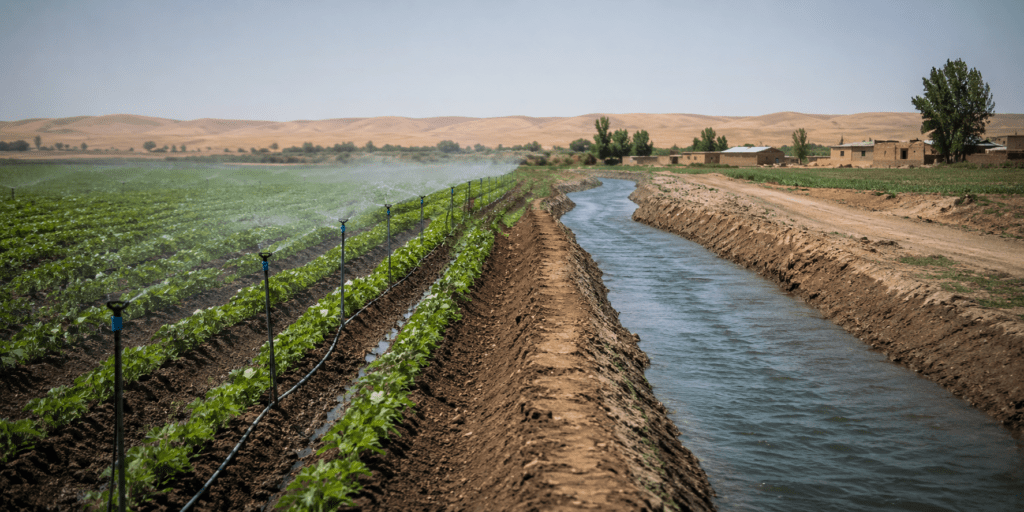
Uzbekistan has recorded one of the world’s fastest reductions in water stress in recent years, according to a new United Nations case study on the country’s water-management policies. The study points to efforts to conserve water, modernize irrigation, and expand regional cooperation. It also warns that Uzbekistan remains under pressure from climate change and rising water demand, while environmental damage linked to the Aral Sea disaster continues to affect the country. The study, prepared by UN-Water, examines how Uzbekistan managed to reduce water withdrawals while maintaining agricultural production and economic development. The report describes the country’s experience as particularly relevant for other water-stressed regions and countries seeking practical solutions to increasing pressure on freshwater resources. Water has long been one of Uzbekistan’s most strategic resources. Much of the country consists of arid and semi-arid landscapes, while agriculture remains heavily dependent on irrigation. The challenge has become even more urgent as climate change affects water availability across Central Asia. According to the UN report, Uzbekistan’s level of water stress increased steadily until 2017. Since then, the country has undertaken large-scale reforms aimed at reducing water consumption and introducing more efficient technologies. These efforts have produced measurable results. In 2017, Uzbekistan’s freshwater withdrawals reached 169% of its total renewable freshwater resources. By 2021, that figure had fallen to 122%. Although still above sustainable levels and considerably higher than the regional average of 69%, the reduction of 47 percentage points within four years represents one of the most significant improvements recorded globally under Sustainable Development Goal 6, which focuses on clean water and sanitation. Data cited by the report show that total freshwater withdrawals declined from 58.9 billion cubic meters in 2017 to 42.5 billion cubic meters in 2021. Most of the reduction came from agriculture, where irrigation withdrawals fell from 53.7 billion cubic meters to 38.5 billion cubic meters during the same period. The UN attributes much of this progress to strong political commitment. According to the report, water management has become a national priority supported at the highest levels of government. UN-Water notes that water-efficiency goals have been incorporated into several development programs. These include the 2017-2021 Action Strategy and the New Uzbekistan Development Strategy for 2022-2026. The goals also appear in the Uzbekistan-2030 strategy. Among the government’s targets are the introduction of water-saving technologies such as drip irrigation, sprinkler irrigation, and laser land leveling across all cultivated land by 2030. Authorities also aim to save up to 15 billion cubic meters of water annually, reduce irrigation losses by 25%, and fully digitize the management of 200,000 water intake points. The report identifies the expansion of water-saving technologies as one of the most important factors behind the country’s progress. Uzbekistan has combined financial incentives, soft loans, and subsidies with training programs for farmers and water specialists. According to UN-Water, this approach has helped reduce investment risks and encouraged wider adoption of modern irrigation systems. These measures are especially important because agriculture remains Uzbekistan’s largest water user. According to data from the...
