
• KZT/USD = 0.00221
  • TJS/USD = 0.10830
  • UZS/USD = 0.00008
  • TMT/USD = 0.29760
  • KZT/USD = 0.00221
  • TJS/USD = 0.10830
  • UZS/USD = 0.00008
  • TMT/USD = 0.29760
  • KZT/USD = 0.00221
  • TJS/USD = 0.10830
  • UZS/USD = 0.00008
  • TMT/USD = 0.29760
  • KZT/USD = 0.00221
  • TJS/USD = 0.10830
  • UZS/USD = 0.00008
  • TMT/USD = 0.29760
  • KZT/USD = 0.00221
  • TJS/USD = 0.10830
  • UZS/USD = 0.00008
  • TMT/USD = 0.29760
  • KZT/USD = 0.00221
  • TJS/USD = 0.10830
  • UZS/USD = 0.00008
  • TMT/USD = 0.29760
  • KZT/USD = 0.00221
  • TJS/USD = 0.10830
  • UZS/USD = 0.00008
  • TMT/USD = 0.29760
  • KZT/USD = 0.00221
  • TJS/USD = 0.10830
  • UZS/USD = 0.00008
  • TMT/USD = 0.29760
12 October 2026

Viewing results 1 - 6 of 2

Kazakhstan’s Grain Exports to Europe Hit Russian Rail Bottleneck

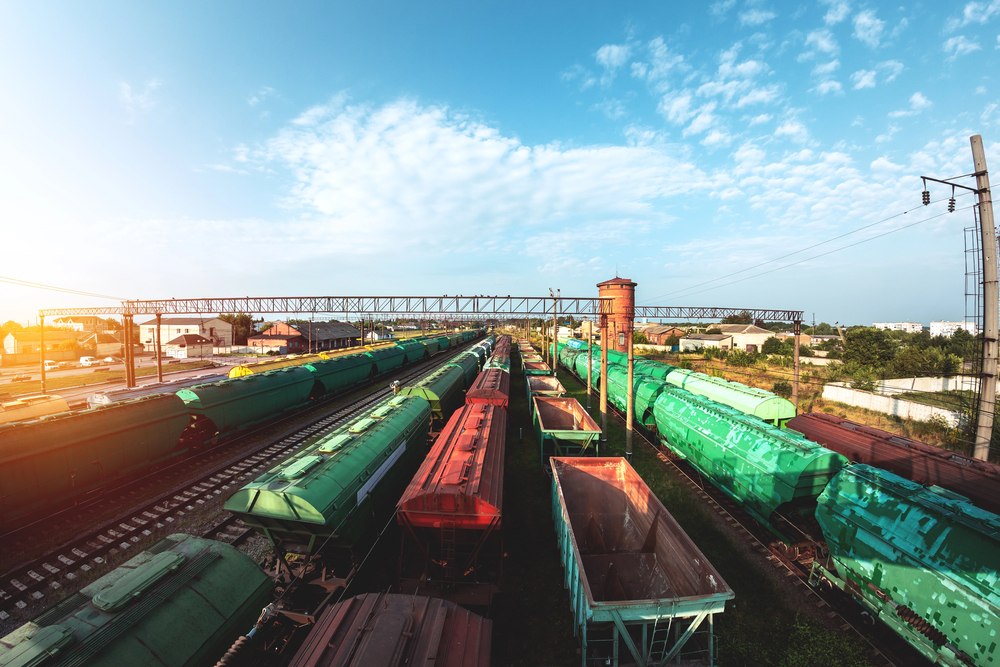
Russian Railways (RZD) has rejected October requests to transport grain from Kazakhstan through Russia to Estonian ports, citing insufficient rail capacity. There is no formal ban on shipments, but without approval, exporters cannot move their cargo along the usual route. Zeynolla Abdumanapov, head of Kazakhstan's National Association of Exporters KazGrain, reported the problem. The affected rail border crossings are Ivangorod–Narva and Pechory–Koidula, through which Kazakhstan's shipments travel to the Estonian ports of Muuga and Sillamäe. The Baltic route is particularly important for shipments of Kazakhstan's durum and high-protein wheat, as well as oilseed flax, to Europe. These crops command higher prices than ordinary wheat. On October 8, Estonia banned the transit of grain originating in or exported from Russia and Belarus. The restrictions do not apply to grain from Kazakhstan passing through Russian territory, and exporters had hoped to take advantage of available capacity at Estonian ports, where Russian grain transit had already been virtually nonexistent. However, disruptions to shipping through the Black Sea, caused by Ukrainian attacks on Russian port infrastructure and vessels, have forced Russia to redirect much of its grain toward its own Baltic ports, including Ust-Luga and Vysotsk. St. Petersburg is another destination. Russian grain also continues to pass through Latvia and Lithuania, which have not imposed equivalent bans. The shift has increased pressure on the railway network serving the Baltic region. According to Reuters, RZD has given priority to grain shipments heading toward Baltic and Arctic ports. Russia has also raised freight tariffs for shipments to Baltic and Finnish border crossings. Gani Yessenbayev, a representative of Kazakhstan Temir Zholy (KTZ), the country's state railway operator, told the Eurasian AGRICOM 2026 conference that KTZ is negotiating with RZD and recommending that exporters resubmit their applications. The volume of cargo affected by the rejections has not yet been disclosed. Russia can be bypassed via the Trans-Caspian International Transport Route through Azerbaijan and Georgia. However, KazGrain estimates that shipping costs along this route are roughly twice as high, while transshipment capacity is constrained by the facilities at Georgia's Port of Poti. For large-scale wheat exports, the additional costs could prove too high. Kazakhstan's grain trade with Iran is also becoming more difficult. According to Abdumanapov, sea freight rates from Aktau have risen from $17 to $95 per metric ton. Suppliers from Kazakhstan must compete with cheaper Russian grain, while a stronger tenge further reduces their export earnings in local currency. Most of Kazakhstan's grain exports, however, go to neighboring countries rather than Europe. From January through September 2026, grain shipments by rail for export increased by 14% to 8.4 million metric tons. Of that total, 5.5 million tons went to Central Asia. Uzbekistan received 4.11 million tons and Tajikistan 1.18 million tons. Shipments to Afghanistan totaled 762,000 tons, while China received 750,000 tons. Kazakhstan increased its agricultural export revenue by more than a third in 2025. The restrictions on transit through Russia therefore primarily threaten sales of Kazakhstan's higher-value agricultural products to the European Union. Future shipments will...


Kazakhstan Flour Exports Surge as Afghanistan Drives Demand

Kazakhstan is heading for its strongest wheat flour export season in years, reviving an industry that once made the country the world's largest flour exporter. Exports are forecast to reach 2.12 million tonnes in the 2025/26 marketing year, according to Yevgeny Karabanov, chairman of the Analytics Committee of the Grain Union of Kazakhstan. Shipments had already reached 1.87 million tonnes after ten months, up 18.3% from a year earlier. That is a substantial volume by global standards. Kazakhstan exported 1.88 million tonnes of wheat flour in 2024, making it the world's second-largest exporter by volume after Turkey. The country has been an even bigger player in the past: around 15 years ago, Kazakhstan was the world's leading flour exporter, although its share of the market subsequently declined as competitors expanded their own milling industries. Afghanistan is central to the current recovery. In 2024, it bought about 1.23 million tonnes of Kazakh flour, roughly two-thirds of Kazakhstan's total exports, and Karabanov said shipments increased by a further 21.5% during the first ten months of the current season. Wheat flour is simply wheat that has been milled into the powder used to make bread and other foods, but the distinction matters for Kazakhstan. Exporting flour allows Kazakh companies to carry out the processing – and retain more of the value – before the product crosses the border. Exporting raw wheat leaves that business to mills in the importing country. That shift is already visible in Uzbekistan. Its purchases of Kazakh flour fell 15.8% during the period cited by Karabanov, while its imports of Kazakh wheat rose by 35%, as more grain is processed domestically. Afghanistan may eventually move in the same direction: its government has raised the tariff on imported flour while lowering duties on wheat in an effort to support domestic mills. Wheat imports subsequently jumped sharply in March and April. For now, however, Afghanistan remains heavily dependent on its neighbors for basic food supplies. The UN Food and Agriculture Organization estimated its cereal import requirement at 3.7 million tonnes in 2025/26, mostly wheat flour, citing limited domestic milling capacity. Dry conditions have also affected Afghan wheat production. Meanwhile, Pakistan closed its main Torkham and Chaman border crossings after clashes in October, disrupting another important Afghan trade route. Kazakhstan's flour revival forms part of a wider increase in agricultural exports. From September 2025 to July 30, 2026, the country exported 13.9 million tonnes of grain and flour in grain equivalent, up 12.6% year-on-year, with Uzbekistan and Afghanistan among the main destinations. The growth also fits Kazakhstan's broader attempt to make more money from its grain before exporting it. Earlier, The Times of Central Asia reported that the country plans to increase its grain deep-processing capacity nearly tenfold by 2028, targeting products with greater added value than raw grain.