• KZT/USD = 0.00222
  • TJS/USD = 0.10850
  • UZS/USD = 0.00008
  • TMT/USD = 0.29850
  • KZT/USD = 0.00222
  • TJS/USD = 0.10850
  • UZS/USD = 0.00008
  • TMT/USD = 0.29850
  • KZT/USD = 0.00222
  • TJS/USD = 0.10850
  • UZS/USD = 0.00008
  • TMT/USD = 0.29850
  • KZT/USD = 0.00222
  • TJS/USD = 0.10850
  • UZS/USD = 0.00008
  • TMT/USD = 0.29850
  • KZT/USD = 0.00222
  • TJS/USD = 0.10850
  • UZS/USD = 0.00008
  • TMT/USD = 0.29850
  • KZT/USD = 0.00222
  • TJS/USD = 0.10850
  • UZS/USD = 0.00008
  • TMT/USD = 0.29850
  • KZT/USD = 0.00222
  • TJS/USD = 0.10850
  • UZS/USD = 0.00008
  • TMT/USD = 0.29850
  • KZT/USD = 0.00222
  • TJS/USD = 0.10850
  • UZS/USD = 0.00008
  • TMT/USD = 0.29850
19 November 2026

Viewing results 1 - 6 of 2

Tajikistan Absent From Global Tourism Development Index as Tourist Arrivals Rise

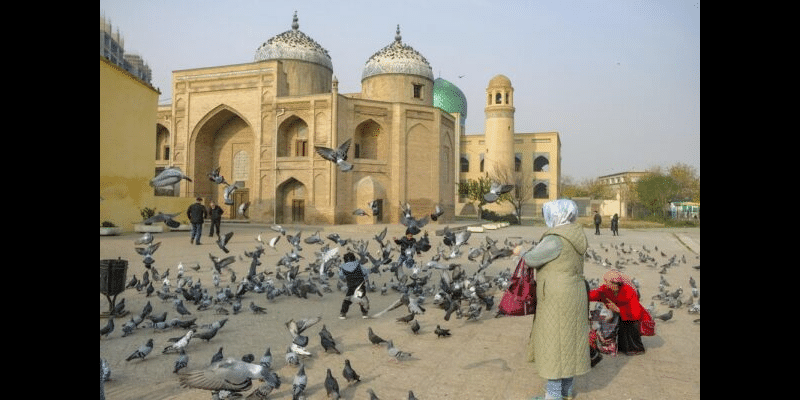
Tajikistan is missing from the World Economic Forum’s 2026 Travel & Tourism Development Index, and the report does not explain why. Two years earlier, the country ranked 99th among 119 economies worldwide. Kazakhstan remained in the rankings, placing 56th. Uzbekistan ranked 76th and Kyrgyzstan 93rd. The latest study covers 110 economies. In addition to Tajikistan, Barbados, Venezuela, Iran, Cambodia, Lebanon, Moldova, Montenegro, and Trinidad and Tobago were included in 2024 but omitted from the 2026 edition. The index assesses conditions for competitive and sustainable tourism across 102 indicators, including the business environment, safety and security, transportation and tourism infrastructure, access to digital services, and natural and cultural resources. It does not directly measure visitor numbers or tourism revenue. Under the forum’s inclusion criteria, a country must have been covered by at least one of its three most recent Executive Opinion Surveys. Fewer than 10% of its indicators may lack data, with additional limits on missing data within individual categories. Countries may also be excluded if damage from conflict has made their data outdated. Approximately 890,000 foreign tourists visited Tajikistan in the first half of 2026, a 16.7% increase compared with the same period last year. Total foreign arrivals, including visitors not classified as tourists, reached approximately 1.06 million. Neighboring Uzbekistan remains the largest source of tourists, accounting for 510,400 arrivals in the first half of the year. Russia accounted for 175,800 tourists and Kyrgyzstan for 89,000. Another 23,100 came from Kazakhstan and 22,700 from China. In July 2026, Tajikistan’s government established a dedicated tourism development fund financed through tourism fees and a levy on outbound tour packages. The funds are intended to modernize infrastructure and improve service quality. Tour operators identify high airfares and underdeveloped infrastructure outside major cities as key obstacles to international tourism growth. Tajik authorities expect the country to receive more than two million foreign tourists in 2026.

Kazakhstan, Uzbekistan, and Azerbaijan Join Trump-Initiated Board of Peace

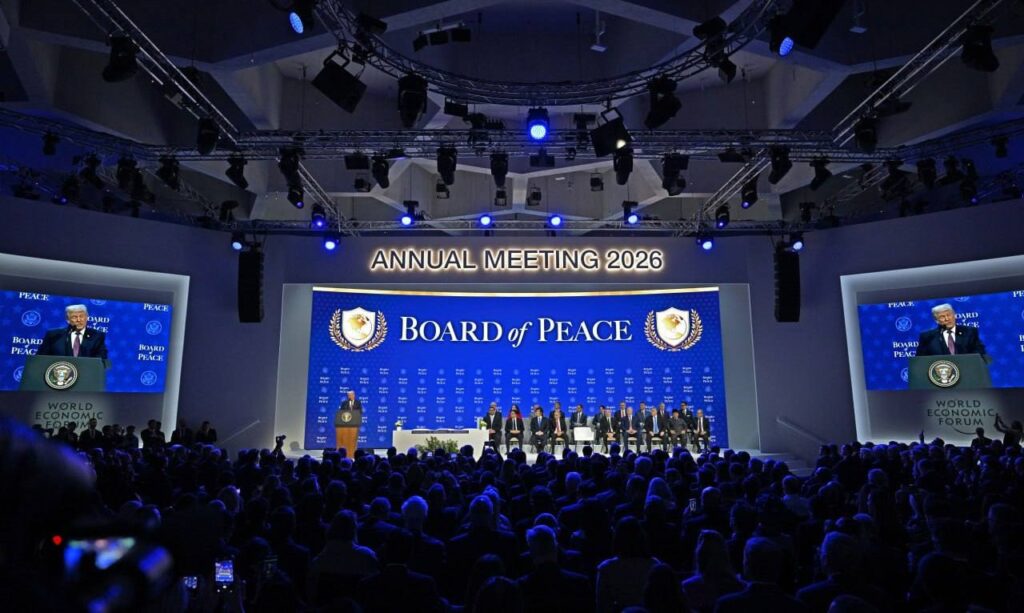
A new international organization, the Board of Peace, was formally established yesterday on the initiative of U.S. President Donald Trump. The charter for the board was signed on the sidelines of the World Economic Forum in Davos by representatives from 19 countries. Joining Kazakhstan and Uzbekistan as founding signatories, the other parties are Argentina, Armenia, Azerbaijan, Bahrain, Bulgaria, Hungary, Indonesia, Jordan, Qatar, Saudi Arabia, Turkey, the United Arab Emirates, Morocco, Mongolia, Pakistan, Kosovo, and Vietnam. The United States is not counted among the 19 signatories, acting instead as the initiative’s convener and chair. The Board of Peace is designed as a consultative platform rather than a treaty-based organization, with no enforcement powers and voluntary participation by member states. Following the signing, a comprehensive development plan for the Gaza Strip was unveiled, which envisions transforming the enclave into a regional economic hub by 2035, with a projected GDP of over $10 billion under the proposal. The plan includes restoring water, electricity, sewage systems, and hospitals, creating jobs, and developing coastal tourism. The concept was presented by entrepreneur Jared Kushner, Trump’s son-in-law. Kushner will serve on the Board of Peace’s executive board, alongside U.S. Secretary of State Marco Rubio, Special Envoy Steve Witkoff, World Bank President Ajay Banga, and former British Prime Minister Tony Blair, among others. The inclusion of Kazakhstan and Uzbekistan, the two largest economies in Central Asia, as founding members underscores their growing role in global diplomacy. Azerbaijan, which has recently expressed interest in joining the Central Asia-focused C5 regional format, also signed the charter. Separately, observers have begun referring to the growing cooperation between Central Asia and Azerbaijan as the “C6,” which could pave the way for greater collaboration on the development of the Trans-Caspian International Transport Route, including the Zangezur Corridor through Armenia. [caption id="attachment_42672" align="aligncenter" width="1280"] Image: president.uz[/caption] Uzbekistan’s participation reflects Tashkent’s increasingly active multi-vector foreign policy under President Shavkat Mirziyoyev, which has sought to expand the country’s diplomatic footprint beyond its immediate neighborhood. In recent years, Uzbekistan has stepped up engagement with the United States, the European Union, and the Middle East, while positioning itself as a pragmatic regional actor on development, connectivity, and post-conflict reconstruction initiatives. During the signing ceremony, President Kassym-Jomart Tokayev of Kazakhstan and Trump reportedly had a brief but cordial exchange. In a statement to the press, Ruslan Zheldibay, spokesperson for the Kazakh president, said Tokayev pointed out that Kazakhstan’s accession to the Abraham Accords was listed as item 177 in a document titled 365 Victories of President Donald Trump in 365 Days, distributed at the Davos Forum. Tokayev also wished Trump success in pursuing a “common sense” domestic policy. Trump, in turn, thanked Tokayev for supporting the Board of Peace initiative. [caption id="attachment_42673" align="aligncenter" width="2560"] Image: Akorda.kz[/caption] The press service of Akorda, the presidential residence of Kazakhstan, later clarified that joining the Board of Peace is based on a sovereign decision and entails a standard three-year term. Participation does not require a financial contribution, though the charter allows member states...