• KGS/USD = 0.01144 0%
  • KZT/USD = 0.00204 0%
  • TJS/USD = 0.10422 -0.1%
  • UZS/USD = 0.00008 0%
  • TMT/USD = 0.28571 0%
  • KGS/USD = 0.01144 0%
  • KZT/USD = 0.00204 0%
  • TJS/USD = 0.10422 -0.1%
  • UZS/USD = 0.00008 0%
  • TMT/USD = 0.28571 0%
  • KGS/USD = 0.01144 0%
  • KZT/USD = 0.00204 0%
  • TJS/USD = 0.10422 -0.1%
  • UZS/USD = 0.00008 0%
  • TMT/USD = 0.28571 0%
  • KGS/USD = 0.01144 0%
  • KZT/USD = 0.00204 0%
  • TJS/USD = 0.10422 -0.1%
  • UZS/USD = 0.00008 0%
  • TMT/USD = 0.28571 0%
  • KGS/USD = 0.01144 0%
  • KZT/USD = 0.00204 0%
  • TJS/USD = 0.10422 -0.1%
  • UZS/USD = 0.00008 0%
  • TMT/USD = 0.28571 0%
  • KGS/USD = 0.01144 0%
  • KZT/USD = 0.00204 0%
  • TJS/USD = 0.10422 -0.1%
  • UZS/USD = 0.00008 0%
  • TMT/USD = 0.28571 0%
  • KGS/USD = 0.01144 0%
  • KZT/USD = 0.00204 0%
  • TJS/USD = 0.10422 -0.1%
  • UZS/USD = 0.00008 0%
  • TMT/USD = 0.28571 0%
  • KGS/USD = 0.01144 0%
  • KZT/USD = 0.00204 0%
  • TJS/USD = 0.10422 -0.1%
  • UZS/USD = 0.00008 0%
  • TMT/USD = 0.28571 0%

Viewing results 1 - 6 of 42

Soft Power in Times of Geopolitical Turbulence: Kazakhstan’s Strategy as a Middle Power

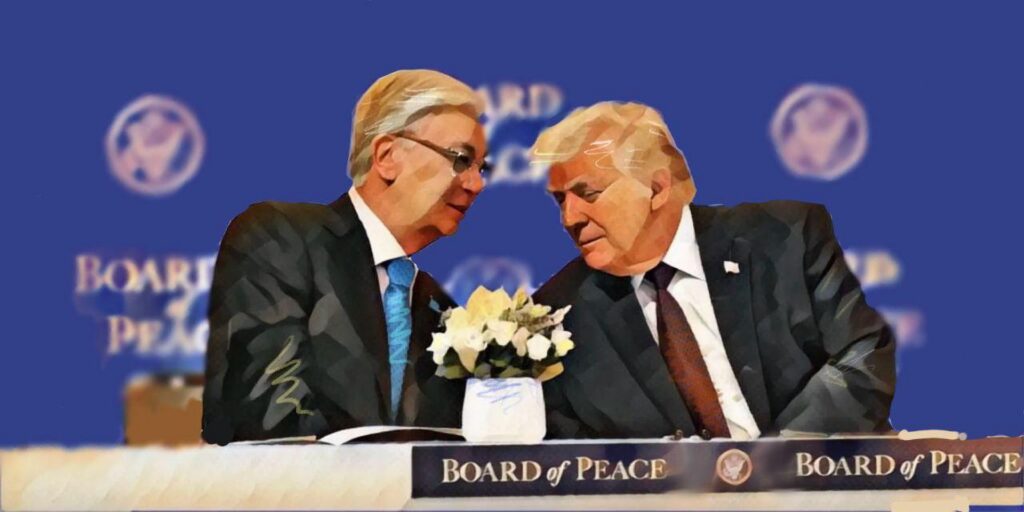
For Kazakhstan, deeply embedded in global supply chains and international investment flows, soft power is evolving from an image-building asset into a strategic instrument of resilience. In an era of globalization, when even geographically distant conflicts can directly threaten national infrastructure and economic security, Astana’s ability to leverage institutional initiatives and investment interdependence as a form of diplomatic protection has become a decisive advantage. Over the long term, stability tends to characterize states whose infrastructure and economic interests are deeply interconnected with those of major global centers of power. A middle power and rational diplomacy Kazakhstan’s status as a middle power is not a matter of ambition, but a deliberate choice in favor of rational diplomacy, where flexibility and institutional engagement serve as key resources. Multilateral dialogue with the U.S., Russia, China, the EU, Turkey, and countries of the Middle East is being developed not as situational maneuvering but as a core strategy for minimizing external risks and preserving sovereignty. It is precisely the combination of proactive soft power, political neutrality, and economic openness that allows Kazakhstan to transform geopolitical turbulence into a strategic advantage, positioning the country as an indispensable hub of international stability. Ultimately, the rational diplomacy of a middle power transforms the country’s geographical position from a potential zone of conflict into a platform for dialogue, where pragmatism and institutional mediation become the principal guarantees of national sovereignty. The Ukrainian case: infrastructure protection as an element of soft power Developments surrounding Russia's war in Ukraine illustrate how Kazakhstan’s soft power can function as a form of economic protection. The attacks on infrastructure in the Novorossiysk area, through which the Caspian Pipeline Consortium exports oil, highlighted a distinctive mechanism for safeguarding national interests through investment interdependence. Strikes near the Black Sea hub posed a direct threat not only to logistics but also to the assets of major American investors in Kazakh energy projects, including Tengiz. According to reports cited in public discussions, the U.S. urged Ukraine to take into account the interests of American investors in Kazakhstan. If confirmed, such a step would represent an important precedent: even amid an intense military conflict, global actors remain attentive to protecting the economic interests tied to Kazakhstan’s energy infrastructure. For Astana, this episode illustrates how decades of building strategic relations with Western partners have created a significant layer of economic security. In this context, soft power manifests itself as a form of “investment protection,” discouraging actions that could damage oil production or transport infrastructure linked to global stakeholders. Institutionalizing neutrality: why Kazakhstan needs a Board of Peace The creation of the Board of Peace by U.S. President Donald Trump and Kazakhstan’s active participation signals Kazakhstan’s transition from ad hoc mediation toward a more structured institutional architecture of soft power. The signing of the Board of Peace Charter by President Kassym-Jomart Tokayev formally embeds peacebuilding activities within the state’s foreign policy framework. Kazakhstan’s developing participation in this initiative is also linked to its experience hosting the Congress of Leaders of World...

Uzbekistan Pledges Support for Gaza Reconstruction

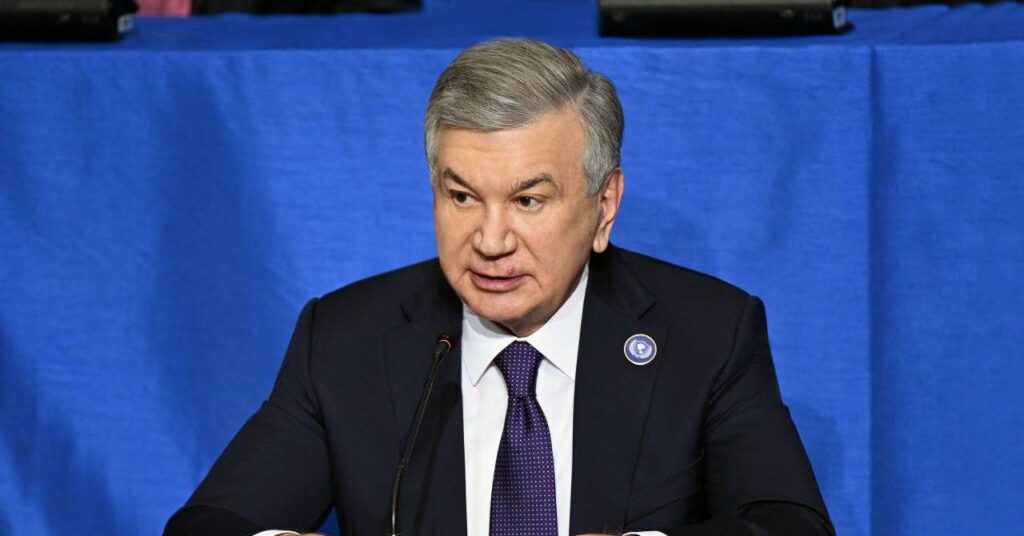
United States President Donald Trump introduced Uzbekistan’s President Shavkat Mirziyoyev as “a friend” during the inaugural meeting of the Board of Peace in Washington, setting a cordial tone for a summit focused on post-conflict recovery in Gaza. In brief remarks while welcoming Mirziyoyev, Trump said Uzbekistan was “doing great” and had “no problems.” The summit, held on February 19 at the United States Institute of Peace, brought together heads of delegations from Azerbaijan, Kazakhstan, Bahrain, Indonesia, Argentina, Paraguay, Romania, Egypt, Qatar, Pakistan, Hungary, Albania, Armenia, Vietnam, Cambodia, the United Arab Emirates, Turkey, Kuwait, Saudi Arabia, Israel, and Morocco, among others. Discussions focused on reconstruction and humanitarian assistance for the Gaza Strip, as well as broader efforts to promote stability in the Middle East. In his address, Mirziyoyev thanked Trump for convening the inaugural meeting of the Board, describing the summit as the result of his “political will and pragmatism.” Uzbekistan supported the initiative to establish the Board of Peace and declared its readiness to participate in its practical implementation. “I am confident that the Board’s work will create favorable conditions for the economic and social restoration of Gaza,” Mirziyoyev said. He stressed that any mechanism for external governance in Gaza must be based on the support of its population. Coordinated efforts by all stakeholders, he added, would help ensure that the post-conflict process remains sustainable and that reconstruction advances efficiently. Mirziyoyev also announced that Uzbekistan is prepared to contribute to the construction of residential buildings, kindergartens, schools, and hospitals in Gaza. He described the meeting as a symbol of international solidarity and urged participants to seize what he called a historic opportunity to help build a renewed Gaza with a functioning economy and improved living conditions.

The Board of Peace and Central Asia: Asserting Agency in a Fragmented Order

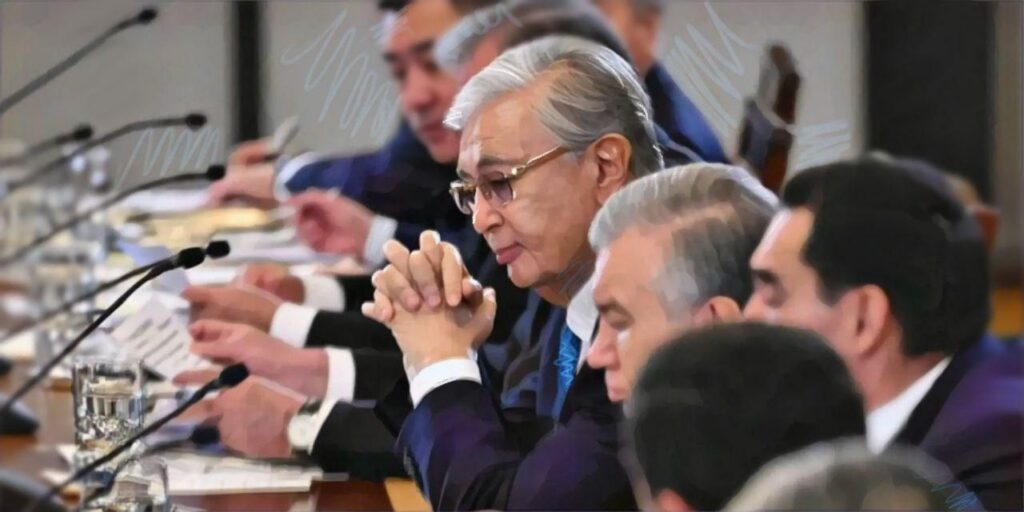
President Kassym-Jomart Tokayev’s speech at the inaugural meeting of U.S. President Donald Trump’s Board of Peace in Washington on February 19 was not only a foreign policy event, but one with significant domestic resonance. The initiatives announced include Kazakhstan’s participation in the reconstruction of Gaza, financial commitments, and readiness to send peacekeepers. Against the backdrop of economic challenges and ongoing constitutional reforms, however, a substantial segment of Kazakh society is questioning whether such an active foreign policy posture is justified at this time. The Board of Peace, the charter for which was ratified in Davos in January 2026 on the sidelines of the World Economic Forum, is positioned as an alternative to traditional multilateral institutions. According to Trump, the new body should not merely discuss conflicts, but will also "almost be looking over the United Nations and making sure it runs properly." Symbolically, the Board’s launch comes amid U.S. reductions and withholding of UN-related funding and withdrawals from multiple international bodies, alongside a partial U.S. payment toward UN arrears and the parallel creation of alternative financial and security mechanisms. According to the U.S. Mission to Kazakhstan, at the first meeting of the Board of Peace, nine members pledged a combined $7 billion aid package for the Gaza Strip. Kazakhstan, Uzbekistan, Azerbaijan, the UAE, Morocco, Bahrain, Qatar, Saudi Arabia, and Kuwait indicated their willingness to contribute. Additionally, Trump pledged $10B in U.S. funding, framing peace and reconstruction as a strategic priority. However, experts note that these sums fall far short of projected needs. According to joint UN-EU-World Bank estimates, the full reconstruction of Gaza could require up to $70 billion. In addition, the implementation of projects is complicated by the issue of disarming Hamas, which is designated as a terrorist organization in the U.S. and the European Union. At present, there is no indication that any Western or regional government intends to revise that designation. A notable feature of the Washington summit was the synchronized participation and subsequent public statements of key member states of the Organization of Turkic States (OTS). Kazakhstan, Uzbekistan, Azerbaijan, and Turkey effectively acted as what appeared to be an aligned geopolitical grouping, albeit without a formal declaration of joint action. What Is Kazakhstan Seeking? For Astana, participation in the Board of Peace appears to represent a renewed step in its multi-vector foreign policy doctrine. Tokayev directly stated Kazakhstan’s readiness to send medical units and observers to international stabilization forces and to allocate more than 500 educational grants for Palestinian students. In effect, Kazakhstan is reinforcing its image as a “Middle Power” prepared not only for diplomatic mediation but also for tangible contributions to international security efforts. This course aligns with the country’s existing participation in UN missions. Currently, 139 Kazakh military personnel are serving in the Golan Heights under the UN Disengagement Observer Force mandate. Nevertheless, the intensification of foreign policy engagement is raising domestic questions. Concerns voiced on social media and among experts include whether the international agenda risks diverting attention from internal economic pressures, including...

Uzbekistan and United States to Establish Investment Platform

Shavkat Mirziyoyev has arrived in Washington with his spouse on a working visit that includes participation in the first summit of the Board of Peace and a series of business engagements aimed at strengthening bilateral economic ties. According to the presidential press service, the visit is focused on expanding trade, investment, and financial cooperation with U.S. partners. As part of his program in Washington, Mirziyoyev met with John Jovanovic, President and Chairman of the Export-Import Bank of the United States, and Ben Black, Chief Executive Officer of the U.S. International Development Finance Corporation. The discussions centered on expanding financial support for priority industrial and infrastructure projects in Uzbekistan. Officials noted that negotiations held last year with U.S. President Donald Trump gave new impetus to trade and investment cooperation. In particular, the two sides reviewed progress in supporting the activities of the bilateral Business Council and advancing plans to launch an Investment Platform intended to promote major projects on a systematic basis. Cooperation with the Export-Import Bank is expected to include increased financing for large-scale industrial and infrastructure initiatives, as well as assistance with the supply of high-technology equipment. During talks with the Development Finance Corporation, emphasis was placed on strengthening investment mechanisms and facilitating the corporation’s participation in national and regional projects, including the development of Uzbekistan’s financial market and energy sector. At the conclusion of the meetings, the parties exchanged an Agreement on the Establishment of an Investment Platform between Uzbekistan and the United States in the presence of the Uzbek president. The current visit builds on steps taken last November, when Uzbekistan announced the creation of the Uzbekistan-U.S. Business and Investment Council. The body was formalized by presidential decree following Mirziyoyev’s official visit to Washington within the C5+1 framework. The council is jointly chaired by senior representatives of both countries and is designed to serve as an institutional mechanism for deepening commercial cooperation. During his Washington meetings, Mirziyoyev also invited the American side to participate in the upcoming Tashkent International Investment Forum, underscoring continued efforts to attract U.S. business engagement in Uzbekistan’s economic reforms.

The Board of Peace and the Emerging C6 Regional Ecosystem

Washington is hosting the first summit of the Board of Peace, an initiative convened by U.S. President Donald Trump. Aircraft carrying leaders from several post-Soviet states have arrived at Joint Base Andrews. While Russia and Belarus have been invited - representation levels vary - the presidents of Kazakhstan, Uzbekistan, and Azerbaijan have traveled to the United States in person. Although each leader has a separate bilateral agenda, Kassym-Jomart Tokayev, Shavkat Mirziyoyev, and Ilham Aliyev share a broader objective: presenting a consolidated regional grouping, informally referred to as the C6, in which Kazakhstan is seen as playing a leading role. Tokayev, a career diplomat who previously served as a senior United Nations official, has developed a consistent approach to foreign visits, which typically includes a meeting with Kazakh citizens residing abroad, particularly students and young professionals, and the publication of an opinion piece in a leading outlet in the host country. During his current visit to the United States, he met members of the Kazakh diaspora and published an article in The National Interest outlining his vision for international stability. [caption id="attachment_44160" align="aligncenter" width="2560"] President Kassym-Jomart Tokayev meets with Kazakh citizens living and studying in the United States; image: Akorda.kz[/caption] According to Kazakh political analyst Andrei Chebotarev, the central theme of Tokayev’s article is the importance of stability amid intensifying geopolitical rivalry and growing international conflicts. Chebotarev emphasized Tokayev’s call for a pragmatic international order grounded in the rule of law, accountability, predictable commitments, and respect for national and cultural identities, arguing that ideologically driven frameworks have proven ineffective. Tokayev described the Board of Peace as “not just another forum for endless discussions,” but as a practical initiative aimed at delivering tangible outcomes, particularly in relation to the Gaza Strip and the broader Middle East. He characterized the White House’s approach as one that views peace “not as a slogan, but as a project” built around infrastructure, investment, employment, and long-term stability. “This initiative deserves respect and international attention,” Tokayev said. During his visit to the United States last November for the C5+1 summit, Tokayev held meetings with senior U.S. officials, including Commerce Secretary Howard Lutnick, as well as executives from major international corporations. A delegation led by Deputy Prime Minister and Minister of National Economy Serik Zhumangarin is also in Washington during the current visit. In addition to promoting investment and technology partnerships, the delegation engaged with members of Congress involved in efforts to repeal the Jackson-Vanik amendment, which continues to complicate trade relations between the United States and certain Central Asian countries. Mirziyoyev has pursued a similar agenda during his current visit, holding meetings with U.S. Commerce Secretary Howard Lutnick and U.S. Trade Representative Jamieson Greer. He also met representatives of American businesses and signed an agreement establishing a new investment platform. [caption id="attachment_44171" align="aligncenter" width="1280"] A set of bilateral agreements on priority areas of Uzbekistan-U.S. cooperation was signed; image: President.uz[/caption] Aliyev, for his part, met in Washington with the leadership of the American Israel Public Affairs Committee, including...

President Tokayev’s Washington Visit: Peace is Not a Bridge Too Far

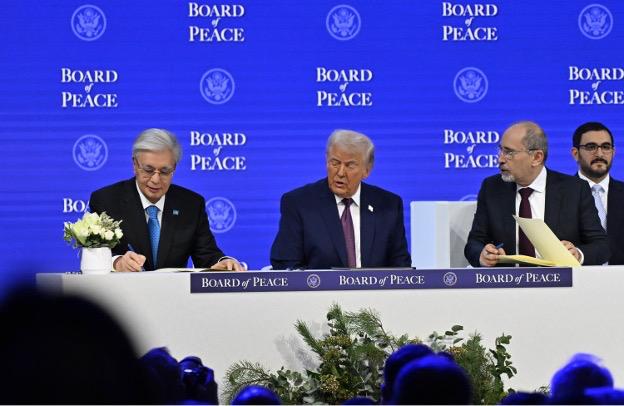
 On February 19, President Tokayev will meet President Trump for the third time in six months to advance Trump’s Board of Peace initiative – an undertaking that aligns with Kazakhstan’s long-articulated view that peace remains achievable, even in a war-torn world under seemingly impossible odds. This approach emphasizes sustained diplomacy, interfaith coexistence, economic integration, and respect for human dignity. Moreover, Washington has not only pivoted towards Central Asia but has found Kazakhstan a rational and predictable partner in an increasingly chaotic and multipolar world — one in need of credible mediators capable of engaging across political, economic, and religious divides. In accepting Trump’s invitation to join the Board, Tokayev has assumed a role consistent with Kazakhstan’s long-articulated identity and practice as a bridge-builder. Kazakhstan’s lived experience of pluralism and balanced pragmatic diplomacy gives that role substance. Kazakhstan brings to the Board a distinctive societal composition that has, despite differences, remained cohesive and broadly tolerant. Although it is a Muslim-majority country in Central Asia, it is also home to a substantial Christian, agnostic, and atheist population and has more than 100 ethnic groups. This demographic and religious diversity is not peripheral to its national identity and story as a relatively newly formed nation; it is foundational and will resonate as it carries out its responsibilities as a member of the Board. For decades, Kazakhstan has institutionalized interreligious dialogue as a matter of state policy rather than relying on symbolic rhetoric. In the process, it has learned to separate political ideology from the core principles of religious freedom and freedom of conscience. The Board of Peace initiative fits squarely within Tokayev’s priorities. As he said recently, this new platform is a “timely and relevant initiative designed to deliver meaningful and long-lasting results” in tackling global conflicts, aiming to complement—not replace—institutions like the United Nations. For Kazakhstan, participation reflects the external expression of that domestic model of pluralism and balanced engagement. It builds on Kazakhstan’s long experience of managing domestic diversity while sustaining balanced relations across competing global power centers through disciplined statecraft and structured dialogue. Kazakhstan brings this worldview into its seasoned practice of diplomacy. On the Board of Peace, Tokayev will bring experience and practical recommendations to the table. Other heads of state joining Tokayev include another Central Asian leader, President Mirziyoyev of Uzbekistan. A Continuation of Kazakhstan’s Role as an International Mediator This visit to Washington continues Kazakhstan's long-standing diplomatic tradition of prioritizing dialogue without dogma, development without division, and peace through prosperity. Tokayev has consistently framed the country’s foreign policy in measured terms: “Kazakhstan will continue to serve as a bridge-builder and peacemaker. It will also continue to choose balance over domination, cooperation over confrontation, and peace over war.” Rather than mere aspirational rhetoric, this statement, made at the 80th United Nations General Assembly in 2025, reflects a pragmatic doctrine that has guided Astana’s multi-dimensional diplomacy — maintaining constructive relations across competing power centers while advancing mediation, confidence-building, and multilateral engagement as tools of stability. This approach is structural...