• KGS/USD = 0.01143 0%
  • KZT/USD = 0.00213 0%
  • TJS/USD = 0.10593 0.47%
  • UZS/USD = 0.00008 0%
  • TMT/USD = 0.28571 0%
  • KGS/USD = 0.01143 0%
  • KZT/USD = 0.00213 0%
  • TJS/USD = 0.10593 0.47%
  • UZS/USD = 0.00008 0%
  • TMT/USD = 0.28571 0%
  • KGS/USD = 0.01143 0%
  • KZT/USD = 0.00213 0%
  • TJS/USD = 0.10593 0.47%
  • UZS/USD = 0.00008 0%
  • TMT/USD = 0.28571 0%
  • KGS/USD = 0.01143 0%
  • KZT/USD = 0.00213 0%
  • TJS/USD = 0.10593 0.47%
  • UZS/USD = 0.00008 0%
  • TMT/USD = 0.28571 0%
  • KGS/USD = 0.01143 0%
  • KZT/USD = 0.00213 0%
  • TJS/USD = 0.10593 0.47%
  • UZS/USD = 0.00008 0%
  • TMT/USD = 0.28571 0%
  • KGS/USD = 0.01143 0%
  • KZT/USD = 0.00213 0%
  • TJS/USD = 0.10593 0.47%
  • UZS/USD = 0.00008 0%
  • TMT/USD = 0.28571 0%
  • KGS/USD = 0.01143 0%
  • KZT/USD = 0.00213 0%
  • TJS/USD = 0.10593 0.47%
  • UZS/USD = 0.00008 0%
  • TMT/USD = 0.28571 0%
  • KGS/USD = 0.01143 0%
  • KZT/USD = 0.00213 0%
  • TJS/USD = 0.10593 0.47%
  • UZS/USD = 0.00008 0%
  • TMT/USD = 0.28571 0%

Viewing results 1 - 6 of 9

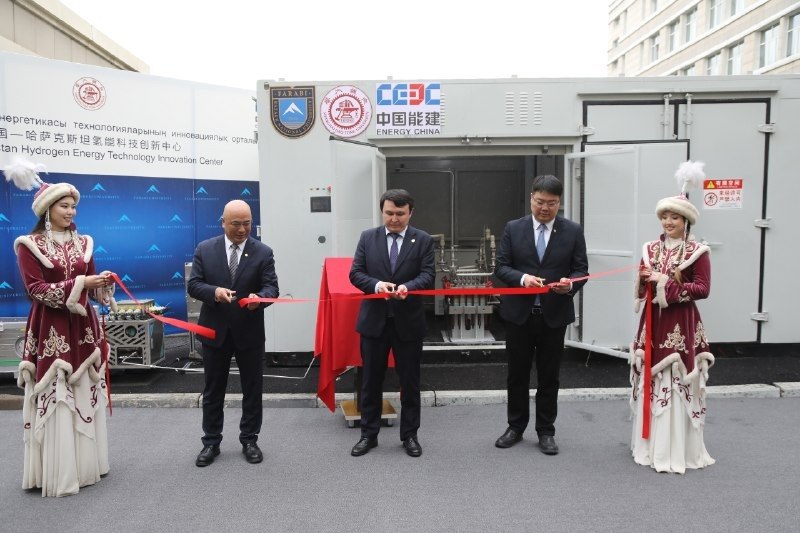
Kazakhstan and China Launch Hydrogen Energy Technology Innovation Center

Kazakhstan and China have expanded cooperation in clean energy with the launch of the China-Kazakhstan Hydrogen Energy Technology Innovation Center at Al-Farabi Kazakh National University in Almaty on April 9. The center is part of Kazakhstan’s strategy to build a modern technological base linking science, education, and industry in support of the country’s transition to low-carbon energy. Speaking at the opening ceremony, Energy Minister Yerlan Akkenzhenov highlighted the importance of international partnerships in the development of the energy sector. “Hydrogen energy is one of the strategic priorities for the development of the energy sector. The Concept adopted in 2024 laid the legal and economic foundation for the creation of a new industry aimed at decarbonizing the economy. The new center should become a key platform for training next-generation engineers, conducting applied research, and rapidly introducing innovations into production,” Akkenzhenov said. As part of the ceremony, Al-Farabi Kazakh National University, Shanghai Jiao Tong University, and Energy China International Corporation signed a trilateral memorandum of understanding outlining the center’s operational framework. The agreement includes expanding scientific and technical cooperation, facilitating technology transfer, and promoting academic exchange. The partners also plan to conduct joint research, test hydrogen technologies, and launch pilot projects, with a particular focus on the commercialization of innovations and their integration into Kazakhstan’s industrial sector. The development of hydrogen energy is a key element of the global transition to cleaner energy systems. According to Kazakhstan’s Ministry of Energy, the country has significant potential in this field due to its natural resource base and growing renewable energy capacity. Cooperation with Chinese technology partners is expected to strengthen Kazakhstan’s position in emerging energy markets and support industrial modernization. During the ceremony, Zhanseit Tuimebayev, chairman of the board and rector of Al-Farabi Kazakh National University, highlighted the evolving role of universities as drivers of economic and technological development. “Universities today are not only centers for training specialists but also key drivers of economic growth, technological development, and national competitiveness. Al-Farabi National University has consistently pursued this mission, transforming itself into a new type of university, one that not only educates, but also develops technologies, shapes markets, and acts as a full-fledged partner to the state and industry,” Tuimebayev said.

Kazakhstan Plans Diesel Fuel Production from Coal

Two projects to produce diesel fuel from coal are underway in Kazakhstan, Energy Minister Yerlan Akkenzhenov said at a government meeting. According to the minister, the projects, each with a capacity of 100,000 tons of diesel fuel per year, are being implemented in the Pavlodar and Karaganda regions. Their costs are estimated at $63 million and $65 million, respectively. As part of efforts to develop the coal chemical industry, a $132 million project is also underway in the Karaganda region to produce metallurgical coke, with a capacity of 1 million tons per year. The minister said the three projects will create about 3,000 jobs. Currently, around 32,000 people are employed in the coal industry. Three additional projects are in the planning stage. These include a coke-chemical production facility in the Karaganda region with coal tar processing capacity of up to 200,000 tons per year, benzene production of up to 35,000 tons, and coke oven gas purification. Authorities are also considering the construction of a plant in the Abai region to produce ammonia and urea from coal (300,000 tons per year of each product), as well as a project to produce up to 2 billion cubic meters of gas from coal. The minister noted that the development of the coal chemical industry faces several challenges, including high capital intensity, technological complexity, and the need to establish an appropriate regulatory framework. He added that developing this sector would reduce dependence on imported petroleum products and increase exports of higher value-added products. The coal industry remains strategically important to the country’s economy. In 2025, coal production reached 115.9 million tons, an increase of 7% compared to the previous year. Domestic consumption totaled 85.9 million tons, while exports stood at 30 million tons. In 2026, coal production is projected to reach 128.9 million tons. Investment in the sector amounted to approximately $655 million in 2025 and is expected to rise to $1.1 billion in 2026. The Times of Central Asia previously reported that Kazakhstan’s coal reserves could meet the country’s energy needs for 200-300 years. The authorities have also approved a coal-fired power generation development program that involves the construction of eight new power plants and the modernization of 11 existing ones.

Kazakhstan Seeks to Expand Oil Exports Amid Geopolitical Uncertainty

Kazakhstan is seeking to reinforce its status as a stable oil supplier while accelerating the diversification of export routes and revising the terms of cooperation with foreign investors amid growing geopolitical uncertainty. These priorities were outlined by Energy Minister Yerlan Akkenzhenov during a speech at the CERAWeek conference in Houston and in a series of meetings with major international oil and gas companies. Discussions focused on structural changes in the global oil industry, ranging from geopolitical instability to the reconfiguration of logistics chains. According to the minister, Kazakhstan remains resilient while adapting to evolving conditions. Energy security continues to be a central concern for the sector, particularly the reliable operation of the Caspian Pipeline Consortium (CPC), through which the majority of Kazakhstan’s oil exports are transported. This route remains the most cost-effective and strategically important option. Authorities have openly acknowledged its critical role in the national economy, stressing the need to ensure uninterrupted transit. At the same time, efforts to develop alternative routes, including the Trans-Caspian corridor and increased shipments to China, are part of a strategy to reduce logistical and political risks. On the sidelines of the forum, government officials held talks with leading energy companies including Chevron, ExxonMobil, and Shell, all key investors in Kazakhstan’s oil and gas industry. Discussions with Chevron focused on expanding production at the Tengiz and Karachaganak fields, as well as developing export infrastructure. ExxonMobil reaffirmed its interest in increasing output at Tengiz and Kashagan, where localization levels are high, with Kazakhstani specialists accounting for more than 90% of the workforce. Talks with Shell focused on boosting production and expanding refining capacity, including refinery modernization and the production of winter-grade diesel fuel. In addition to operational issues, the discussions addressed the question of redistributing roles within joint projects. Kazakhstan is considering independently implementing certain gas-processing initiatives after partners failed to reach a final investment decision on the Karachaganak project. The development of the petrochemical industry and the expansion of refining capacity have been identified as separate priorities. Kazakhstan plans to double its oil-refining capacity to meet domestic demand and increase exports of petroleum products. To attract investment, the government has introduced a revised model contract offering tax incentives and encouraging geological exploration. Experts say Central Asia’s role in the global energy sector is increasing, with Kazakhstan playing a key part in regional stability. The minister said the country’s strategic objective is to maintain the sector’s investment appeal while ensuring maximum economic returns for the national economy. “Kazakhstan remains a predictable and reliable supplier of energy resources and is ready to translate the trust of its partners into the development of technological projects within the country,” Akkenzhenov said. The Times of Central Asia previously reported that Italian energy company Eni is accelerating the expansion of its projects in Kazakhstan. The company plans to complete construction of a hybrid power plant in Zhanaozen, one of the country’s main oil and gas hubs, by the end of the year.