• KGS/USD = 0.01143 -0%
  • KZT/USD = 0.00192 -0%
  • TJS/USD = 0.10820 0.19%
  • UZS/USD = 0.00008 0%
  • TMT/USD = 0.28575 0%
  • KGS/USD = 0.01143 -0%
  • KZT/USD = 0.00192 -0%
  • TJS/USD = 0.10820 0.19%
  • UZS/USD = 0.00008 0%
  • TMT/USD = 0.28575 0%
  • KGS/USD = 0.01143 -0%
  • KZT/USD = 0.00192 -0%
  • TJS/USD = 0.10820 0.19%
  • UZS/USD = 0.00008 0%
  • TMT/USD = 0.28575 0%
  • KGS/USD = 0.01143 -0%
  • KZT/USD = 0.00192 -0%
  • TJS/USD = 0.10820 0.19%
  • UZS/USD = 0.00008 0%
  • TMT/USD = 0.28575 0%
  • KGS/USD = 0.01143 -0%
  • KZT/USD = 0.00192 -0%
  • TJS/USD = 0.10820 0.19%
  • UZS/USD = 0.00008 0%
  • TMT/USD = 0.28575 0%
  • KGS/USD = 0.01143 -0%
  • KZT/USD = 0.00192 -0%
  • TJS/USD = 0.10820 0.19%
  • UZS/USD = 0.00008 0%
  • TMT/USD = 0.28575 0%
  • KGS/USD = 0.01143 -0%
  • KZT/USD = 0.00192 -0%
  • TJS/USD = 0.10820 0.19%
  • UZS/USD = 0.00008 0%
  • TMT/USD = 0.28575 0%
  • KGS/USD = 0.01143 -0%
  • KZT/USD = 0.00192 -0%
  • TJS/USD = 0.10820 0.19%
  • UZS/USD = 0.00008 0%
  • TMT/USD = 0.28575 0%
14 December 2025

Our People > Vagit Ismailov

Vagit Ismailov's Avatar

Vagit Ismailov

Journalist

Vagit Ismailov is a Kazakhstani journalist. He has worked in leading regional and national publications.

Articles

Ashgabat Hosts Forum Marking International Year of Peace and Trust

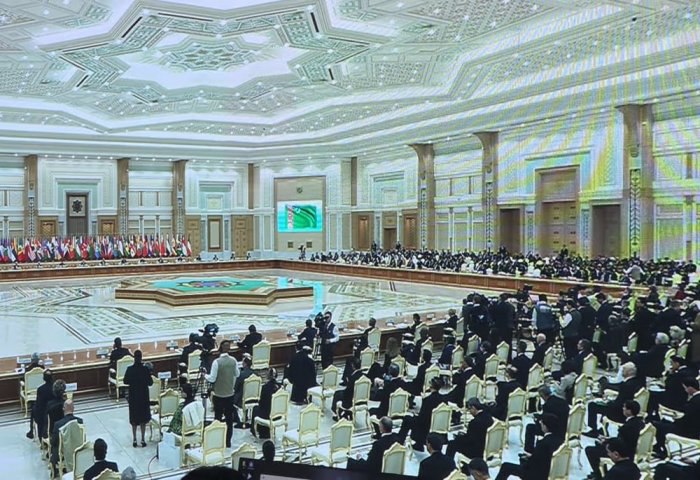
An international forum marking the 30th anniversary of Turkmenistan’s permanent neutrality has opened at the Maslahat Köşgi Palace in Ashgabat. The event has drawn high-level delegations and representatives of international organizations. Among those attending are President of Turkmenistan Serdar Berdimuhamedov, President of Russia Vladimir Putin, and the presidents of Turkey and Iran, Recep Tayyip Erdogan and Masoud Pezeshkian. The forum has also brought together the presidents of the Central Asian states, including President of Kazakhstan Kassym-Jomart Tokayev, President of Kyrgyzstan Sadyr Japarov, President of Uzbekistan Shavkat Mirziyoyev, and President of Tajikistan Emomali Rahmon. Other participants include Prime Minister of Pakistan Mian Muhammad Shehbaz Sharif, Prime Minister of Georgia Irakli Kobakhidze, and Prime Minister of Azerbaijan Ali Asadov, along with other heads of state and government. In his opening address, President Berdimuhamedov said neutrality has provided a strong foundation for Turkmenistan’s sustainable development. He noted that the country’s foreign policy is guided by principles of peace, trust, and mutual respect, and that Turkmenistan’s approach to neutrality reflects long-standing traditions of good neighborliness and harmony. The forum is being held as a broad international dialogue and is expected to open new opportunities for promoting global peace and expanding international cooperation. Ahead of the forum’s opening, President Berdimuhamedov and visiting foreign leaders took part in a ceremonial flower-laying at the Monument of Neutrality in Ashgabat as part of the official events commemorating the country’s neutral status. Turkmenistan’s permanent neutrality was formally recognized by a United Nations General Assembly resolution on December 12, 1995. In 2017, at Ashgabat’s initiative, the General Assembly designated December 12 as International Neutrality Day. In 2025, the United Nations declared the International Year of Peace and Trust. In this context, the Peace and Trust forum is being held on December 12 in Ashgabat with the participation of leaders from member states of the Organization of Turkic States.

2 days ago
Tajikistan Struggles to Fund Cleanup of Soviet-Era Uranium Waste

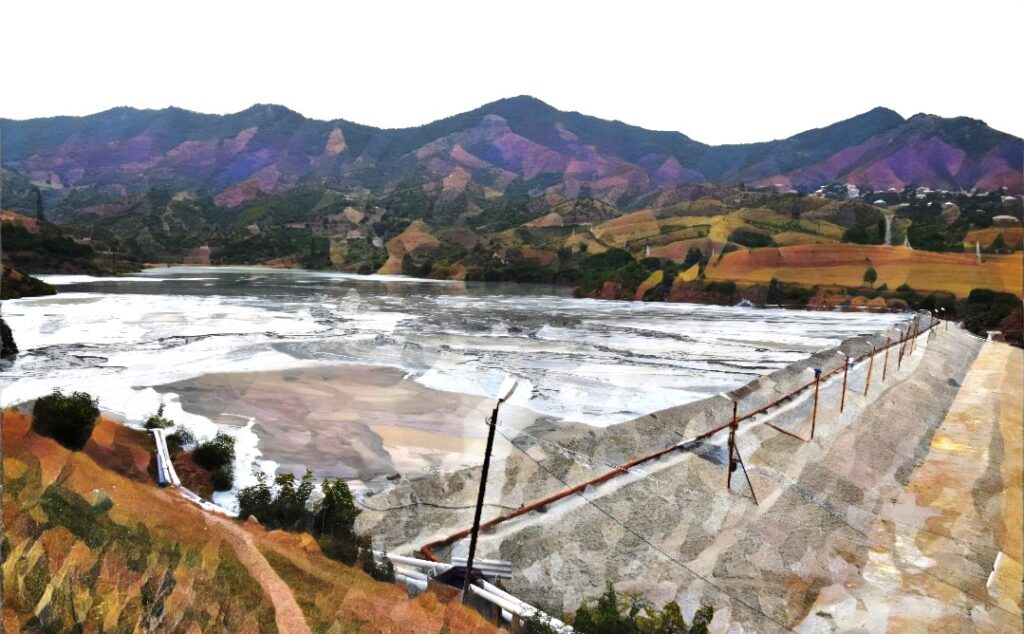
Tajikistan continues to grapple with the extensive environmental legacy of the Soviet-era uranium industry. Tens of millions of tons of radioactive waste still pose serious risks to human health and the environment. Addressing this legacy will require hundreds of millions of dollars and sustained international support. Uranium mining in Tajikistan began in the 1940s in areas including Taboshar, Adrasman, and nearby settlements. After mining operations were shut down, the country was left with abandoned mines, underground tunnels, and extensive tailings ponds containing more than 55 million tons of radioactive waste across an area exceeding 170 hectares. In 2023, partial rehabilitation work was completed in Taboshar, where 7.6 million tons of waste, representing 17.5 percent of the total, were remediated. The Tajik government has agreed to continue cooperation with Russia, which is expected to allocate approximately $17 million for the reclamation of selected facilities. However, the most hazardous areas remain unaddressed. These include early-stage Taboshar tailings ponds, underground workings, and the Degmai complex. International consultants Wismut GmbH, WISUTEC GmbH, and GEOS estimate that restoring the Taboshar facilities will require approximately $9.5 million, while reclamation of the Degmai tailings pond is expected to cost about $27 million. All of these sites are included in the International Atomic Energy Agency master plan and have been designated as funding priorities. Progress remains slow, largely due to limited financial resources. Despite some external support, current funding levels fall far short of what is required. To date, only 17 percent of contaminated sites have been decontaminated. The European Bank for Reconstruction and Development special environmental rehabilitation account for Central Asia has yet to become fully operational. In 2025, the government approved a national rehabilitation program covering the 2025 to 2030 period. The plan includes legislative updates, project design, implementation, and ongoing monitoring. Preliminary estimates suggest Tajikistan will need more than $110 million by 2030 to complete its remediation objectives. Given the scale of the required investment, international financing remains essential. Tajikistan is working to transform its uranium legacy into a manageable and transparent project, but without sustained international partnership, the challenge is unlikely to be resolved.

2 days ago

How Tajikistan Is Struggling to Keep the Lights On Amid Winter Power Shortages

As winter grips Tajikistan, severe electricity restrictions have become a daily reality. While officials claim that recent rainfall has helped partially stabilize the country’s largest hydroelectric power plant, residents across multiple regions report worsening shortages, with power barely available for a few hours each day. Government officials say that water inflow into the Nurek Reservoir has increased following recent rains. Kurbon Ahmadzoda, a representative of the state energy company Barki Tojik, reported an increase of 30-40 cubic meters per second, enabling authorities to supply electricity for four to five hours daily. Earlier, the government had attributed stricter electricity limits to a drop in water levels at the Nurek Hydroelectric Power Plant, which generates over half of Tajikistan’s electricity. A prolonged dry spell had reduced reservoir levels, triggering the latest round of supply cuts. “As of December 9, around seven meters of the reservoir’s total 53-meter reserve have already been used,” Ahmadzoda said, adding that recent rainfall had improved inflows into the Vakhsh River, which feeds the plant. Dustmurod Toirov, head of the Transmission Networks Control Center, confirmed a 15-20% increase in water inflow. As a result, daily depletion of the reservoir dropped from 23 centimeters to 17 centimeters. This, he said, allowed authorities to extend supply in some areas by an additional two to two-and-a-half hours. Toirov also claimed that residents in Khujand, Bokhtar, Kulob, and the Rudaki district were receiving consistent electricity, with high-rise buildings fully supplied. However, social media posts paint a different picture. Dozens of residents report receiving only one to three hours of electricity per day, describing increasing hardship as winter progresses. To address consumption, authorities have implemented strict rationing measures. Toirov said automated power cuts are triggered when household usage exceeds 4 kW, a move he claims has already led to more economical electricity use. In late November, the “Distribution Electric Networks” company sent mass SMS warnings to citizens: exceeding usage limits would result in 30-minute power cuts. Amid the broader energy crisis, the government has also introduced new penalties targeting illegal cryptocurrency mining, which officials say consumes large amounts of stolen electricity. Electricity rationing in Tajikistan typically begins in mid-autumn and continues through spring. However, in the past two years, restrictions have started earlier, as soon as September. The 2024-2025 winter has seen some of the harshest limits yet, with some regions receiving just two to four hours of electricity per day.

3 days ago

Kobyz Musical Instrument and Karakalpak Yurt Added to UNESCO Heritage List

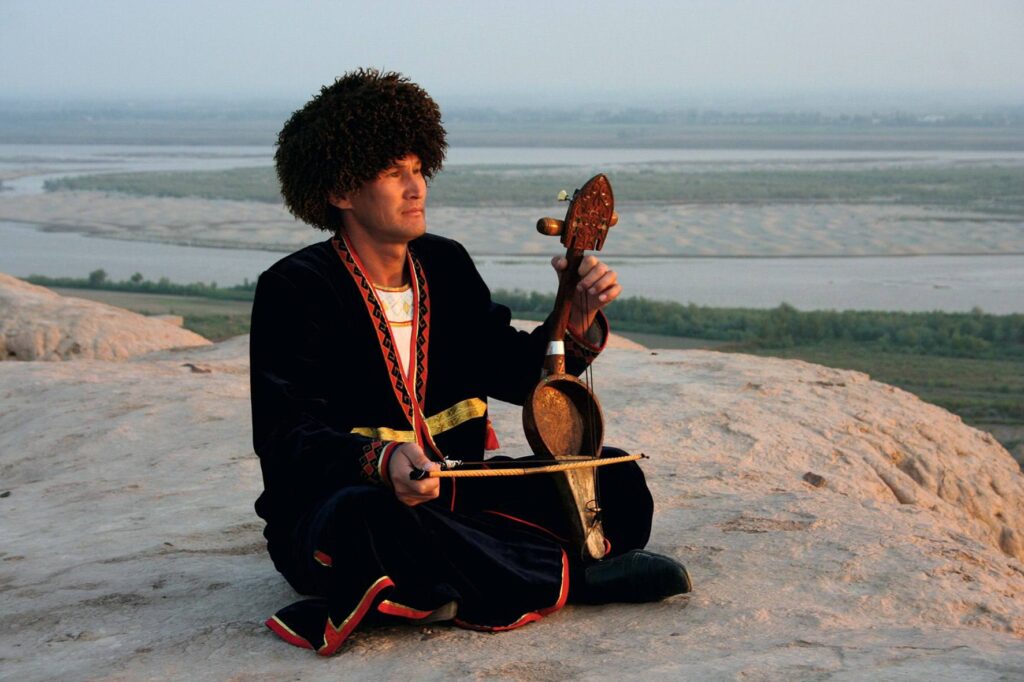
At the 20th session of the UNESCO Intergovernmental Committee for the Safeguarding of the Intangible Cultural Heritage, held in New Delhi from December 8-13, Uzbekistan’s nominations for the kobyz musical instrument and the Karakalpak yurt were officially approved for inclusion in the UNESCO Intangible Cultural Heritage List. As part of the application process, researchers documented the historical and cultural significance of the zhyrau (oral storytellers), whose performances are traditionally accompanied by the kobyz. A documentary film was also produced in Karakalpakstan, an autonomous republic within Uzbekistan, highlighting the craftsmanship involved in making the kobyz. The nomination emphasized the urgent need for preservation, citing a steady decline in the number of artisans who know the tradition. The kobyz is an ancient, bowed string instrument originating among Turkic peoples, with historical roots dating back to the 5th-8th centuries. Its haunting sound traditionally accompanies zhyrau performances and remains prevalent in both Karakalpakstan and Kazakhstan.

3 days ago

Kazakh Singer Dimash Kudaibergen Named UN Global Goodwill Ambassador

On December 8, during the annual session of the International Organization for Migration (IOM) Council in Geneva, world-renowned Kazakh singer Dimash Kudaibergen was officially appointed a Global Goodwill Ambassador. The announcement, highlighted on the artist’s official website, reflects his “long-standing commitment to supporting people in crisis situations.” Kudaibergen had previously served as the IOM’s Regional Goodwill Ambassador since 2024, using his global platform to raise awareness about the challenges facing migrants, promote their integration, and participate in various humanitarian efforts. His engagement with the IOM deepened in 2025. The artist took part in the organization's Ramadan campaign, voiced strong opposition to human trafficking, and met with IOM Director General Amy Pope to reaffirm his support for ongoing humanitarian programs. Throughout his global “Stranger” tour, Kudaibergen championed messages of inclusivity and sustainability, performing in cities including New York, Mexico City, Barcelona, London, and Berlin. More than 100,000 attendees around the world heard his call to support the IOM’s mission. His performance of the iconic composition “S.O.S d’un terrien en détresse” at the Council meeting became an emotional highlight of the session. “Dimash uses his voice not only to touch the hearts of his listeners, but also to help people affected by crises to be heard and seen,” said Pope, praising the artist’s impact. Addressing member state delegations, Kudaibergen said, “Receiving the title of Global Goodwill Ambassador is an incredible honor. I accept it with great humility and a strong sense of responsibility.” The IOM, established in 1951, is the leading intergovernmental organization in the field of migration and joined the United Nations system in 2016. Over the years, other UN Goodwill Ambassadors have included Angelina Jolie, Shakira, David Beckham, and Lionel Messi. Dimash Kudaibergen is a People's Artist of Kazakhstan (2023) and Kyrgyzstan (2025). Known for his extraordinary vocal range spanning seven octaves and seven semitones (G0 to D8), he blends pop, opera, and traditional Kazakh musical elements in his performances.

4 days ago