• KGS/USD = 0.01144 0%
  • KZT/USD = 0.00210 0%
  • TJS/USD = 0.10617 1.05%
  • UZS/USD = 0.00008 0%
  • TMT/USD = 0.28490 0%
  • KGS/USD = 0.01144 0%
  • KZT/USD = 0.00210 0%
  • TJS/USD = 0.10617 1.05%
  • UZS/USD = 0.00008 0%
  • TMT/USD = 0.28490 0%
  • KGS/USD = 0.01144 0%
  • KZT/USD = 0.00210 0%
  • TJS/USD = 0.10617 1.05%
  • UZS/USD = 0.00008 0%
  • TMT/USD = 0.28490 0%
  • KGS/USD = 0.01144 0%
  • KZT/USD = 0.00210 0%
  • TJS/USD = 0.10617 1.05%
  • UZS/USD = 0.00008 0%
  • TMT/USD = 0.28490 0%
  • KGS/USD = 0.01144 0%
  • KZT/USD = 0.00210 0%
  • TJS/USD = 0.10617 1.05%
  • UZS/USD = 0.00008 0%
  • TMT/USD = 0.28490 0%
  • KGS/USD = 0.01144 0%
  • KZT/USD = 0.00210 0%
  • TJS/USD = 0.10617 1.05%
  • UZS/USD = 0.00008 0%
  • TMT/USD = 0.28490 0%
  • KGS/USD = 0.01144 0%
  • KZT/USD = 0.00210 0%
  • TJS/USD = 0.10617 1.05%
  • UZS/USD = 0.00008 0%
  • TMT/USD = 0.28490 0%
  • KGS/USD = 0.01144 0%
  • KZT/USD = 0.00210 0%
  • TJS/USD = 0.10617 1.05%
  • UZS/USD = 0.00008 0%
  • TMT/USD = 0.28490 0%

Viewing results 1813 - 1818 of 3237

Islamic Development Bank Supports Rogun HPP Project in Tajikistan

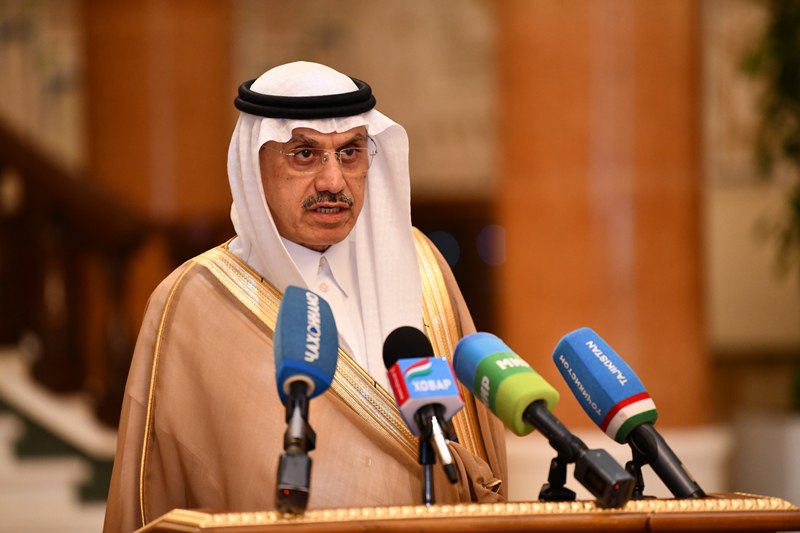
News agency Khovar has reported on the Islamic Development Bank (IDB) support in the construction of the Rogun Hydropower Plant (HPP) in Tajikistan. Dr. Muhammad Suleiman Al-Jasser, President of the IDB Group, announced this after a meeting with Tajik President, Emomali Rahmon. The meeting detailed Tajikistan's history towards economic development and outlined the country's priorities for the future. "The Islamic Development Bank has cooperated closely and successfully with Tajikistan for many years. Financing under this agreement has amounted to more than $900 million. We are satisfied with the current level of cooperation. One of the projects under consideration today is support for the Rogun Hydroelectric Power Plant project. The Islamic Development Bank has decided to sign an agreement with the Government of the Republic of Tajikistan,” Muhammad Suleiman Al-Jasser stated. Al-Jasser noted that IDB funds allocated to Tajikistan are directed to energy, education, industry, agriculture, transportation, and other key economic sectors. “We are confident that the current cooperation will be expanded and will serve as an invitation to other participants and investors,” Al-Jasser concluded.

Uzbekistan Plans to Earn $300 Million a Year From Medical Tourism

Nuz.uz reports that Uzbekistan plans to earn $300 million annually from medical services and tourism. At the meeting chaired by President Mirziyoyev, the program “Medical Hospitality” was announced, under which the budget will cover the costs of private clinics for international certification and participation in foreign exhibitions. Doctors traveling abroad to advertise and provide diagnostic services will be reimbursed for transportation and accommodation expenses. In addition, value-added tax will be refunded to foreign patients visiting clinics. "Last year, more than 60,000 foreign tourists were treated in 86 sanatoriums and medical institutions of the country. Suppose the number of such institutions is increased. In that case, it is possible to attract an additional 100,000 foreign patients, making it possible to earn $300 million a year from medical services,” the publication notes. Zumrad Bekatova, a member of the Legislative Chamber of the Oliy Majlis, said that Uzbekistan is paying special attention to expanding the network of private medical organizations, diversifying their activities, and strengthening their material and technical base. However, despite these efforts, only two private clinics have received international certification, and the share of foreign patients has yet to exceed 12%.

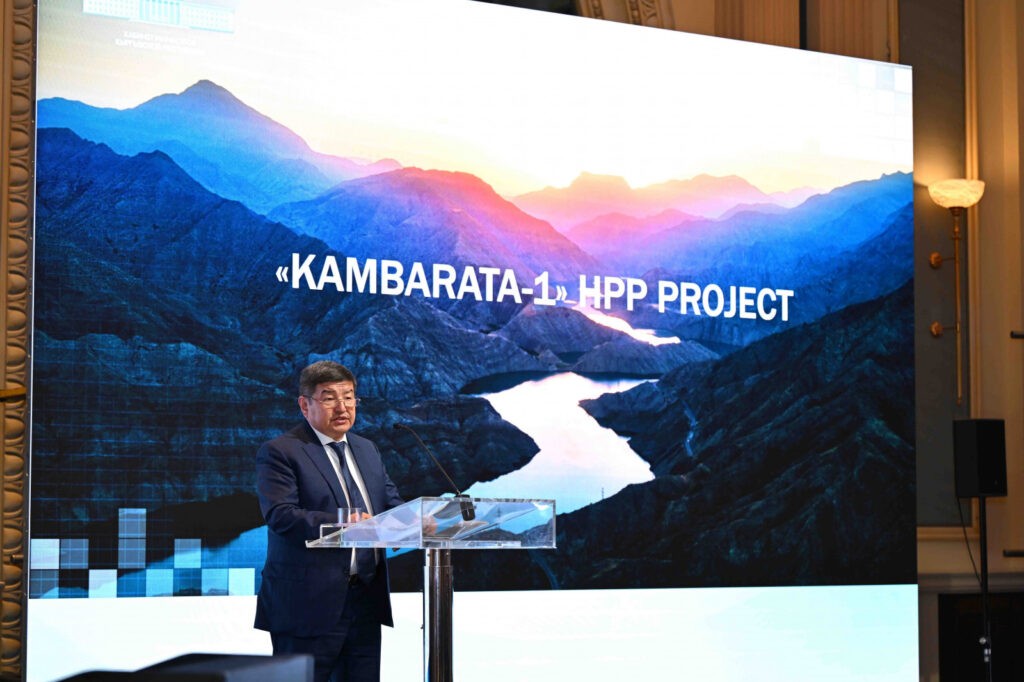
Donor Coordination Committee Established for Kyrgyzstan’s Kambarata HPP-1 Project

The Kyrgyz Republic International Energy Investment Forum, held in Vienna, on June 10, concluded with the establishment of a Donor Coordination Committee for the construction of Kambarata HPP-1 hydropower plant in Kyrgyzstan. The Kyrgyz Cabinet of Ministers said that the doors are open to interested parties but to date, the committee comprises major international financial institutions and development partners, including the World Bank, the OPEC Fund, the Asian Development Bank, the Asian Infrastructure Investment Bank, the Islamic Development Bank, and the European Bank for Reconstruction and Development. The Committee’s first meeting is scheduled for autumn this year. An inter-ministerial agreement on cooperation on the Kambarata HPP-1 project was also signed by the Ministries of Energy of the Kyrgyz Republic, Kazakhstan, and Uzbekistan. Summarizing the outcome of the forum, Chairman of the Cabinet of Ministers of the Kyrgyz Republic Akylbek Japarov announced: “We have made significant progress in establishing contacts and a common understanding of further actions. I am confident that the created Donor Coordination Committee will be a continuation of actions to implement the national project — the construction of Kambarata HPP-1.” Japarov told forum participants that “According to experts, by 2050 the population in Central Asia will increase by 27%, the demand for food by 35%, and the consumption of drinking water by 50%. At the same time, water is the main artery of life in the countries of the Central Asian region. Countries located at the sources of large rivers account for 80.7% of the region’s total water flow.” Regarding different countries’ priorities for water usage - downstream Kazakhstan and Uzbekistan use water in irrigation mode in summer, and upstream Kyrgyzstan and Tajikistan, in energy mode in winter -he warned “This situation affects the energy and food security in the region.” He then provided a more detailed report on the Kambarata HPP-1 project: “Kambarata HPP-1 is located at the source of the glaciers. Effective operation of this power plant will allow the accumulation and rational use of water resources of the Toktogul reservoir. The Kambarata HPP-1 construction project has broad economic, environmental, and social benefits and prospects for both Kyrgyzstan and the Central Asian region. The project will provide the Kyrgyz Republic and Central Asia with clean energy at the lowest cost, which entails lower costs of the energy transition in the region. Electricity generation at hydroelectric power plants will reduce emissions of pollutants into the atmosphere.” Reiterating the project’s key importance in meeting the growing demand for energy and increasing energy security in the region, Japarov continued: “The power plant will be sited in the upper reaches of the Naryn River. Its installed capacity will be 1,860 megawatts with an average annual generation of 5.6 billion kilowatt-hours of electricity. The preliminary construction estimate is more than $4 billion. The master plan of Kambarata HPP-1 includes a rock-fill dam, a hydroelectric power plant building with four hydraulic units, construction and operational spillways and transport tunnels, a residential village [for personnel], a reservoir and water treatment facilities.” He confirmed...

How the Trans-Caspian Corridor will Revitalize Trade between Asia and Europe.

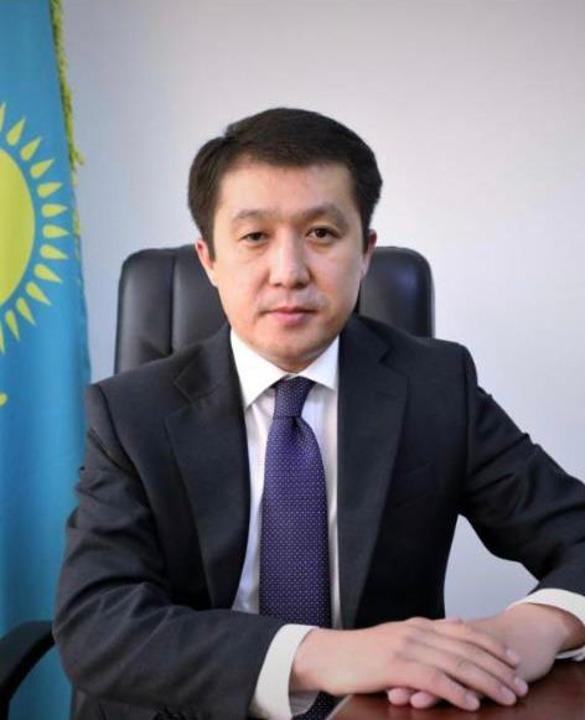
Kazakhstan's Transport Minister, Marat Karabayev has stated that geopolitical tensions are disrupting traditional logistics chains and jeopardizing global trade. As reported in an article published in the Chinese business publication, "South China Morning Post, " he claimed that developing the Trans-Caspian transport corridor is essential for increasing transit potential. Karabayev believes the Trans-Caspian international transportation route is an effective alternative to traditional maritime routes. The overland corridor connects Southeast Asia and China with Europe, crossing Kazakhstan, Azerbaijan, Georgia, and Turkey. Last year, cargo traffic along this route exceeded 2.7 million tons, up 86%. "Kazakhstan can play a key role here. As the largest country between Asia and Europe, it is an important transit hub for trade between the two continents. Kazakhstan accounts for about 80% of all land transit traffic from China to Europe,” said Karabayev. He noted that the Trans-Caspian corridor has undergone a steady development over the past decade. In recent years, geopolitical changes have given it additional impetus, especially since the number of container ships crossing through the Suez Canal in 2023, decreased by 67%  and the cost of sea transportation from Shanghai to European countries has almost tripled in recent months. Given that overland transit would reduce costs and become a more viable logistical option, Kazakhstan is committed to improving infrastructure and terminal facilities, increasing rolling stock, removing administrative barriers, and creating favorable carrier conditions. "However, for the Middle Corridor to achieve its goals, we need the support and participation of other countries," advised Karabayev. "Austria, Germany, Latvia, Latvia, Lithuania, Estonia, and Hungary have expressed interest in joining the Trans-Caspian International Transport Route Association. The EU recently announced an investment of 10 billion euros ($10.85 billion). In addition, a roadmap for development until 2027 has been agreed with Azerbaijan, Georgia, and Turkey.”

First NPP Reactor in Uzbekistan May Start Before 2033

Spot.uz reports that the first reactor of the Small Nuclear Power Plant is planned to be operational in five years. The project will be built near Tuzkon Lake, Farish District, Jizzakh Region. The cost has yet to be disclosed. “The cost of the low-power nuclear power plant construction project based on six RITM-200N reactor units with an installed capacity of 330 MW is confidential information and will not be disclosed,” Uzatom told Spot.uz. The small nuclear power plant's first reactor will be commissioned 60 months after the completion of priority works, which should begin this summer. Each subsequent reactor will be commissioned within six months. The full commissioning will occur before 2033. “During the construction of a low-power nuclear power plant, local general industrial equipment, products, and components are used by the specifications specified in the project documents. Considering the long service life of the small nuclear power plant, it is necessary to use local raw materials,” Uzatom stated. The Times of Central Asia previously reported that the contract for the construction of the NPP was concluded on May 27th, during Russian President Vladimir Putin's visit to Tashkent, between the Directorate for NPP Construction under the Atomic Energy Agency and the Atomstroyexport joint stock company (Rosatom’s engineering department).

South Korea Set to Intensify Cooperation with Central Asia

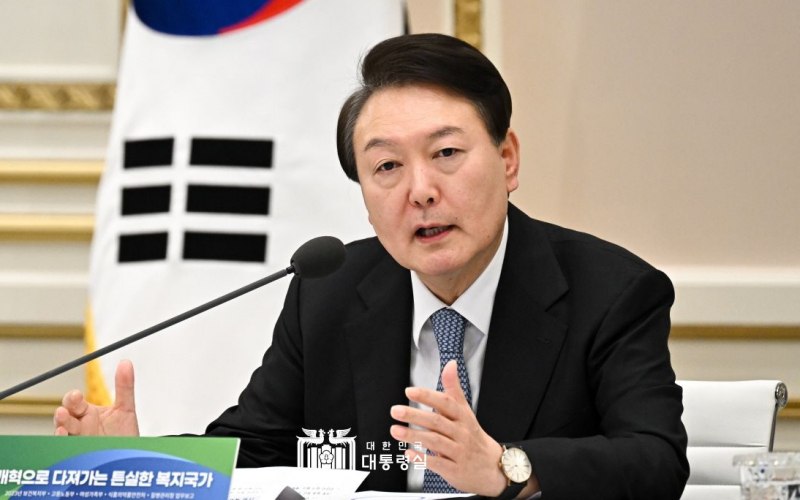
With the intention of  intensifying  cooperation between Seoul and Central Asia, South Korean President Yoon Suk-Yeol will make a state visit to three Central Asian countries from 10-15 June. As reported by Kim Tae-hyo First Deputy Director of the National Security Office of the Presidential Administration, President Yoon Suk-Yeol accompanied by his wife Kim Gong Hee, will visit Turkmenistan, Kazakhstan, and Uzbekistan and engage in talks with the countries' leaders as well as participate in business forums. Kim Tae-hyo emphasized that South Korea aims to intensify diplomacy and cooperation with Central Asia through wide-ranging efforts. These include a regular summit of the Korea-Central Asia K-Silk Road Initiative, the first of which will be hosted by Seoul next year. “Through this initiative, we intend to promote the joint, free, and peaceful development and prosperity of Korea and the Central Asian region,” stated Kim Tae-hyo The main areas of cooperation under the Initiative include the development of four key sectors : natural resources, official development assistance, cultural and people-to-people exchanges, and enhanced official and private contacts. Areas for cooperation will be identified and prioritized in each of the five Central Asian countries :Kazakhstan, Kyrgyzstan, Turkmenistan, Uzbekistan and Tajikistan. Cooperation in Kazakhstan will focus on energy and infrastructure; in Kyrgyzstan, water resources and tourism, and in Turkmenistan, constructing energy plants. Seoul makes no secret of its high interest in the region's rich natural resources, including uranium, lithium and tungsten.