• KGS/USD = 0.01143 0%
  • KZT/USD = 0.00213 0%
  • TJS/USD = 0.10593 0.47%
  • UZS/USD = 0.00008 0%
  • TMT/USD = 0.28571 0%
  • KGS/USD = 0.01143 0%
  • KZT/USD = 0.00213 0%
  • TJS/USD = 0.10593 0.47%
  • UZS/USD = 0.00008 0%
  • TMT/USD = 0.28571 0%
  • KGS/USD = 0.01143 0%
  • KZT/USD = 0.00213 0%
  • TJS/USD = 0.10593 0.47%
  • UZS/USD = 0.00008 0%
  • TMT/USD = 0.28571 0%
  • KGS/USD = 0.01143 0%
  • KZT/USD = 0.00213 0%
  • TJS/USD = 0.10593 0.47%
  • UZS/USD = 0.00008 0%
  • TMT/USD = 0.28571 0%
  • KGS/USD = 0.01143 0%
  • KZT/USD = 0.00213 0%
  • TJS/USD = 0.10593 0.47%
  • UZS/USD = 0.00008 0%
  • TMT/USD = 0.28571 0%
  • KGS/USD = 0.01143 0%
  • KZT/USD = 0.00213 0%
  • TJS/USD = 0.10593 0.47%
  • UZS/USD = 0.00008 0%
  • TMT/USD = 0.28571 0%
  • KGS/USD = 0.01143 0%
  • KZT/USD = 0.00213 0%
  • TJS/USD = 0.10593 0.47%
  • UZS/USD = 0.00008 0%
  • TMT/USD = 0.28571 0%
  • KGS/USD = 0.01143 0%
  • KZT/USD = 0.00213 0%
  • TJS/USD = 0.10593 0.47%
  • UZS/USD = 0.00008 0%
  • TMT/USD = 0.28571 0%

Viewing results 1855 - 1860 of 3347

Traders Rally in Kyrgyzstan

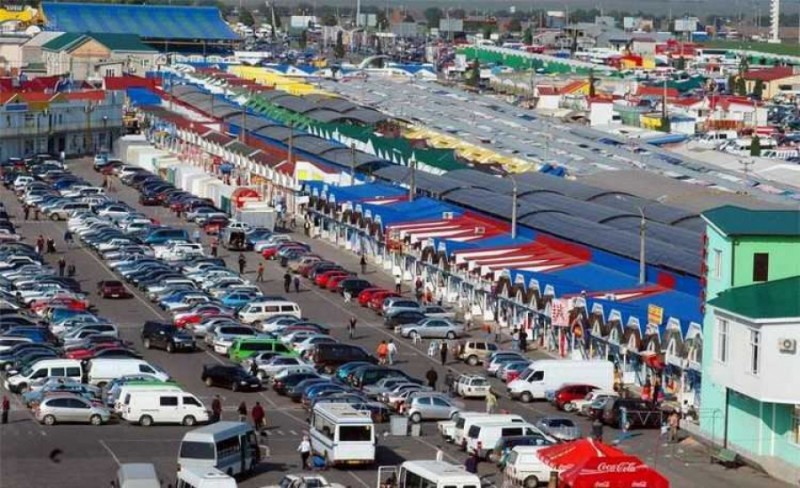
 As reported 24.kg, entrepreneurs of the auto parts company, Dordoi Motors have rallied against the introduction of electronic invoices (EI) and electronic bills of lading (EBL). The rally was attended by 380 Dordoi Motors entrepreneurs and according to a spokesperson, market traders from Osh Bazaar and Aziz market plan to join their campaign.  “We are not against working, but unnecessary red tape with EBL hinders trade,” said one of the rally participants. Addressing the throng, market director Erkin Salymbekov , suggested that the protesters continue working or suspend trading until the issue is resolved. It should be noted that last year,  Salymbekov, vice president of the  Dordoi association stated that the introduction of EBL would play an important role in developing the country's economy and called for entrepreneurs' support of the government's policy. From 1 January this year,  all markets in the country were to switch from the patent system to the EBL and electronic invoice. However, as a result of the rally held by traders associated with Kyrgyzstan's largest market , Dordoi, the president has postponed the transition to electronic bills until July 1st, 2024.

Kazakhstan Poised for Large-Scale Locust Invasion

At a central operational headquarters meeting to counteract the spread of locusts, Vice Prime Minister of Kazakhstan Serik Zhumangarin received new reports on projected risks to the region. Alarmed by the forecast, Zhumangarin announced, "We have never before faced such a wide spanning  infestation of locusts and must not underestimate the possible consequences.  I instruct the Committee of State Inspection of the Ministry of Agriculture to immediately finalize all procedural issues and send necessary equipment to the regions where it is needed. In the hot season, as a precaution, we will switch to meetings at the headquarters twice a week" The government reported that 260,000 hectares had already been treated in the Turkestan Oblast, but thereafter, the areas affected by locusts had spread to an additional 50,000 hectares. Treatment is therefore being extended to the districts of  Arys City, Saryagash, Keles, Ordabasinsk, and Shardara. According to forecasts, the largest invasion of locusts  is expected in the regions of Kostanay and Aktobe. "Locusts have always been with us, from the time of  dinosaurs and mammoths. We have always and will continue, to battle them," stated Zhumangarin. He then  said that whilst locusts are regarded as halal and some countries have learned to harvest them as a source of great protein food,  that's not us, I guess!"

EDB Concept for Eurasian Transport Network

On 6 June, the Eurasian Development Bank (EDB) announced that it is preparing a concept for the Eurasian Transport Network aimed at enhancing connectivity across Eurasia and stimulating economic development, trade and mobility in the region. The EDB is a multilateral development bank with investments in the Eurasian states of Armenia, Belarus, Kazakhstan, Kyrgyzstan, Russia, and Tajikistan. The Eurasian Transport Network is a system of international transport corridors and routes spanning over 50,000 kilometres. In 2023, five key corridors — the Northern, Central and Southern Eurasian Corridors, TRACECA (including the Trans-Caspian International Transport Route) and the International North-South Transport Corridor — carried 260 million tons of freight and 3.6 million international containers. According to the EDB, container traffic has tripled over the past decade. Having mooted the notion of the Eurasian Transport Network back in 2021, the EDB is now poised to present a detailed concept of its development. Analysis has shown that the synergy of corridors is ensured not through their competition, but through the connection and complementarity nature of its routes. The concept includes ten key elements, including addressing Central Asia’s challenges by making the region a transport crossroads, focusing on intra-regional connectivity, and providing a strong impetus to realize the region’s vast agro-industrial potential through new logistics and specialized rolling stock. The EDB’s new report, titled The Eurasian Transport Network, also examines promising transport infrastructure development projects and initiatives, including cooperation between countries and multilateral development banks towards their implementation. The report will be launched at the EDB Business Forum, scheduled for 27–28 June 2024 in Almaty, Kazakhstan.    

Central Asia – EU Political and Security Cooperation

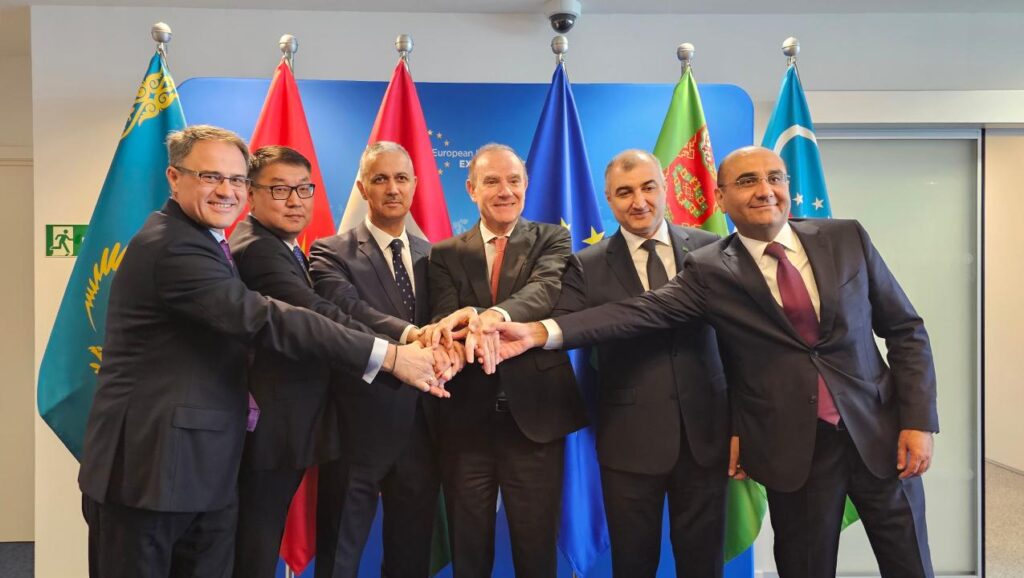
On June 5, Brussels hosted the 11th round of the annual High-Level Political and Security Dialogue between the European Union and Central Asia. Chaired by Enrique Mora, Deputy Secretary-General for Political Affairs of the European External Action Service, the meeting was attended by Deputy Ministers of Foreign Affairs of Kazakhstan, the Kyrgyz Republic, Tajikistan, Turkmenistan, and Uzbekistan. As reported by Kazakhstan’s Foreign Ministry, the agenda comprised the implementation of the Joint Roadmap for Deepening Ties between Central Asia and the EU, the dynamics of transport, trade, economic, energy and climate relations, and common security challenges regarding Afghanistan. Roman Vassilenko, Deputy Minister of Foreign Affairs of Kazakhstan, presented several initiatives relating to energy, trade and water resources management aimed at enhancing interregional cooperation with the EU. Outlining the priorities of Kazakhstan’s chairmanship of the International Fund for Saving the Aral Sea (IFAS), he highlighted a program for continuous monitoring of the basin ecosystem. To be implemented over the next three years, the initiative will provide a mechanism for long-term intraregional cooperation on the Aral issue. Vassilenko also reiterated the need for Central Asian countries to synchronize efforts in the fields of effective irrigation, the operation of water and energy facilities, and the implementation of environmental measures. The European External Action Service reported that in turn, the EU had reaffirmed its willingness to support efforts to intensify its cooperation on security with Central Asia, especially in areas concerning management of water-related challenges, energy and climate change, and connectivity. The High-Level Political and Security Dialogue was the latest conference to be held within the context of increased engagement between Central Asia and the European Union. Central Asia’s Heads of State and the President of the European Council had previously met on 27 October 2022 and 2 June 2023.  At a further EU-Central Asia Ministerial meeting on 23 October 2023 in Luxembourg, the 27 EU Foreign Ministers adopted a Joint Roadmap for Deepening Ties between the EU and Central Asia with concrete actions for strengthening cooperation, most notably regarding security. The EU and Central Asian countries are now planning the first-ever EU-Central Asia Summit for later this year.    

Turkmenistan to Ditch Forced Labor in Cotton Harvesting

According to reports  published by Turkmen.news, the government of Turkmenistan and the International Labor Organization (ILO) have adopted a roadmap for cooperation for 2024-2025, The document details specific steps to prevent the use of forced labor by adults and children during the cotton harvest. It also provides mechanisms for hired labourers to lodge  complaints regarding coercion or extortion, and sets a minimum wage for pickers. If  all of the conditions and measures outlined in the roadmap are implemented,  significant progress will be made towards eradicating forced labor in Turkmenistan.  The key aim is the legislation of a  presidential decree on measures for organized cotton harvesting to eliminate the use of forced or compulsory  labor. It is expected that a system of prohibitions and penalties will be introduced regarding the  practice of forced mobilization or extortion.  The roadmap stresses the need for a simple and easily accessible  means whereby complaints of coercion can be anonymously filed to prevent officials  retaliating against the complainant. The Ministry of Foreign Affairs, the Supreme Court, the Prosecutor General's Office, the Interior Ministry, the Ministry of Justice, the Ombudsman Institute, and the Ministry of Labor and Social Security are tasked with developing the document's recommendations. “Overall, if the measures in the roadmap are implemented, it will be a big step forward. Although the government has not publicly recognized the problem, such a detailed plan is encouraging,” said Ruslan Myatiev, editor of Turkmen.news.

Erdogan: Turkmenistan Gas Exports to Turkey “Only a Matter of Time”

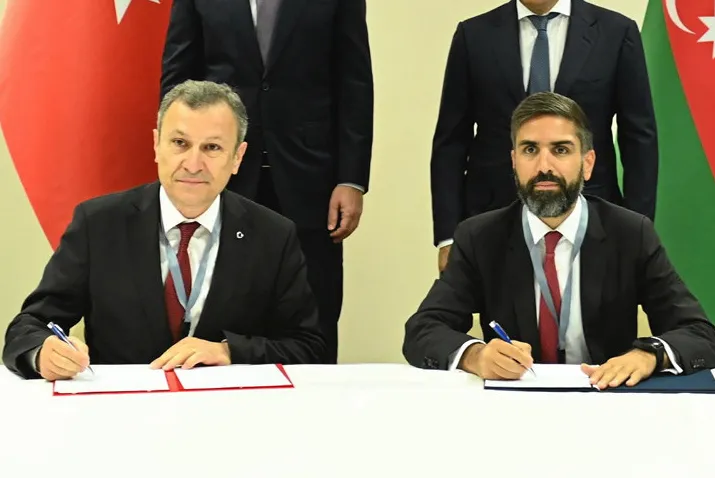
Turkey's president Recep Tayyip Erdogan has said that it is "only a matter of time" before gas from Turkmenistan is exported to Turkey and Europe through the expanded Trans-Anatolian Gas Pipeline (TANAP) project. “Our long-standing cooperation, crowned with infrastructure investments such as Baku-Tbilisi-Ceyhan, Baku-Tbilisi-Erzurum pipelines, and TANAP, has not only benefited Turkey and Azerbaijan but has also made significant contributions to the energy security of the region and Europe,” Erdogan said at the International Caspian Oil and Gas Exhibition in Azerbaijan's capital of Baku. Two gas routes from Turkmenistan to Azerbaijan are being reported. The Turkish Daily Sabah reports that this plan involves transporting gas by sea on gas carrying ships. Upstream, citing experts, reports that SOCAR will start negotiations with Turkmenistan on the resumption of gas supply through Iran under the exchange scheme. On June 4th, Turkey’s Botas Petroleum Pipeline and Azerbaijan’s SOCAR also signed agreements to promote an intergovernmental deal calling for cooperation on natural gas issues reached in May. In one of the five signed contracts, Botash and SOCAR must jointly organize the natural gas supply from Turkmenistan to Azerbaijan and then through Turkey to other countries.