• KGS/USD = 0.01144 0%
  • KZT/USD = 0.00215 0%
  • TJS/USD = 0.10641 0%
  • UZS/USD = 0.00008 0%
  • TMT/USD = 0.28530 0%
  • KGS/USD = 0.01144 0%
  • KZT/USD = 0.00215 0%
  • TJS/USD = 0.10641 0%
  • UZS/USD = 0.00008 0%
  • TMT/USD = 0.28530 0%
  • KGS/USD = 0.01144 0%
  • KZT/USD = 0.00215 0%
  • TJS/USD = 0.10641 0%
  • UZS/USD = 0.00008 0%
  • TMT/USD = 0.28530 0%
  • KGS/USD = 0.01144 0%
  • KZT/USD = 0.00215 0%
  • TJS/USD = 0.10641 0%
  • UZS/USD = 0.00008 0%
  • TMT/USD = 0.28530 0%
  • KGS/USD = 0.01144 0%
  • KZT/USD = 0.00215 0%
  • TJS/USD = 0.10641 0%
  • UZS/USD = 0.00008 0%
  • TMT/USD = 0.28530 0%
  • KGS/USD = 0.01144 0%
  • KZT/USD = 0.00215 0%
  • TJS/USD = 0.10641 0%
  • UZS/USD = 0.00008 0%
  • TMT/USD = 0.28530 0%
  • KGS/USD = 0.01144 0%
  • KZT/USD = 0.00215 0%
  • TJS/USD = 0.10641 0%
  • UZS/USD = 0.00008 0%
  • TMT/USD = 0.28530 0%
  • KGS/USD = 0.01144 0%
  • KZT/USD = 0.00215 0%
  • TJS/USD = 0.10641 0%
  • UZS/USD = 0.00008 0%
  • TMT/USD = 0.28530 0%

Viewing results 1879 - 1884 of 3398

Farms in Tajikistan Being Abandoned Due to Lack of Money

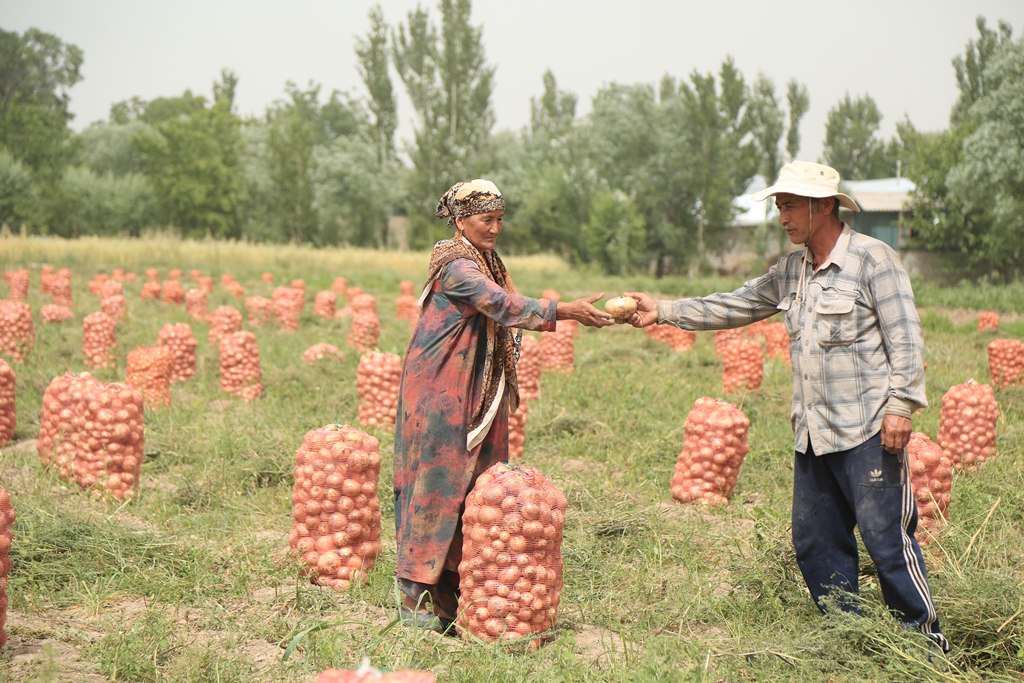
Farmers in Tajikistan are being forced to abandon their farms, explaining that there is no way to earn a living from them. One farmer in the Sino Dekhkan farm in the Vosei district said he was forced to stop operating because of financial problems. “I used to take a loan from Amonatbank to run my business. But they don't give loans anymore. They say you are already old; you will die, and who will pay you back? The land has been standing for two years. It's a cotton field. I haven't found a single somoni for sowing,” the man said. Another problem, farmers say, is the shortage of irrigation water, and the situation only worsens yearly. “I have not been on my land for three years. Because there is no water in the canal. The Nazar State Farm, in Kukhnashahr, takes all the water, and we don't have a drop left,” complained a resident of Kamolobod village in Kulyab. Farmers in Sughd region, adjacent to Dushanbe, face the same problem. Some farmers complain that the authorities force them to plant crops to their detriment. As a result, they say, they not only do not make a profit but also remain at a disadvantage. Economist Foziljon Fatkhulloyev said the agriculture industry will only develop once farmers are given more benefits and preferences. “They give benefits, for example, for six months, but do not consider that farmers' profits do not cover their expenses. If they provide more benefits, the prices of agricultural products on the market would be reduced by 5-10 percent. They should at least give agrarians tax breaks,” he suggested. About 70% of Tajikistan's population lives in rural areas, and developing the agricultural sector will help solve many of its residents' socio-economic problems. Agriculture and labor migration are a source of income for many families. Data is needed on how many farms were forced to close last year, and how many farmers still need to yield products. Representatives of Tajikistan's Ministry of Agriculture do not comment on the situation. At press conferences, the ministry's leadership reports on the development of agriculture and the success of farms.

S&P Keeps Uzbekistan’s Credit Rating as “Stable”

The global credit rating agency S&P has maintained Uzbekistan's sovereign credit rating at “BB-/B” (stable outlook). Its latest report on Uzbekistan mentions that: In 2024-2027, the average economic growth is forecasted to be 5.2%, slightly lower than last year’s 6%. Financial and governance reforms, including a planned increase in energy tariffs, will support the country’s investment prospects. Decision-making remains centralized. Although the perception of corruption is improving, it remains high. Growth in Uzbekistan is mainly due to domestic and international investments, which accounted for about 43% of the GDP last year. From 2021 to 2023, Uzbekistan has seen strong real GDP growth, averaging around 6.4% annually, and we expect the outlook to remain strong, supported by public and private investment. Investments drive growth in Uzbekistan, and last year, investments were one of the highest in the world, accounting for about 43% of GDP. Within the “Uzbekistan – 2030” strategy framework, state, and public structures are activating energy, transport, telecommunications, agriculture, and tourism expenditures. At the same time, they are consistently continuing the work of reforming the energy sector, privatization, and improving the tax-budget policy. Uzbekistan’s economy continues to weather the effects of the Russia-Ukraine war well, though remittance flows and remittances from Russia have declined from their 2022 peak. The flow of remittances was estimated to be approximately $11 billion in 2023 (11% of GDP) but was still nearly 40% higher than in 2021 and up 9% year-over-year in the first quarter of 2024. Russia remains Uzbekistan’s largest remittance source, at 78% of total remittances in 2023. In addition, the total volume of trade with Russia has increased. In the first quarter of 2024, compared to the same period in 2023, it was about 16%. Given the sanctions imposed on Russia by the Western Union, Uzbekistan’s exports to Russia have increased to meet the growing demand. In addition, Uzbekistan signed a two-year contract with Russia’s Gazprom in October 2023, importing 9 million cubic meters of gas daily. Despite strong growth rates, our sovereign ratings for Uzbekistan remain limited by a low per capita GDP, projected to be $2,600 in 2024, compared to other countries globally. The country benefits from favorable demographics with a young population. Almost 90% of the population is of working age or below, providing an opportunity for growth based on labor supply. However, analysts say job growth will need help to keep up with demand. The weakness of the Russian economy, where most permanent and seasonal migrants in Uzbekistan are employed, may exacerbate this issue. The effectiveness of Uzbekistan’s monetary policy has improved in recent years. One of the most significant reforms was the exchange rate liberalization in September 2017. The central bank intervenes in the foreign exchange market from time to time to moderate volatility and assess the appreciation of the local currency through large purchases of gold.

World Bank to Support Kyrgyzstan’s Food Industry

The World Bank's International Development Association will loan Kyrgyzstan $35 million to develop agro-food clusters in the Chui, Jalal-Abad, and Naryn regions. Of that amount, $5 million is a grant, and $30 million is an interest-free loan for 12 years with a six-year grace period. Kyrgyzstan's deputy minister for water resources and agriculture, Kubat Kaseyinov, said the allocated money will be used to develop a dairy cluster in Chui and Jalal-Abad. There are also plans to improve the seed system and breeding farms throughout the country. This includes providing equipment for seed farms, developing infrastructure, improving animal breeding policies and regulations, developing a national meat and dairy farming plan, and supporting selected breeding farms.

Foreign Investment in Central Asia is Following Demographic Trends

The population growth in Central Asia, combined with worsening demographic situations across the rest of the post-Soviet space, means a gradual shift in power and investment toward the regional powers of Uzbekistan and Kazakhstan. Thanks to their growing markets – unlike Belarus and Russia, where the population is slowly declining, and especially Ukraine – Uzbekistan and Kazakhstan are starting large projects with the participation of foreign investors. In particular, Russia is showing increased interest in Central Asia, with the US and the EU also keen to engage financially. Recently, Kazakhstani political scientist Marat Shibutov noted on social media that politicians have realized the benefits of investing in countries with major population growth. He argued that power dynamics across the post-Soviet space are changing in line with that. Shibutov quoted an article that he co-authored with Yuri Solozobov in May 2019: “according to statistics, in 1991 there were 20 million people in Uzbekistan and 51 million in Ukraine. Now, there are officially 32.6 million in Uzbekistan (experts say about 34 million) and 42 million in Ukraine (the real figure is unknown). But soon, everything is set to change dramatically. In fact, in 2-5 years, Uzbekistan will equal or surpass Ukraine in population – this will be a turning point in the post-Soviet space. First and foremost, Uzbekistan's investment and trade position will improve, especially in the consumer goods segment. Considering the nuclear power plant project being implemented with the help of Russia and the Ustyurt oil and gas fields, Uzbekistan will become a more promising country for foreign investors than Ukraine, whose development will be entirely about defense spending and internal political issues.” Due to the war that started in 2022, Shibutov’s forecast has materialized even faster. According to UN estimates, Ukraine's population this year is barely 37 million. No one has accurate data since the last census in this country was carried out in 2001. As of 2023, the Ministry of Social Policy of Ukraine put the figure even lower than the UN, at 36 million. Thus, after Russia (with a population of over 140 million), Uzbekistan is likely the second most populous country of the former USSR. In Kazakhstan the population is growing even faster than in Uzbekistan. Russian and Kazakh businesses are implementing 135 projects worth $26.5 billion. Additionally, 67 joint projects worth $14 billion are being planned across key economic industries, including machine building, metallurgy, and chemicals. They are expected to create 11,000 jobs. According to Russian ambassador to Kazakhstan Alexei Borodavkin, there are more than 18,000 enterprises with Russian capital in Kazakhstan and about 4,000 joint ventures with Kazakh partners. Overall, Russia and Kazakhstan have investments totaling $33.5 billion across 143 projects. In November last year, a memorandum of cooperation was signed between the countries’ ministries of energy to build three thermal power plants (TPP) in Kazakhstan – Kokshetau TPP, Semey TPP, and Ust-Kamenogorsk TPP. The combined capacity of the new coal-fired facilities will be about 1 GW (Kokshetau TPP 240 MW, Semey TPP 360 MW,...

French Cargo Airline Plans to Use Uzbekistan’s Navoi Airport

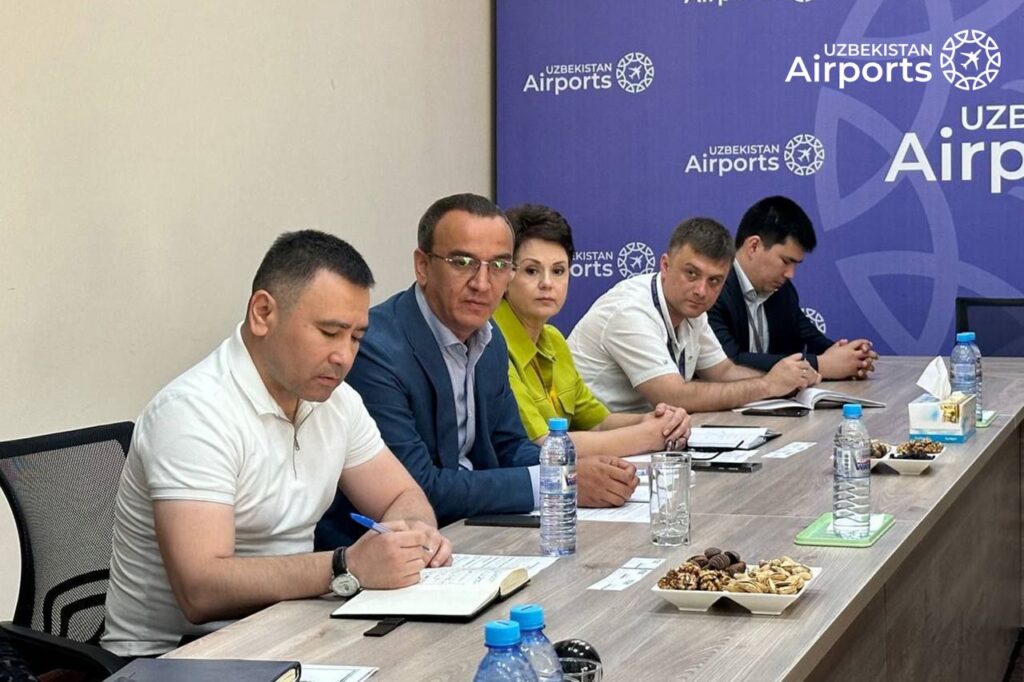
CMA CGM Air Cargo, a French cargo airline, plans to deliver cargo from China to Europe via Uzbekistan. The carrier intends to use Navoi Airport as a transit point. Representatives of Uzbekistan Airports, Uzaviation, and Uzaeronavigatsia Center recently met with the French CMA CGM Air Cargo delegation, headed by General Director Damien Mazauder, in Tashkent. The airline will carry out five flights a week on Airbus A330 aircraft, and Navoi Airport will become a transit point for technical landings, refueling, and crew changes. CMA CGM Air Cargo is headquartered in Paris; it was established in 2021 as an air division of the CMA CGM transportation group.

Kyrgyzstan Lifts Ban on Mining of Uranium and Thorium

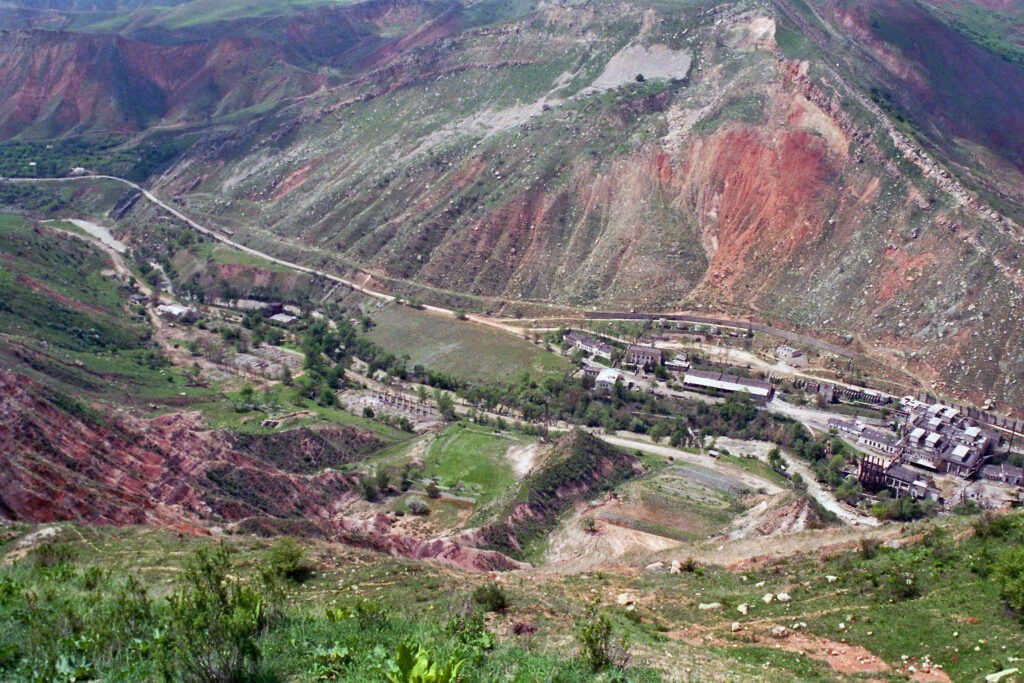
Deputies of the Kyrgyz Parliament have approved a bill lifting the ban on mining uranium and thorium by 69 votes in favor to three against. Parliamentarians are confident that the legislative changes will bring significant economic dividends to the country. The law banning uranium and thorium mining was passed in 2019. At that time, authorities wanted to sell the license to develop a deposit, but faced a significant pushback from residents who feared the project could harm the environment and damage the water table. The result was a complete ban on the entire territory of the Republic. In the Issyk-Kul region of Kyrgyzstan alone, 150,000 cubic meters of radioactive waste were accumulated from uranium mining in the last century. According to the Ministry of Emergency Situations, the country has 92 burial sites, with 23 tailing dumps containing uranium elements. Kyrgyzstan's total volume of poisonous and hazardous substances stands at 2.9 million cubic meters. The notes behind the new bill indicate that alternative sources of income are needed due to severe economic impacts over recent years. However, these activities must strictly comply with environmental norms and standards in uranium and thorium mining. Speaking in parliament, Minister of Natural Resources, Environment, and Technical Supervision, Melis Turganbayev assured deputies that the bill's passage would not harm the environment or the health of Kyrgyz citizens. “For uranium mining to be profitable, a deposit needs 40-50 tons. Kyrgyzstan lacks such reserves. There are occurrences from 0.01 to 0.08% in 83 locations. Our goal is not the uranium, but the associated metals,” Turganbayev said. Authorities plan to mine titanomagnetite, which is accompanied by uranium and thorium. Both elements will be processed at the Kara-Balta Combine in Chui Oblast. Thorium will be stored, while uranium will be sold to other states. Iskhak Masaliyev, one of the three deputies who voted against the bill, reminded his colleagues of discussions in the early 2000s on ecology. However, only now has it been possible to begin to eliminate harmful waste. Doctor of Geological and Mineral Sciences, academician Rozalia Jenchuraeva told The Times of Central Asia that the 2019 law banning mining was “a big folly” as it suspended all waste activities and impacted jobs, leaving hazardous materials lying no more than 20 meters deep are slowly contaminating the soil and water. “If they pull it all out, it will be wonderful. It will clean up the land. This is work for the Kara-Balta Combine. I think the government has decided to develop Kyzyl-Ompol, which is the right thing to do,” Jenchuraeva said. Jenchuraeva believes that Kyrgyzstan has qualified personnel who have previously worked at uranium sites, know how to mine uranium and thorium, and can develop the deposits using their expertise and resources. Earlier, President Japarov met with residents near the Kyzyl-Ompol deposit. “The development of Kyzyl-Ompol will create over a thousand jobs. This mine will become the second Kumtor (gold deposit). The local budget will cease to be subsidized, and the people will get richer,” the president said. Kyzyl-Ompol is...