• KGS/USD = 0.01144 0%
  • KZT/USD = 0.00214 0%
  • TJS/USD = 0.10508 0.48%
  • UZS/USD = 0.00008 0%
  • TMT/USD = 0.28490 -0.28%
  • KGS/USD = 0.01144 0%
  • KZT/USD = 0.00214 0%
  • TJS/USD = 0.10508 0.48%
  • UZS/USD = 0.00008 0%
  • TMT/USD = 0.28490 -0.28%
  • KGS/USD = 0.01144 0%
  • KZT/USD = 0.00214 0%
  • TJS/USD = 0.10508 0.48%
  • UZS/USD = 0.00008 0%
  • TMT/USD = 0.28490 -0.28%
  • KGS/USD = 0.01144 0%
  • KZT/USD = 0.00214 0%
  • TJS/USD = 0.10508 0.48%
  • UZS/USD = 0.00008 0%
  • TMT/USD = 0.28490 -0.28%
  • KGS/USD = 0.01144 0%
  • KZT/USD = 0.00214 0%
  • TJS/USD = 0.10508 0.48%
  • UZS/USD = 0.00008 0%
  • TMT/USD = 0.28490 -0.28%
  • KGS/USD = 0.01144 0%
  • KZT/USD = 0.00214 0%
  • TJS/USD = 0.10508 0.48%
  • UZS/USD = 0.00008 0%
  • TMT/USD = 0.28490 -0.28%
  • KGS/USD = 0.01144 0%
  • KZT/USD = 0.00214 0%
  • TJS/USD = 0.10508 0.48%
  • UZS/USD = 0.00008 0%
  • TMT/USD = 0.28490 -0.28%
  • KGS/USD = 0.01144 0%
  • KZT/USD = 0.00214 0%
  • TJS/USD = 0.10508 0.48%
  • UZS/USD = 0.00008 0%
  • TMT/USD = 0.28490 -0.28%

Viewing results 2107 - 2112 of 3237

Uzbekistan, AIIB Sign Three-Year Investment Program

As part of his state visit to China, on January 24th Uzbekistan president Shavkat Mirziyoyev visited the headquarters of the Asian Infrastructure Investment Bank (AIIB) in Beijing and held talks with the bank's president, Jin Liqun. The sides announced that cooperation between Uzbekistan and AIIB has reached unprecedented levels in recent years, with the portfolio of joint projects exceeding $3 billion. In 2023 alone the bank’s investments in Uzbek projects reached $1 billion, financing energy, water supply, reconstruction of roads and railway, and business development. Mr Mirziyoyev advocated increasing financing for projects involving strategic raw materials, and the implementation of socially important programs on the principles of public-private partnership, his press service reported. During the meeting, Mr Liqun reaffirmed his bank’s strategic commitment to supporting Uzbekistan's sustainable growth. The two leaders signed a three-year investment program, with the goal of further supporting Uzbekistan’s development in multiple sectors across the country, AIIB said.  In 2023, AIIB announced that it would hold its 2024 Annual Meeting in Samarkand, Uzbekistan, on September 25th-26th, marking the first time AIIB would hold its flagship event in Central Asia.  AIIB is a multilateral development bank which began operations in Beijing in January 2016 and has since grown to 109 approved members worldwide.

EU Drives Increased Demand For Kazakh Coal

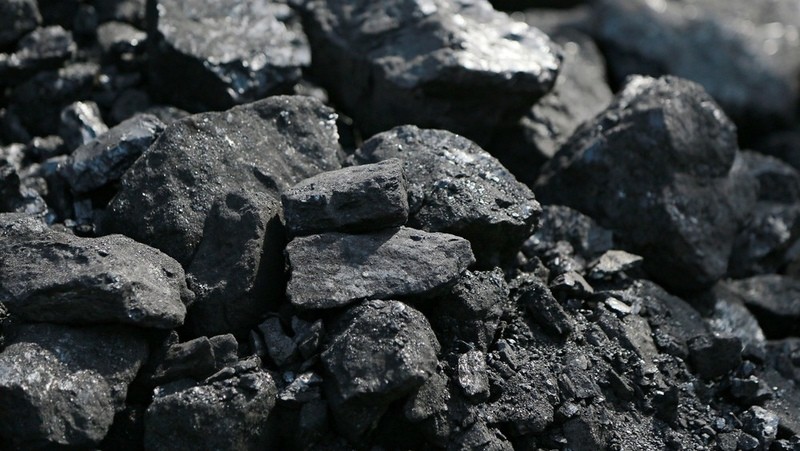
Kazakhstan will increase its production of coal in the period 2023-2029, the Kazakh Ministry of Industry and Construction has said, adding that the country exports around 28% of the total volume of coal it mines.  In order to meet the demands of energy-producing and industrial enterprises, the ministry says it is working to increase coal production, as well as the country’s coal export potential. According to the National Bureau of Statistics of Kazakhstan, exports of hard coal and lignite have increased 6.5-fold, mainly due to the growing demand for Kazakh coal from the countries of the European Union. The embargo on Russian coal exports to European countries, introduced in the EU from August 2022, has created a good opportunity for Kazakhstan to significantly increase its coal exports to Europe. 

“At a Crossroads” – Atlantic Council Addresses Rare Earth Elements in Central Asia

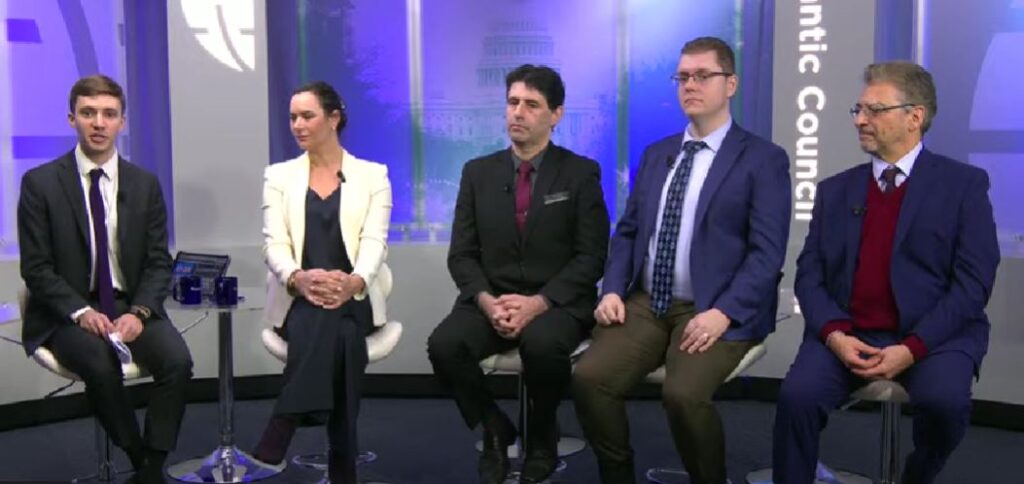
On January 23rd, the Atlantic Council’s Eurasia Center and the International Tax and Investment Center gathered together the authors of the report, “Leveraging Central Asia’s Rare Earth Elements for Economic Growth.” The report highlights the potential of Central Asia, which has remained underappreciated in terms of its rare earth elements (REE) resources, despite its increasing geopolitical significance. China currently dominates the global mining and refining of REEs, giving it a near-monopoly status. The report argues that this scenario calls for an urgent need to diversify global supply chains and suggests that Western investment could play a pivotal role in exploring and mining Central Asia's REEs, thereby contributing to the diversification of supply chains. Furthermore, such investment could have far-reaching implications for the region itself, bolstering regional integration and sovereignty, spurring economic growth, and enhancing economic freedom throughout Central Asia. Opening the discussion, Ariel Cohen, a Nonresident Senior Fellow at the Eurasia Center of the Atlantic Council, highlighted the critical geopolitical location of Central Asia, stating that REEs “may be the next big thing in Central Asia at the engine of economic growth.” Cohen praised the “visionary multi-vector policy pioneered” in Kazakhstan by President Tokayev, and characterized Kazakhstan’s relationship with Russia as “very fraught,” and defined by “multi-generational trauma. Nuclear energy is zero emission energy,” he said, but for the U.S. to capitalize on opportunities for mining REEs in Kazakhstan, “we need to do more and better.” The President of Second Floor Strategies, a public policy consulting company, Wilder Alejandro Sánchez emphasized that Kazakhstan and Uzbekistan are the most “forward-looking” nations in Central Asia in regard to REEs, whilst mining in Kyrgyzstan remains stuck in a “legal limbo,” and Tajikistan currently lacks the necessary critical infrastructure. Nether the less, he stated, REEs could become a driving factor behind regional “cooperation and integration.” Wesley Hill, an International Program Manager at the Energy, Growth, and Security Program of the International Tax and Investment Center, spoke about the international relations components of REEs. “In the same way we competed and continued to compete for other energy resources, most especially crude oil, we will be competing for REEs,” he stated. “It's happening already, this geopolitical clash [which is] primarily driven by competition between the United States and China. After the publication of this report, Beijing cut off all exports of rare earth element refining technologies to the United States. Central Asia is very much at a crossroads,” he stated. Addressing this geopolitical conflict with China over REEs, Ambassador John Herbst, a Senior Director at the Eurasia Center of the Atlantic Council, stated that Central Asia is a “critical region… rich in rare earth minerals [whilst] China is our principal adversary. They are not a friend of the United States.” Finally, Suriya Evans-Pritchard Jayanti, a Nonresident Senior Fellow at the Eurasia Center of the Atlantic Council, characterized REEs as an “extremely important development opportunity” for Central Asia, particularly given “geostrategic energy realignment after the Russian invasion of Ukraine. I think it's a geostrategic realignment opportunity for...

Excise tax increase provokes a rise in alcohol prices

Alcohol prices in Turkmenistan have changed twice this month: at the beginning of the year they doubled, and by the end of the month they almost returned to the previous level. The order to reduce prices, as reported in the Chronicles of Turkmenistan, came from the Ministry of Trade and Foreign Economic Relations. Thus, Turkmen wines went up in price from $2-2.86 per bottle to $2.86 - $4.29. Cognac went up from $8.59-14.31 to $10-17.17, vodka - from $8.59-10 to $17.17, expensive brands of vodka in liter bottles - from $28.62 to $42.94, beer - from $4.29-5.72 to $8.59-11.45. At the same time, the quality of alcoholic beverages produced in the country leaves much to be desired - consumers note that most of the wines are produced not from grapes, but from Chinese powder. The increase in alcohol prices was due to another increase in excise taxes from January 1, 2024. Excise tax on beer increased from 30% to 34.5%, on wines and spirits, depending on the degree - from 39%, 61% and 77% to 44.85%, 70.15% and 88.55% respectively, the publication notes. New excise tax rates are also introduced in neighboring Uzbekistan. Thus, the excise tax on domestically produced ethyl alcohol will double to $1.21 per liter. At the beginning of 2023, it increased fivefold. Excise on some types of alcoholic beverages will increase by 5% later - from July 1. However, tariffs for imported alcohol are again reduced by about 5%. Now the minimum wholesale and retail prices for alcoholic beverages in Uzbekistan vary within the following limits: wines - $1.17 -1.33 per 1 liter of finished product, cognac, $4.65 - 5.35, vodka and other alcoholic products (except beer) $3.48. For comparison, in Kazakhstan from October 1, 2023, the minimum retail price of vodka, strong liquor and vodka products was $4.69 per liter, cognac and brandy $6.95 per liter. This Central Asian country, according to WHO, has the highest alcohol consumption compared to its neighbors. Kyrgyzstan ranks second, Turkmenistan third, followed by Tajikistan and Uzbekistan. Nevertheless, all countries in the region, except Tajikistan, have seen a decline in per capita alcohol consumption. For example, in Kazakhstan in 2010 it was 9.3 liters, and in 2016 this figure decreased to 7.7 liters. In Kyrgyzstan, during this time, total alcohol consumption decreased from 10.2 liters to 6.2 liters per capita. Similarly, in Uzbekistan, alcohol consumption fell from 3.2 liters to 2.7 liters. The same situation in Turkmenistan - alcohol consumption fell from 6 liters to 5.4 liters per capita. Only in Tajikistan is the opposite situation observed. People there began to consume more alcohol - 3.3 liters against 2.4 liters. Recall that all Central Asian countries have a ban on advertising of alcoholic beverages, and a number of measures are taken to reduce the consumption of alcohol by the population. For example, in Kazakhstan, Uzbekistan, Tajikistan and Turkmenistan the minimum legal age to buy alcohol is 21; only in Kyrgyzstan can it be bought from the age of 18.

President Rahmon Invites Qatari Business to Invest in Tajikistan

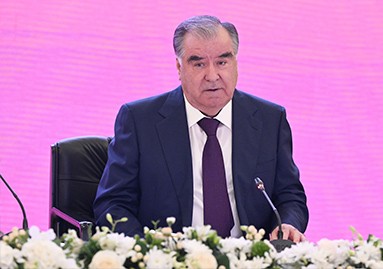
During his state visit to Qatar on January 22nd, the president of Tajikistan, Emomali Rahmon, held negotiations in Doha with the emir of the state of Qatar, Sheikh Tamim bin Hamad Al Thani.  During the meeting, it was proposed to launch joint transport-transit projects in order to expand the logistics networks between the two countries. This will facilitate the transportation of cargo and passengers, as well as transit to other countries, Rahmon’s press service reported. Also on January 22nd, Rahmon met with Qatar’s business community, expressing his views on a broad scope of cooperation opportunities with leading Qatari companies in the fields of agriculture, transport infrastructure, logistics, civil aviation, and tourism. The president emphasized that the government of Tajikistan is ready to support the proposals of investors to establish cooperation in these priority areas. In his speech to the Qatari business community, Rahmon spoke about the current economic situation in Tajikistan and the macroeconomic stability ensured in the country. The president said that Tajikistan’s GDP growth rate in the last 20 years has been more than 7% on average, and in 2023 reached 8.3%, while inflation was 3.8%. “Today, more than 720 public investment projects worth more than USD 13.8 billion are under implementation in our country.” Rahmon said that attracting investments is a priority for the Tajik government, and in this context, vast opportunities for investment have been created, and tax and customs incentives and guarantees are widely applied.  According to Rahmon, Tajikistan’s aluminum production and lithium resources provide for favorable conditions for the production of electric vehicles. “That’s the two main types of materials for the production of electric cars available in our country,” he said. The president pointed out that industrial production can be another future direction of cooperation, adding that projects in the light industry, food, metallurgy, machine building, chemistry, production of construction materials and pharmaceuticals are a priority for Tajikistan. Rahmon also mentioned that Tajikistan is rich in mineral resources, with some 800 deposits of minerals, rare and precious metals, including copper, silver, gold, lead, lithium, antimony, nickel, tungsten, vanadium and other rare minerals having been discovered and partially prepared for mining in Tajikistan. The president added that the reserves of food salt in Tajikistan amount to more than 72 billion tons, which is sufficient to meet the consumption needs of all inhabitants of the planet for this product for more than 300 years.

Forum Of Uzbek Regions And Chinese Provinces Held In Xinjiang

On January 22nd the first Uzbek-Chinese interregional forum was held in the city of Urumqi, in China’s Xinjiang Uyghur Autonomous Region. The forum was attended by heads of key ministries, industry associations, chambers of commerce and industry, companies and more than 1,200 representatives of the business communities of the two countries. The Uzbek delegation at the forum was headed by deputy prime minister Jamshid Khojaev. The Chinese delegation was led by Ma Xingrui, secretary of the Party Committee of the Xinjiang Uygur Autonomous Region. In their welcoming speeches, the heads of both delegations stated that Uzbek-Chinese relations have entered a qualitatively new stage, which became possible thanks to the far-sighted policies of the heads of the two states, the Uzbek Ministry of Investment, Industry and Trade reported. The officials emphasized the positive dynamics of trade and investment partnership, with bilateral trade turnover having doubled and exceeding $14 billion over the past six years. It was noted that all the necessary capabilities are available to increase this indicator up to $20 billion in the coming years. The volume of utilized Chinese investments in Uzbekistan amounted to almost $15 billion. More than 2,000 enterprises with the participation of Chinese capital operate in Uzbekistan. In 2023 more than 60 projects worth almost $2 billion were successfully launched with the participation of Chinese companies, which are becoming leading partners in modernizing the country's industrial sector. Mr Khojaev and Mr Xingrui outlined the further steps to increase cooperation between the two countries, including through direct interaction between regions, emphasizing the importance of regularly holding exhibitions of the industrial and agricultural potential of the regions of Uzbekistan and the provinces of China. The heads of delegations called on business leaders to step up efforts to create high-tech industries based on the competitive advantages of the economies of the two countries, develop industrial cooperation to produce in-demand products and jointly develop new markets, as well as increase the volume of mutual trade. As a result of the forum, 27 documents were signed on the establishment of economic, trade and cultural ties between the regions of Uzbekistan and the provinces of China. In addition, a solid package of 30 agreements and contracts was signed between the business communities of the two countries.