Viewing results 2221 - 2226 of 3398
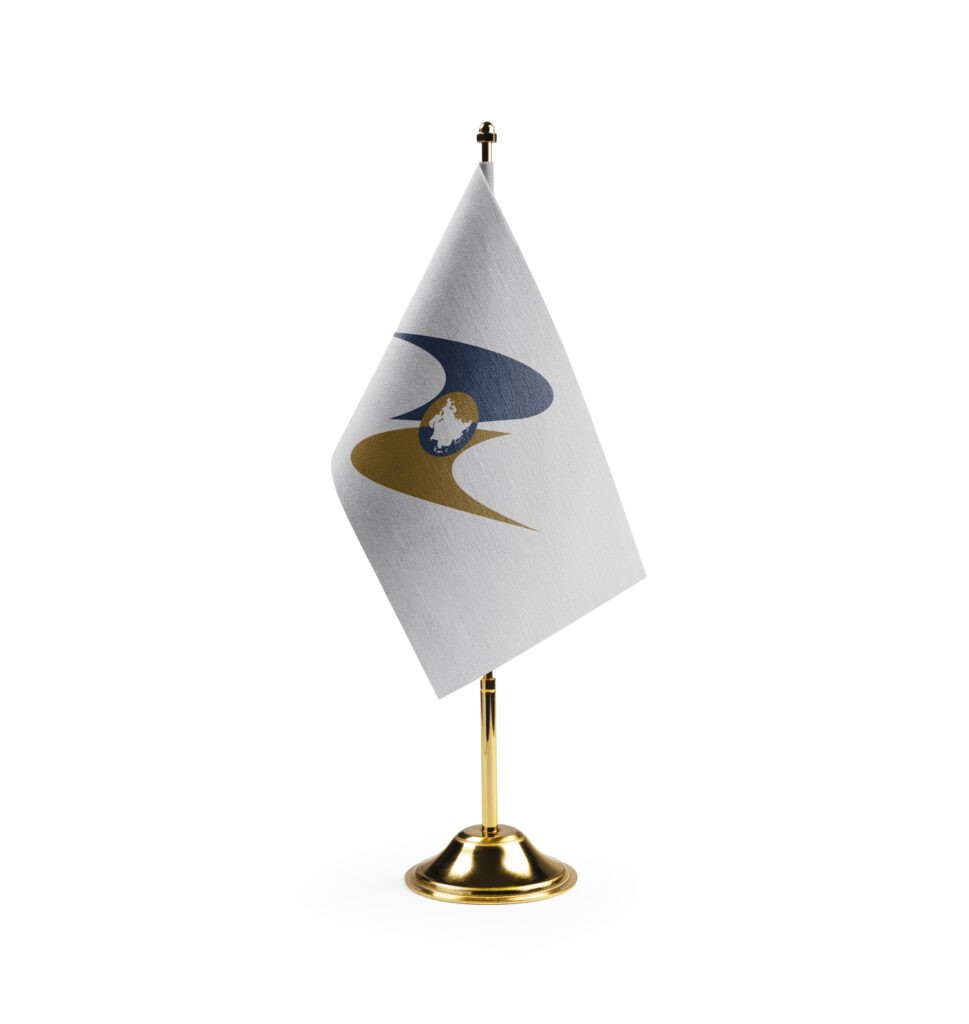
A meeting of the Supreme Eurasian Economic Council was held in St Petersburg on December 25th. The meeting was attended by leaders of the Eurasian Economic Union (EEU) member countries - the Prime Minister of Armenia, Nikol Pashinyan, President of Belarus, Alexander Lukashenko, President of Kazakhstan, Kassym-Jomart Tokayev, President of Kyrgyzstan, Sadyr Japarov, and President of Russia, Vladimir Putin. Opening the meeting, Russian President Putin said that the Eurasian Economic Union will soon be ten years old, and over this period, the mutual trade between its member countries has almost doubled and the aggregate GDP of the EEU countries has grown from US$1.6 trillion to US$2.5 trillion. “We have created deep common markets for goods, services, capital, and workforce, which are operating in line with agreed-upon rules. The main point is that the Eurasian Union has become an authoritative international integration association with an efficient structure and a good foundation,” he said. Putin added that the work on aligning integration processes within the EEU and China's Belt and Road Initiative is also yielding results. The Council’s meeting adopted the declaration “Eurasian Economic Path,” which is aligned with China’s Belt and Road Initiative.
On December 25th, Deputy Minister of Investment, Industry and Trade, Khurram Teshabayev took part in a dialogue between the Ministry and young Uzbek investors and entrepreneurs, the Ministry’s official website reported. The event gathered senior officials of the ministry and more than 500 representatives of the younger generation - successful investors and business people from all regions of the country, in online and offline formats. Opening the meeting, Teshabayev emphasized the importance of involving young people in entrepreneurial and investment activities, saying that a number of opportunities have been created in Uzbekistan to realize the potential of young people, including within the framework of the “Uzbekistan-2030 Strategy”. Today, the task of providing comprehensive support to young entrepreneurs and investors has been elevated to the level of state policy, the Deputy Minister said. Youth industrial-entrepreneurial zones with preferential treatment for manufacturers have been created, a fund to support young entrepreneurs has been established, which provides assistance in the implementation of investment projects and entrepreneurial initiatives, covering the production of products and the provision of services, startup projects and scientific research. Young entrepreneurs can receive support both by obtaining an infrastructurally developed territory for organizing production facilities, and in the form of financial assistance for the implementation of projects for the production of import-substituting products that are in high demand in foreign markets. To date, the Fund for Support of Young Entrepreneurs has allocated funds for the implementation of about 700 youth projects, with about 150 of them located in Youth Industrial Zones.
According to Uzbekistan’s Statistics Agency, over the eleven months of 2023 to December, Uzbekistan reduced natural gas production by more than 4.5 billion cubic meters compared to the same period last year. From January-November, 42.7 billion cubic meters of gas was produced, compared to 47.3 billion cubic meters in 2022. Official statistics also recorded a decrease in the country’s oil production by 12,000 tons from January-November. In recent years, Uzbekistan’s natural gas industry has experienced problems due to the depletion of reserves at existing fields. This year, Uzbekistan started importing natural gas from Russia through Kazakhstan. A government meeting chaired by President Shavkat Mirziyoyev earlier this month focused on maintaining natural gas production volumes at existing fields and discovering new reserves. The meeting considered ways of transitioning to geological drilling at a depth of 6-7 kilometers using advanced technologies. It was stated at the meeting that in recent years, the depth of geological exploration has been increased from 2-3 kilometers to 4-5 kilometers. In 2024, it is planned to carry out seismic work on an area of 3.5 thousand square kilometers and drill new exploration wells.
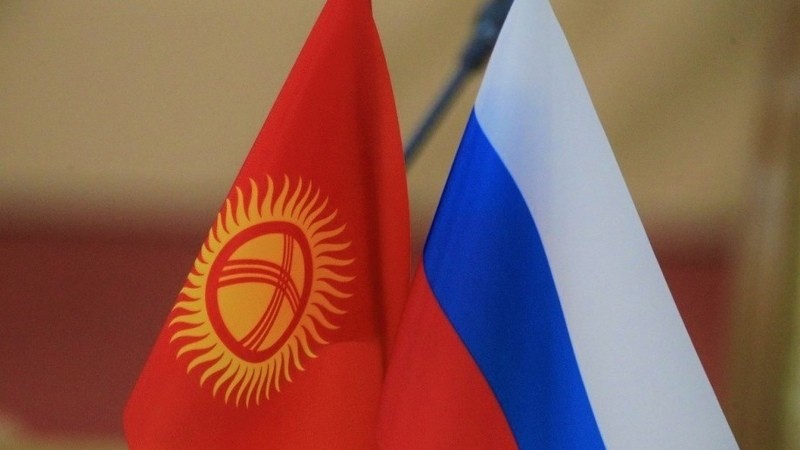
The Russian-Kyrgyz Development Fund (RKDF) has said it will finance both new and existing projects in Kyrgyzstan totaling more than $140 million in 2024. The Fund will focus on strategic sectors of the economy: industry, infrastructure development in education and healthcare, logistics, agriculture and agro-processing, strengthening food security, and energy independence. Work in the country’s regions will continue and be expanded, for which the Fund’s Council approved financing of $1 million. “The strategic decision to approve the budget will allow the Fund to continue operating as usual. The RKDF has the necessary amount of resources, and we will continue to accept new applications. We hope that the number and quality of interesting, important and necessary projects for the country will grow, and the Fund, by financing them, will continue to contribute to the development of the economy,” stated Artem Novikov, Chairman of the Board of the RKDF. Member of the RKDF Council, and Minister of the Economy and Commerce of Kyrgyzstan, Daniyar Amangeldiev said that compared to the previous year, the Fund’s overall project portfolio in Kyrgyzstan will be increased by 50%.
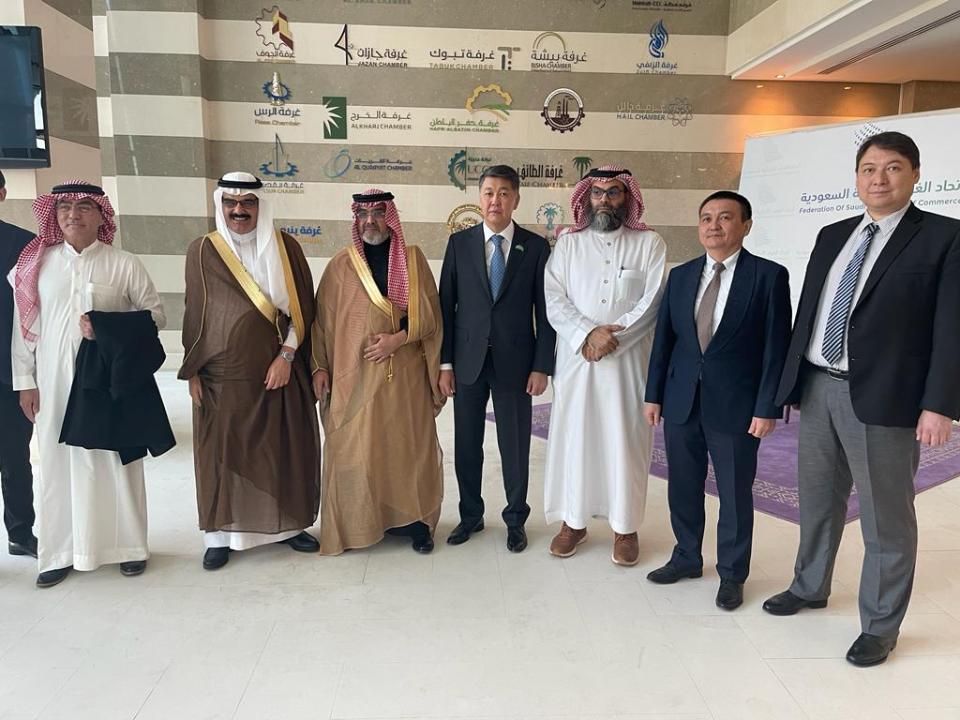
The first meeting of the Kazakhstan-Saudi Business Council took place on December 21st, 2023, demonstrating the deepening diplomatic and economic relations between the two countries. This event was organized by the Embassy of Kazakhstan to Saudi Arabia and the Federation of Saudi Chambers, as part of the 6th session of the Intergovernmental Committee between the two nations. In attendance were the Ambassador of Kazakhstan to Saudi Arabia, Berik Aryn, and Co-Chairman of the Business Council and General Director of GreyWolf Management LLP, Kanat Kudaibergen. Representatives from 46 Kazakh companies also participated in the meeting. Saudi Arabia was represented by the Ambassador of Saudi Arabia to Kazakhstan, Faisal Al-Qahtani, Co-Chairman of the Business Council and CEO of Alrajhi International Investments, Ahmed Al-Dakhil, as well as representatives from the Federation of Saudi Chambers and over 40 Saudi company managers and representatives. The establishment of the Kazakhstan-Saudi Business Council was formalized through an agreement signed between the National Chamber of Entrepreneurs of Kazakhstan, Atameken, and the Federation of Saudi Chambers during the Astana International Forum in June 2023.
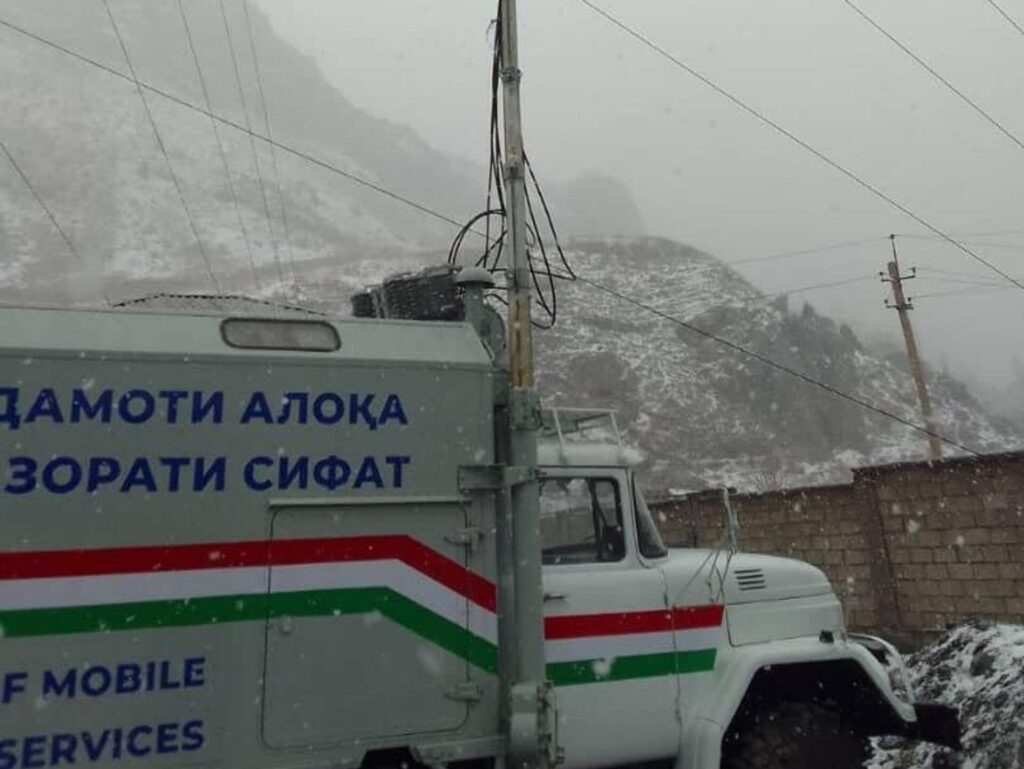
The results of monitoring the quality of mobile communications in the cities and districts of Nurek, Dangara, Vose and Kulyab were presented to the Head of the Communications Service of Tajikistan, Bek Sabur, who arrived on a working visit to the Khatlon region. His visit is connected to the implementation of a decree from the President of Tajikistan "On measures to expand non-cash payments." According to various sources, the level and quality of communications do not meet the requirements. The press service of the Tajik Communications Service reported that Sabur, together with specialists, tested mobile communications in Nurek, Dangar, Vos and Kulyab. "The main purpose of the trip is to determine the accuracy of coverage of base stations in populated areas and identify problems," the press service stated. As a result of the technical inspection, it transpired that not all areas meet the quality requirements for communications. In addition, operator coverage was weak in some places. "The management of the Communications Service ordered providers to install additional stations at the same time as updating the existing ones," the department noted, adding that Sabur held a meeting with the residents of Khatlon to get their opinion on the level and quality of mobile communications. Sabur's visit followed reports received from all over Tajikistan about the low quality of mobile operator services. Tajiks often complain about slow Internet and poor communication. One of the main reasons for this is the lack of infrastructure development. It is also affected by poor energy supply and insufficient development of modern communication technologies in the country. As a result, a significant part of the population has difficulty accessing the Internet. Another problem is the lack of investment in the country's telecommunications industry, although this is slowly being corrected. For example, Tajikistan and China recently signed an agreement that provides for the supply of Chinese equipment to the Republic, which will help improve the quality of the Internet. Tajikistan has also agreed to cooperate with two Russian companies - PITER IX and Digit – in this area. Sabur instructed officials and mobile companies to urgently eliminate the identified shortcomings in order to provide all regions with stable communications and Internet following the Presidential decree.