• KGS/USD = 0.01144 0%
  • KZT/USD = 0.00216 0%
  • TJS/USD = 0.10659 0%
  • UZS/USD = 0.00008 0%
  • TMT/USD = 0.28530 0%
  • KGS/USD = 0.01144 0%
  • KZT/USD = 0.00216 0%
  • TJS/USD = 0.10659 0%
  • UZS/USD = 0.00008 0%
  • TMT/USD = 0.28530 0%
  • KGS/USD = 0.01144 0%
  • KZT/USD = 0.00216 0%
  • TJS/USD = 0.10659 0%
  • UZS/USD = 0.00008 0%
  • TMT/USD = 0.28530 0%
  • KGS/USD = 0.01144 0%
  • KZT/USD = 0.00216 0%
  • TJS/USD = 0.10659 0%
  • UZS/USD = 0.00008 0%
  • TMT/USD = 0.28530 0%
  • KGS/USD = 0.01144 0%
  • KZT/USD = 0.00216 0%
  • TJS/USD = 0.10659 0%
  • UZS/USD = 0.00008 0%
  • TMT/USD = 0.28530 0%
  • KGS/USD = 0.01144 0%
  • KZT/USD = 0.00216 0%
  • TJS/USD = 0.10659 0%
  • UZS/USD = 0.00008 0%
  • TMT/USD = 0.28530 0%
  • KGS/USD = 0.01144 0%
  • KZT/USD = 0.00216 0%
  • TJS/USD = 0.10659 0%
  • UZS/USD = 0.00008 0%
  • TMT/USD = 0.28530 0%
  • KGS/USD = 0.01144 0%
  • KZT/USD = 0.00216 0%
  • TJS/USD = 0.10659 0%
  • UZS/USD = 0.00008 0%
  • TMT/USD = 0.28530 0%

Viewing results 55 - 60 of 5828

Kazakhstan Aims to Boost IT Services Exports to $5 Billion by 2030

Kazakhstan plans to increase its IT services exports nearly fivefold, to $5 billion by 2030, officials and industry participants said at a roundtable focused on positioning the country as a regional hub for international tech talent and digital nomads. According to official data, Kazakhstan exported IT services worth $471 million to 95 countries in the first nine months of 2025. In the final quarter of the year, that figure more than doubled, reaching $1.142 billion as of January 1, 2026. Export revenues also exceeded spending on imported digital solutions by more than 2.6 times, with imports totaling $429 million. The new export target is expected to be supported by workforce expansion and talent attraction initiatives. Representatives of Astana Hub said the country plans to train 10,000 specialists in AI by 2030. At the same time, Kazakhstan is promoting its Digital Nomad Residency program, launched in January 2025, aimed at attracting foreign IT professionals. To date, more than 700 applications from 30 countries have been submitted under the program, with over 120 specialists granted residency status. “Human capital development is the foundation on which Kazakhstan’s growth as a digital hub is built,” said Deputy Prime Minister and Minister for Artificial Intelligence and Digital Development Zhaslan Madiyev. “We aim to make the Digital Nomad process fully digital, transparent, fast, and convenient. The arrival of highly qualified professionals is not just a statistic, it brings international experience, new competencies, and links to global markets. Our goal is to create conditions where talented IT professionals can realize their potential here and contribute to Kazakhstan’s economy.” Participants at the roundtable, including engineers and analysts from international companies, also shared their relocation experiences and proposed improvements to digital services. Following the meeting, stakeholders agreed to continue work through a permanent working group to better adapt the program to the needs of the IT community. As previously reported by The Times of Central Asia, President Kassym-Jomart Tokayev proposed establishing a regional center for cooperation with Japan in digital transformation and artificial intelligence in Astana.

Kazakhstan Freezes Projects with Iran Amid Military Conflict

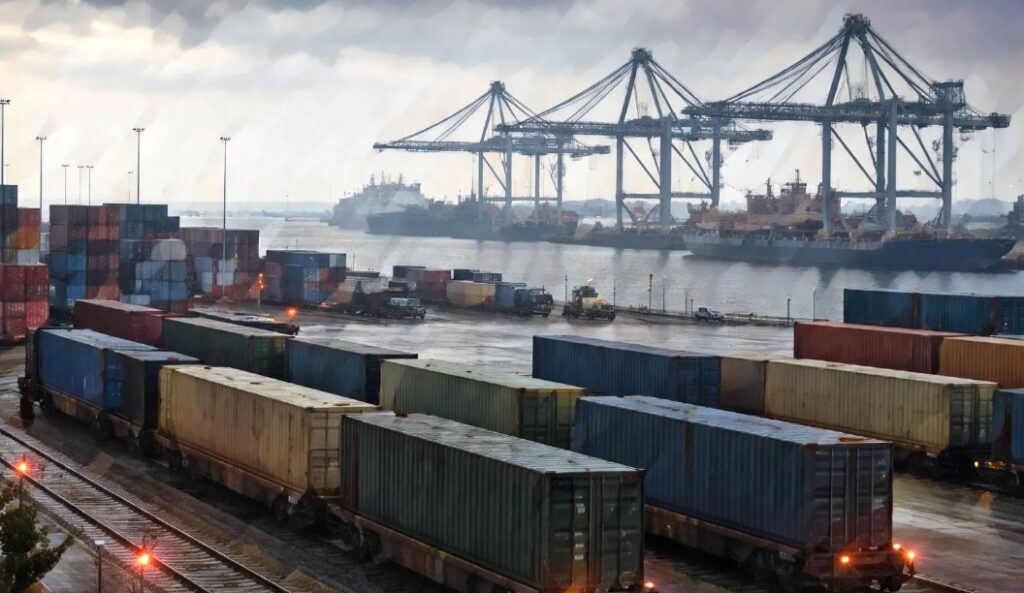
Kazakhstan has suspended several joint projects with Iran amid ongoing military hostilities in the country, Deputy Foreign Minister Arman Issetov has announced. The decision effectively puts on hold plans to expand trade and economic cooperation between Astana and Tehran, despite previously stated ambitions to significantly increase bilateral trade. On December 11, 2025, during the Kazakhstan-Iran business forum in Astana, Tokayev said bilateral trade had exceeded $340 million the previous year. The two sides set an initial goal of raising trade to $1 billion, with a longer-term aim of doubling that figure. However, the escalation of military activity in Iran has forced both sides to reconsider these plans. “The situation is currently very complicated. At this point, many of our projects with Iran have been frozen due to the country being in a state of war. As a result, our businesses and entrepreneurs are now in a wait-and-see position,” Issetov said. “Kazakhstan is not suffering major losses, as the volumes were relatively small and did not significantly impact the national economy. Nevertheless, given our strong partnership with Iran, there is an effect, though not a substantial one,” he added. Despite the growth in trade, Iran’s share in Kazakhstan’s foreign economic relations remains limited. According to the Ministry of National Economy, exports to Iran in 2025 amounted to $239.3 million, while imports totaled $191 million, equivalent to roughly 0.3% of the country’s total foreign trade turnover. The agricultural sector accounted for the bulk of trade: approximately 90% of Kazakhstan’s exports to Iran consisted of wheat and barley. In the first ten months of last year alone, grain shipments reached $280 million, exceeding the total agricultural trade volume for 2024 ($220 million). Government officials believe these volumes can be redirected to alternative markets if necessary. From a logistics perspective, Iran is not considered a critical transit route for Kazakhstan. This was previously confirmed by Deputy Prime Minister and Minister of National Economy Serik Zhumangarin. “I don’t think the conflict will have any impact on our logistics. Shipments through the Persian Gulf were never dominant for us,” he said. Despite its currently limited role, Iran had been viewed as a promising direction for the development of transport corridors. In December 2025, Tokayev announced plans to build a transport and logistics terminal at Shahid Rajaee Port, which was intended to provide direct access for Kazakh exports to global markets. Plans also included strengthening links between Kazakhstan’s ports of Aktau and Kuryk and Iran’s ports of Amirabad and Anzali, as well as integrating Bandar Abbas and Chabahar into regional logistics chains. “It is important for us to develop multimodal corridors connecting Central Asia with the Persian Gulf, and the Kazakhstan-Turkmenistan-Iran railway plays a key role in this,” Tokayev previously stated. According to his estimates, cargo traffic along this route could have doubled by 2030. For now, those plans are effectively on hold.

Kazakhstan to Train “White Hat” Hackers and AI Engineers for the Energy Sector

Kazakhstan plans to train cybersecurity and AI specialists for the energy sector as part of its broader effort to digitally transform the industry, the country’s Ministry of Energy said. In 2026, declared the Year of Digitalization and Artificial Intelligence in the electricity and heat power sector, the ministry plans to develop a professional standard titled Digitalization and the Application of Artificial Intelligence in Energy. The document envisages the creation of new professions, including “white hat” hackers and AI engineers. A “white hat” hacker is a cybersecurity specialist who legally tests IT systems for vulnerabilities with the owners’ permission. Unlike malicious hackers, such experts identify weaknesses so they can be fixed before potential attacks, thereby protecting data and infrastructure. Following a meeting of the Sectoral Council for Electricity and Heat Power Engineering under the ministry, the new standard was expanded to include the following specialties: smart grid designer, engineer for the development and implementation of AI in power systems (Smart Grid), and energy grid cybersecurity specialist (“white hat” hacker). The ministry said these professions were formulated on the basis of Kazakhstan’s Atlas of New Professions and Competencies and are intended to adapt the education system to the demands of the digital economy. The development of Smart Grid systems is seen as one of the key tasks for the next five to ten years. In the future, some energy system management functions, including dispatch control, are expected to be handed over to intelligent algorithms, requiring new competencies at the intersection of energy and IT. As part of the digitalization of the fuel and energy complex, Kazakhstan also plans to create a system of digital models and “digital twins” for facilities within the Unified Energy System as early as 2026. “Our goal is not simply to digitize processes, but to create an intelligent model of the energy system. This will improve the quality of operational management and make it possible to take strategic decisions based on precise data rather than forecasts,” Vice Minister of Energy Bakytzhan Ilyas said. According to him, the introduction of vertical online monitoring using digital twins will make it possible to track key parameters in real time from generation volumes to energy production costs. This will form the basis for tariff-setting policy and investment attraction. Kazakhstan’s energy sector is already implementing a number of projects using artificial intelligence technologies. Among them is AI-based defect detection on power transmission lines using drones, computer vision, and machine learning. The technology can identify support structure defects, overheating, and deformations using data from 4K cameras, thermal imagers, and LiDAR. Another example is robotic diagnostics of heating networks using acoustic resonance, allowing the condition of pipelines to be assessed without excavation or shutting down the system. The ministry emphasizes that the digitalization of the energy sector requires not only technological solutions, but also systematic workforce training. As previously reported by The Times of Central Asia, Kazakhstan plans to expand the use of AI across various sectors from healthcare to the fiscal sphere, including early...

Uzbekistan Leases 4,000 Hectares in Belarus, Signs 60,000-Ton Export Deal

Uzbekistan’s Kashkadarya region has agreed to lease 4,000 hectares of farmland in Belarus and signed a major export contract as part of efforts to expand agricultural cooperation between the two countries, according to Dunyo Information Agency. The agreements were reached during a working visit to Belarus by a delegation from Kashkadarya region. As part of the trip, Uzbek representatives visited livestock and retail facilities in the Vitebsk region, including the districts of Braslav, Shumilino, and Postavy, where they studied local production practices. Talks with the leadership of the Vitebsk Regional Executive Committee focused on strengthening economic ties and building joint production chains. One of the key outcomes was a deal between Uzbek companies “Asl Yuksalish Savdo” and “Muborak qorako‘lchilik” and the Belarusian “Sirotinsky” livestock farm. Under the agreement, the Uzbek side will lease farmland on a long-term basis to launch an agricultural project. The first stage involves breeding 1,000 head of cattle, marking the beginning of a broader investment in livestock production. At the same time, Uzbekistan is expanding its export presence in the Belarusian market. “Asl Yuksalish Savdo” signed a contract with the retail chain CJSC “Dobronom” to supply 60,000 tons of agricultural products annually. The shipments will include dried fruits, legumes, melons, and grapes. The visit also included discussions on tourism and cultural cooperation. The two sides agreed to organize study tours for tourism sector representatives to boost travel exchanges. Cultural ties are also expected to deepen, with plans for performances by the Kashkadarya Regional Theater in Minsk ahead of an upcoming high-level visit. The agreements build on broader economic cooperation between the two countries. Earlier this year, Belarus announced plans to increase bilateral trade with Uzbekistan to $2 billion by 2030. Speaking after talks with Uzbek Prime Minister Abdulla Aripov, Belarusian Prime Minister Aleksandr Turchin described the target as “ambitious but achievable,” noting that trade turnover is already approaching $1 billion.

Kazakhstan Seeks to Strengthen Industrial Base Through Local Locomotive Manufacturing

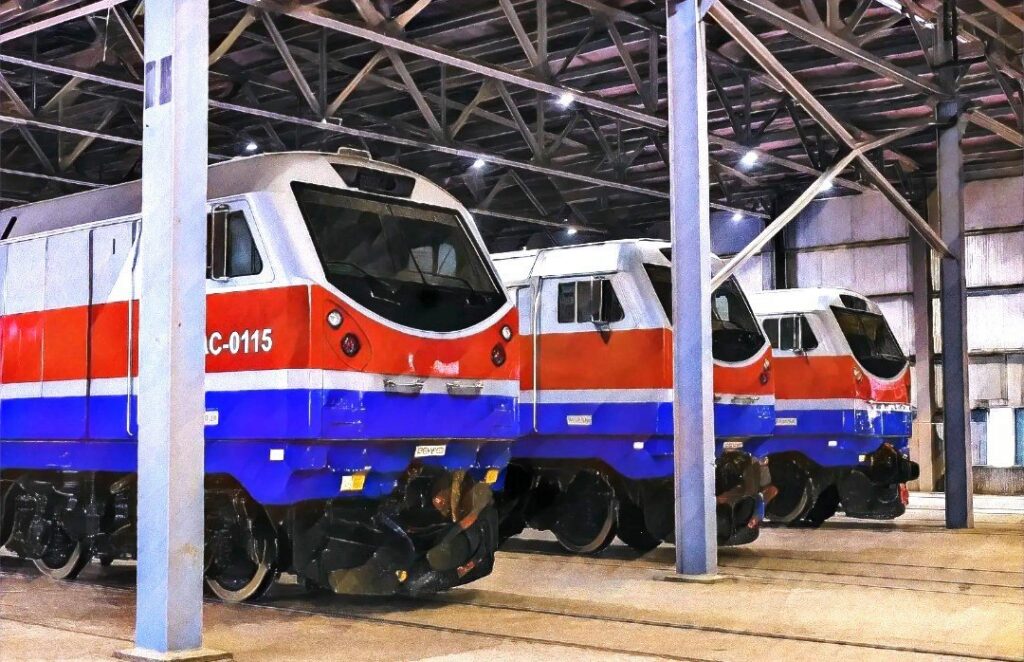
Kazakhstan is expanding its railway engineering sector as a key pillar of its industrial policy aimed at reducing import dependence and strengthening technological sovereignty. The machinery industry remains one of the main indicators of an economy’s technological maturity. For Kazakhstan, its development represents not only domestic industrialization but also the strengthening of the country’s position as an exporter of high-value-added products. Railway engineering plays a particularly important role in this system. One of the anchor investors in the sector is Wabtec Corporation. Recently, Kazakhstan signed contracts with the company worth $4.2 billion. These agreements include the supply of 300 locomotives through 2036, as well as service maintenance, the implementation of digital systems, and equipment repair. On the sidelines of the 13th Forum of Machine Builders of Kazakhstan, Shyngys Altayuly, Product Director at Wabtec Corporation LLP, told The Times of Central Asia about the expansion of production localization and plans to manufacture a new generation of locomotives. Since 2009, the “Locomotive Kurastyru Zauyty” plant in Astana has been producing freight TE33A(S) Evolution locomotives, passenger TEP33A models, and shunting TEM11 units. Over this period, more than 700 locomotives have been manufactured for the state railway company Kazakhstan Temir Zholy, including over 40 units exported to CIS countries and neighboring markets. “With the introduction of our Evolution series TE33A locomotives in Kazakhstan, lifecycle costs have been reduced while ensuring high operational readiness across the country’s locomotive fleet,” Altayuly noted. He also emphasized that over the past 25 years, 75% of all mainline AC diesel locomotives purchased globally have been produced by Wabtec. From Imports to Sovereignty The plant has localized the production of all major components, including the main frame, diesel compartment, driver’s cab, generator, equipment and air compartments, bogie frame, and other elements. This reduces dependence on external suppliers amid unstable global logistics. At the same time, the facility is expanding cooperation with local suppliers. Kazakh enterprises produce elements of the running gear, safety systems, electronics, and a range of other components, including metal structures, driver’s cabins, wheels, and safety system components. “In this way, we are building a domestic value-added engineering chain. This includes not only locomotive production itself but also the entire component base used in assembly,” Altayuly explained. According to him, the localization level has already reached 40%, and further expansion is underway. Components planned for future localization include casting, lighting systems, heated windshields, driver’s seats, piping products, and cable systems. “Once a company becomes a supplier to JSC ‘LKZ,’ it gains access to international markets. Wabtec operates in 50 countries, and our products are used in more than 100 countries worldwide. Therefore, any enterprise that completes this process and becomes a reliable supplier will gain access to global markets,” Altayuly added. Debut of a New Locomotive The next stage of development will be the launch of the new T33AT locomotive, scheduled for production in 2027. The project is being implemented as part of the Wabtec-KTZ partnership and reflects a strategy of integrating global technologies into the national industry....

How Young Professionals from Central Asia Are Building Global Careers

Beyond opportunity, a new generation of Central Asians is learning how to compete, adapt, and fit into global work environments. “I felt like I would understand what real work is much faster by living in the U.S.,” Ruzana Ileuova says. Many people view building a career abroad as an opportunity. However, for Central Asian professionals, it also entails constantly adapting to new identities and expectations. While logging in to work every day from a location that feels both familiar and unfamiliar, Ruzana learns to trust her abilities and adapt to unspoken expectations. She says that pressure increases when working remotely, as it requires a high level of self-discipline. “I always feel like I have to do more to prove myself,” she says. Despite strong language skills and academic preparation, she describes an ongoing sense of self-doubt, particularly in high-performance environments. “Even the language barrier still gives me imposter syndrome,” she adds. “And I’m the youngest on my team.” Her narrative highlights a crucial aspect of this generation: success overseas requires constant negotiation of confidence, identity, and location, in addition to opportunity. Reinventing the Path For others, the path to an international career begins not with a plan, but with chance. Originally from Bishkek, Kyrgyzstan, Aman Arykbaev did not imagine a global career. His journey began when he was unexpectedly selected for the green card lottery. “I used to think the green card was not a real thing until I saw that I was selected,” he says. His early years were characterized by uncertainty, as he arrived in the United States with little money and no guidance. “I worked almost two years installing heating, ventilation, and air conditioning. At that time, my English was very weak,” Arykbaev recalls. After attending a six-month IT boot camp, he was able to enter a new field and land his first tech job in a matter of weeks. “I had several interview stages, and by the end of the week, I got an offer.” Arykbaev, who is currently a senior quality engineer, exemplifies a characteristic of this generation: the ability to change course. Careers are now rebuilt, sometimes from the ground up, rather than fixed. Breaking Into Global Systems The route was more regimented, but no less difficult, for Aldiyar Bekturganov, an Amazon software engineer. He followed a well-known path of internships, networking, and applications after relocating to the U.S. for college. However, the process was anything but easy. “I failed my first interview completely,” he says. That setback accelerated his learning curve. Even after landing a job, entering the workforce was not without its challenges. The shift from university to professional life, he explains, was immediate. “You suddenly realize the work actually matters,” he says. “If something is delayed, people are waiting on you.” Unlike academic settings, where mistakes are part of the process, professional environments demand results that affect teams and timelines. While Bekturganov represents a more traditional corporate trajectory, Dameli Bozzhanova offers a contrasting perspective shaped by entrepreneurship and flexibility. Working in...