• KGS/USD = 0.01144 0%
  • KZT/USD = 0.00216 0%
  • TJS/USD = 0.10456 0%
  • UZS/USD = 0.00008 0%
  • TMT/USD = 0.28571 0%
  • KGS/USD = 0.01144 0%
  • KZT/USD = 0.00216 0%
  • TJS/USD = 0.10456 0%
  • UZS/USD = 0.00008 0%
  • TMT/USD = 0.28571 0%
  • KGS/USD = 0.01144 0%
  • KZT/USD = 0.00216 0%
  • TJS/USD = 0.10456 0%
  • UZS/USD = 0.00008 0%
  • TMT/USD = 0.28571 0%
  • KGS/USD = 0.01144 0%
  • KZT/USD = 0.00216 0%
  • TJS/USD = 0.10456 0%
  • UZS/USD = 0.00008 0%
  • TMT/USD = 0.28571 0%
  • KGS/USD = 0.01144 0%
  • KZT/USD = 0.00216 0%
  • TJS/USD = 0.10456 0%
  • UZS/USD = 0.00008 0%
  • TMT/USD = 0.28571 0%
  • KGS/USD = 0.01144 0%
  • KZT/USD = 0.00216 0%
  • TJS/USD = 0.10456 0%
  • UZS/USD = 0.00008 0%
  • TMT/USD = 0.28571 0%
  • KGS/USD = 0.01144 0%
  • KZT/USD = 0.00216 0%
  • TJS/USD = 0.10456 0%
  • UZS/USD = 0.00008 0%
  • TMT/USD = 0.28571 0%
  • KGS/USD = 0.01144 0%
  • KZT/USD = 0.00216 0%
  • TJS/USD = 0.10456 0%
  • UZS/USD = 0.00008 0%
  • TMT/USD = 0.28571 0%

Viewing results 955 - 960 of 5581

South Korea to Support Health and Nutrition in Kyrgyz Schools

The Korea International Cooperation Agency (KOICA), in partnership with Kyrgyzstan’s Ministry of Education, has launched a new initiative aimed at improving health and nutrition in schools by incorporating locally produced agricultural products into school meals. According to KOICA’s Kyrgyzstan office, the project will directly benefit approximately 16,000 students and local farmers across the regions of Osh, Jalal-Abad, Chui, Naryn, and Batken. The project aims to enhance children’s health through fortified school meals, upgraded school infrastructure, and capacity-building programs for school personnel. With a total budget of $10 million, the program will run until 2028. It will support the renovation of kitchens and dining areas, the construction of toilets, the installation of handwashing stations, and the delivery of educational programs on healthy eating, meal procurement, health, and hygiene in approximately 40 schools. In addition, the project includes training for local agricultural cooperatives on crop cultivation, post-harvest handling, and operational management, alongside the development of model farms. A key component of the initiative is expanding access to clean water and ensuring that hygiene and sanitation services are adequate, inclusive, and gender-sensitive. This is not KOICA’s first investment in Kyrgyzstan’s development. Earlier, The Times of Central Asia reported on a separate $10 million project launched by KOICA to improve air quality in the country, with a particular focus on Bishkek.

Russian Climber Stranded on Kyrgyzstan’s Pobeda Peak is Feared Dead

In 2021, Russian climber Natalia Nagovitsina stayed with her sick husband overnight on one of Kyrgyzstan’s highest mountains and later recounted the ordeal in which he died in a documentary titled  “Stay with Khan Tengri: Tragedy on the Mountain.” Now rescue workers and experienced climbers believe it is likely that Nagovitsina is dead after she became immobilized with a broken leg on the upper reaches of another mountain in Kyrgyzstan and efforts to bring her down in bad weather failed. Her story, and the deaths of others who scaled Pobeda Peak this year, have made for a grim high-altitude climbing season within the Central Asian country, which is celebrating its best-known climber, Eduard Kubatov, for recently reaching the summit of K2 in Pakistan without supplementary oxygen.    Various accounts have described Nagovitsina’s ordeal since she broke a leg on August 12 on Pobeda, Kyrygzstan’s highest mountain at 7,439 meters above sea level. It lies on the border between Kyrgyzstan and China and is also known by the Kyrgyz name Jengish Chokusu (Victory Peak). Italian climber and friend Luca Sinigaglia helped to bring food, a tent and a sleeping bag to Nagovitsina several days later, but he then fell ill and died. Subsequently, on August 16, a Kyrgyz helicopter involved in rescue operations made a hard landing, injuring some on board. On August 19, a drone filmed movement at Nagovitsina’ sleeping bag on the ridge where she was stranded, but few climbing veterans believe she could have since survived extended exposure to the brutally cold conditions on the mountain.  “There is practically no chance” that Nagovitsina is alive after nearly two weeks on the mountain, wrote Anna Piunova, editor of Mountain.RU, a Russian website that covers climbing news. Some climbers, including Bishkek-based Kadyr Saydilkan, bristled at any online commentators who suggested that Nagovitsina, who was in her late 40s, was to blame for the disaster, or didn’t deserve to be rescued, or shouldn’t have been on the mountain in the first place because she was a woman.  Nagovitsina, Saydilkan said on Facebook, “fought with death for ten days and survived as long as she could. She dreamed, set goals, lived freely, with love, and pursued her dream!!! And you?”

Kazakhstan’s Gumilyov Eurasian National University Opens Branch in Kyrgyzstan’s Osh

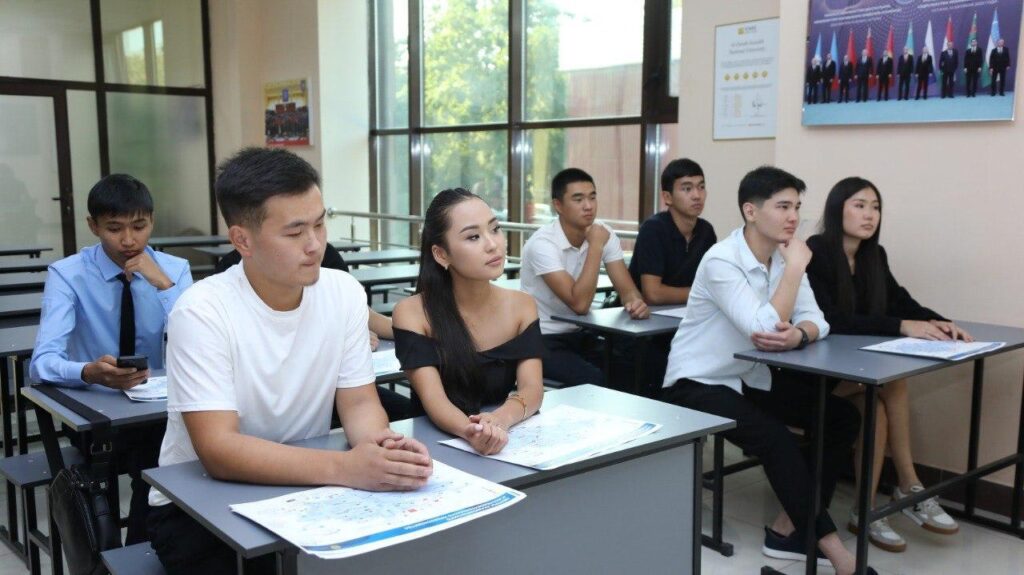
Kazakhstan’s L.N. Gumilyov Eurasian National University (ENU) has opened a new branch at Osh State University in Kyrgyzstan’s second-largest city, Osh. The new branch will offer training in ecology, information and communications technology (ICT), and the service sector. Students will also study Russian language and literature, translation, foreign languages, journalism, and physics, earning dual diplomas from both ENU and Osh State University. ENU Rector Yerlan Sydykov said that the new branch would help strengthen regional human capital and “create a strong intellectual foundation for the sustainable development of Central Asia.” ENU currently collaborates with 16 Kyrgyz universities through academic mobility initiatives and dual-degree programs.

Kazakhstan Develops Water-Efficient Rice Variety to Combat Climate and Irrigation Challenges

The Ibrai Zhakhayev Kazakh Scientific Research Institute of Rice Growing is trialling a new moisture-saving rice variety in the Kyzylorda region. The variety, known as “Syr Sulu,” is designed to mature more quickly and use significantly less water compared to traditional strains. Syr Sulu matures within 105-110 days and offers high yields, up to 80-85 centners per hectare with proper agricultural practices. By comparison, Russian rice varieties typically cultivated in the Kyzylorda region require 120-125 days to reach maturity, resulting in higher water consumption. "The water situation in the southern regions of Kazakhstan makes it necessary to find and develop new ways to save water. Given global climate change, such crop varieties could become a compelling alternative to existing water-intensive varieties. The results of this research will have a positive impact on the development of agriculture and reduce water consumption in rice fields," said a representative of the Kazakh Rice Institute. Moisture Retention Innovations In parallel, the institute is working with the Ministry of Water Resources and Irrigation to continue trials of the Hungarian product Water Retainer, a soil treatment designed to preserve moisture. In 2025, the product is being tested on irrigated land in the Almaty, Zhambyl, Kyzylorda, Karaganda, Akmola, and Zhetysu regions. "The first stage of testing, in which four research institutes participated, showed that the product reduces the growing season of rice and achieves significant water savings. Traditionally, rice is watered for 90 days, but with the use of the preparation, 51 days are sufficient," said Lazzat Dzhusipova, Director of the Ministry's Department of Scientific and Innovative Technologies. Broader Water Challenges As previously reported by The Times of Central Asia, the Eurasian Development Bank (EDB) released a comprehensive assessment of Central Asia’s water and energy challenges in April 2025. The study found that much of the region’s water infrastructure is outdated and inefficient, leading to the loss of 40-55% of available water. The EDB estimates that, without urgent modernization, Central Asia could face an annual water deficit of 5-12 cubic kilometers by 2028.

In Turkmenistan, Non-Turkmen Public Servants Pressured to “Turkmenize” Their Names

In the city of Turkmenabad, mounting evidence points to growing pressure on government employees from ethnic minority backgrounds to alter their names to Turkmen equivalents. According to reports by turkmen.news, ethnic Uzbek names such as Sardon and Shukhrat are being replaced with Turkmenized versions like Serdar and Shokhrat. Forced “Turkmenization” Sources indicate that while this practice previously applied primarily to candidates for high-ranking government positions, it is now being extended to mid-level officials and rank-and-file employees. The pressure appears to be particularly intense within the Ministry of Internal Affairs. In recent years, individuals of non-Turkmen origin have reportedly been systematically excluded from employment in the ministry. While personal connections or influence once allowed some exceptions, ethnic Uzbek and Tajik applicants are now being rejected outright, despite ongoing staffing shortages and high attrition rates. Several sources allege that these practices are being directed from the central government in Ashgabat. The same coercive approach is reportedly applied to secondary school graduates in the Lebap region, where students are encouraged or pressured to conceal their ethnic identities or change their names to Turkmen variants. There are also claims that many Uzbeks previously registered themselves as Turkmen in older-style passports to avoid potential discrimination. Ethnic Composition and Language Rights Official data ranks the Lebap velayat as Turkmenistan’s second most ethnically diverse region, with a significant Uzbek population. In districts such as Farab and Dyaneva, Uzbeks comprise one-third or more of the population. In neighboring Dashoguz region, Uzbeks officially represent nearly one-third of the population. However, similar to the Baluchi community in Mary province, they are denied the right to study their native language in schools, even as an elective subject. Unspoken Employment Discrimination Employment opportunities for non-Turkmens are most restricted in the Lebap and Dashoguz regions. New economic projects and job-creating initiatives are typically implemented last in these areas. An unspoken rule reportedly prioritizes ethnic Turkmens for state employment. The Ministry of National Security screens applicants’ backgrounds across three generations, a practice known as uch arka maglumat. Although Turkmenistan’s laws do not officially require candidates to be ethnically Turkmen and there are ethnic minorities in some senior posts, career advancement is significantly hindered for non-Turkmens. Sources stress that ethnic discrimination in Turkmenistan is closely linked to the broader issue of systemic corruption. Government appointments and promotions are often determined not by merit, but by personal connections, bribery, or family lineage. As a result, officials frequently serve the interests of a narrow in-group rather than the public.

Trilateral Summit in Turkmenistan Focuses on Transport, Energy, and Trade

On August 22, a trilateral summit was held in Turkmenistan’s Avaza National Tourist Zone, bringing together Uzbekistan President Shavkat Mirziyoyev, Chairman of the Halk Maslahaty of Turkmenistan Gurbanguly Berdimuhamedov, and Azerbaijan President Ilham Aliyev. The leaders focused on strengthening cooperation in trade, the economy, transport, energy, and humanitarian affairs, while also emphasizing the development of political, cultural, and multilateral ties. Transport and Transit Mirziyoyev presented several initiatives aimed at expanding regional transport routes and maximizing the region’s transit potential. He highlighted the strategic importance of integrating existing and new corridors to better connect China with South Asia, the Middle East, and Europe. Construction of the China-Uzbekistan railway is underway, and a memorandum has been signed with Pakistan and Afghanistan to establish the Trans-Afghan Corridor. According to Mirziyoyev, these projects could significantly enhance infrastructure utilization across Azerbaijan, Turkmenistan, and Uzbekistan. The development of the Middle Corridor and the Zangezur Corridor was also discussed. The leaders agreed to collaborate on increasing the capacity of regional transport hubs, constructing modern logistics infrastructure at the ports of Turkmenbashi and Baku, implementing a unified tariff policy, and digitizing freight systems. Uzbekistan expressed its willingness to reduce tariffs on a reciprocal basis to facilitate improved access to global markets for regional businesses. Energy Cooperation Energy cooperation was another key focus. The participants emphasized the need to expand collaboration in energy exports and to explore new supply routes. A proposed project to export “green” energy to Europe was described as promising. Additionally, in the hydrocarbon sector, the leaders proposed deeper cooperation in geological exploration and offshore field development in the Caspian Sea. “Joint efforts in the fields of transport, transit, and logistics will be of great importance not only for our countries but also for the wider region,” said President Aliyev, stressing the strategic nature of trilateral cooperation. Aliyev also noted that Azerbaijan’s state oil company SOCAR has begun developing an oil field in Uzbekistan, with results expected in the coming years. Trade and Industry According to summit participants, mutual trade volume between Uzbekistan, Turkmenistan, and Azerbaijan has doubled in recent years, with industrial goods making up 40% of this trade. Talks included preparations for a Comprehensive Action Plan aimed at developing trade and logistics chains, establishing wholesale distribution centers, unifying phytosanitary standards, introducing digital product labeling, and launching joint online platforms. The leaders also underscored the importance of regional engagement and called for increased organization of trade fairs and business forums under the auspices of national chambers of commerce and industry. Summit Outcomes The summit concluded with the endorsement of a new trilateral program for cultural and tourism exchanges, aimed at boosting regional tourism and promoting shared cultural heritage. A joint presidential statement was issued, alongside memoranda of cooperation in the fields of transport and logistics, shipbuilding, and aviation. Additionally, an agreement was signed on cooperation between national commodity and raw material exchanges. To ensure implementation, President Mirziyoyev proposed the development of a roadmap and the institutionalization of regular ministerial meetings focused on key cooperation areas.