• KGS/USD = 0.01144 0%
  • KZT/USD = 0.00212 0%
  • TJS/USD = 0.10456 0.19%
  • UZS/USD = 0.00008 0%
  • TMT/USD = 0.28490 0%
  • KGS/USD = 0.01144 0%
  • KZT/USD = 0.00212 0%
  • TJS/USD = 0.10456 0.19%
  • UZS/USD = 0.00008 0%
  • TMT/USD = 0.28490 0%
  • KGS/USD = 0.01144 0%
  • KZT/USD = 0.00212 0%
  • TJS/USD = 0.10456 0.19%
  • UZS/USD = 0.00008 0%
  • TMT/USD = 0.28490 0%
  • KGS/USD = 0.01144 0%
  • KZT/USD = 0.00212 0%
  • TJS/USD = 0.10456 0.19%
  • UZS/USD = 0.00008 0%
  • TMT/USD = 0.28490 0%
  • KGS/USD = 0.01144 0%
  • KZT/USD = 0.00212 0%
  • TJS/USD = 0.10456 0.19%
  • UZS/USD = 0.00008 0%
  • TMT/USD = 0.28490 0%
  • KGS/USD = 0.01144 0%
  • KZT/USD = 0.00212 0%
  • TJS/USD = 0.10456 0.19%
  • UZS/USD = 0.00008 0%
  • TMT/USD = 0.28490 0%
  • KGS/USD = 0.01144 0%
  • KZT/USD = 0.00212 0%
  • TJS/USD = 0.10456 0.19%
  • UZS/USD = 0.00008 0%
  • TMT/USD = 0.28490 0%
  • KGS/USD = 0.01144 0%
  • KZT/USD = 0.00212 0%
  • TJS/USD = 0.10456 0.19%
  • UZS/USD = 0.00008 0%
  • TMT/USD = 0.28490 0%

Viewing results 2329 - 2334 of 5581

Turkmenistan to Build New High-Speed Highway

The private company "Ojar Asia" has signed a contract with the Eurasian representative office of China's Sino Hydro Bureau 12 Co. Ltd., for the parties to jointly build the Serakhs-Mary-Serkhetabat highway in Turkmenistan. This road will have a length of about 450 kilometers. The highway will be an important element of the country's transport infrastructure, and will improve conditions for foreign trade, including the export of Turkmenistan's natural resources. More than $2 billion in investment from Sino Hydro Bureau will finance it, and Ojar Asia will lead the construction. Turkmenistan is developing road infrastructure to improve transportation links and stimulate its economy. Road projects are strategically important as the country plans to integrate the new highways into international East-West and North-South transportation corridors. This helps increase transit transportation and natural resource exports, which are vital in diversifying an economy traditionally dependent on hydrocarbon exports.

WHO and UNDP to Upgrade Kazakhstan’s Virological Labs

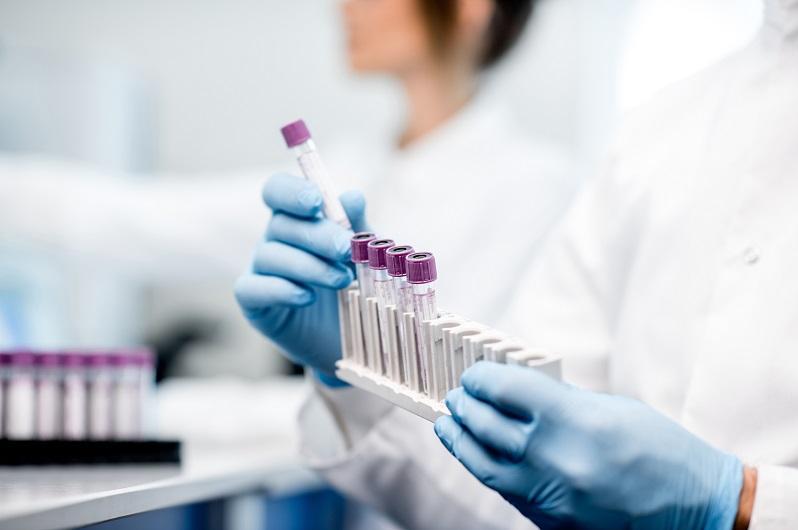
Kazakhstan’s Ministry of Healthcare, the World Health Organization (WHO) Office in Kazakhstan, and the United Nations Development Programme (UNDP) have announced a strategic partnership to upgrade the country's critical health infrastructure, supported by a three-year grant from the Pandemic Fund. As reported by UNDP in Kazakhstan, the collaboration will better prepare Kazakhstan for potential pandemics by enhancing its management of response to infectious diseases. Key components of the initiative include renovating and modernizing Almaty's virological laboratory and the construction of another in Turkestan. Both facilities will incorporate SMART (Self-Monitoring Analysis and Reporting Technology)  as well as “green” technologies to ensure sustainability and environmental responsibility. The project also includes the renovation of the National Scientific Center of Especially Dangerous Infections in Almaty to improve the infrastructure, functionality, and safety standards of its virological and bacteriological laboratories, and the modernization of  sanitary and quarantine checkpoints across Kazakhstan. Russia earlier reported on the alleged existence of US laboratories developing biological weapons in Kazakhstan. Issued by the Kremlin-controlled media in the wake of Russia’s invasion of Ukraine, the report's claims have been staunchly denied by Zauresh Zhumadilova, Director General of the National Scientific Center of Especially Dangerous Infections under the Ministry of Health of Kazakhstan. According to Zhumadilova, all laboratories in Kazakhstan belong to the government and are controlled by the country’s Ministry of Health. In June, Kazakhstan’s Deputy Minister of Culture and Information Kanat Iskakov, also commented on rumors concerning the alleged existence of foreign biological laboratories in Kazakhstan and reiterated, “The [Kazakh] Ministry of Foreign Affairs and authorized bodies have several times stated that there are no biological laboratories run by the USA or any other country, in Kazakhstan." He added that the  research center in Almaty, fully funded by the state, is run by local specialists. Reuters has reported that artificial intelligence (AI) was behind the fake news, originated in China, about the existence of U.S. laboratories allegedly developing biological weapons in Kazakhstan. Referencing the U.S. Department of Homeland Security (DHS) 2024 Homeland Threat Assessment, the agency stated that a Chinese government-controlled news site using a generative AI platform, had promoted a previously circulated false claim that the United States was running a lab in Kazakhstan to create biological weapons for use against China. According to DHS, China and other adversaries are developing AI technologies that could undermine U.S. cyber defenses, including generative AI programs that support malware attacks. In response, Reuters reports that the Biden administration is poised to launch a new front to safeguard the U.S. from AI technologies developed by China and Russia, and comments on the potential employment of AI by U.S. adversaries to wage aggressive cyberattacks or even create potent biological weapons.

Kazakhstan Hosts Summit of Central Asian Countries and Germany

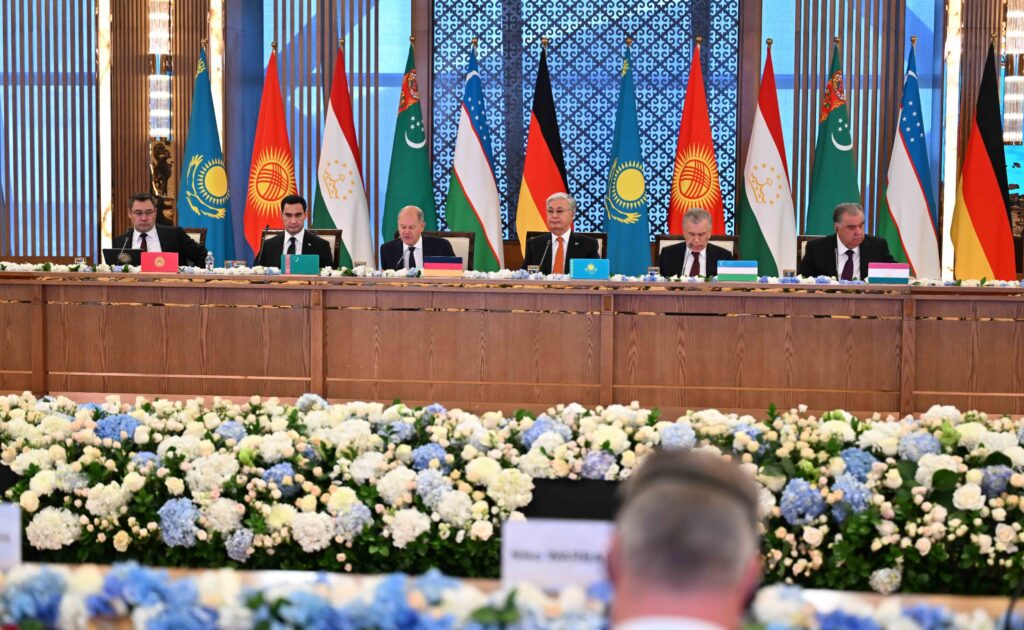
Opening the summit in Astana, Kazakh President Kassym-Jomart Tokayev expressed gratitude to Federal Chancellor Olaf Scholz and Central Asian leaders for their participation and support of regional cooperation. Noting the strengthened relationship following the high-level dialog launched in Berlin last September, he stated, “I believe this is evidence of interest and aspiration from the Central Asian states and Germany for comprehensive development of strategic partnerships. Our meeting is called to summarize joint work and outline new ways to deepen cooperation. Today, we will discuss important trade, investment, energy, ecology, transportation and logistics, education, and science issues. I am confident that our constructive discussions will lead to concrete solutions that will benefit all our countries.” According to the President of Kazakhstan, Germany's socio-economic, scientific, and technological progress is an example for many countries. The positive impact of German technologies and investments in various spheres of the economy cannot be overestimated. Hence, full-scale partnership with Germany, one of the world's most developed countries and the largest economy in the European Union, is a priority for Kazakhstan and other Central Asian states. The most promising areas of cooperation between Central Asian states and Germany include increasing trade turnover, cooperation in the energy sector, development of industrial cooperation, transportation and logistics interconnection, and development of scientific and educational ties. With reference to the above, Tokayev stated: “Wide investment prospects are opened by the development of the Middle Corridor, including the modernization and digitalization of the Caspian Sea ports and construction of cargo terminals. Further integration of Central Asian and European transportation and logistics systems remains urgent. Kazakhstan welcomes the decision of European partners to allocate 10 billion euros under the Global Gateway program for the development of the Middle Corridor. We count on Germany's assistance connecting this route with the Trans-European Transport Network (TEN-T) and the Global Gateway strategy." Citing the need for sustained focus on strengthening and ensuring international security and stability,  Tokayev then emphasized: “Our countries closely cooperate in a multilateral format, including within the framework of the United Nations. We intend to continue to strongly support the efforts of this non-alternative universal Organization in the fight against terrorism, extremism, illegal migration, climate change, peacekeeping, and disarmament. Kazakhstan is ready to participate in the UN reform process. We believe that several developed countries, including Germany, certainly deserve a place as permanent members of the UN Security Council. I want to take this opportunity to wish the Kyrgyz Republic success in promoting its candidacy for the post of a non-permanent member of the UN Security Council for 2027-2028. I am confident that Kyrgyzstan will be able to significantly contribute to strengthening stability and security in Central Asia and beyond." Following speeches by Federal Chancellor of Germany Olaf Scholz, President of Kyrgyzstan Sadyr Japarov, President of Tajikistan Emomali Rahmon, President of Turkmenistan Serdar Berdimuhamedov and President of Uzbekistan Shavkat Mirziyoyev, a Joint Declaration was adopted by the Heads of the Central Asian states and the Federal Chancellor of Germany.

Mirziyoyev and Scholz Agree to Grow Uzbekistan-Germany Cooperation

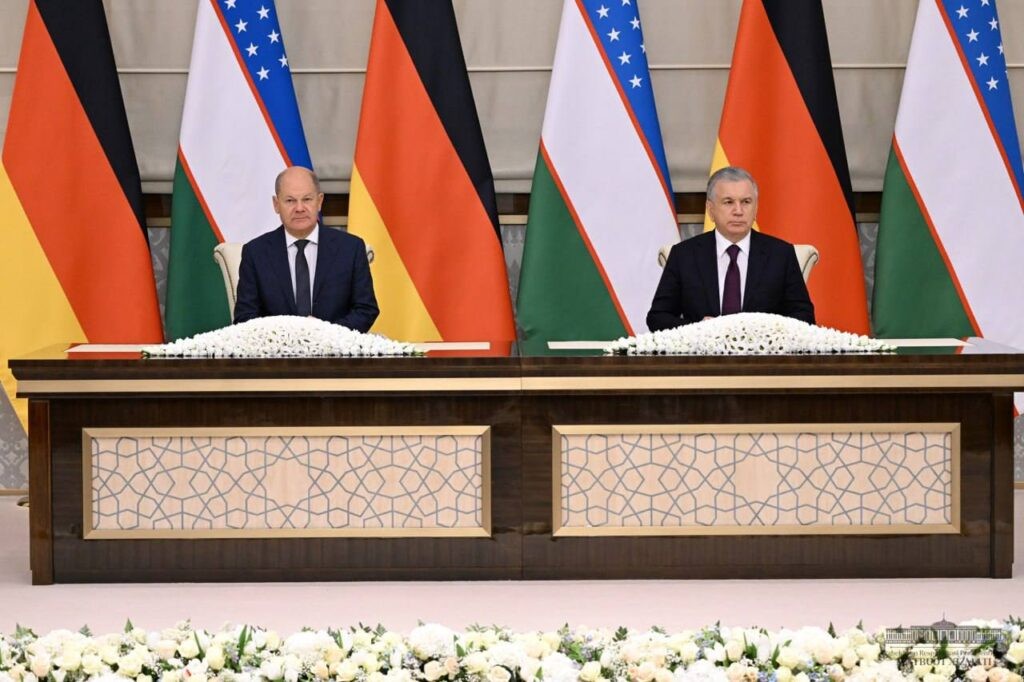
On September 15, German Chancellor Olaf Scholz met with Uzbek president Shavkat Mirziyoyev in Samarkand. Last year the volume of trade between Uzbekistan and Germany exceeded 1 billion euros for the first time. Since the beginning of 2024, German companies have invested over 800 million euros into the Uzbek economy, while in June, the eighth meeting of the Uzbek-German Business Council was successfully held in Tashkent. At the end of the negotiations, Mirziyoyev and Scholz signed eight bilateral documents, including agreements in the fields of migration, use of water resources, essential minerals, transport and climate change. Additionally, Mirziyoyev and Scholz participated in the opening ceremony of the new Academy of Public Administration, which the Uzbek government has recently built in cooperation with the Hans Seidel Foundation and the Bavarian School of Public Administration. Scholz will also participate in a C5+1 meeting in Kazakhstan on September 17 with the leaders of Kazakhstan, Kyrgyzstan, Uzbekistan, Turkmenistan, and Tajikistan.

Uzbekistan Signs Customs Agreement With U.S.

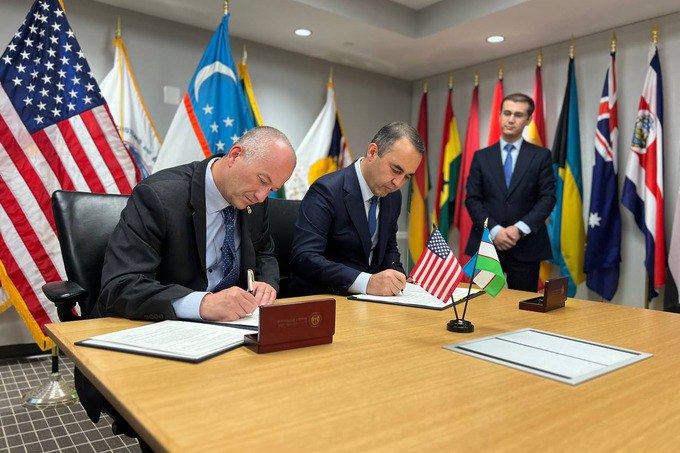
The heads of the Uzbek and American customs services have signed an agreement “On Cooperation and Mutual Assistance,” an essential legal basis of cooperation in customs. The deal was signed in a bilateral meeting between the Chairman of the Uzbekistan's Customs Committee, Akmalkhuja Mavlonov, and the Commissioner of the U.S. Customs Border Service, Troy Miller. Prior to Uzbekistan, the United States had signed such bilateral agreements on customs cooperation with only 17 other countries. After establishing diplomatic relations between Uzbekistan and the USA, an official face-to-face meeting between the heads of the customs services of the two countries is being held for the first time in the past 32 years. Uzbekistan’s foreign trade in goods with the USA has increased by 48% in the last six years. In the first eight months of this year, this indicator increased by 64% compared to 2023. Establishing cooperation and information exchange between the two countries' customs services can further increase foreign trade. That’s why negotiations focused on urgent issues such as risk monitoring in customs, digitalization of customs procedures, and effective use of human resources. The negotiations addressed the potential for U.S. Border and Customs Service specialists to be brought to Uzbekistan, as well as opportunities for Uzbek specialists to enhance their skills in the United States. The Times of Central Asia has previously written that an American think tank, the Center for Strategic and International Studies (CSIS), has recently called on American politicians to turn Uzbekistan into a valuable partner.

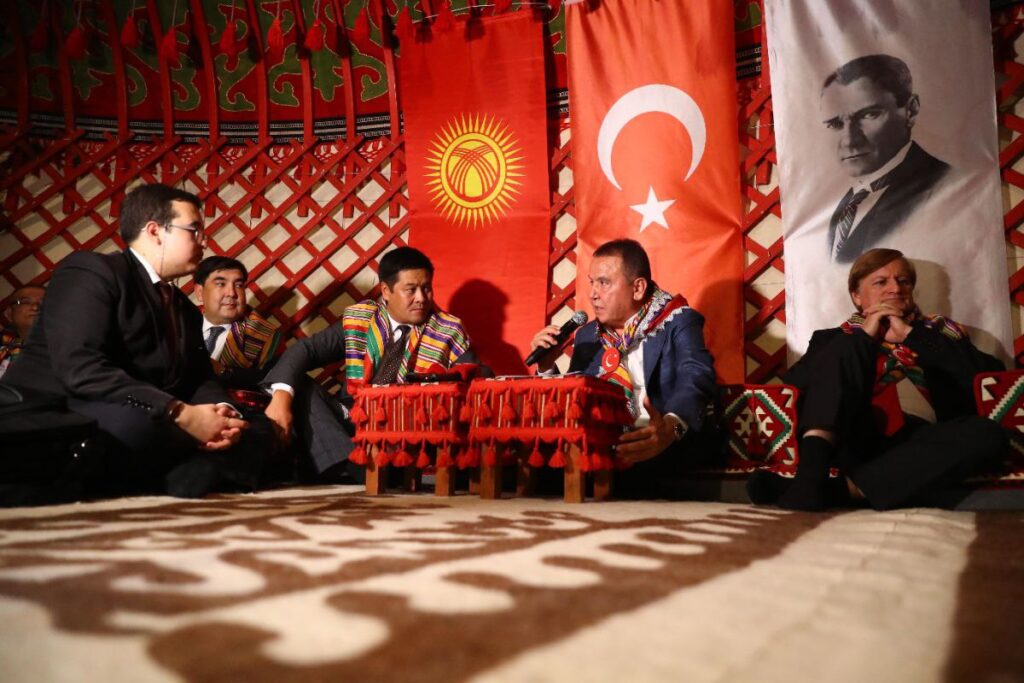
Kyrgyzstan’s Cholpon-Ata and Turkey’s Antalya Become Twin Cities

Turkey's Antalya and Kyrgyzstan's Cholpon-Ata have become twin cities; the official ceremony on the establishment of ties was held in Turkey. According to the Kyrgyz Foreign Ministry, the corresponding document between the resort towns of the two countries was signed by the mayors of the cities. Both sides believe that cooperation between Cholpon-Ata and Antalya will open up opportunities for tourism and infrastructure development projects. “Special attention in the framework of future interaction will be paid to the exchange of experience in the development of urban infrastructure and the coastal zone of Lake Issyk-Kul, construction technologies, as well as environmentally friendly solutions to protect the environment,” representatives of the Foreign Ministry stated. Diplomats believe signing a protocol on "twin" relations will create favorable conditions for attracting Turkish investment in Kyrgyzstan's tourism sector and implementing joint initiatives. The Kyrgyz side also proposed to the Antalya authorities that a Turkish educational center be built in Cholpon-Ata to train tourism specialists.