• KGS/USD = 0.01144 0%
  • KZT/USD = 0.00212 0%
  • TJS/USD = 0.10456 0.19%
  • UZS/USD = 0.00008 0%
  • TMT/USD = 0.28490 0%
  • KGS/USD = 0.01144 0%
  • KZT/USD = 0.00212 0%
  • TJS/USD = 0.10456 0.19%
  • UZS/USD = 0.00008 0%
  • TMT/USD = 0.28490 0%
  • KGS/USD = 0.01144 0%
  • KZT/USD = 0.00212 0%
  • TJS/USD = 0.10456 0.19%
  • UZS/USD = 0.00008 0%
  • TMT/USD = 0.28490 0%
  • KGS/USD = 0.01144 0%
  • KZT/USD = 0.00212 0%
  • TJS/USD = 0.10456 0.19%
  • UZS/USD = 0.00008 0%
  • TMT/USD = 0.28490 0%
  • KGS/USD = 0.01144 0%
  • KZT/USD = 0.00212 0%
  • TJS/USD = 0.10456 0.19%
  • UZS/USD = 0.00008 0%
  • TMT/USD = 0.28490 0%
  • KGS/USD = 0.01144 0%
  • KZT/USD = 0.00212 0%
  • TJS/USD = 0.10456 0.19%
  • UZS/USD = 0.00008 0%
  • TMT/USD = 0.28490 0%
  • KGS/USD = 0.01144 0%
  • KZT/USD = 0.00212 0%
  • TJS/USD = 0.10456 0.19%
  • UZS/USD = 0.00008 0%
  • TMT/USD = 0.28490 0%
  • KGS/USD = 0.01144 0%
  • KZT/USD = 0.00212 0%
  • TJS/USD = 0.10456 0.19%
  • UZS/USD = 0.00008 0%
  • TMT/USD = 0.28490 0%

Viewing results 2467 - 2472 of 5581

Kazakhstan’s Kapchagay Reservoir Fills Up For First Time In A Decade

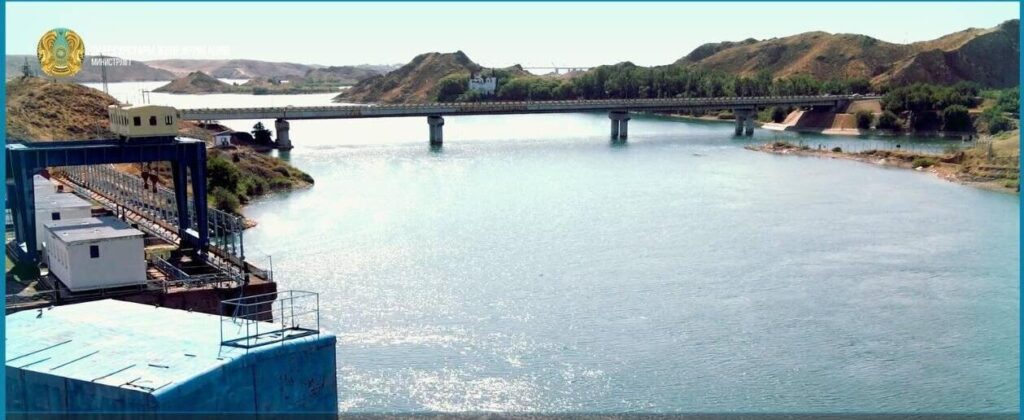
Kazakhstan’s Ministry of Water Resources and Irrigation announced on August 26 that the Kapchagay reservoir outside Almaty was completely full for the first time in ten years. Created in 1970 as an artificial lake, 100km long and up to 25km wide in places, the reservoir can hold more than 18 billion cubic meters of water. The reservoir collects water from the Ili River, which originates in China. This spring, the ministry said up to 900 cubic meters of water per second flowed into the reservoir, attributing the increased inflow to the melting of the Tien Shan mountain glaciers and higher than usual rainfall. The reservoir was initially meant to regulate the flow of the Ili River on its way to Kazakhstan’s largest lake, Balkhash. Today, it is used for irrigation, fish farming, and recreation. Located a one-hour drive from Almaty, its beaches are popular with holidaymakers. According to Medet Kerimzhanov, deputy head of the Balkhash-Alakol basin inspectorate, the last time the Kapchagay reservoir was 100% full was in 2014. Today, 750 cubic meters of water per second are released from the reservoir to irrigate fields. Kerimzhanov added that the irrigation season in the region will continue until the end of September. Earlier this month, the Ministry of Water Resources said it was drafting an intergovernmental agreement between Kazakhstan and China on distributing water from transboundary rivers — the Ertis, the Ili, and the Emel. To date, the parties have reached a consensus on several provisions of the future agreement, the ministry said.

China to Build a Trade and Industrial Park in Astana

Last week, Xinjiang Hengyuan Investment Management Co., Ltd., based in the Chinese city of Baiyang, and Kazakh Invest signed a memorandum to implement the construction of a trade and industrial park, spanning 50 hectares, in Astana. As reported by Kazakh Invest, the project is expected to positively impact the development of critical sectors of Kazakhstan's economy, including logistics, warehousing, processing, trade, and real estate management. The project will also attract Chinese trade and manufacturing companies to operate in Kazakhstan. Yan Wang, Deputy Mayor of Baiyang, commented: "We are entering this project with great enthusiasm, seeing the enormous potential of Kazakhstan as a key logistics hub in the region. Creating the Kazakhstan-China Trade and Industrial Park in Astana will significantly expand the country's logistics capabilities and strengthen its role as an important transit corridor between East and West. We believe this project will catalyze attracting new trade flows and manufacturing." Yerzhan Yelekeyev, Chairman of the Board of Kazakh Invest, added: "This project opens up new horizons for cooperation between Kazakhstan and China. The creation of the Kazakhstan-China Trade and Industrial Park in Astana will not only accelerate the development of key sectors of our economy -but-also create numerous new jobs.”

Uzbekistan and Afghanistan To Work Together on Mining Projects

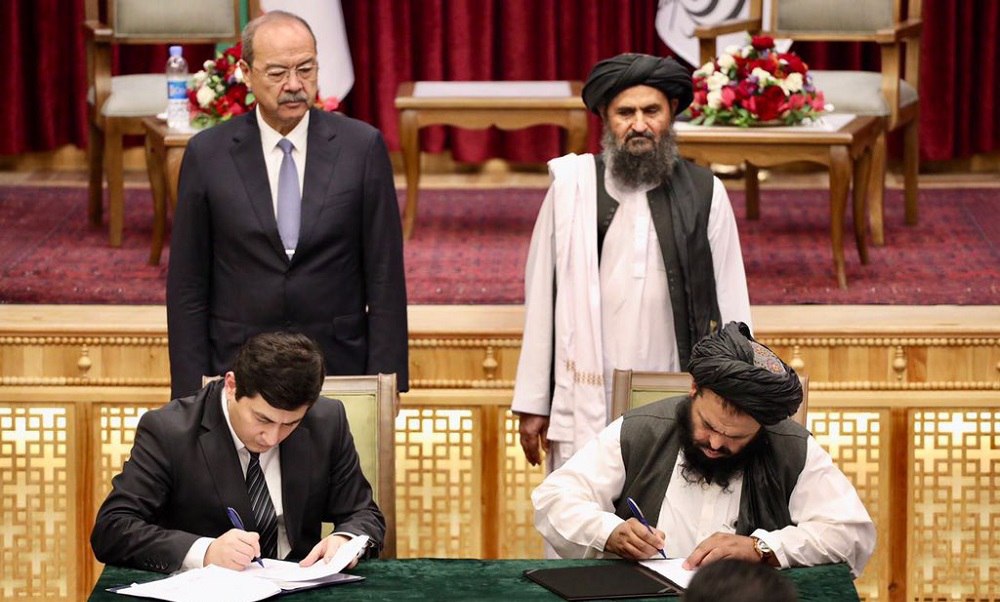
Afghanistan and Uzbekistan have signed five agreements related to mining projects in Afghanistan. The agreements are for the exploration of hydrocarbon fields in the Afghan-Tajik oil and gas basin, the development of copper and gold deposits in the Qandaran district of Zabul province, iron extraction in the Hesh district of Bamyan province, and hydrocarbon resources in the Tuti-Maidan district of Faryab province. There are also plans to build a 120-megawatt gas-fired power plant in Faryab province. These agreements, totaling $1.15 billion, were part of a more comprehensive package of 35 agreements and memorandums of understanding signed between the two countries. These agreements amount to an Uzbek investment in Afghanistan of over $2.5 billion. The latest round of cooperation points to the strengthening of economic ties between Tashkent and Kabul, which is especially important given the region's current geopolitical challenges and financial instability. These agreements can also significantly impact Afghanistan's economic development by providing needed resources and creating jobs in crucial regions of the country.

With the Russian Language Waning in Central Asia, Will Other Languages Replace It?

Russian is still the most widespread foreign language in Kazakhstan, though its role is declining there, and across Central Asia in general. At the same time, the people of the region have been slow to learn other languages, in part due to economic factors such as slowing globalization, according to the Kazakhstani political analyst Zamir Karazhanov, who is head of the Kemel Arna Public Foundation.   The language of cities Since declaring independence in 1991, all the counties of Central Asia have made promoting their national languages a priority. But foreign languages, which link the region with the rest of the world, have also historically been seen as critical. In practice, however, the study and use of foreign languages other than Russian is not widespread. The Russian language is losing its prominence in Kazakhstan as the number of ethnic Russians declines. According to official statistics, as of January 1, 2024, Russians made up 14.89% of the country’s population, down from close to 40% in 1989. Nevertheless, thanks to the education system and Kazakhstan’s proximity to Russia, the level of proficiency in Russian remains high. In Kazakhstan and Kyrgyzstan, Russian is a second official language. In Tajikistan, it is called the “language of interethnic communication”. In Uzbekistan and Turkmenistan, however, it does not have an official status. More than 90% of Kazakhstanis know Russian to some degree, while 20% of the population considers it their native language. Meanwhile, those figures for Turkmenistan are 40% and 12% respectively. In Kyrgyzstan, about 44% know Russian and 5% consider it their native language; in Uzbekistan, it is about 50% and 2.7%; and in Tajikistan, 55% and 0.3%. Kazakhstan's President Kassym-Jomart Tokayev has repeatedly spoken about the need to preserve the Russian language in Kazakhstan, and the unacceptability of language-based discrimination. Last year, he unveiled the International Russian Language Organization, established by the CIS Heads of State Council. “The new organization is open to all countries and, of course, very relevant from the point of view of global humanitarian cooperation,” explained Tokayev, while underlining that measures to promote the Russian language in the Eurasia region and elsewhere are congruous with the trend of strengthening national identities. “Kazakhstan will continue the policy of bolstering the status of the state language of Kazakh,” Tokayev said at the time. Today, Kazakhstan has many Russian-language media, while Russian remains the lingua franca at meetings among post-Soviet countries. Even though Russian is concentrated in big cities, all Kazakhstanis receive a significant amount of western and other foreign news from Russian sources. “Russian is spoken in most of Kazakhstan. In the biggest city, Almaty, communicating in Russian is not a problem. But, if you move 30-50 km outside the city, it gets harder to speak it. Russian is the language of cities and the language of interethnic interaction,” the political analyst Karazhanov told The Times of Central Asia. “Of course, the number of native speakers of the Kazakh language is growing, and the number of Russian speakers is declining, but Kazakh...

Uzbekistan and Azerbaijan Seal Lucrative Deals

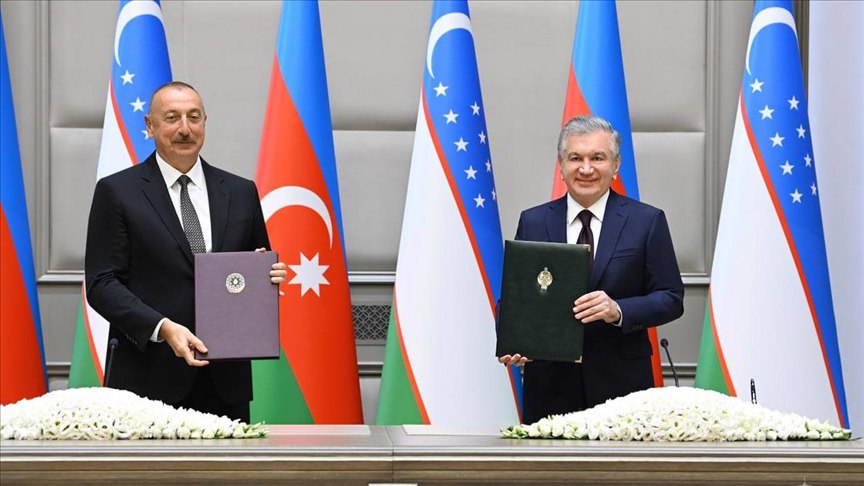
On August 22, at the invitation of Shavkat Mirziyoyev, President of Azerbaijan, Ilham Aliyev, arrived in Uzbekistan on a state visit. The event, covered by the presidential text service, included a report on a meeting between the presidents, and the first sitting of the Interstate Supreme Council on August 23, at which Mirziyoyev announced:  “Today, we will sign the Treaty on Union Relations. For several years, we have raised Uzbekistan-Azerbaijan relations to the highest level of interstate cooperation." The Uzbek president then referred to the 30th anniversary of diplomatic relations between Uzbekistan and Azerbaijan, to be celebrated next year and in turn,  Mirziyoyev proposed commemorating the date and declaring 2025, 'Year of Economic Cooperation between Uzbekistan and Azerbaijan'. As a result of the meeting, an agreement was made to adopt a comprehensive program covering 20 prioritized sectors. Cooperation on a portfolio of projects, worth over 2 billion dollars, in energy, chemistry, mining, textile, agriculture, urban development, and other areas was established, and agreement met on increasing the number of air flights, easing surface and air transport procedures, and digital solutions. Mirziyoyev proposed establishing a mechanism for regular meetings between rectors of the two countries' leading universities and holding a joint media forum. Prospects of building tourism and business complexes in the capitals were also discussed to increase the flow of tourists, humanitarians, and business exchanges. In addition,  the presidents signed an Agreement on Union Relations, adopted at the first meeting of the Interstate Supreme Council. The meeting closed with a ceremonial signing of bilateral documents comprising: ¾ Intergovernmental agreement on labor activity and protection of citizens’ rights; ¾ Practical action plan for further expansion of trade, economic, and investment cooperation; ¾ Memorandum on cooperation in the fields of preschool education, vocational education, secondary special education, higher education, and science; ¾ Action plan in the field of tourism for 2024-2026; ¾ Cooperation program for 2024-2026 between the Ministry of Justice of Uzbekistan and the State Agency for Citizen Services and Social Innovation under the President of Azerbaijan; ¾ Memorandum on cooperation between the Center for Professional Development of Lawyers under the Ministry of Justice of Uzbekistan and the Academy of Justice of the Ministry of Justice of Azerbaijan; ¾ Agreement on cooperation between the National Guard of Uzbekistan and the Ministry of Internal Affairs of Azerbaijan, and ¾ Memorandum on cooperation between centers of forensic expertise. During the event, the presidents also met with representatives of companies from both countries including Azerbaijan’s PASHA Holding, SOCAR, SOFAZ, Agalarov Development, Silk Way Group, Matanat, Sarda Group, AzerGold, Azermash, Azerbaijan Investment Holding, Azerbaijan Railways, and  Alyat Free Economic Zone. The meeting concluded with the launch of various cooperative projects ranging from the construction of hotel and residential complexes in Tashkent and building material production in the Kashkadarya region (Uzbekistan),  to the establishment of textile clusters and a sewing factory in Azerbaijan. To mark the end of the state visit, the two presidents and their wives attended in a concert featuring artists from the two countries.

CAREC Think Tank Development Forum to Focus on Climate Solutions

The 8th CAREC Think Tank Development Forum (CTTDF) will be held on August 27 and 28 in Almaty. Themed “The Climate Challenge: Thinking Beyond Borders for Collective Action,” the forum aims to address regional climate challenges by fostering collaborations for policy recommendations and joint research. The CAREC Institute, the Eurasian Development Bank, the Asian Development Bank, and other partners will organize the forum, which will bring together policymakers, experts, and leaders from across Asia to advance regional cooperation on climate action. Headquartered in Urumqi in China’s Xinjiang, the CAREC Institute is an intergovernmental organization contributing to the Central Asia Regional Economic Cooperation (CAREC) Program through knowledge generation and capacity building. The Institute is jointly shared and governed by the CAREC's eleven member countries: Afghanistan, Azerbaijan, China, Georgia, Kazakhstan, Kyrgyzstan, Mongolia, Pakistan, Tajikistan, Turkmenistan, and Uzbekistan. The forum participants will engage in meaningful policy discourse to identify solutions for a climate-resilient region, explore joint research opportunities, and facilitate innovative climate studies beyond mainstream agendas. Representatives from international organizations, high-level government officials, esteemed university scholars, and experts from leading think tanks will be key speakers. The Director of the CAREC Institute and the Vice President of the Asian Development Bank will address the opening ceremony. The forum will include a research presentation by Arman Akhunbaev, Eurasian Development Bank’s head of the Center for Infrastructure and Industrial Research, with insights into the financial solutions to close the investment gap in Central Asia's drinking water and sanitation infrastructure. The forum will also feature presentations, panel discussions, case studies, and interactive sessions designed to foster dialogue and develop actionable strategies for climate resilience in the CAREC region.