• KGS/USD = 0.01144 0%
  • KZT/USD = 0.00208 0%
  • TJS/USD = 0.10516 0.77%
  • UZS/USD = 0.00008 0%
  • TMT/USD = 0.28571 0%
  • KGS/USD = 0.01144 0%
  • KZT/USD = 0.00208 0%
  • TJS/USD = 0.10516 0.77%
  • UZS/USD = 0.00008 0%
  • TMT/USD = 0.28571 0%
  • KGS/USD = 0.01144 0%
  • KZT/USD = 0.00208 0%
  • TJS/USD = 0.10516 0.77%
  • UZS/USD = 0.00008 0%
  • TMT/USD = 0.28571 0%
  • KGS/USD = 0.01144 0%
  • KZT/USD = 0.00208 0%
  • TJS/USD = 0.10516 0.77%
  • UZS/USD = 0.00008 0%
  • TMT/USD = 0.28571 0%
  • KGS/USD = 0.01144 0%
  • KZT/USD = 0.00208 0%
  • TJS/USD = 0.10516 0.77%
  • UZS/USD = 0.00008 0%
  • TMT/USD = 0.28571 0%
  • KGS/USD = 0.01144 0%
  • KZT/USD = 0.00208 0%
  • TJS/USD = 0.10516 0.77%
  • UZS/USD = 0.00008 0%
  • TMT/USD = 0.28571 0%
  • KGS/USD = 0.01144 0%
  • KZT/USD = 0.00208 0%
  • TJS/USD = 0.10516 0.77%
  • UZS/USD = 0.00008 0%
  • TMT/USD = 0.28571 0%
  • KGS/USD = 0.01144 0%
  • KZT/USD = 0.00208 0%
  • TJS/USD = 0.10516 0.77%
  • UZS/USD = 0.00008 0%
  • TMT/USD = 0.28571 0%

Viewing results 25 - 30 of 5407

Kazakhstan Authorities Acknowledge Gap Between Real Scale of Shadow Employment and Official Data

Kazakhstan’s authorities have acknowledged a significant discrepancy between official estimates of informal employment and administrative data, highlighting the scale of the country’s shadow labor market. Minister of Labor and Social Protection Askarbek Yertaev said the actual number of people working outside the formal economy could be almost three times higher than indicated by official statistics. He made the statement during a Senate meeting devoted to regional development issues. Presenting the ministry’s assessment of informal employment, Yertaev noted that out of a workforce of 9.7 million people, only 6.7 million made mandatory pension contributions at least once in 2025. Of these, 5.3 million were employees and 1.4 million were self-employed. This leaves around 3 million people without recorded pension contributions. According to the minister, the figure significantly exceeds official estimates. Data from the National Statistics Bureau indicated that at the beginning of 2025, informal employment accounted for about 12% of the employed population, or just over 1.1 million people. Yertaev said the discrepancy suggests that a substantial number of citizens either work informally or underreport their income. Additional evidence of the scale of shadow employment comes from differences between statistical data and digital administrative records. While official statistics show 7.1 million registered employees, the Unified System for Accounting for Employment Contracts records contracts for only 4.1 million people. Among the factors driving workers into informal employment, Yertaev cited overdue debts and the freezing of bank accounts, which he said may encourage individuals to conceal income and avoid formal labour arrangements. To address the issue, the Ministry of Labor plans to expand the use of digital tools aimed at facilitating formal employment. This includes the introduction of AI solutions on the Electronic Labor Exchange portal. According to the ministry, an AI-based system will automatically match job seekers with vacancies based on their education and professional background, while also supporting users throughout the job search process. Deputy Chairman of the State Revenue Committee of the Ministry of Finance Zhanibek Nurzhanov also presented the results of a pilot project on platform employment. Implemented jointly with the Ministry of Labor, the initiative led to the registration of more than 43,000 taxi drivers as individual entrepreneurs under a special tax regime. The State Revenue Committee’s information systems are now integrated with 31 online platforms, a step authorities say should help bring more workers into the formal economy. Participants in the Senate discussion stressed that efforts to reduce shadow employment should combine enforcement measures with policies that encourage voluntary legalization of labor relations. As The Times of Central Asia previously reported, proposals to combat the payment of undeclared wages included sectoral agreements on salary levels and requirements for companies to disclose employment structures.
Timur Suleimenov Advances Tokayev Crypto Reserve Plan with $350M Portfolio

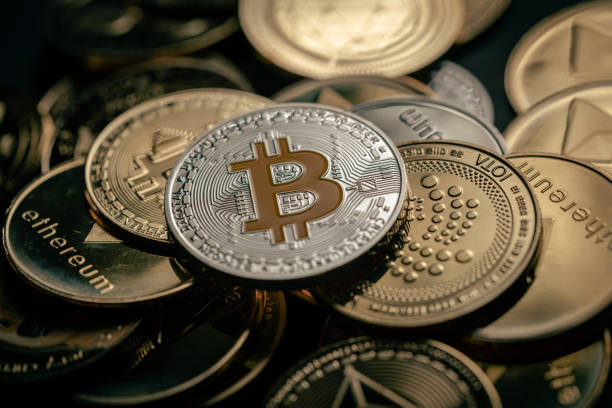
National Bank Governor Timur Suleimenov is moving to implement President Kassym-Jomart Tokayev’s crypto strategy, saying Kazakhstan has already formed a crypto-related investment portfolio of up to $350 million from gold and foreign-exchange reserves. The move is the clearest sign yet that Tokayev’s calls for a strategic state role in digital assets are moving from presidential strategy to central-bank implementation. Suleimenov has presented the initiative as a measured reserve-management step rather than a dramatic plunge into direct coin buying. The National Bank is preparing a list of instruments that goes beyond direct cryptocurrency exposure and includes shares of high-tech companies tied to crypto and digital financial assets, index funds and other instruments with similar market behavior. Deputy Governor Aliya Moldabekova said the first investments are expected in April-May, with officials focusing on digital-asset infrastructure companies rather than a large immediate direct allocation to cryptocurrencies. The structure closely tracks Tokayev’s own instructions. In his September 8, 2025 state-of-the-nation address, Tokayev said Kazakhstan should place greater focus on crypto assets and called for a State Digital Assets Fund to be created on the basis of the National Bank’s investment arm to accumulate a strategic crypto reserve. That same address argued that Kazakhstan needed to accelerate the formation of a full digital-asset ecosystem, and The Astana Times reported that the National Investment Corporation, a National Bank subsidiary, will manage the crypto fund. Tokayev had already laid some of the political groundwork a year earlier. In his September 2, 2024 address, he said Kazakhstan should continue improving the regulatory framework for digital assets and mining while further developing crypto exchanges. By May 2025, he was also telling central-bank officials of the Organization of Turkish States that Kazakhstan would introduce new regulations for the secure circulation of digital assets, including cryptocurrencies, stablecoins and tokenized assets. At the same time, Tokayev has paired crypto expansion with tougher enforcement language. During a January 28, 2026 meeting at the Financial Monitoring Agency, he warned that attempts to move capital abroad through cryptocurrency schemes were continuing and said the state needed a stronger barrier against such activity. That caution helps explain why Timur Suleimenov and Tokayev are favoring a state-managed, rules-based portfolio of diversified crypto-linked assets, rather than a rapid expansion into direct cryptocurrency purchases. Taken together, Kazakhstan’s direction is becoming clearer: Tokayev is setting the strategic line, and Timur Suleimenov is translating it into a controlled investment program inside the National Bank. If the first allocations begin on schedule in April or May, the coming weeks will offer the first concrete test of whether Tokayev’s crypto-reserve vision can work under Suleimenov’s more cautious, institutionally managed model.

Old Bublik? Classic Bublik? Kazakhstani Tennis Player Loses in California

It wasn’t so much the loss that alarmed some tennis fans, but the racket smash.  After stellar results since mid-2025 that propelled him into the top 10, Kazakhstan’s Alexander Bublik went out in the round of 32 at the Indian Wells tennis tournament to Rinky Hijikata, who is ranked outside the top 100. Bublik faded in the third after two tiebreaks, losing 6-7(3), 7-6(3), 6-3 to the Australian qualifier in the southern California desert on Monday. But a moment that distracted from the shot-making came when Hijikata tied the match at the end of the second set, hitting a smash into the open court. Bublik responded by pulverizing his racket, smashing it into the hard court five times in a reminder of past emotional eruptions that some people in the tennis world saw as undermining his potential. Tennis analyst Nikola Aracic said he thought Bublik had the potential to be in the top five but that recent disappointments, including a fourth-round wipeout by Australian Alex de Minaur at the Australian Open in January, were threatening his chances.  “We’re seeing the ‘old Bublik’ unfortunately, and he is back in the trap of jester-maxxing on the court,” Aracic said on his YouTube channel, in reference to Bublik hitting an easy, putaway ball with his racket handle during the match against Hijikata.  “NEVER CHANGE,” Tennis TV said on X, accompanying video of the stunt with a laughter emoji. “People on the internet love it and some of the major publications in the tennis world have praised this as ‘classic Bublik,’” Aracic said. “But I’m seeing this as something very negative” that, if continued, could relegate Bublik to a lower ranking as he loses focus.  The Athletic, a sports journalism outlet owned by The New York Times, featured Bublik in an article this week that was titled: “How to smash a tennis racket: Style, control, damage, aggression — and danger.” The article says Bublik smashed his racket “with abandon and devastation,” though it notes that destroying rackets has a long history among the tennis elite.   Russia-born Bublik, 28, started 2026 by winning the ATP tournament in Hong Kong and becoming a top 10 player for the first time. He won four titles last year after struggling early in 2025, matching his showman instincts with a surge up the rankings.  After beating Bublik, Hijikata lost to Cameron Norrie of Britain in the round of 16 on Wednesday. 

From Electricity to Fuel, Central Asia is Doing More Business with Afghanistan

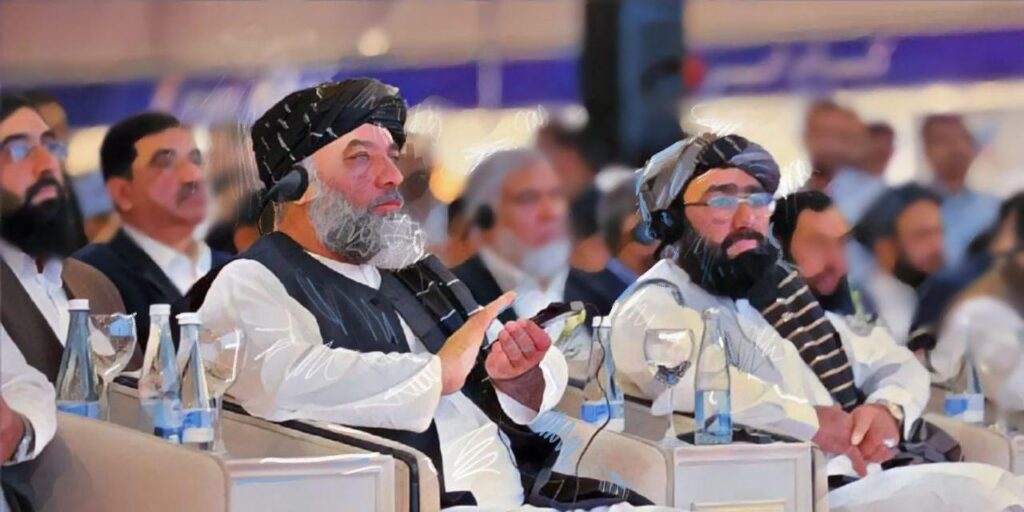
Central Asia is becoming even more important to Afghanistan. After the Taliban returned to power in August 2021, most of the countries of Central Asia established a dialogue with its leadership that focused on business potential, backed up by security promises. This understanding is more important than ever to the Taliban government, as events along Afghanistan’s eastern and western borders have left Central Asia as the only reliable import-export route for Afghanistan at the moment. Booming Trade At the start of March, Afghanistan’s Ministry of Industry and Commerce released figures for 2025 that showed trade with Central Asia increased from $1.79 billion in 2024 to $2.4 billion in 2025. While most of the trade is exports from Central Asia to Afghanistan, reports mentioned that Afghan exports to Central Asia -- mostly to Kazakhstan and Uzbekistan -- increased by 77 percent, from $122 million in 2024 to $216 million in 2025. A closer look shows that Uzbekistan-Afghanistan trade in 2025 totaled some $1.6 billion.  A full figure for Kazakh-Afghan trade in 2025 is not yet available. However, trade between Kazakhstan and Afghanistan amounted to some $525.2 million in 2024.  Kazakhstan's Deputy Prime Minister Serik Zhamangarin said at a Kazakh-Afghan business forum in Kazakhstan’s southern city of Shymkent in October 2025 that bilateral trade in the first eight months of 2025 had reached some $335.9 million. These figures are certain to have grown.  Fresh agreements worth more than $360 million were signed on the sidelines of the Kazakh-Afghan business forum. On March 6, Uzbekistan’s President Shavkat Mirziyoyev signed a decree ratifying the Preferential Trade Agreement between Uzbekistan and Afghanistan. Trade totals for Kyrgyzstan, Turkmenistan, and Tajikistan with Afghanistan are more modest, but, as in the cases of Kazakhstan and Uzbekistan, are set to grow.  Kyrgyz-Afghan trade for the 12 months to March 2025 came to some $66 million, but, during a Kyrgyz-Afghan business conference in Kabul commercial contracts worth some $157 million were signed.  There are no figures for Turkmen-Afghan trade in 2025, but Turkmen electricity exports to Afghanistan are increasing. Turkmenistan is also preparing to export natural gas to Afghanistan. A natural gas pipeline is slowly being constructed from the Turkmen border to the western Afghan city of Herat, which could start operation as soon as 2027. Tajikistan was the lone Central Asian country to shun contact with the Taliban after they returned to power. Representatives of the previous government of Ashraf Ghani continue to occupy the Afghan embassy in Dushanbe.  Tajik and Taliban authorities finally established contacts only in late 2024 but even to this day the two sides rarely meet face-to-face. However, Tajik-Afghan trade in 2025 still totaled some $120 million. Afghanistan’s Ministry of Industry and Commerce noted that most of Central Asia’s exports to Afghanistan are electricity, fuel products, and natural gas. Uzbekistan, Tajikistan, and Turkmenistan export electricity to Afghanistan via transmission lines that were built during the 20 years the Taliban were out of power. Some 80 percent of Afghanistan’s electricity is imported, and most of that (75-80 percent) comes...

Kyrgyzstan Plans Gradual Electricity Tariff Increases to Address Energy Sector Deficit

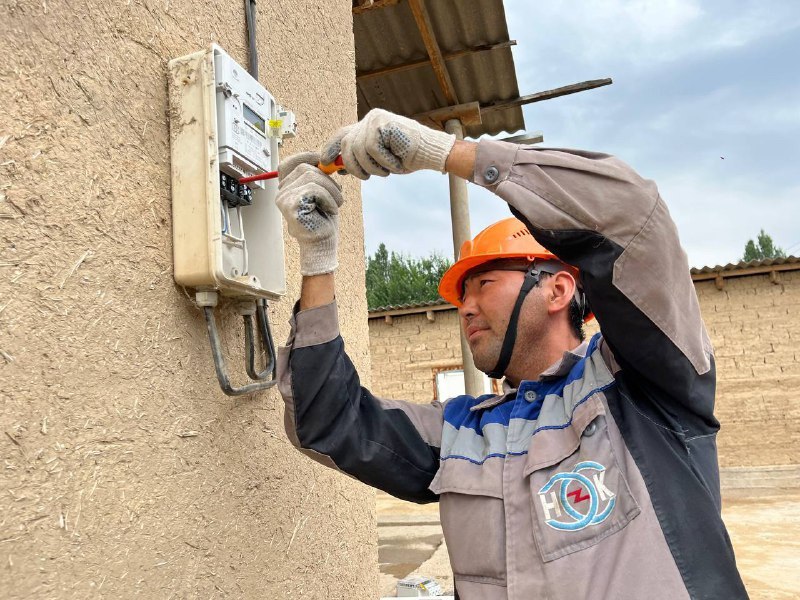
Kyrgyzstan will raise household electricity tariffs starting May 1, as part of a broader reform program aimed at reducing subsidies and bringing tariffs closer to the actual cost of power generation. Under the new policy, the household tariff will increase by approximately $0.003 per kilowatt-hour, reaching $0.018 per kWh. According to the Ministry of Energy, tariffs are expected to continue rising each May until at least 2030, when they are projected to fully cover production costs. The government has outlined a tentative schedule for further increases: 2027: rise of about $0.004 per kWh 2028: rise of about $0.0045 per kWh 2029: rise of about $0.005 per kWh 2030: rise of about $0.0065 per kWh Even after the planned increase in 2026, households will cover only around 45% of the real cost of electricity, Timur Orozaliev, Director of the Department for Regulation of the Fuel and Energy Complex, told the Kabar state news agency. He said the cost of electricity production in 2026 is estimated at approximately $0.034 per kWh, meaning the new tariff will pay for less than half of actual generation costs. Electricity tariffs for industrial enterprises, financial institutions, restaurants, and government agencies are already two to three times higher than those for households. Despite the planned increases, electricity prices in Kyrgyzstan remain among the lowest in Central Asia. Electricity demand continues to grow. In 2025, national consumption reached 19.3 billion kWh, an increase of 900 million kWh compared with the previous year. Of this total, 15.4 billion kWh was generated domestically, while 3.9 billion kWh was imported from Turkmenistan, Uzbekistan, Kazakhstan, and Russia. Kyrgyzstan regularly experiences seasonal power shortages, particularly during winter, when many households rely on electricity for heating. To address the deficit, the government is working to build new hydropower plants and modernise existing facilities as part of a broader strategy to stabilise the national energy system and reduce dependence on electricity imports.

Kazakhstan May Miss Record Oil Output Target in 2026 Amid Infrastructure Disruptions

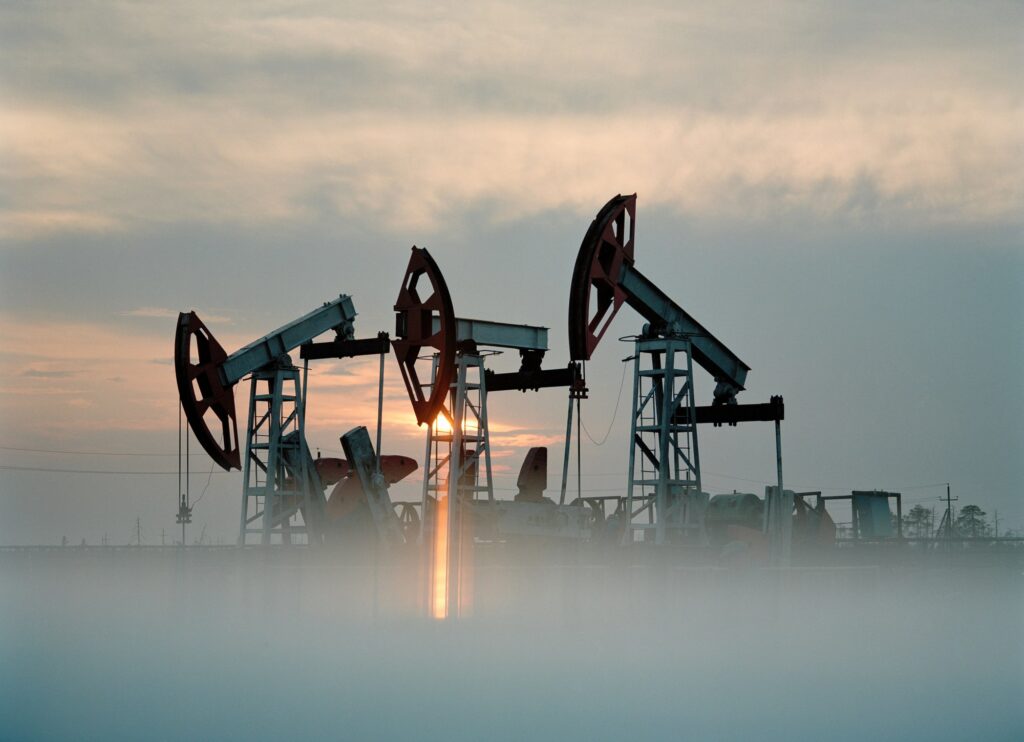
Kazakhstan’s oil production could decline by 2-4 million tons by the end of 2026 following disruptions linked to attacks on the infrastructure of the Caspian Pipeline Consortium (CPC) and fires at the country’s largest oil field, Tengiz. This was stated by Energy Minister Yerlan Akkenzhenov in response to journalists’ questions. In 2025, Kazakhstan produced more than 99.5 million tons of oil, exceeding the initial forecast of 96.2 million tons. Output for 2026 had originally been projected at 100.5 million tons, a potential record for the country. However, the minister indicated that actual production is now likely to fall short of this target. “According to the economic development plan, oil production in 2026 was expected to reach 100.5 million tons. However, due to events at the end of last year and the beginning of this year, attacks on CPC infrastructure and fires at Tengiz, production is likely to be in the range of 96-98 million tons,” Akkenzhenov said. Earlier reports suggested that Kazakhstan had been forced to urgently revise its oil export routes following drone attacks on CPC facilities. In January two fires broke out at electric generators at the Tengiz field. Although the incidents were quickly contained, they caused power outages and temporarily reduced production by nearly 20%. According to the minister, production at Tengiz had been fully restored by early March. “Tengiz has returned to a production level of 120,000 tons per day. A commission is currently finalising its investigation into the causes of the fire, and the results will be announced shortly,” Akkenzhenov said. Akkenzhenov also noted that global oil markets remain volatile amid ongoing tensions in the Middle East. He said that oil prices had recently peaked at $119 per barrel before declining to around $87. “Prices fluctuate daily. At the same time, attacks on oil infrastructure in Persian Gulf countries continue, reducing physical supply and keeping prices relatively high,” he said. Akkenzhenov added that rising global oil prices have not yet significantly affected domestic gasoline prices in Kazakhstan. According to the minister, future price dynamics will largely depend on developments in the Middle East. Military escalation in the region, including hostilities involving Iran that began in late February 2026, has already affected global energy markets and may continue to influence oil prices and supply stability.