• KGS/USD = 0.01144 0%
  • KZT/USD = 0.00212 0%
  • TJS/USD = 0.10456 0.19%
  • UZS/USD = 0.00008 0%
  • TMT/USD = 0.28490 0%
  • KGS/USD = 0.01144 0%
  • KZT/USD = 0.00212 0%
  • TJS/USD = 0.10456 0.19%
  • UZS/USD = 0.00008 0%
  • TMT/USD = 0.28490 0%
  • KGS/USD = 0.01144 0%
  • KZT/USD = 0.00212 0%
  • TJS/USD = 0.10456 0.19%
  • UZS/USD = 0.00008 0%
  • TMT/USD = 0.28490 0%
  • KGS/USD = 0.01144 0%
  • KZT/USD = 0.00212 0%
  • TJS/USD = 0.10456 0.19%
  • UZS/USD = 0.00008 0%
  • TMT/USD = 0.28490 0%
  • KGS/USD = 0.01144 0%
  • KZT/USD = 0.00212 0%
  • TJS/USD = 0.10456 0.19%
  • UZS/USD = 0.00008 0%
  • TMT/USD = 0.28490 0%
  • KGS/USD = 0.01144 0%
  • KZT/USD = 0.00212 0%
  • TJS/USD = 0.10456 0.19%
  • UZS/USD = 0.00008 0%
  • TMT/USD = 0.28490 0%
  • KGS/USD = 0.01144 0%
  • KZT/USD = 0.00212 0%
  • TJS/USD = 0.10456 0.19%
  • UZS/USD = 0.00008 0%
  • TMT/USD = 0.28490 0%
  • KGS/USD = 0.01144 0%
  • KZT/USD = 0.00212 0%
  • TJS/USD = 0.10456 0.19%
  • UZS/USD = 0.00008 0%
  • TMT/USD = 0.28490 0%

Viewing results 3223 - 3228 of 5581

Kazakh News Publisher Says New Media Law Does Little for National Press

Kazakhstan's new law "On Mass Media," recently passed by its lower house of parliament (the Mazhilis), has agitated the country's reporters. In an interview with The Times of Central Asia, Dzhanibek Suleyev, the publisher of several news sites, remonstrates that the law should have been more supportive of the national press. An aspect of the law that has caused heated discussions is the Ministry of Foreign Affairs' new right to deny accreditation to foreign journalists "in case of a threat to the national security of the Republic of Kazakhstan." A few months ago the Ministry of Foreign Affairs didn't renew or refused to issue accreditation to 36 correspondents of the news website Azattyq, the Kazakh affiliate of the U.S. Government's Radio Free Europe/Radio Liberty (RFE/RL). No explanation was given for this rejection, and Azattyq has filed a lawsuit in court. Suleyev explained: "It is clear that the state wants to protect itself and society as much as possible from extremist publications and the spread of deviant morality, but what is proposed for those who simply do their work honestly, every day? We like to impose restrictions, but what about support? I think that if the state were to expand the field of cooperation, the press would be less critical." "Apparently, the state authorities have such an ambiguous opinion of Azattyq. In addition, the lack of accreditation clearly does not prevent 'going on the air,' the audience has access to the materials. I do not think that denial of accreditation to foreign media will become a mass phenomenon. The New York Times or leading sports publications and channels will hardly be denied accreditation. You have to understand that from the point of view of the state, there are ordinary media, and there are structures engaged in propaganda and counter-propaganda, and this should be taken into account," Suleyev explained. Suleyev said that the establishment of a one-year statute of limitations for media materials is a positive development, as it protects journalists' rights. It was initially proposed to set the term at three years from the date of publication. "It is good that it was reduced to a year, three years of limitation is the death of the publication. Of course, I would have liked to reduce the statute of limitations even further, but thanks for that. If journalists are always afraid of the court, how can they work? Because of the long statute of limitations, editorial offices need to keep archives, video, audio and documents, not everyone can do this. Besides, with a long statute of limitations, it is easier to settle scores with the press, to get unwanted people closed down," he said. Suleyev was happy to see more television programs in Kazakh. The new law aims to increase the amount of Kazakh-language and domestic content on television and radio. From 2025 at least 55% of TV and radio programs should be broadcast in Kazakh, rising to 60% from 2027. Retransmission of foreign TV and radio channels will be reduced to 10%...
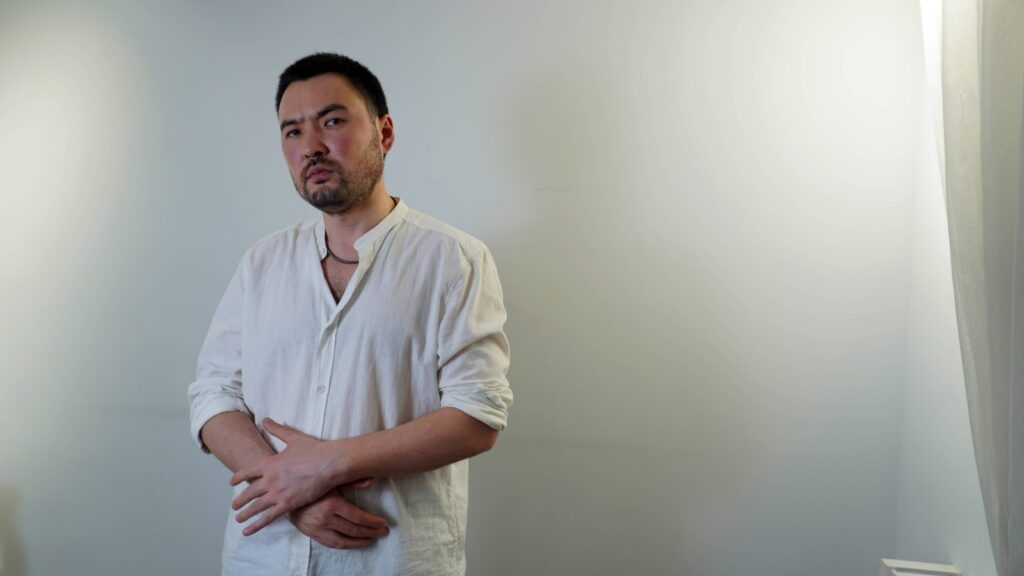
Development of Kazakhstan’s Cinematography: An Inside Look – An Interview with Kazakh Actor, Abay Kazbayev, on Kazakhstan’s Film Industry and its Prospects for Development

Kazakhstan's film industry is attracting more and more attention globally, and many talented actors are contributing to its development. One such theater and film actor is Abay Kazbayev, who agreed to share his experience and vision of the industry.   How did you start in the industry?   I have no specialized education, but I’m constantly learning. I started to explore a career path as an actor at the age of 33, after trying my hand in many different fields.  I’m now actively engaged in developing my range, from plasticity to internal monologue. To date, I’ve worked on series such as Shahristan, Upperty, and Shabashniki. Shooting the latter, I had to shave my head for the role, which looked strange. In general, I like to experiment on the image. It’s interesting to observe the change of type. I also worked on two theater projects, on one of which I was lucky enough to work with Saulius Varnas, a European theater director. He staged the play, A House in the Middle of Spring, based on Eugene Ionesco's script, Hunger and Thirst. On this project, I worked with such professionals as Marat Amiraev, Altynshash Shayakhmetova, Sharim Dostay, and others. In my second theater project, I had the lead role, but, unfortunately, we managed to stage just one private performance. (Shakhrisatn is a Kazakh detective thriller from 2023; Marat Amiraev is a famous Kazakh actor who starred in such series as 5:32 and Prisoners; Altynshash Shayakhmetova is a Kazakh actress who starred in such series as Boztorgai and Bir Toksan.)   How do you perceive the evolution of Kazakhstan's cinematography over the past decades? What key changes have taken place, in your opinion?   It is difficult to talk about decades, as ten years ago, I was in a completely different sphere. But I can say that coming to the movie theater I can now watch one or two of our domestic films, which certainly pleases me. Ten or twenty years ago, the release of a Kazakhstani film in theaters was something of an event, but it’s now become the norm. Many people criticize our movies for being limited to comedies and crime dramas but I for one, greatly enjoy movies such as Business in the Kazakh Way. It is still too early to talk about (local movies) as an industry, since to my mind, it doesn’t exist as such. Having said that, we have plenty of people engaged in creating movies: directors, producers, actors, - actors turned directors, actors turned producers, and vice versa. A highlight for me, was the movie Nomad. Released about twenty years ago, it ignited the dreams of many aspiring artists many of whom have since made a name for themselves, including Sanjar Madi, who starred in many of its scenes. Other key events include Akan Satayev's The Racketeer which came out a few years after Nomad, followed by Farhat Sharipov's The Tale of the Pink Hare. Both provided a wave of new faces and young blood to...

Carlsberg Expands Production in Kazakhstan

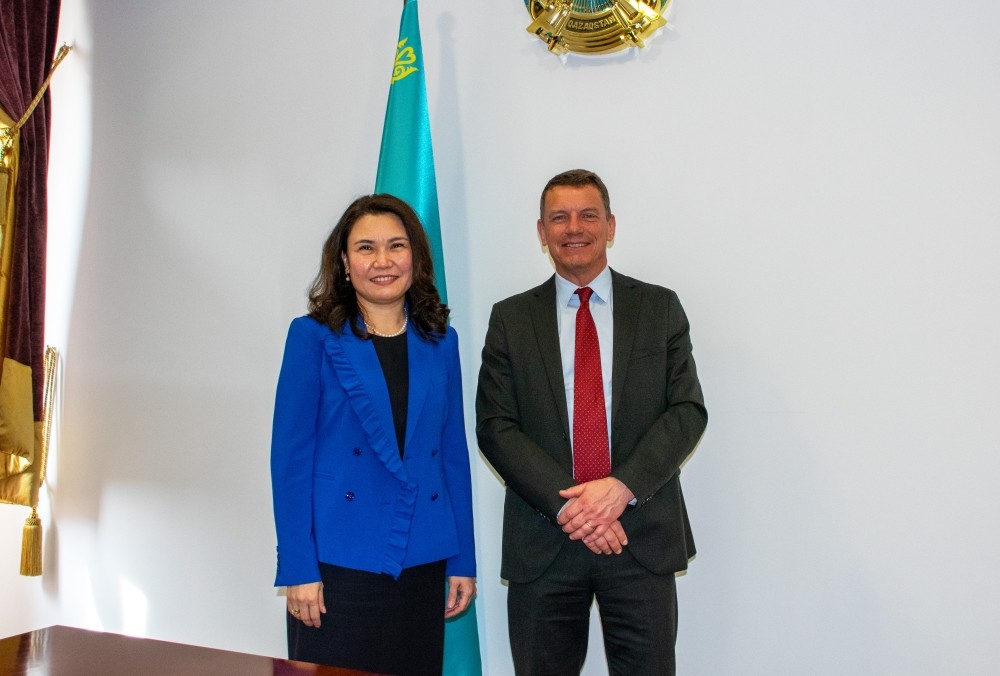
Kazakh Invest has announced that Danish company Carlsberg is to open a new factory in Almaty to produce non-alcoholic beverages worth $50 million. In preparation of its launch, Deputy Minister of Foreign Affairs of Kazakhstan, Nazira Nurbayeva, Chairman of Kazakh Invest, Yerzhan Yelekeyev, and First Vice President for Central and Eastern Europe of the Carlsberg Group, Lars Lehmann met on 18 April. During the meeting, Lars Lehmann thanked the Ministry of Foreign Affairs of Kazakhstan for its support at all stages of the project and pledged the company’s commitment to furthering cooperation with Kazakhstan. Outlining the benefits afforded by the initiative, he reported that the new production facility in Almaty will help ensure 100% localization of brewing and non-alcoholic products for the Kazakh market and in addition, create opportunities for export to Uzbekistan, Kyrgyzstan, Tajikistan, and Armenia. Regarding the company’s existing business in Kazakhstan, Lehmann stated, "Over the past years, Carlsberg Kazakhstan LLP has been consistently included in Kazakhstan's Top 50 largest taxpayers. Our regional hub is also located here. Over the past two years, the share of local raw materials used in our products has increased from 30% to 65% and in the future, should rise to 80%." Carlsberg Kazakhstan currently provides jobs for some 500 employees in Almaty and over 2,000, in distribution companies across Kazakhstan.

USAID Launches $18 Million Program to Boost Economic Growth in Tajikistan

On 18 April, the United States Agency for International Development (USAID) launched a new initiative to support long-term economic opportunities in Tajikistan. Running for five years at a cost of $18 million, Employment and Enterprise Development Activity (EEDA) will partner local firms to improve productivity in the fields of textiles, food processing and IT through the adoption of innovative, green technologies, increased investment, and market linkages. According to a report from the U.S. Embassy in Tajikistan, the project will create 5,000 permanent jobs, assist 200 business start-ups in accessing finance, and leverage $10 million in private sector investment. In his address at the launch, USAID Tajikistan Mission Director Peter Riley stated, “It is crucial to foster innovation, drive economic growth, and create sustainable employment opportunities within the public and private entities. These partnerships underscore the shared goal of advancing Tajikistan’s economic landscape and ensuring prosperity for all stakeholders.”

Central Asia’s Scorecard on Women’s Rights and Welfare

Women's rights differ significantly around the world, with progress varying greatly from one country to another. Some states have advanced gender equality significantly through strong legal systems and policies while others are hindered by cultural norms and a lack of political commitment. In Central Asia, each of the young nations has shown a different level of progress on women's rights and welfare, which requires consideration in individual, regional and global contexts. Kazakhstan’s new and comprehensive law on strengthening protections for women and children’s rights, adopted on April 15 to international fanfare,  highlighted the larger issue of women’s status in Central Asia. The legislation was driven by a 2023 Presidential Decree for a Human Rights Action Plan that brought Kazakhstan in compliance with OECD standards. Another piece of relatively recent positive news from the region came in April 2023 when Uzbekistan’s parliament passed new legislation specifying domestic violence as a criminal offense under the law and strengthening 2019 provisions that indirectly address domestic violence. Yet even when there are laws in place to protect women, ensuring their implementation remains critical. For this to happen, laws should first clearly define what constitutes domestic violence so that crimes can be classified and prosecuted as such. As a benchmark, OECD standards close gaps in legally prosecuting such violence by encompassing this classification to include domestic violence against women and children. Kazakhstan has conformed to this norm in its new legislation and thus holds the best practice in the region. Furthermore, to facilitate enforcement and implementation, Kazakhstan’s recent efforts include placing women in key administerial positions in the police force dealing with violent crimes against women. At a larger scale, the country’s Family and Gender Policy foresees increasing the share of women at decision-making levels across the public and private sectors to 30%. Backing this narrative on Kazakhstan’s upward trajectory from a cultural and social perspective, UNDP’s Gender Social Norms Index Report in 2023 found that Kazakhstan has the lowest levels of gender bias in the region (and incidentally was ranked above the United States in the Gender Inequality Index, which utilized 2021 data as shown below).   The World Economic Forum’s Global Gender Gap Report 2023 also shows significant progress in women’s empowerment in Kazakhstan, which jumped 18 positions in one year to 62nd place globally, particularly through eliminating gender gaps in education levels and increasing women’s political and economic participation.   Two other Central Asian countries have some form of legislation concerning domestic violence against women on paper, but progress on their implementation has not always been encouraging.  Kyrgyzstan, for instance, adopted legislation on domestic violence in 2003 as well as a new law on this issue in 2017, which has strengthened protection for victims and sought to improve enforcement mechanisms. But according to reports, the legislation has proven difficult to enforce, and perpetrators may still avoid punishment. In 2013, Tajikistan also passed a law that specifically addressed domestic violence and included measures for its prevention, protection, and punishment. This, too, appears to...

Tajikistan and Uzbekistan Sign Allied Relations Treaty

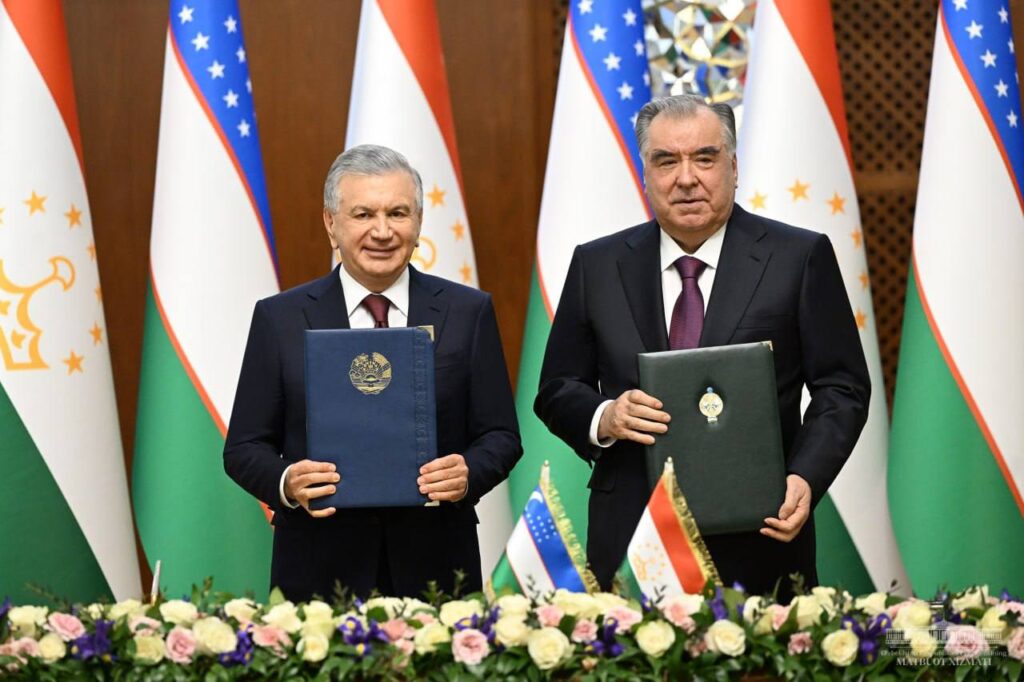
On April 18, Shavkat Mirziyoyev, President of Uzbekistan met Emomali Rahmon, President of Tajikistan in Dushanbe, where the two leaders signed a Treaty on Allied Relations between their countries. Referring to Tajikistan as Uzbekistan’s closest, most reliable, and time-tested strategic partner, Mirziyoyev announced, “The fraternal Uzbek and Tajik peoples are inextricably linked by strong bonds of centuries-old friendship. We are brought together by common history, cultural and spiritual values, traditions, and customs.” He went on to emphasize the enormous significance of the Treaty on Allied Relations saying, “With this step, we confirmed our strong mutual commitment to an irreversible course towards deepening the multifaceted Uzbek-Tajik strategic partnership and alliance. Without any exaggeration, this important document will mark a new historical milestone in bilateral relations.” Adding that the Treaty takes Tajik-Uzbek relations to a qualitatively new level, President Rahmon stated, “This document will also become an important factor in strengthening peace and stability in our region – Central Asia” On the eve of Mirziyoyev’s visit, a Tajik-Uzbek business forum resulted in a solid portfolio of new cooperation projects and trade contracts in mechanical engineering, electrical engineering, energy, mining, agricultural, textile and pharmaceuticals industries. During the Tajik-Uzbek talks it was reported that in recent years, bilateral trade turnover has increased 40-fold and the number of joint ventures has grown 15-fold. Tajikistan and Uzbekistan have now raised the bar by setting a target to increase trade turnover to $2 billion by expanding the exchange of supplies and launching cross-border trade zones.