• KGS/USD = 0.01144 0%
  • KZT/USD = 0.00208 0%
  • TJS/USD = 0.10440 -0.19%
  • UZS/USD = 0.00008 0%
  • TMT/USD = 0.28571 0.28%
  • KGS/USD = 0.01144 0%
  • KZT/USD = 0.00208 0%
  • TJS/USD = 0.10440 -0.19%
  • UZS/USD = 0.00008 0%
  • TMT/USD = 0.28571 0.28%
  • KGS/USD = 0.01144 0%
  • KZT/USD = 0.00208 0%
  • TJS/USD = 0.10440 -0.19%
  • UZS/USD = 0.00008 0%
  • TMT/USD = 0.28571 0.28%
  • KGS/USD = 0.01144 0%
  • KZT/USD = 0.00208 0%
  • TJS/USD = 0.10440 -0.19%
  • UZS/USD = 0.00008 0%
  • TMT/USD = 0.28571 0.28%
  • KGS/USD = 0.01144 0%
  • KZT/USD = 0.00208 0%
  • TJS/USD = 0.10440 -0.19%
  • UZS/USD = 0.00008 0%
  • TMT/USD = 0.28571 0.28%
  • KGS/USD = 0.01144 0%
  • KZT/USD = 0.00208 0%
  • TJS/USD = 0.10440 -0.19%
  • UZS/USD = 0.00008 0%
  • TMT/USD = 0.28571 0.28%
  • KGS/USD = 0.01144 0%
  • KZT/USD = 0.00208 0%
  • TJS/USD = 0.10440 -0.19%
  • UZS/USD = 0.00008 0%
  • TMT/USD = 0.28571 0.28%
  • KGS/USD = 0.01144 0%
  • KZT/USD = 0.00208 0%
  • TJS/USD = 0.10440 -0.19%
  • UZS/USD = 0.00008 0%
  • TMT/USD = 0.28571 0.28%

Viewing results 439 - 444 of 840

Israeli Companies Ready to Invest in Construction of Reservoirs in Kazakhstan

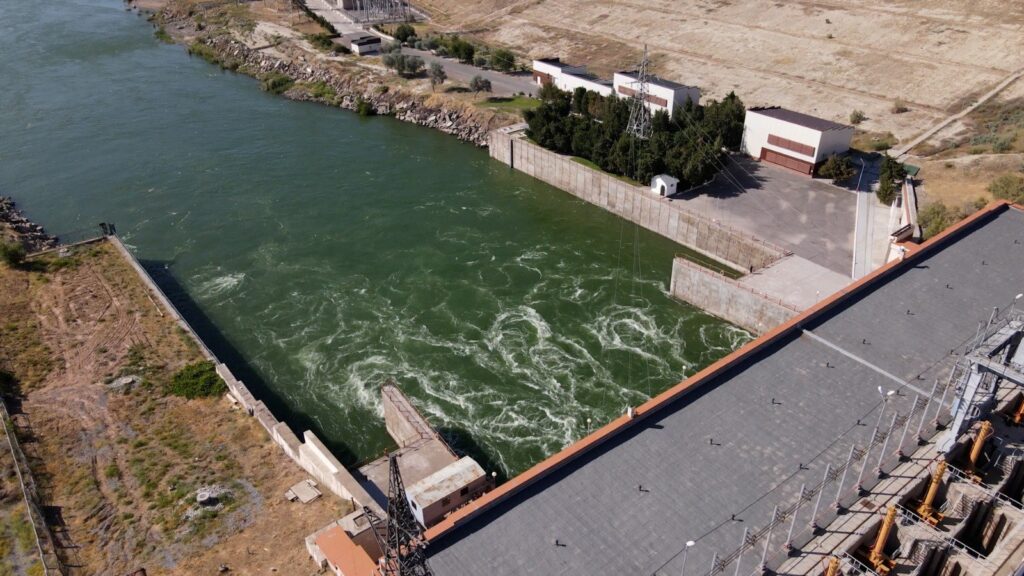
Israeli companies have expressed interest in participating in the construction and reconstruction of reservoirs in Kazakhstan as well as their readiness to provide the country with modern flood forecasting and protection systems. The announcement was made during a meeting on August 8 between Kazakhstan’s Minister of Water Resources and Irrigation Nurzhan Nurzhigitov, and a consortium of leading Israeli companies in the field of water resources management, headed by Managing Partner of Value LBH and Chairman of the Board of the investment company Dan Capital, Shimon Ben-Hamo. Discussions  focused on potential cooperation in various areas of the water industry, from the construction and reconstruction of water facilities to joint personnel training, as well as the introduction of  water-saving technologies, water purification and reuse, drinking water quality control, and automation of water distribution and metering. Reporting on the meeting, Minister Nurzhigitov commented: "Israeli companies have extensive experience and modern technologies for high-quality water management. Some companies have been successfully operating in Kazakhstan for a long time. We intend to achieve the most efficient water use in all sectors, so we count on mutually beneficial cooperation.” The Kazakh Ministry of Water Resources and Irrigation plans to build 20 new reservoirs with a 2.5 billion cubic meters capacity by 2030. Once completed, the project will reduce the country’s dependence on water flowing from upstream Kyrgyzstan and China by 25%, help combat drought in southern Kazakhstan, and reduce the threat of flooding in 70 rural settlements with a total population of nearly 140 thousand people. In addition, irrigation will be provided for a further 250 thousand hectares of farmland. Plans are also in place to reconstruct 15 existing reservoirs with a total capacity of 1.9 billion cubic meters.

Climate Council Established in Uzbekistan

Uzbek media is reporting that a Climate Council is being established in the country. The council will coordinate activities to combat climate change, develop policy in this area, and ensure the country's fulfillment of its obligations under the Paris Agreement. The main functions of the Council will also include: -- Development of the National Strategy for Climate Change Mitigation and Adaptation, as well as coordination of government agencies in this area; -- Monitoring the implementation of Uzbekistan's obligations under the UN Framework Convention on Climate Change and the Paris Agreement; -- Support for projects to combat climate change, including using green technologies, scientific research, and innovation. The National Center for Green Transformation and Adaptation to Climate Change under the Ministry of Ecology has been renamed the National Center for Climate Change. This center will serve as the working body of the Climate Council, and coordinate Uzbekistan's preparation for international and regional climate events.

Kazakhstan Completes Annual Anti-Locust Measures

This year’s locust control measures have been completed in all regions of Kazakhstan. As a result, farmers' crops have not been damaged by swarms of the grasshopper pests. Over 3.1 million hectares of land have been treated against locusts, 23% more than the planned 2.5 million hectares. Monitoring work will continue in some regions for another week. The amount of agricultural land affected by locusts has dramatically increased in recent years, from 514,000 hectares in 2020 to 1.6 million hectares in 2023. According to the UN’s Food and Agriculture Organization, locust outbreaks pose a severe threat to agriculture in the South Caucasus and Central Asia, with more than 25 million hectares and 20 million people in the region vulnerable to damage. Kazakhstan has cooperated closely with agricultural authorities of bordering countries, including Russia, to monitor the potential spread of locusts. Next year the government plans to purchase 100 drones to monitor the birthplaces of locust larvae and more drones to treat fields.

Tajikistan and Uzbekistan Discuss Using Lake Sarez For Drinking Water

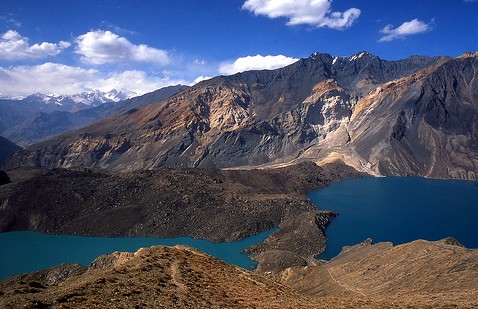
On August 3, a Tajik-Uzbek working group on the shared use of water from Central Asia's transboundary rivers met in Dushanbe. Participants discussed the potential for using the water from Lake Sarez, in the Tajik National Park in the east of the country, to provide Central Asian countries with clean drinking water. Other potential joint projects between Tajikistan and Uzbekistan in the field of water management were also considered. In 2018, the presidents of Tajikistan and Uzbekistan, Emomali Rahmon and Shavkat Mirziyoyev, first discussed using the Sarez freshwater as drinking water, during a visit by Rahmon to Uzbekistan. The nations subsequently commissioned a feasibility study from the Intergovernmental Joint Commission on Trade and Economic Cooperation. Rahmon has repeatedly emphasized that Tajikistan has ample freshwater resources, and has previously used speeches at political forums to suggest using the Sarez mountain lake to provide Central Asian countries with drinking water. The Tajik government has also offered to supply drinking water from Sarez to Iran, Jordan, and the United Arab Emirates. The Times of Central Asia has previously written that Central Asia will face severe water shortages in the coming years. More than 80% of the available water in Central Asia is used for irrigation, 40% of which is lost during delivery in the fields. With the commissioning of the Qosh Tepa canal in Afghanistan, the water shortage will become even more serious from 2028. The chairman of the Eurasian Development Bank, Nikolay Podguzov, has warned that the Qosh Tepa's construction could threaten Central Asia's water balance.

Uzbekistan Pushed to Clean Up Cities Amid Air Pollution Protests

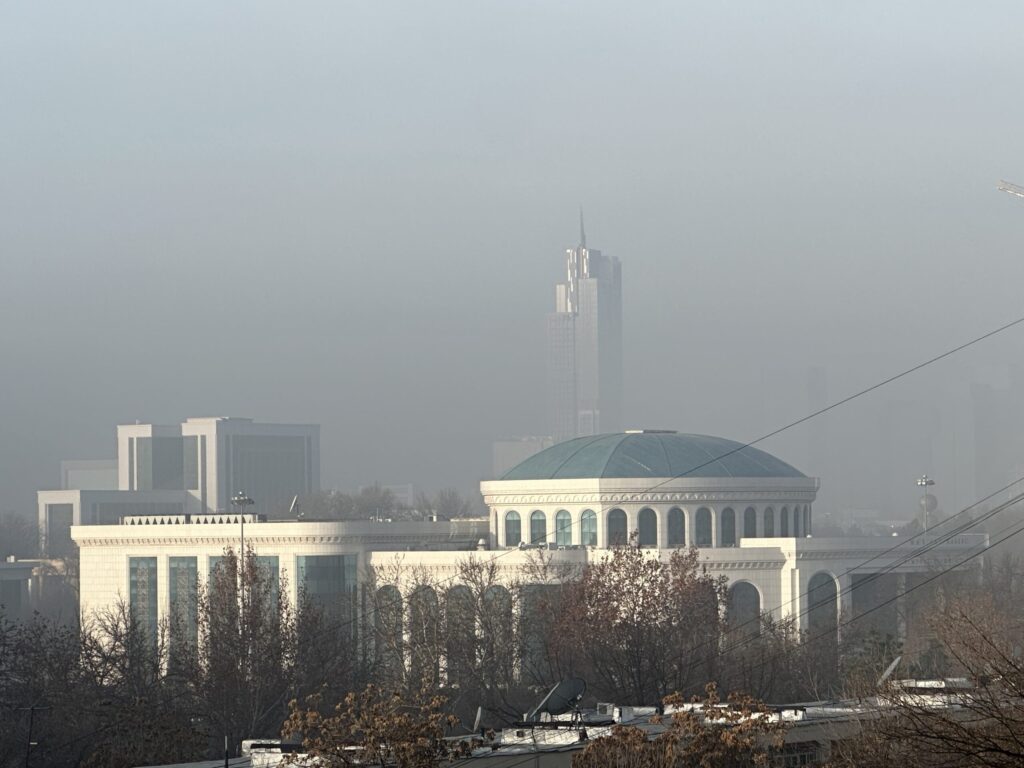
Uzbekistan's capital Tashkent continues to suffer from high levels of air pollution. According to the IQAir portal, on the morning of August 2 the concentration of PM 2.5 (fine particles in the air) in the city was 5.4 times higher than the WHO base indicator. Protest groups have been holding flash mobs in Tashkent this summer. One participant, Temurkhan Jahangir, believes that the main factor for the city's dangerous air is the government's poor urban planning policy. “The urban development strategy, implemented at the expense of urban densification, was a complete mistake from the start. It is foolish to sell land in the city center and build more buildings between multi-story buildings,” he said. According to the Ministry of Ecology, about 49,000 trees have been illegally cut down in the Tashkent region recently, which has also had a negative impact on air quality. At a meeting on January 29, the country's president Shavkat Mirziyoyev spoke about ecological problems. In particular he criticized the implementation of construction projects that don't consider environmental protection. He instructed the ministry to develop a “master plan” for each city and district of Uzbekistan, for local governors to improve the ecological situation by the end of the year. “On average, 730,000 motor vehicles move in Tashkent every day. In addition, 160,000 to 300,000 motor vehicles enter from the regions. Engines using A-80 gasoline, which does not meet international standards, emit harmful emissions into the atmosphere, exceeding the norm,” the Ministry of Ecology says. Mirziyoyev has also tasked the ministry with comprehensively abandoning A-80 gasoline from 2025 onwards, and developing sustainable public transport. He added that encouraging the population to switch to electric cars must be introduced to support green energy, prevent environmental problems, and reduce harmful emissions.

Kazakhstan Prepares for the Second Phase of North Aral Sea Restoration

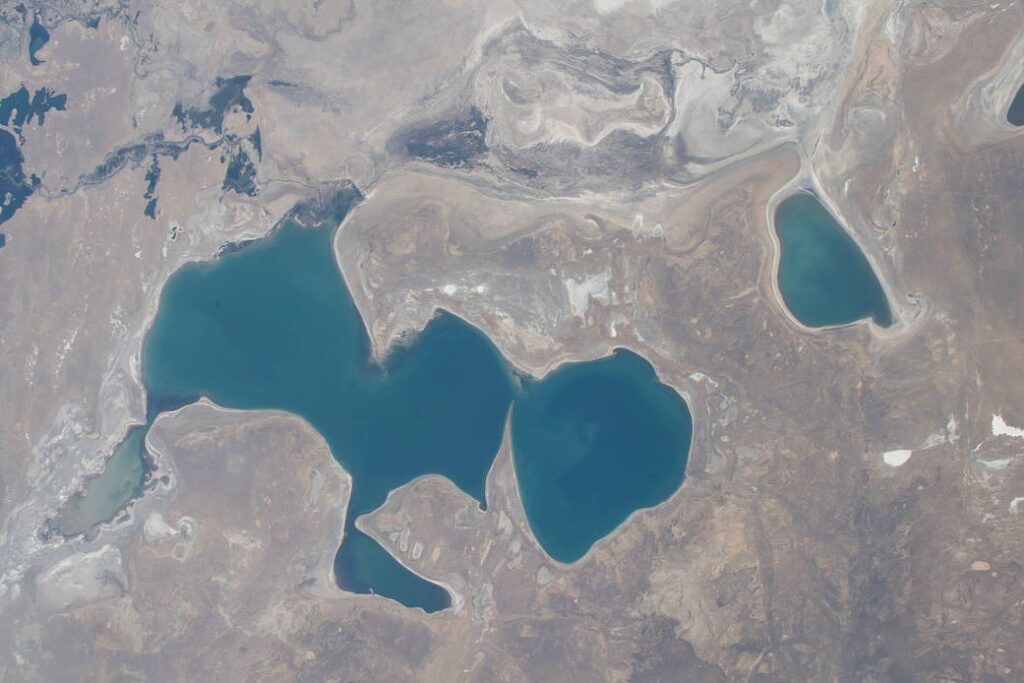
On August 1, Kazakhstan’s minister for water resources and irrigation, Nurzhan Nurzhigitov, chaired a meeting on preparations for the second phase of the North Aral Sea restoration project. The North Aral Sea is the portion of the former Aral Sea fed by the Syr Darya River. It split from the South Aral Sea in 1987–1988, when water levels dropped due to water diversion for agricultural use. The meeting reviewed the preparation of a feasibility study for the project. The project consists of three components. The first component improves conditions for fisheries and the aquatic environment in and near the sea, and stabilizes wetlands in the Syr Darya River delta. The second component supports sustainable economic, social, and environmental activities in Kazakhstan’s Kyzylorda region by developing fisheries, livestock farming, tourism, and forest planting. The third component plans to improve water management systems in the Aral-Syr Darya basin. Nurzhigitov commented: "The project being prepared is a continuation of a large-scale project to regulate the Syr Darya River bed and preserve the North Aral Sea, which was implemented between 2002 and 2010 and positively affected the entire Aral Sea region. The second phase covers many different areas — from the stable provision of the North Aral Sea with water to developing economic and social projects."