• KGS/USD = 0.01143 -0%
  • KZT/USD = 0.00192 -0%
  • TJS/USD = 0.10820 0.19%
  • UZS/USD = 0.00008 0%
  • TMT/USD = 0.28575 0%
  • KGS/USD = 0.01143 -0%
  • KZT/USD = 0.00192 -0%
  • TJS/USD = 0.10820 0.19%
  • UZS/USD = 0.00008 0%
  • TMT/USD = 0.28575 0%
  • KGS/USD = 0.01143 -0%
  • KZT/USD = 0.00192 -0%
  • TJS/USD = 0.10820 0.19%
  • UZS/USD = 0.00008 0%
  • TMT/USD = 0.28575 0%
  • KGS/USD = 0.01143 -0%
  • KZT/USD = 0.00192 -0%
  • TJS/USD = 0.10820 0.19%
  • UZS/USD = 0.00008 0%
  • TMT/USD = 0.28575 0%
  • KGS/USD = 0.01143 -0%
  • KZT/USD = 0.00192 -0%
  • TJS/USD = 0.10820 0.19%
  • UZS/USD = 0.00008 0%
  • TMT/USD = 0.28575 0%
  • KGS/USD = 0.01143 -0%
  • KZT/USD = 0.00192 -0%
  • TJS/USD = 0.10820 0.19%
  • UZS/USD = 0.00008 0%
  • TMT/USD = 0.28575 0%
  • KGS/USD = 0.01143 -0%
  • KZT/USD = 0.00192 -0%
  • TJS/USD = 0.10820 0.19%
  • UZS/USD = 0.00008 0%
  • TMT/USD = 0.28575 0%
  • KGS/USD = 0.01143 -0%
  • KZT/USD = 0.00192 -0%
  • TJS/USD = 0.10820 0.19%
  • UZS/USD = 0.00008 0%
  • TMT/USD = 0.28575 0%
14 December 2025

Viewing results 1627 - 1632 of 2337

Turkmenistan’s Food Prices Continue to Rise

The prices of subsidized products in Turkmenistan's state stores continue to rise, according to a report by correspondents from the Chronicles of Turkmenistan. Beginning March 12, the price of a kilogram of poultry increased to 35 manat ($10) from 21 manat ($6). The price for domestically produced chicken is the same as for poultry imported from Turkey. In some stores chicken legs are still being sold at the old price -- 16 manat ($4.57) per kilogram -- but according to sellers, new batches could be more expensive. These days in various parts of Turkmenistan's capital Ashghabat, private traders are selling rice -- the price of which has increased by three manat per kilo -- directly from trucks. As of March 6, eggs have become more expensive in Ashgabat's state stores. The price has increased to 1.50 manat ($0.43) and 45 manat ($12.86) for a 30-egg tray, respectively, from one manat ($0.29) per egg or 30 manat ($8,57) per tray. The cost of flour went to 3-5 manat ($0.86 – $1.43) per kilogram from one manat ($0.29) in February -- while the cost of bread increased to four manat ($1.14) from one manat ($0.29) per loaf. Turkmenistan's president Serdar Berdimuhamedov signed an order to raise the purchase prices of wheat and cotton by two to three times beginning with the harvest of 2024 -- just before the sharp increase in the prices of goods in state stores.

Starting Over: Central Asian Countries Celebrate the Arrival of Spring

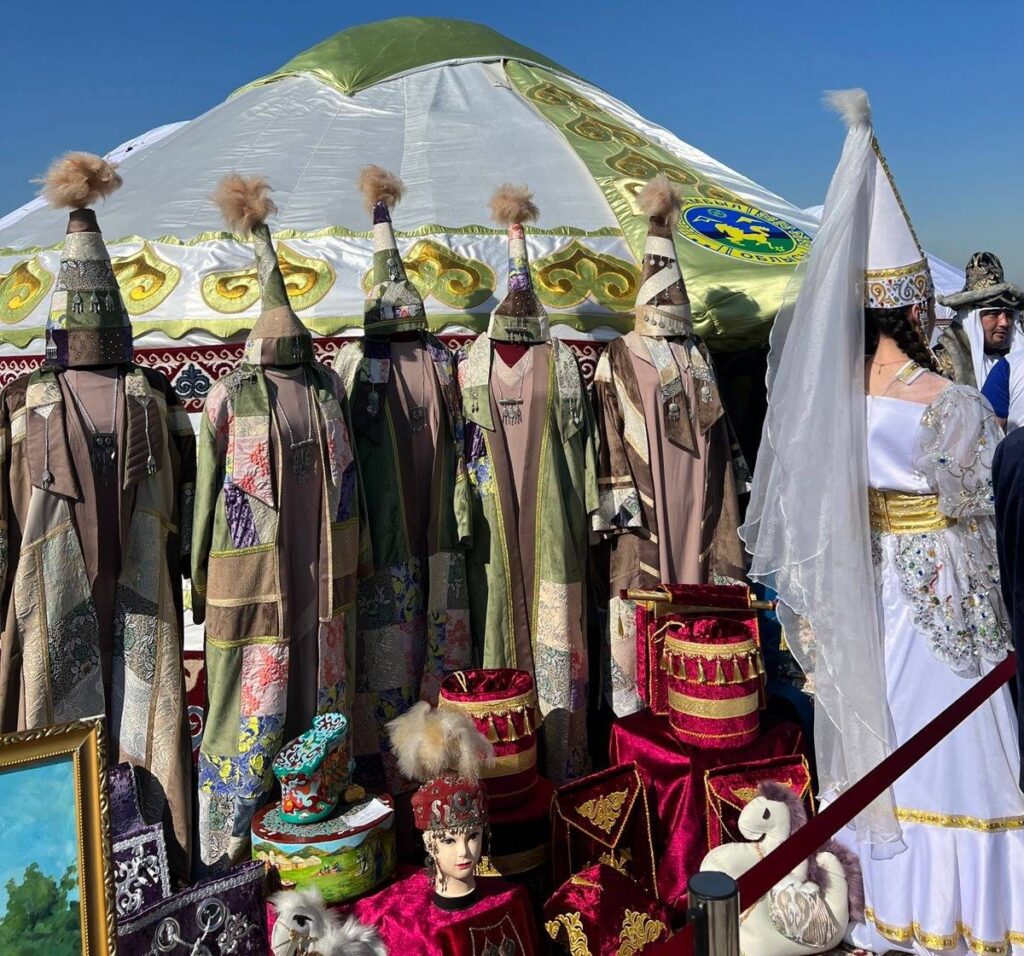
It’s time for renewal in Central Asia. Spring is arriving and it’s time to tidy up the home. Time for traditional music, cuisine, and brightly colored costumes. An occasion to reflect and renew, give thanks for the past, and build toward the future. Or set aside bad things that happened and start over. One of the world’s oldest holidays happens on the spring equinox, which is March 20 (Central Asia time) this year. Known as Nowruz, Navruz, Nauryz, and other variations, it means “New Day” in Farsi and traces its roots to the ancient Persian religion of Zoroastrianism. This year, it coincides with the Muslim holy fasting month of Ramadan. The holiday is also celebrated in the Caucasus, the Middle East, and other regions. [caption id="attachment_15786" align="aligncenter" width="1200"] A view of the shanyrak, the central part of the upper dome of the yurt is shown to guests as an art object during Nauryz festivities. A shanyrak design, containing blue that represents the sky, is the national emblem of Kazakhstan. Photo: TCA[/caption] Celebrations are already in full swing. This year, Kazakhstan introduced a new format for Nauryz, with events running from March 14-23. In 2009, UNESCO included the day on its list of “intangible cultural heritage of humanity.” In many parts of Central Asia, people decorate houses with branches of fruit trees to ensure a prosperous year. On the night before the spring equinox, people fill vessels with water from springs, milk, and grain. It is believed that such a ritual will bring abundant rains and a successful harvest in the coming year. Holiday concerts feature traditional instruments. There are the karnai and surnai (wind instruments) and dutar (strung) in Tajikistan and Uzbekistan, or the dombra and kobyz (both strung) in Kazakhstan and Kyrgyzstan. [caption id="attachment_15785" align="aligncenter" width="1200"] Baursak, a fried bread, and Nauryz kozhe, a cool, hearty drink that symbolizes good luck, are shown during Nauryz celebrations in Almaty, Kazakhstan in 2023. Ingredients of Nauryz kozhe can include water, meat, salt, milk or yogurt, and grain. Photo: TCA[/caption] A beautifully set table is another Nauryz tradition. The central place on the table in Tajikistan, Uzbekistan, Kyrgyzstan, and Turkmenistan is occupied by sumanak, a dessert. It is made of germinated wheat and cooked in a metal pot for about 12 hours. According to legend, you should make a wish while stirring the sumanak. It is said that if you make a wish from a pure heart, it will definitely come true. In Kazakhstan, a special place on the table is occupied by Nauryz kozhe, a hearty soup of milk, meat, butter, two kinds of millet, rice, and corn, symbolizing the seven principles of life: growth, luck, happiness, wealth, health, wisdom, and heavenly protection. At home, it is poured into seven bowls and placed before seven wise elders, known as aksakals. The number has a special meaning in many aspects of the celebration. Traditionally, everyone should invite seven guests to their home and visit seven houses themselves. Nauryz is also a time...

Optimism Meets Reality at the B5+1 Forum in Almaty

The inaugural B5+1 Forum, a conference dedicated to strengthening business between the five Central Asian republics and the United States, came to a close today in Almaty after a second well received day of panel discussions. The B5+1 Forum was created by the Center for International Private Enterprise (CIPE), which aims to use public-private partnerships to create a better environment for business and trade. The B5+1 platform brings international and local companies together with high-ranking government officials from all six countries, to learn about the difficulties that each side faces, and suggest new ways to attract partners and investment. Following an opening day focused on “Looking within Central Asia”, today’s speakers brought attention to “Central Asia’s place in the world economy”. The morning began with a keynote speech by Eurasian affairs expert S. Frederick Starr, who argued that because the five countries are now members of different trade blocs, the revival of the Central Asian Economic Union could break down their existing barriers to business and trade with the United States. During a morning session on international partnerships, foreign experts brainstormed ways to speed up the Central Asia region’s economic integration with the rest of the world. To an audience of business leaders whose overall mood was optimistic, the EU’s ambassador to Kazakhstan Kestutis Jankauskas and World Bank economist David Knight brought a dose of realism, by explaining that business in Central Asia is not performing as well as in other emerging regions. This, they both said, is because the governments – and business owners – have mostly still not let go of self-defeating ways of approaching markets and investment. The middle session went into more detail about the investment landscape, particularly in terms of IT and fintech. Jennifer Miel, executive director for Kazakhstan for the US Chamber of Commerce, mentioned that all five Central Asian countries have seen healthy increases in foreign direct investment since 2021. This was soon tempered by Anatoly Motkin of the agency StrategEast, who said that to achieve further sustainable growth, the region must unify its legislation and best practices, so that foreign investors can treat it as a single market as much as possible. The Forum’s closing session explored the role of business associations in public-private dialogue. The panel was moderated by Eric Hontz, CIPE’s director for accountable investments, and featured the executive directors of the US Chambers of Commerce in Kyrgyzstan, Tajikistan and Uzbekistan – Aisuluu Sydygalieva, Nilufar Bulbulshoeva and Tatyana Bystrushkina. Discussion centered on best practices and solutions for effective member representation. The B5+1 Forum forms part of CIPE’s program called “Improving the Business Environment in Central Asia” (IBECA). CIPE themselves are affiliated to the US Chamber of Commerce – the catalyst behind the B7 and B20 platforms – and receive funding from the US Department of State. Early indications are that the B5+1 Forum in 2025 will be held in Bishkek, Kyrgyzstan.

World Bank Supports Economic Reforms in Kazakhstan

Approval was granted on March 14th for the loan of $600 million to Kazakhstan by the World Bank’s Board of Executive Directors. The loan will be used to implement the first phase of a series of reforms aimed to promote sustainable growth in the country and support Kazakhstan's transition to a more competitive, greener, and inclusive economy. As a carbon-intensive economy, Kazakhstan has ambitions to scale-up action on tackling climate change and reduce reliance on the extraction of natural resources. The reforms aim to increase renewable energy generation, gradually phase out fossil fuel subsidies, improve energy efficiency, and protect poor and vulnerable households. These measures are integral to Kazakhstan’s Nationally Determined Contributions, which are committed to reducing harmful emissions by 25 percent by 2030. “This new partnership with the Government of Kazakhstan supports tangible measures to advance a low-emissions development strategy as part of the global fight against climate change,” said Andrei Mikhnev, World Bank Country Manager for Kazakhstan. Funding provided by the World Bank, with a low-cost and long-term repayment option, will support the government’s reforms in the following areas: In developing greener and more efficient energy, the program implements key recommendations by the Country Climate and Development Report (CCDR) to support the reduction of Kazakhstan’s carbon footprint and contribute to global efforts to combat climate change. In developing more competitive digital and financial markets and promoting transparent procurement practices, the program aims to enable more firms to provide digital services, develop safeguards essential for a digital economy, allocate credit to support productivity and increase transparency in procurement practices. In targeting the poor and supporting regional development, reforms aim to strengthen the social protection system and enhance regional development, as part of broader efforts to enhance inclusion and provide greater opportunities nationwide.

Kyrgyzstan Tightens Control Over Foreign-Funded NGOs

BISHKEK, Kyrgyzstan - Kyrgyzstan´s parliament has passed a law that tightens control over foreign funded non-governmental organizations despite international concerns that the measure would further erode rights and access to basic services in the Central Asia country. Supporters of the law have characterized the law as a way to ward off foreign interference in Kyrgyzstan, while critics say it represents a slow-moving crackdown that rolls back efforts to develop civil society with the help of international governments and other institutions. The Jogorku Kenesh, or parliament, approved the law by a vote of 66-5 on Thursday. The government has said the law would assign the status of a foreign agent to NGOs, media and other institutions, as well as individuals in some cases, that are financed from abroad. Furthermore, materials posted on behalf of foreign principals on the Internet will be required to contain the phrase: “Materials (information) were produced, distributed and (or) sent by a non-profit organization performing the functions of a foreign representative.” Violations of the law could lead to criminal penalties. President Sadyr Japarov of Kyrgyzstan has said that “only a small number, but a [quite] vociferous group, of these structures financed by foreign states… is a source of inaccurate information for their grantors”. Last month, Japarov pushed back against concerns about the draft law that were expressed by U.S. Secretary of State Antony Blinken in a written response emphasizing that the draft law – which MPs initiated and adopted in its first reading – “is close to the Foreign Agents Registration Act (FARA) adopted in 1938 in the United States”. “My only request is that you do not interfere in the internal affairs of our country,” Japarov said. Some opponents claim it is based on Russia´s “foreign agents” law and could be used as an instrument of oppression. Members of non-governmental groups and other critics strongly opposed the draft law as it moved toward ratification in the parliament. On March, 15 groups wrote to four international finance institutions that are backing projects in Kyrgyzstan and asked them to join their efforts to block it. “The law would inevitably create a climate of fear, preventing people, including workers, human rights defenders and civil society organizations, from speaking out due to fear of reprisals,” the groups said in their letter to the Asian Development Bank, European Bank for Reconstruction and Development, European Investment Bank and World Bank. Separately this week, the government in Kyrgyzstan withdrew a draft law on the media that critics said would have restricted free speech. Among the terms of the measure was the right of government agencies to revoke a journalist’s accreditation if it disapproved of the reporter’s coverage of an issue.

High-Profile Speakers Open B5+1 Forum in Almaty

The ‘B5+1’ platform – a group of countries comprising the five Central Asian republics and the United States – took an important step forward today, with the launch of the inaugural B5+1 Forum in Almaty.  Instrumental in the formation of the B5+1 group has been the Center for International Private Enterprise (CIPE), which aims to develop public-private partnerships in the Central Asia region. This new business platform has been created to help international and local companies to capitalize on opportunities in global business and trade – while assisting the six governments in attracting more direct foreign investment.  The theme of the opening day was “Looking within Central Asia”. It began with a panel discussion on boosting economic integration in the Central Asia region, drawing from the area's distinctive context, and successful examples like ASEAN and the EU. Recommendations, from panelists including Richard E. Hoagland of the Caspian Policy Center and Alisher Shaykhov from Uzbekistan’s National Venture Capital Fund, included integrating the region's value chain into the global economy, and promoting collaborative investment initiatives. The second panel offered perspectives from Central Asia’s business leaders. Panelists including B5+1 representatives Aziza Shuzheyeva (Kazakhstan, e-commerce) and Manusurjon Rasulev (Uzbekistan, agribusiness) gave insights into the region’s high-profile industries. Speakers advocated for policy synchronization in these sectors, as well as in tourism and trade, as a means to boost regional growth.  For the third panel, government officials voiced their support for enhancing public-private dialogue. Tajikistan was represented by its deputy minister for economy Ahliddin Nuriddinzoda; his counterpart Ainura Usenbekova spoke on behalf of Kyrgyzstan, and Turkmenistan’s minister of finance Serdar Jorayev also spoke at length. Their focus was on national reforms and regional integration. The B5+1 Forum forms part of CIPE’s program called “Improving the Business Environment in Central Asia” (IBECA). CIPE themselves are affiliated to the US Chamber of Commerce – the catalyst behind the B7 and B20 platforms – and receive funding from the US Department of State. The B5+1 Forum continues tomorrow, Friday 15 March, with a thematic day dedicated to “Central Asia’s place in the world economy”.