• KGS/USD = 0.01144 0%
  • KZT/USD = 0.00193 -0%
  • TJS/USD = 0.10832 0.09%
  • UZS/USD = 0.00008 0%
  • TMT/USD = 0.28490 0%
  • KGS/USD = 0.01144 0%
  • KZT/USD = 0.00193 -0%
  • TJS/USD = 0.10832 0.09%
  • UZS/USD = 0.00008 0%
  • TMT/USD = 0.28490 0%
  • KGS/USD = 0.01144 0%
  • KZT/USD = 0.00193 -0%
  • TJS/USD = 0.10832 0.09%
  • UZS/USD = 0.00008 0%
  • TMT/USD = 0.28490 0%
  • KGS/USD = 0.01144 0%
  • KZT/USD = 0.00193 -0%
  • TJS/USD = 0.10832 0.09%
  • UZS/USD = 0.00008 0%
  • TMT/USD = 0.28490 0%
  • KGS/USD = 0.01144 0%
  • KZT/USD = 0.00193 -0%
  • TJS/USD = 0.10832 0.09%
  • UZS/USD = 0.00008 0%
  • TMT/USD = 0.28490 0%
  • KGS/USD = 0.01144 0%
  • KZT/USD = 0.00193 -0%
  • TJS/USD = 0.10832 0.09%
  • UZS/USD = 0.00008 0%
  • TMT/USD = 0.28490 0%
  • KGS/USD = 0.01144 0%
  • KZT/USD = 0.00193 -0%
  • TJS/USD = 0.10832 0.09%
  • UZS/USD = 0.00008 0%
  • TMT/USD = 0.28490 0%
  • KGS/USD = 0.01144 0%
  • KZT/USD = 0.00193 -0%
  • TJS/USD = 0.10832 0.09%
  • UZS/USD = 0.00008 0%
  • TMT/USD = 0.28490 0%
19 December 2025

Viewing results 1 - 6 of 2398

Kazakhstan Boosts Oil Output Despite Export Infrastructure Challenges

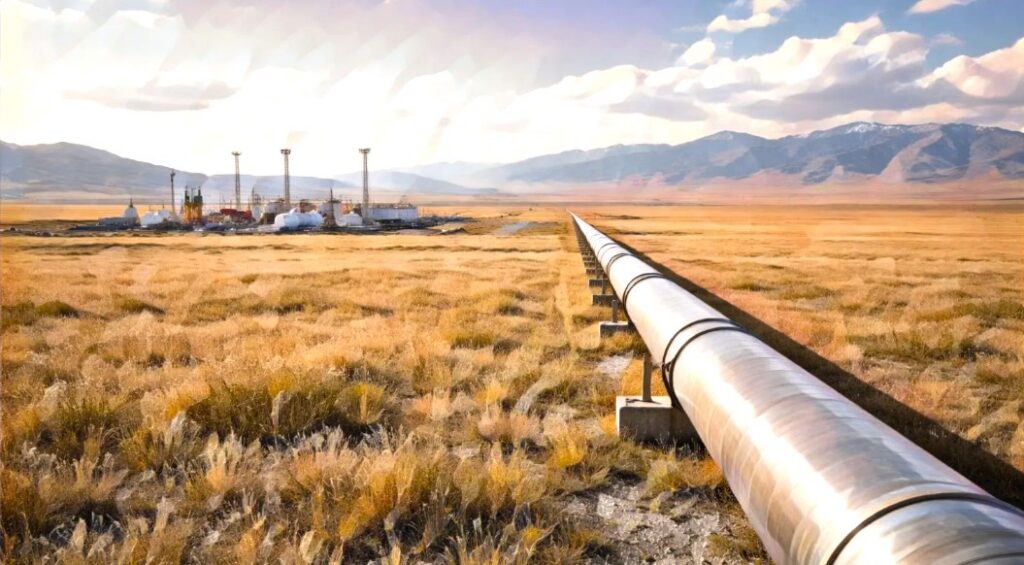
Kazakhstan increased its production of oil and gas condensate by 14% in January-November 2025 compared to the same period last year, and exceeded its annual export plan ahead of schedule, despite ongoing disruptions in the Caspian Pipeline Consortium (CPC). The figures were announced by Deputy Minister of Energy Sungat Yessimkhanov. By the end of 2024, Kazakhstan had produced 87.7 million tons of oil and gas condensate, 97.1% of its target of 90.5 million tons. Total oil exports for the year reached 63.2 million tons. In the first 11 months of 2025, production rose to 91.9 million tons, marking a 14.1% year-on-year increase. The full-year target for 2025 is 96.2 million tons. Over the same period, exports amounted to 73.4 million tons, already surpassing the annual target of 70.5 million tons and representing a 16.1% increase from the previous year. This growth came despite serious challenges to Kazakhstan’s main export route. The CPC, which carries the bulk of Kazakh crude to international markets, experienced disruptions following a drone attack on its infrastructure. The incident raised fresh concerns about the vulnerability of critical export corridors. In the gas sector, Kazakhstan produced 62.8 billion cubic meters of natural gas in January-November 2025, a 16.7% increase from the same period in 2024. The annual gas production target for 2025 has already been met. Liquefied petroleum gas (LPG) production rose to 2.8 million tons, up 1.8%. Gas transit volumes through Kazakhstan reached 64.5 billion cubic meters, up 0.9%. During the same period, domestic production of petroleum products reached 14 million tons. The full-year target is 14.5 million tons, on track to match the 2024 total, when 17.9 million tons of crude were processed domestically. Production of oil and gas chemical products increased by 12.2%, reaching 567,600 tons. The target for 2025 is set at 590,000 tons. As previously reported by The Times of Central Asia, Kazakh authorities are actively seeking foreign investment for the construction of a fourth major oil refinery with a projected capacity of up to 10 million tons per year. Overall, Astana plans to attract between $15 billion and $19 billion in investment for the development of the oil refining sector by 2040.

Uzbekneftegaz Signs $5 Million Consulting Deal With U.S. Firm Ballard Partners

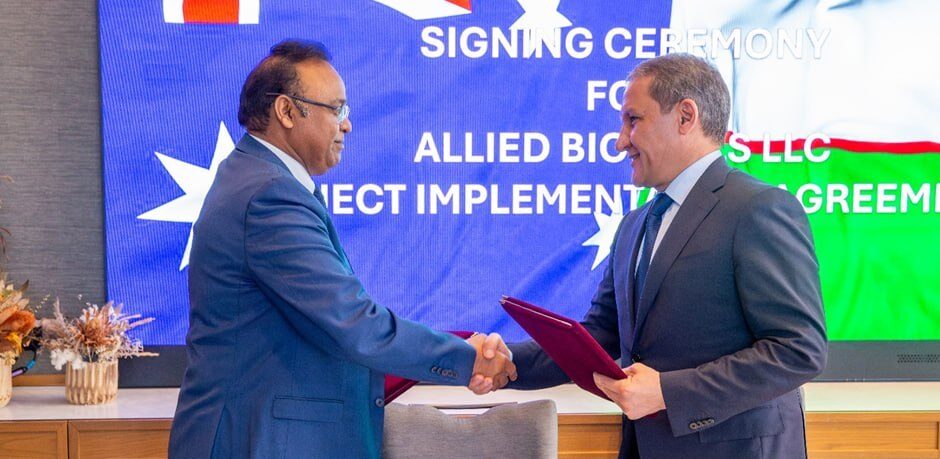
Uzbekneftegaz has signed a $5 million lobbying and strategic consulting contract with the U.S.-based firm Ballard Partners, according to documents published by the Uzbek Telegram channel Revizor on December 12. The agreement outlines services for “strategic consulting and advocacy before the U.S. government.” The reported monthly fee is $83,334, implying a contract duration of approximately five years. Ballard Partners is often described by U.S. media outlets as having close ties to President Donald Trump. Reuters recently reported that several major companies, including cryptocurrency exchanges Kraken and Blockchain.com, retained Ballard Partners after the November elections for lobbying on digital asset regulation. The firm is led by Brian Ballard, a longtime Trump fundraiser, and has seen a notable uptick in clients in recent months. Politico reported earlier this year that Ballard Partners’ revenue has sharply increased, with many organizations under pressure from the current administration turning to the firm for representation. According to the report, Ballard signed around 40 new clients following the elections, exceeding its client intake from the previous ten months. The Uzbekneftegaz deal follows recent comments by Uzbekistan’s Minister of Energy, Jurabek Mirzamakhmudov, confirming that the government has been in discussions with the U.S. Treasury’s Office of Foreign Assets Control (OFAC) regarding sanctions on Russian energy giant Lukoil. However, there is no publicly available evidence linking the Uzbekneftegaz agreement with Ballard Partners to the Lukoil sanctions issue. At this stage, the specific scope of Ballard Partners’ work on behalf of Uzbekneftegaz remains undisclosed. The available documentation does not specify the precise interests the firm will advocate for in Washington, leaving open questions about the contract’s strategic goals and expected outcomes.

Financing Agreement for China-Kyrgyzstan-Uzbekistan Railway Project Signed in Bishkek

On December 16, a loan agreement was signed in Bishkek to finance the construction of the China-Kyrgyzstan-Uzbekistan (CKU) railway, an ambitious regional transport project intended to bolster connectivity across Central and South Asia. According to the Kyrgyz government, the agreement was concluded between China-Kyrgyzstan-Uzbekistan Railway Company LLC, a joint venture formed by the three participating countries and a syndicate of Chinese banks, including the China Development Bank and Eximbank. The CKU railway has been discussed for more than two decades, but repeatedly stalled over financing, route selection, and technical concerns. Momentum increased after 2022 as China sought alternative westbound transport corridors and Central Asian states looked to diversify trade routes and reduce reliance on existing transit pathways. The total cost of the railway project is estimated at $4.7 billion. Half of that amount, approximately $2.3 billion, will be provided as a 35-year loan from China to the joint project company, which will be responsible for repayment. The remaining $2.3 billion will be contributed to the company’s authorized capital: China will cover 51%, while Kyrgyzstan and Uzbekistan will each provide 24.5%. The CKU railway is a strategically significant infrastructure initiative spanning 523 kilometers. Construction officially began on December 27, 2024, in Kyrgyzstan’s Jalal-Abad region. Once completed, the railway will link Kashgar in China with Torugart, Makmal, and Jalal-Abad in Kyrgyzstan, and continue on to Andijan in Uzbekistan. A cargo transshipment station and logistics hub are planned in Makmal. The railway is expected to handle up to 15 million tons of cargo annually. Despite its strategic appeal, the project has raised concerns about debt exposure, particularly for Kyrgyzstan, which already relies heavily on Chinese financing. Officials say the joint-venture structure and long loan maturity will limit fiscal risks, though critics argue projected cargo volumes will need to be met for the railway to be financially sustainable. Currently, neither Kyrgyzstan nor Uzbekistan has a direct rail link with China; the only such connection in Central Asia runs through Kazakhstan. For Uzbekistan, the railway is expected to shorten transit times to Chinese markets and expand export capacity for industrial and agricultural goods. Officials in Tashkent have argued that the CKU route could reduce delivery times by several days compared with existing rail corridors. The CKU railway is among the most technically complex projects in the region. It includes the construction of 50 bridges and 29 tunnels, totaling 120 kilometers in length, meaning roughly 40% of the route will consist of bridges and tunnels. The Kyrgyz section alone will cover 304 kilometers. On December 5, Chairman of the Kyrgyz Cabinet of Ministers Adylbek Kasymaliev visited the construction site of one of the tunnels in the Jalal-Abad region to inspect progress. According to government sources, work has begun on 18 of the 29 planned tunnels and 17 of the 50 bridges. The project currently involves 5,695 pieces of machinery and over 5,000 workers. For Kyrgyzstan, the CKU railway represents the largest infrastructure project in the country’s history. Authorities view the project as a chance to transform...

Average Annual Investment in Kyrgyzstan Grows by 140%

Average annual investment in Kyrgyzstan has increased by 140% in recent years, Prime Minister Adylbek Kasymaliyev announced at an investment forum held in Bishkek. The event brought together representatives from various sectors of the Kyrgyz economy, including construction, tourism, the agro-industrial complex, the jewelry industry, and associations of suppliers and distributors. Heads of development funds offering preferential financing to domestic businesses also participated. Kasymaliyev acknowledged that the state's previous involvement in attracting investment to the private sector had been fragmented. However, this is changing under Kyrgyzstan’s new investment strategy, a comprehensive, state-level framework designed to draw both domestic and foreign capital. As a result of recent reforms, the prime minister stated that Kyrgyzstan’s gross domestic product has nearly tripled over the past five years. GDP growth for the first 11 months of 2025 stood at 10.2%. "We expect promising initiatives from you. Only through joint efforts can we lay a solid foundation for a dynamic and competitive economy," Kasymaliyev said, addressing the business community. He also emphasized the importance of continuous dialogue between government agencies and the private sector to maintain a stable investment flow. “For any state, investment is the main source of economic growth, stability, and development. In the current environment, time is the investor's main asset, and the country's internal stability is the key to the success of both state and business,” he said. Kasymaliyev identified several priority sectors for attracting investment, including hydropower, logistics, agriculture, mining, IT, the halal industry, tourism, and pharmaceuticals. Rustam Baltabaev, Executive Director of the Association for the Development of the Agro-Industrial Complex, told The Times of Central Asia that while relevant legislation is necessary, it alone is not sufficient to foster a favorable investment climate. The decisive factor, he argued, is sustained, constructive dialogue between the government and the business sector. “The investment climate is defined not by declarations, but by the practical conditions under which businesses operate,” Baltabaev said. “It includes the speed and cost of launching a project, the time required to obtain permits, predictable regulations, protection of property rights, infrastructure, access to financing, human capital, and fair competition. Business associations play a key role by channeling investor concerns into actionable regulatory solutions.” Participants at the forum noted that entrepreneurs have previously criticized the government for inadequate support. However, many expressed cautious optimism that new approaches and improved cooperation between the public and private sectors could signal a shift. Both government officials and business leaders agreed that mutual respect and policy consistency are critical to attracting new foreign investors to Kyrgyzstan.

Mirziyoyev: Uzbekistan’s Natural Resources Valued at Up to $79,000 Per Person

Uzbekistan’s vast underground wealth has drawn renewed attention following the release of an international ranking of countries by natural resource value per capita, as reported by Uzbek publication Zamin. According to the ranking, Saudi Arabia tops the list, with natural resources valued at approximately $1 million per person, driven largely by its extensive oil reserves. Canada and Australia follow, each exceeding $700,000 per capita, supported by a combination of oil, forests, minerals, iron ore, coal, and natural gas. Russia ranks fourth, with more than $520,000 in resources per person. Although accurately assessing Uzbekistan’s total natural resource value remains difficult due to fluctuating global commodity prices and ongoing geological exploration, the country's long-term potential is considered substantial. In July 2018, Azam Qadirhodjayev, then Deputy Chairman of Uzbekistan’s State Committee for Geology and Mineral Resources, estimated the total potential value of the country’s mineral resources at approximately $5.7 trillion. Of this, over $1 trillion stemmed from explored and currently developed deposits. At the time, only about 20% of Uzbekistan’s territory had been fully studied, leaving considerable room for new discoveries. Additional details were provided in December 2023, when Ilyos Jumayev, a representative of the Ministry of Mining Industry and Geology, announced at a press conference that Uzbekistan officially possesses 101 gold deposits and three silver deposits. According to the ministry, the country holds nearly all mineral types found globally, including gold, silver, copper, uranium, oil, natural gas, lithium, molybdenum, tungsten, manganese, nickel, cobalt, tantalum, and niobium. Major gold reserves serve as the raw material base for the Navoi and Almalyk mining and metallurgical complexes, while copper deposits are primarily located in the Tashkent region. The value of Uzbekistan’s natural resources was also a key topic at the Tashkent International Investment Forum in June 2025. President Shavkat Mirziyoyev stated that the country’s underground wealth is valued at approximately $3 trillion. He emphasized that the global demand for technological minerals is rising amid the fourth industrial revolution and identified strategic reserves of lithium, tungsten, magnesium, graphite, titanium, and vanadium as vital for developing high value-added industries. Based on the president’s $3 trillion estimate and Uzbekistan’s current population of roughly 38.24 million, the per capita value of natural resources stands at approximately $78,000 to $79,000. While lower than the per capita resource wealth in countries like Saudi Arabia or Canada, officials argue that incomplete geological surveying leaves room for this figure to grow. Uzbekistan’s resource base includes not only precious and rare earth metals but also energy resources such as oil and natural gas, underscoring the country’s strategic position in the global minerals landscape.

Turkmenistan Considers Cotton Exports to Kyrgyzstan

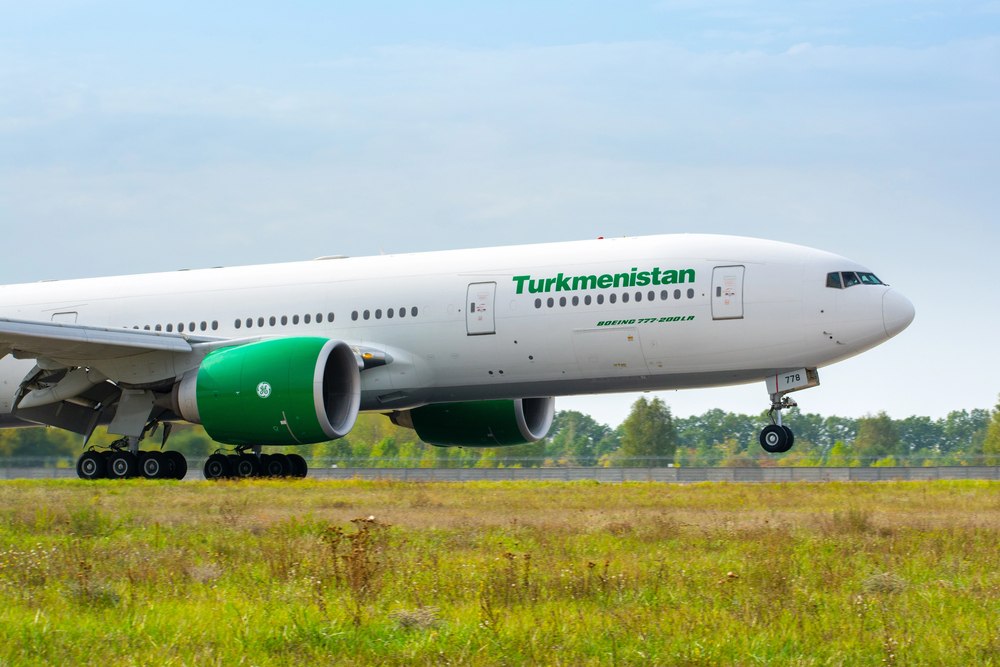
Turkmenistan is exploring the possibility of exporting cotton to Kyrgyzstan as part of a broader effort to jointly develop the textile industry, according to Danil Ibrayev, a member of the presidium of the Eurasian Economic Union (EAEU) Business Council and President of the Kyrgyz Union of Industrialists and Entrepreneurs. He shared the update during an interview with Birinchi Radio. Ibrayev noted that both countries are currently discussing practical mechanisms for supplying Turkmen cotton to Kyrgyz enterprises, where it would be processed into finished textile products. These products could then be sold domestically or exported, including to other EAEU member states. “Turkmenistan produces large volumes of cotton. We are now discussing how to organize its delivery to Kyrgyzstan and develop textile production here,” Ibrayev said. The initiative aligns with Kyrgyzstan’s strategy to revitalize its light industry by securing stable sources of raw materials. Turkmenistan, meanwhile, is seeking to diversify export routes for its agricultural commodities, with cotton remaining a vital component of its economy. Experts cited by local media suggest that such cooperation could deepen industrial integration within Central Asia and reduce dependence on textile imports from outside the region. With growing demand for locally produced goods and the expansion of import substitution policies, regional partnerships are gaining strategic significance. Last year, Kyrgyz officials emphasized the government's commitment to expanding domestic textile production and actively sourcing raw materials from neighboring states. Cotton processing was identified as one of the quickest pathways to job creation and increased exports through value-added manufacturing.