• KGS/USD = 0.01144 0%
  • KZT/USD = 0.00209 0%
  • TJS/USD = 0.10438 0%
  • UZS/USD = 0.00008 0%
  • TMT/USD = 0.28490 0%
  • KGS/USD = 0.01144 0%
  • KZT/USD = 0.00209 0%
  • TJS/USD = 0.10438 0%
  • UZS/USD = 0.00008 0%
  • TMT/USD = 0.28490 0%
  • KGS/USD = 0.01144 0%
  • KZT/USD = 0.00209 0%
  • TJS/USD = 0.10438 0%
  • UZS/USD = 0.00008 0%
  • TMT/USD = 0.28490 0%
  • KGS/USD = 0.01144 0%
  • KZT/USD = 0.00209 0%
  • TJS/USD = 0.10438 0%
  • UZS/USD = 0.00008 0%
  • TMT/USD = 0.28490 0%
  • KGS/USD = 0.01144 0%
  • KZT/USD = 0.00209 0%
  • TJS/USD = 0.10438 0%
  • UZS/USD = 0.00008 0%
  • TMT/USD = 0.28490 0%
  • KGS/USD = 0.01144 0%
  • KZT/USD = 0.00209 0%
  • TJS/USD = 0.10438 0%
  • UZS/USD = 0.00008 0%
  • TMT/USD = 0.28490 0%
  • KGS/USD = 0.01144 0%
  • KZT/USD = 0.00209 0%
  • TJS/USD = 0.10438 0%
  • UZS/USD = 0.00008 0%
  • TMT/USD = 0.28490 0%
  • KGS/USD = 0.01144 0%
  • KZT/USD = 0.00209 0%
  • TJS/USD = 0.10438 0%
  • UZS/USD = 0.00008 0%
  • TMT/USD = 0.28490 0%

Viewing results 1033 - 1038 of 3169

Kazakhstan Completes International Visits Ahead of Nuclear Power Plant Construction

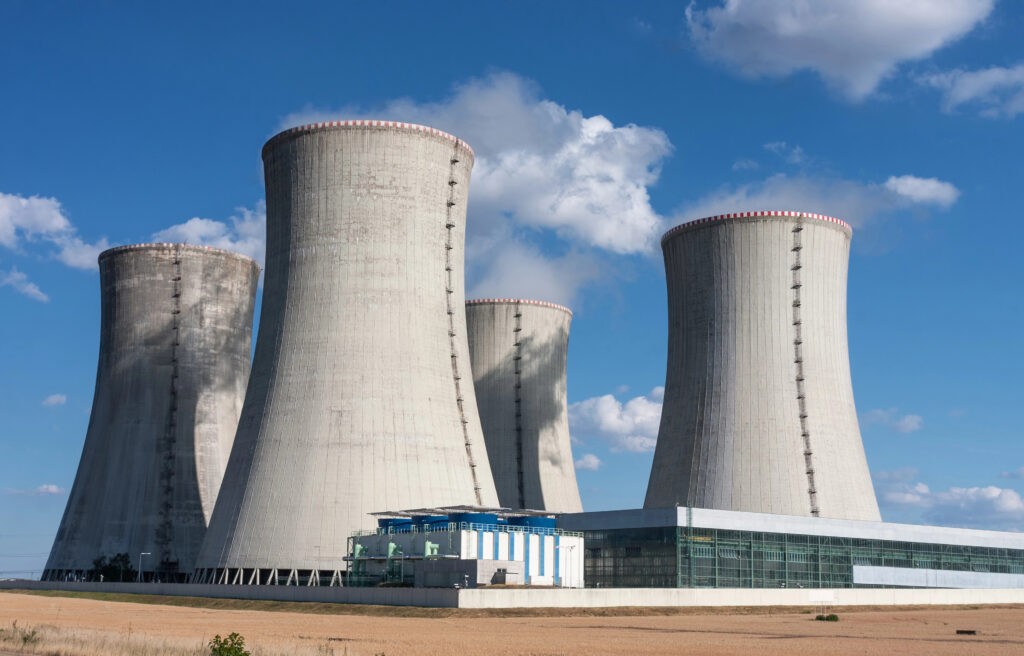
Kazakhstan has completed a series of international visits to evaluate technologies for its planned nuclear power plant (NPP). On January 21, 2025, a Kazakh delegation led by Energy Minister Almasadam Satkaliyev visited Russia to assess the operations of Generation 3+ nuclear power units at the Leningrad NPP. During the visit, the delegation examined key components of the plant, including its control systems, turbine hall, laboratory facilities, and cooling system. Particular focus was placed on the VVER-1200 reactor, the flagship project of Russia's state nuclear corporation, Rosatom. This visit marked the final stage of Kazakhstan’s review process of potential suppliers for the NPP. From October to December 2024, Kazakh specialists also visited South Korea, France, and China. As a result, the final list of candidate suppliers includes Russian Rosatom, Korean KHNP, Chinese CNNC, and French EDF. While in Russia, the Kazakh delegation also consulted with Leningrad NPP management and visited the satellite town of Sosnovy Bor, a scientific and engineering innovation hub. The Leningrad NPP is Russia’s largest by installed capacity and features two types of reactors: uranium-graphite RBMK and water-water VVER. “We have completed a series of working visits dedicated to studying advanced nuclear power technologies. Familiarization with the operation of Leningrad NPP allowed us to study in detail the key aspects of operation, the safety of the plant, and its impact on the environment,” Energy Minister Satkaliyev stated. The final decision on the supplier or consortium to construct the NPP will be made in 2025. This decision will take into account Kazakhstan’s national interests, its international obligations, and recommendations from the International Atomic Energy Agency (IAEA). Kazakhstan’s first nuclear power plant is set to be built in the village of Ulken on the shores of Lake Balkhash. The project is intended to address the country’s growing power shortages and reduce greenhouse gas emissions. Potential partners from China, Russia, South Korea, and France are being considered, and the project is expected to be financed through foreign loans.


eBay Officially Registers for Tax Purposes in Uzbekistan

The American e-commerce giant eBay has officially registered for tax purposes in Uzbekistan, according to UzDaily. As a result, eBay will now pay value-added tax (VAT) on its services in the country. Other global companies, including Netflix, Amazon, Google, Apple, and Zoom, are also registered with Uzbekistan’s special tax office for foreign digital companies. In total, 64 foreign companies are currently complying with the country’s VAT requirements. The Tax Committee of Uzbekistan reported that 61 foreign companies providing electronic services contributed 101.9 billion UZS (approximately $7.89 million USD) in taxes to the national budget between January and September 2024. This represents a 2.1-fold increase compared to the same period in 2023, highlighting the growing importance of foreign digital service providers in Uzbekistan's economy. In December 2024, Uzbekistan introduced new regulations requiring all companies providing e-commerce services to register as legal entities in the country. Despite their tax registrations, major platforms like eBay and Amazon have not yet established physical offices in Uzbekistan, raising questions about their long-term plans for expanding operations in the local market. In related news, The Times of Central Asia previously reported that Binance, one of the world’s largest cryptocurrency exchanges, will officially begin offering services to users in Uzbekistan. This move underscores the country’s growing focus on integrating global digital platforms into its economy. eBay’s registration for VAT in Uzbekistan marks another step in the country’s efforts to regulate and tax the growing digital economy. As more global companies comply with Uzbekistan’s tax requirements, questions remain about whether these platforms will deepen their presence in the country by establishing local offices.

Uzbekistan Receives $14.8 Billion in Remittances in 2024

The total volume of remittances sent to Uzbekistan in 2024 reached a record $14.8 billion, marking a 30% increase - equivalent to $3.4 billion - compared to the previous year. This data comes from the Central Bank’s Brief Review on Currency Transactions of Individuals. Key Sources of Remittances Russia remains the dominant source of remittances for Uzbekistan, accounting for 77% of the total, or $11.5 billion - a 29% increase from 2023. Other key contributors include: Kazakhstan: $795 million United States: $577 million South Korea: $534 million Turkey: $405 million United Kingdom: $135 million July saw the highest inflow of remittances, with $1.785 billion received, while February recorded the lowest amount, at $738 million. Remittance growth varied significantly by country / region: United Kingdom: Up 83% South Korea: Up 56% United States: Up 35% European Union: Up 32% While inflows surged, the volume of remittances sent abroad from Uzbekistan also grew, increasing by 19% in 2024 to reach $2.8 billion. Russia remains the largest source of remittances to Uzbekistan, thanks to the significant number of Uzbek migrants working there. However, new restrictions introduced in 47 Russian regions, including the occupied territories of Crimea, Sevastopol, and Zaporozhye, could negatively impact Central Asian migrant workers. According to the Russian Ministry of Internal Affairs, there were more than 6.1 million foreigners in Russia in 2024, the majority from Central Asia and other CIS countries. Among them, over 1.88 million Uzbek citizens visited Russia during the first eight months of the year, underscoring the strong ties between Uzbek migrant labor and Russia's economy. The substantial increase in remittances highlights the critical role of labor migration in Uzbekistan’s economy. However, the evolving regulatory environment in key source countries like Russia could pose challenges for Central Asian migrants and, by extension, Uzbekistan’s remittance-dependent economy.

Binance Officially Launches Operations in Uzbekistan

The National Agency for Prospective Projects has announced that Binance, one of the world’s largest cryptocurrency exchanges, will officially provide services to users in Uzbekistan. According to the agency’s press service, Binance will operate in the country through the local company CoinPay LLC, ensuring compliance with Uzbekistan’s laws. Residents of Uzbekistan will be able to access the platform via coinpay.uz, which will allow users to deposit and withdraw funds in the national currency using bank cards and local payment systems. “The system will launch after integrating all partner platforms, including national payment systems,” the agency stated. Legal Challenges Resolved This development comes after Binance faced regulatory challenges in Uzbekistan. In January 2024, the National Agency for Prospective Projects fined Binance for non-compliance with the country’s laws on cryptocurrency asset turnover. The agency subsequently filed a lawsuit in the Tashkent City Economic Court to enforce the fine. The court trial, which ran from March 26 to June 7, 2024, ruled in favor of the agency. Binance was fined 300 base calculation amounts, which the company paid in full to the state budget. Binance’s Expansion in Central Asia Uzbekistan is the latest addition to Binance’s growing presence in Central Asia. The exchange launched its first local digital asset platform in the region in Kazakhstan in June 2023. This platform is based at the Astana International Financial Center. Later that year, Binance Kazakhstan partnered with the National Bank of Kazakhstan and the National Payment Corporation to implement a groundbreaking project: the issuance of the world’s first stablecoin backed by a national digital currency. This innovation was tested on the BNB Smart Chain (BSC) network. Binance has also made efforts to engage with the cryptocurrency community in Kyrgyzstan. In January 2023, the company held its first community meet-up in the country. In May of that year, Binance’s regional head for Central Asia, Kirill Khomyakov, described Kyrgyzstan as a promising market for cryptocurrency development. However, despite these initiatives, Binance has not yet officially launched operations in the Republic. Binance’s official entry into Uzbekistan marks another step in its strategic expansion across Central Asia. By complying with local regulations and collaborating with a licensed partner, Binance has reinforced its commitment to integrating its platform into Uzbekistan’s growing cryptocurrency landscape.

EBRD Invests Record €2.26 Billion in Central Asia in 2024

The European Bank for Reconstruction and Development (EBRD) reached a record level of investment in Central Asia in 2024, contributing €2.26 billion to 121 projects across six countries in the region. This was nearly double the amount invested in 2023. Additionally, the EBRD attracted €784 million from co-financiers, bringing the total investment in the region’s economy to over €3 billion. Uzbekistan and Kazakhstan Lead in Funding Uzbekistan and Kazakhstan were the largest recipients of EBRD funding, securing €938 million and €913 million, respectively. These two nations ranked as the fifth and sixth largest destinations for EBRD investments globally in 2024. Other countries in the immediate region also benefited from significant funding, with Mongolia receiving €264 million, Tajikistan €88 million, and the Kyrgyz Republic €52 million. Focus on Sustainable Infrastructure and Green Economy The majority of EBRD investments in Central Asia supported sustainable infrastructure projects, accounting for 61% of the total. Another 24% was channeled to local banks to assist small businesses, women entrepreneurs, and youth-focused initiatives, as well as projects promoting climate resilience and resource efficiency. The remaining 15% was allocated to private-sector companies. In alignment with the Paris Agreement, 58% of EBRD investments in the region went to projects promoting a green economy. Milestones in 2024 The EBRD achieved several notable milestones in 2024: Total investments in Kazakhstan surpassed €10 billion. Uzbekistan reached €5 billion in cumulative EBRD funding. Both Tajikistan and the Kyrgyz Republic exceeded €1 billion in total investments since the EBRD began operations in the region 30 years ago. Landmark Projects The EBRD financed several groundbreaking projects in Central Asia during 2024, including: Uzbekistan: €59 million for a renewable hydrogen facility aimed at decarbonizing the fertilizer sector. Kazakhstan: €96.4 million for a new wastewater treatment plant in Aktobe, the largest municipal project supported by the EBRD in the region. Mongolia: €11.3 million to support the first green bond issued by a local bank. Investments in Energy Infrastructure Significant funding was also allocated to improving electricity grids across the region: In Kazakhstan, €252 million was used to construct 600 km of transmission lines. In Uzbekistan, €60.3 million supported the development of a 230 km transmission line in the Navoi region. In the Kyrgyz Republic, €14 million upgraded power infrastructure in Osh and Issyk-Kul. In Tajikistan, €31 million was allocated to improve a transformer in the Sugd region. Investments in Health and Transportation The EBRD also provided substantial funding for healthcare and infrastructure projects: Kazakhstan: €365 million for a hospital project. Uzbekistan: €216 million for a road and bridge project in the Khorezm region. Mongolia: €39.2 million for a hospital in Darkhan. Support for Small Businesses The EBRD continued its efforts to empower small businesses in Central Asia, providing advisory services to more than 450 small and medium-sized enterprises (SMEs). Over 8,000 SMEs benefited from training and mentoring programs. In Tajikistan, the EBRD launched its Star Venture initiative, allocating €28 million to 25 high-growth companies through agreements with local banks. The EBRD’s Legacy in Central Asia As the...

Kyrgyzstan Boosts Exports of National Dairy Products

Exports of Kyrgyzstan's dairy products have seen significant growth, with member states of the Eurasian Economic Union (EAEU) increasing their imports from the republic. Just six months ago, Kyrgyzstan lagged behind its EAEU counterparts in dairy production and exports. Impressive Growth in Exports According to the Ministry of Agriculture, milk sales by Kyrgyz farms rose by 124% in 2024, while dairy exports increased by as much as 167%. By the end of 2024, Kyrgyzstan had exported more than 33,000 tons of milk and dairy products, compared to just under 30,000 tons in 2023. The growth was driven not only by traditional products - such as cheese, butter, ice cream, cream, milk powder, and pasteurized milk - but also by national dairy specialties made from cow's milk. Notably, Kyrgyzstan exported over 120 tons of fermented milk products, such as the national beverages chalap and bozo, to Russia, Kazakhstan, and Uzbekistan in 2024. Additionally, exports of kurut, a traditional Kyrgyz snack made from dried curd balls, exceeded 3.3 tons last year, reflecting the growing demand for unique national products abroad. Context Within the EAEU This progress comes in the wake of criticism from the Eurasian Economic Commission (EEC) last summer, which ranked Kyrgyzstan among the lowest milk producers in the Union. According to EEC data, Armenia was at the bottom with an annual production of 123,000 tons of milk, while Kyrgyzstan was second-to-last with 620,000 tons. For comparison, neighboring Kazakhstan produces over 2 million tons annually, while Russia leads the EAEU with 13.5 million tons of milk produced per year. International Support Spurs Growth The Kyrgyz Ministry of Agriculture attributed the surge in dairy production and exports in part to foreign assistance programs, particularly a USAID initiative. This project has funded the construction of new dairy processing facilities for dozens of farmers in southern Kyrgyzstan. Additionally, more than 100 farmers continue to receive training and counseling on modern cow husbandry practices, which have improved productivity and product quality.