• KGS/USD = 0.01144 0%
  • KZT/USD = 0.00212 0%
  • TJS/USD = 0.10456 0.19%
  • UZS/USD = 0.00008 0%
  • TMT/USD = 0.28490 0%
  • KGS/USD = 0.01144 0%
  • KZT/USD = 0.00212 0%
  • TJS/USD = 0.10456 0.19%
  • UZS/USD = 0.00008 0%
  • TMT/USD = 0.28490 0%
  • KGS/USD = 0.01144 0%
  • KZT/USD = 0.00212 0%
  • TJS/USD = 0.10456 0.19%
  • UZS/USD = 0.00008 0%
  • TMT/USD = 0.28490 0%
  • KGS/USD = 0.01144 0%
  • KZT/USD = 0.00212 0%
  • TJS/USD = 0.10456 0.19%
  • UZS/USD = 0.00008 0%
  • TMT/USD = 0.28490 0%
  • KGS/USD = 0.01144 0%
  • KZT/USD = 0.00212 0%
  • TJS/USD = 0.10456 0.19%
  • UZS/USD = 0.00008 0%
  • TMT/USD = 0.28490 0%
  • KGS/USD = 0.01144 0%
  • KZT/USD = 0.00212 0%
  • TJS/USD = 0.10456 0.19%
  • UZS/USD = 0.00008 0%
  • TMT/USD = 0.28490 0%
  • KGS/USD = 0.01144 0%
  • KZT/USD = 0.00212 0%
  • TJS/USD = 0.10456 0.19%
  • UZS/USD = 0.00008 0%
  • TMT/USD = 0.28490 0%
  • KGS/USD = 0.01144 0%
  • KZT/USD = 0.00212 0%
  • TJS/USD = 0.10456 0.19%
  • UZS/USD = 0.00008 0%
  • TMT/USD = 0.28490 0%

Viewing results 1579 - 1584 of 3202

Kyrgyzstan and Tajikistan to Test Facilities Prior to Launch of CASA-1000

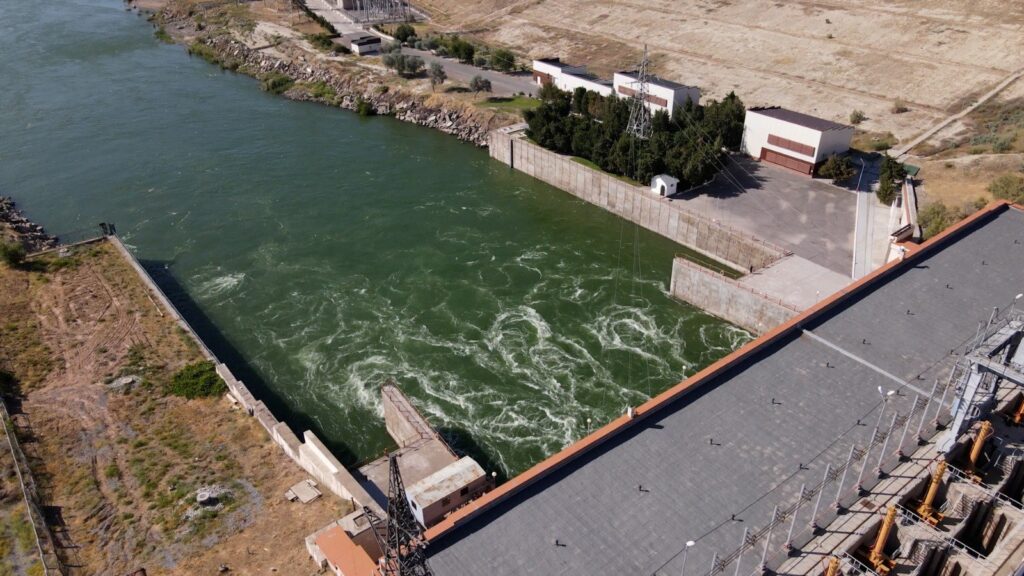
On August 9, Ministers of Energy of Kyrgyzstan and Tajikistan agreed to a plan to test overhead lines, transformers, and substations prior to launching the Central Asia-South Asia (CASA-1000) electricity transmission project, scheduled for completion by the end of 2024. The construction of a 500 kV transmission line with a length of 456 kilometers is now nearing completion in Kyrgyzstan. All of the supports have been installed and 428 km of the 456 km of the transmission line have been strung. The remaining section will be finished before the end of August 2024. The CASA-1000 project aims to connect the energy systems Kyrgyzstan and Tajikistan with those of Afghanistan and Pakistan and through the new infrastructure, transport 1,300 megawatts of surplus electricity from Central Asia to high-demand electricity markets in South Asia. With spring and summer rainfall and significant water flow from the mountains, hydropower-rich Kyrgyzstan and Tajikistan produce surplus electricity during the summer. At the same time, neighboring South Asia, Afghanistan and Pakistan experience chronic electricity shortages, especially during the summer months. By connecting the four countries through a shared electricity transmission system, Kyrgyzstan and Tajikistan can sell clean hydropower-produced surplus electricity in the summer months to Afghanistan and Pakistan.

Central Asian Countries and Japan Hold Business Forum

Kazakhstan’s capital, Astana, hosted a business forum on August 9 as part of the "Central Asia + Japan" dialogue. The forum, which brought together more than 450 representatives from Central Asian countries and Japan, focused on strengthening economic ties and expanding cooperation in digitalization, transport and logistics, agriculture, and heavy industry. At the forum, over 30 bilateral documents were signed between companies and organizations from Kazakhstan, Kyrgyzstan, Tajikistan, Turkmenistan, and Japan on joint projects in infrastructure, science, technology, and other key areas. Documents signed between Kazakhstan and Japan include, among others, an agreement between the JSC Development Bank of Kazakhstan and Japan Bank for International Cooperation to finance joint projects in sectors such as energy (including alternative energy), infrastructure (including transportation), machine engineering, and the food industry. The Japanese bank is ready to invest $200 million. The company Kazakh Invest and Japanese company Fitech agreed to cooperate to produce fire-resistant materials in Kazakhstan and export the goods produced to other countries. JSC KazIOR and FUJIFILM signed a memorandum of understanding to develop modern mobile medical complexes for radiology, mammography, and endoscopy. LLP Kazakhmys Corporation, LLP Eurasian Machinery, and Hitachi Construction Machinery signed a memorandum of cooperation to develop a new mining project. Speaking at the business forum, Kazakhstan’s Prime Minister Olzhas Bektenov focused on the interaction of Central Asia and Japan in the transfer of advanced technologies and manufacture of products with high added value, noting the possibility of creating joint innovation clusters, technology parks, and incubators. Bektenov also urged the expansion of partnerships in developing rare earth metal deposits and implementing joint projects in the transport and logistics industry, emphasizing that Central Asia's transit potential opens up great opportunities for Japanese exports and imports.

Is Kazakhstan Preparing to Take on the Oil Consortium “Whales”?

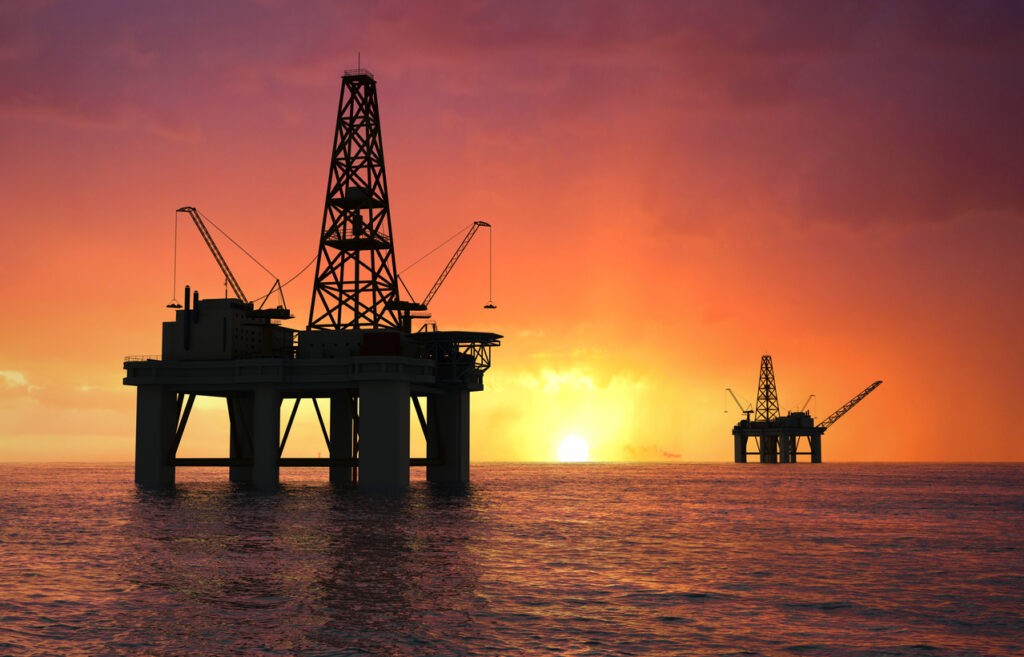
The filed lawsuits and environmental claims totaling $159.6 billion against the consortiums operating the Kashagan and Karachaganak fields reflect the Kazakhstani government’s intention to revise the largest oil & gas contracts.   Kazakhstan, due to drought in Central Asia and a drop in oil production after the expiration of major oil & gas contracts by 2040, will likely look like Arrakis, the fictional desert planet from Dune: Part Two over whose valuable commodity the Great Houses struggle. Meanwhile, the Dune sandworms, which produce the spice needed by all the planets, resemble the consortiums developing the Tengiz, Karachaganak, and Kashagan fields – just as huge and just as rare, with almost no such production sharing agreements (PSAs) with 40-year stabilization contracts left in the world. In Kazakhstan, the three operators are known as the “three whales.”   What’s going on At the beginning of April 2024, Bloomberg published an article about the claims exceeding $16.5 billion brought forward by Kazakhstan, through PSA LLP, against the consortiums North Caspian Operating Company (NCOC), which is developing the offshore Kashagan field, and Karachaganak Petroleum Operating (KPO). The environmental regulator for the Atyrau region has additionally filed a claim for $5.1 billion against NCOC, while another lawsuit for $138 billion of lost revenue has been launched. Consortium Amount of PSA claim Environmental fine Total NCOC $13 billion + $138 billion $5.1 billion $156.1 billion KPO $3.5 billion $3.5 billion   The total amount is possibly the largest in the world for the oil & gas sector. Since 2016, PSA LLP has been the authorized state institution in the production sharing agreements for NCOC, KPO, and the Dunga project (previously owned by Total E&P Dunga GmbH; in November 2023, the state-owned KazMunayGas bought the TotalEnergies stake for an estimated $300 million). Kazakhstan’s Ministry of Energy is currently entrusted to run PSA LLP, while the stakes in Karachaganak and Kashagan are held by KazMunayGas (KMG) and the sovereign wealth fund Samruk-Kazyna (SK). The international arbitration claims followed inspections in 2013-20 that revealed costs not agreed upon with the Kazakhstani government (costs are reimbursed from oil revenues), along with failure to hit planned oil production targets and violations during tenders, etc. The initial amount of the lawsuit against NCOC was raised from $13 billion to $15 billion. The new claim for $138 billion relates to lost revenue “reflecting the calculation of the value of oil production that was promised to the government but not delivered by the field developers,” Bloomberg reported, citing sources familiar with the matter. The $5.1 billion fine levied by regional environmental regulators against NCOC has to do with the storage of excessive amounts of sulfur on site (more than a million tons more than permitted), as well as 10 other Administrative Code violations. Later, however, a court partially satisfied the consortium’s appeal. Deputy General Director of PSA LLP Nurlan Serik has made clear that Kazakhstan intends to challenge the consortium’s costs and failure to fulfil plans only through courts. According to various estimates, about $60...

Uzbekistan and Kazakhstan Aim for $10 Billion Trade Volume

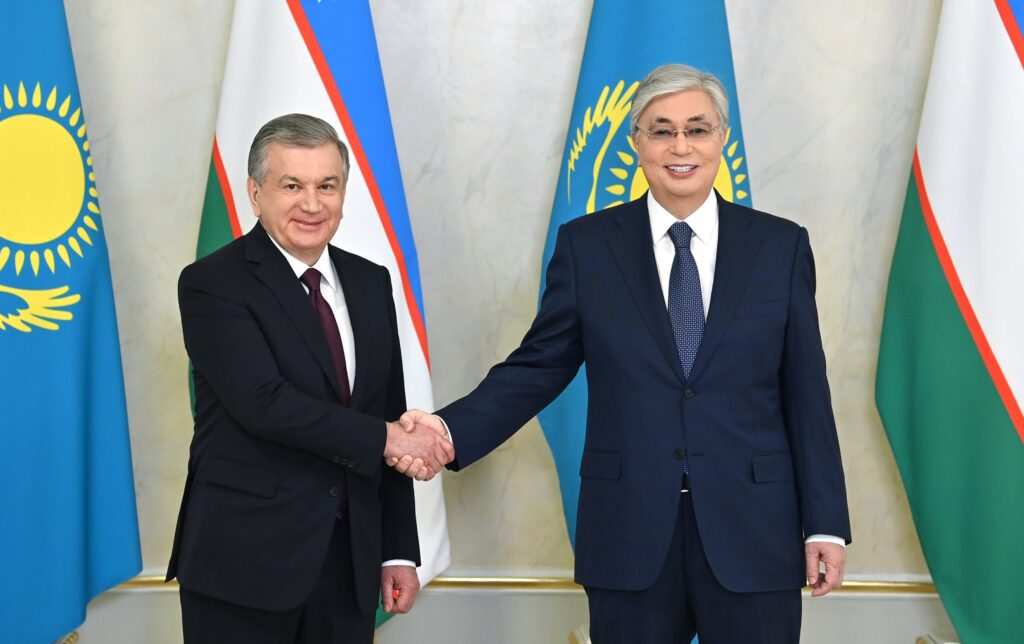
Following on from our previous report on the President of the Republic of Uzbekistan's current visit to Kazakhstan, on August 8, a meeting was held between Shavkat Mirziyoyev and the President of the Republic of Kazakhstan, Kassym-Jomart Tokayev, at the residence in Аkorda. Meetings of the Intergovernmental Commission, the business forum, and several cultural events were also held on the eve of the visit. A strategic partnership and alliance program until 2034 has been prepared, and a council chaired by the heads of foreign policy agencies is being established. In recent years, the volume of trade has doubled, the number of joint ventures has increased five-fold, the volume of cargo transportation is increasing, and large cooperation projects are being implemented. At the meeting, the presidents supported a further comprehensive cooperation program and the establishment of an inter-parliamentary forum with the participation of the chambers of the two countries' parliaments. Before the current summit, a portfolio of new deals and contracts with a total value of $7 billion was initiated to develop industrial cooperation which includes projects in energy, transport and logistics, metallurgy, textiles, agriculture, and construction, as well as inter-regional projects. The highest priority was given to implementing strategic regional projects as soon as possible, such as the Kambarata HPP-1. It was also agreed that the first meeting of the two countries' regional leaders in Samarkand will be held this fall. In unison, the first session of the Supreme Interstate Council was held under the president's chairmanship. The two countries' leaders noted the adoption of the strategic partnership and alliance program for 2024-2034, stating that the volume of trade should increase to $10 billion in the coming years, and for this purpose, a separate program will be adopted by the end of the month. Special attention was paid to the mutual formation of markets and eliminating existing restrictions. At the end of the Supreme Interstate Council's first meeting, a ceremony was held, wherein the presidents signed the decisions of the Supreme Interstate Council on approving the strategic partnership and alliance program for 2024-2034 and establishing the Council of Foreign Ministers. In addition, agreements were reached on mutual cooperation in agriculture, health, and the economy. A memorandum on establishing the Uzbekistan-Kazakhstan Council of Experts, protocols on cooperation in the regulation of natural monopolies and competition policy, and a plan for several other activities were also signed. At the end of the bilateral negotiations, branches of the Tashkent Institute of Irrigation and Agricultural Mechanization Engineers in Almaty (Kazakhstan) and the South Kazakhstan State University named after Mukhtar Avezov in Chirchik (Uzbekistan) were ceremonially opened. The leaders of Uzbekistan and Kazakhstan also took part in a ceremony dedicated to the arrival of the first freight train on the route Xi’an–Khorgos–Almaty–Saryogoch–Tashkent. Presidents Mirziyoyev and Tokayev unveiled a statue in Astana of the founder of the Uzbek literary language, poet and great thinker, Alisher Navoi. In 2020, the late Kazakh poet Nesipbek Aytuli translated and published Navoi's most important work, Khamsa, into Kazakh, and President Tokayev...

Uzbekistan’s Reserves Reach $37.4 billion

As of August 1, Uzbekistan's official reserves reached $37.4 billion, 1.06 billion dollars more than a month ago, according to a Kun.uz report based on data from the Central Bank of the Republic of Uzbekistan. This reserve value is a record indicator for the period after 2018 when data disclosure began. Still, $37.4 billion is enough to cover 12 months of imports. The increase in the value of international reserves is mainly due to the continued rise in gold reserves and prices. The physical volume of gold in reserves increased by 310,000 ounces (9.64 tons) to 12.05 million ounces (374.8 tons), and the value reached $29.15 billion (+$1.84 billion). According to the Central Bank, the impact of the increase in the price of gold from $2,327.6 to $2,419.6 in July amounted to $1.11 billion. In July, foreign currency assets decreased by $781.5 million to $7.69 billion and since the beginning of the year, have declined by $1.68 billion, partly affected by the extinguishment of the sovereign Eurobonds issued in 2019, worth $500 million. The value of securities purchased by the Central Bank was 35.3 million dollars.

Israeli Companies Ready to Invest in Construction of Reservoirs in Kazakhstan

Israeli companies have expressed interest in participating in the construction and reconstruction of reservoirs in Kazakhstan as well as their readiness to provide the country with modern flood forecasting and protection systems. The announcement was made during a meeting on August 8 between Kazakhstan’s Minister of Water Resources and Irrigation Nurzhan Nurzhigitov, and a consortium of leading Israeli companies in the field of water resources management, headed by Managing Partner of Value LBH and Chairman of the Board of the investment company Dan Capital, Shimon Ben-Hamo. Discussions  focused on potential cooperation in various areas of the water industry, from the construction and reconstruction of water facilities to joint personnel training, as well as the introduction of  water-saving technologies, water purification and reuse, drinking water quality control, and automation of water distribution and metering. Reporting on the meeting, Minister Nurzhigitov commented: "Israeli companies have extensive experience and modern technologies for high-quality water management. Some companies have been successfully operating in Kazakhstan for a long time. We intend to achieve the most efficient water use in all sectors, so we count on mutually beneficial cooperation.” The Kazakh Ministry of Water Resources and Irrigation plans to build 20 new reservoirs with a 2.5 billion cubic meters capacity by 2030. Once completed, the project will reduce the country’s dependence on water flowing from upstream Kyrgyzstan and China by 25%, help combat drought in southern Kazakhstan, and reduce the threat of flooding in 70 rural settlements with a total population of nearly 140 thousand people. In addition, irrigation will be provided for a further 250 thousand hectares of farmland. Plans are also in place to reconstruct 15 existing reservoirs with a total capacity of 1.9 billion cubic meters.