• KGS/USD = 0.01144 0%
  • KZT/USD = 0.00215 0%
  • TJS/USD = 0.10599 -0.28%
  • UZS/USD = 0.00008 0%
  • TMT/USD = 0.28571 0%
  • KGS/USD = 0.01144 0%
  • KZT/USD = 0.00215 0%
  • TJS/USD = 0.10599 -0.28%
  • UZS/USD = 0.00008 0%
  • TMT/USD = 0.28571 0%
  • KGS/USD = 0.01144 0%
  • KZT/USD = 0.00215 0%
  • TJS/USD = 0.10599 -0.28%
  • UZS/USD = 0.00008 0%
  • TMT/USD = 0.28571 0%
  • KGS/USD = 0.01144 0%
  • KZT/USD = 0.00215 0%
  • TJS/USD = 0.10599 -0.28%
  • UZS/USD = 0.00008 0%
  • TMT/USD = 0.28571 0%
  • KGS/USD = 0.01144 0%
  • KZT/USD = 0.00215 0%
  • TJS/USD = 0.10599 -0.28%
  • UZS/USD = 0.00008 0%
  • TMT/USD = 0.28571 0%
  • KGS/USD = 0.01144 0%
  • KZT/USD = 0.00215 0%
  • TJS/USD = 0.10599 -0.28%
  • UZS/USD = 0.00008 0%
  • TMT/USD = 0.28571 0%
  • KGS/USD = 0.01144 0%
  • KZT/USD = 0.00215 0%
  • TJS/USD = 0.10599 -0.28%
  • UZS/USD = 0.00008 0%
  • TMT/USD = 0.28571 0%
  • KGS/USD = 0.01144 0%
  • KZT/USD = 0.00215 0%
  • TJS/USD = 0.10599 -0.28%
  • UZS/USD = 0.00008 0%
  • TMT/USD = 0.28571 0%

Viewing results 1897 - 1902 of 3398

Uzbekistan Moving Closer Towards WTO Membership

Uzbekistan is accelerating its efforts to join the World Trade Organization (WTO). “Uzbekistan remains steadfast in its commitment to joining the World Trade Organization, and we are diligently exerting every possible effort to make meaningful progress,” the country's deputy prime minister Jamshid Khodjaev has said. Khodjaev is also the chair of Uzbekistan's commission on WTO accession. The South Korean ambassador to the United Nations and other international organizations in Geneva, Yun Seong Deok, is a prominent supporter of the country's move towards WTO membership, commenting that “the tone of engagement on both bilateral and multilateral tracks has improved substantially.” Since the commission's seventh meeting, Uzbekistan had adopted several legal acts to align its trade regime with WTO rules in various areas, including on state duties for company registration, intellectual property rights, technical barriers to trade, sanitary and phytosanitary measures, and customs valuation.

Rome Hosts Third Central Asia + Italy Ministerial Meeting

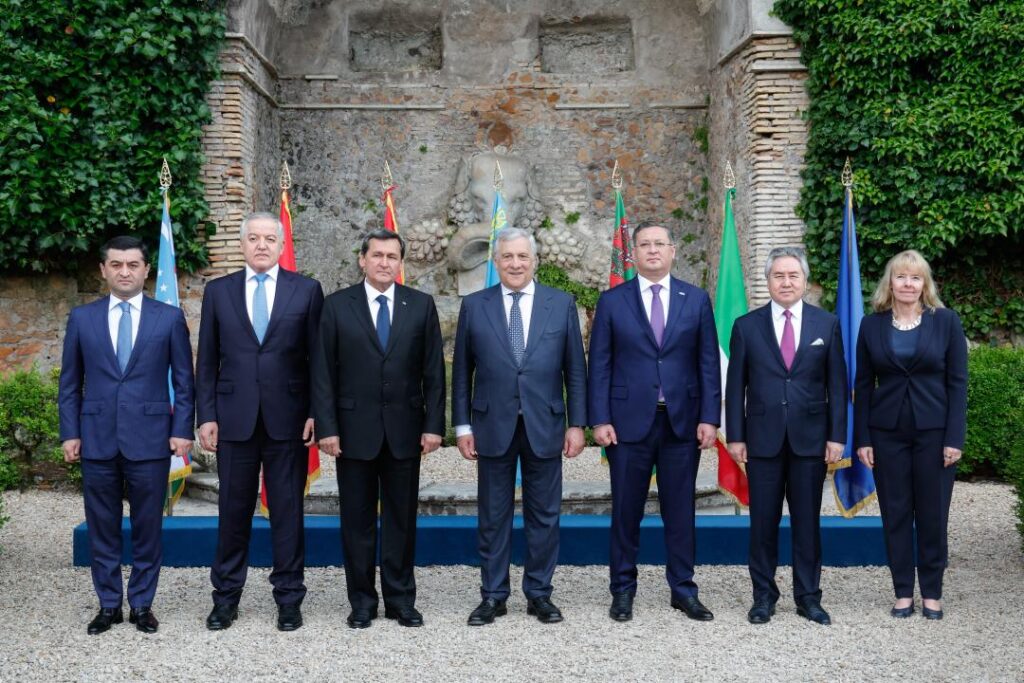
On May 29, Italy’s Deputy Prime Minister and Minister of Foreign Affairs and International Cooperation Antonio Tajani, and Foreign Affairs Ministers of Kazakhstan, Kyrgyzstan, Tajikistan, Turkmenistan, and Uzbekistan convened at the 3rd Central Asia + Italy Ministerial Meeting in Rome. The wide-ranging agenda focused on identifying new areas and practical measures regarding cooperation between Italy and Central Asia in transportation, logistics, green energy, global connectivity, higher education, and the fight against terrorism and drug trafficking. Calling for proactive collaboration in transport interconnectivity, energy, climate change, and education, Antonio Tajani commented: “Italy views with great interest the opportunities presented to Italian companies in Central Asia. Establishing a strategic partnership with Central Asian countries and strengthening economic and industrial cooperation in the fields of water resources, the environment, and higher education is a priority.” Over the past year, the Italian Government’s promotion of relations with Central Asian countries has been demonstrated by business forums involving Uzbekistan in June 2023, Kazakhstan in January, and most recently, Tajikistan in April. In line with a strategy to grow diplomatic activity conducted by the Italian Ministry of Foreign Affairs at the instigation of Minister Tajani,  such initiatives aim to boost collaboration on regional projects concerning infrastructure, agriculture, machinery, and energy in Central Asia.    

Nuclear Power in Uzbekistan Has a Political Aspect – Economist Behzod Hoshimov

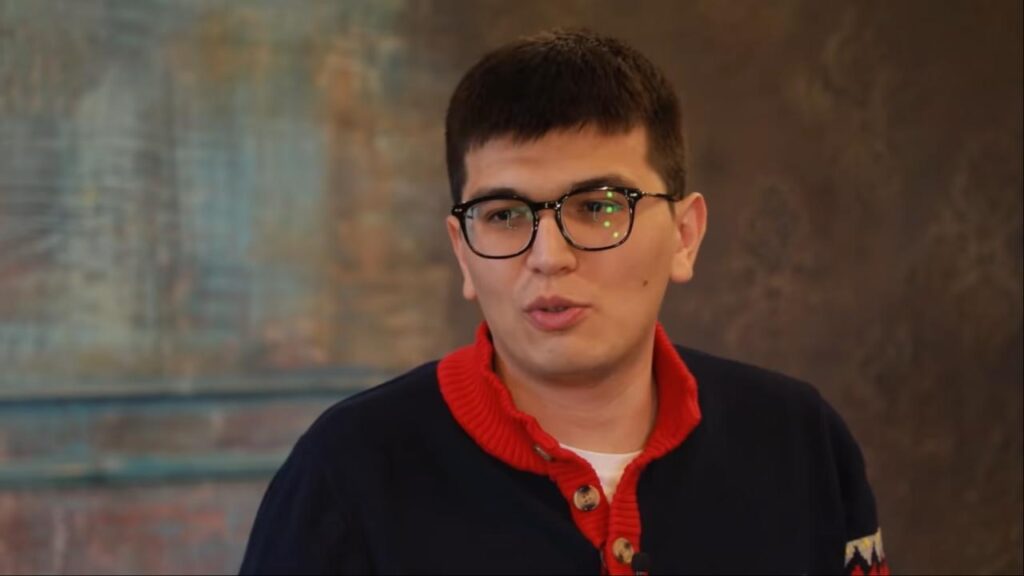
A Russian-built and managed nuclear power plant (NPP) is under construction in Uzbekistan's Jizzakh region. However, some experts are not convinced about the project's feasibility. One of them is Uzbek economist Behzod Hoshimov, who has been speaking recently about the economic and political aspects of Rosatom's foray into Uzbekistan. According to Hoshimov, the problem is not the lack of reform in the electricity and energy sectors, but rather poor policy and management. “Even now, without any nuclear power plants, we can import electricity or fuel for its production, and we can attract companies that produce solar energy at fairly normal prices. Therefore, the problem of "lack of electricity" results from artificially created, mismanaged, and wrongly constructed electricity policy. The construction of NPP is not a technological problem that can be solved,” the economist writes on his Telegram channel. He raises questions such as whether the decision to build a nuclear power plant was economically feasible, and how much money the Uzbek government will spend on its construction. “Will it be financed from other financial sources, including the state debt, and most importantly, if the state is building, how much will it cost the people of Uzbekistan?" The amounts intended to be used from all state and non-state financial sources must be fully and completely disclosed. This fiscal requirement is also defined in our constitution,” Hoshimov adds. “But more importantly, there are other conditions in the deal, which are more important than the station's price. We need to talk about them. It is very important who manages the station and at what price electricity is sold. In Turkey, Russia has built entirely at its own expense and made a deal for 12.5 cents per 1 kilowatt hour of energy. There is a reasonable question about whether we should take it under the same conditions. Today, if there are cheaper generation sources in Uzbekistan, how much more expensive nuclear energy is necessary?” Hoshimov has noted that there are also political aspects to the issue: “The second thing that applies to all state expenditures, especially large and important ones, is choosing a contractor. Did companies other than "Rosatom" participate in the tender? Countries like France and Japan have highly developed atomic energy, and they also build excellent stations. What did their companies offer to our government? Why "Rosatom?" The reason I ask this question is, of course, that there is no place for politics in such a thing. Europe has almost completely abandoned Russian energy – the reason for this was the full-fledged war in Europe. Once upon a time, Germany decided that Russian energy was cheap, not considering political calculations but relying only on economic calculations, and this decision cost a lot. But for a much smaller country like ours, the fact that the main contractor in the NPP is the Russian state and a state-owned enterprise should be a very big question.” He also points out: "If the Japanese and the Russians offer the same price, I would say that the Japanese should be...

Ten Thousand Hectares of Land in Tajikistan Left Without Water

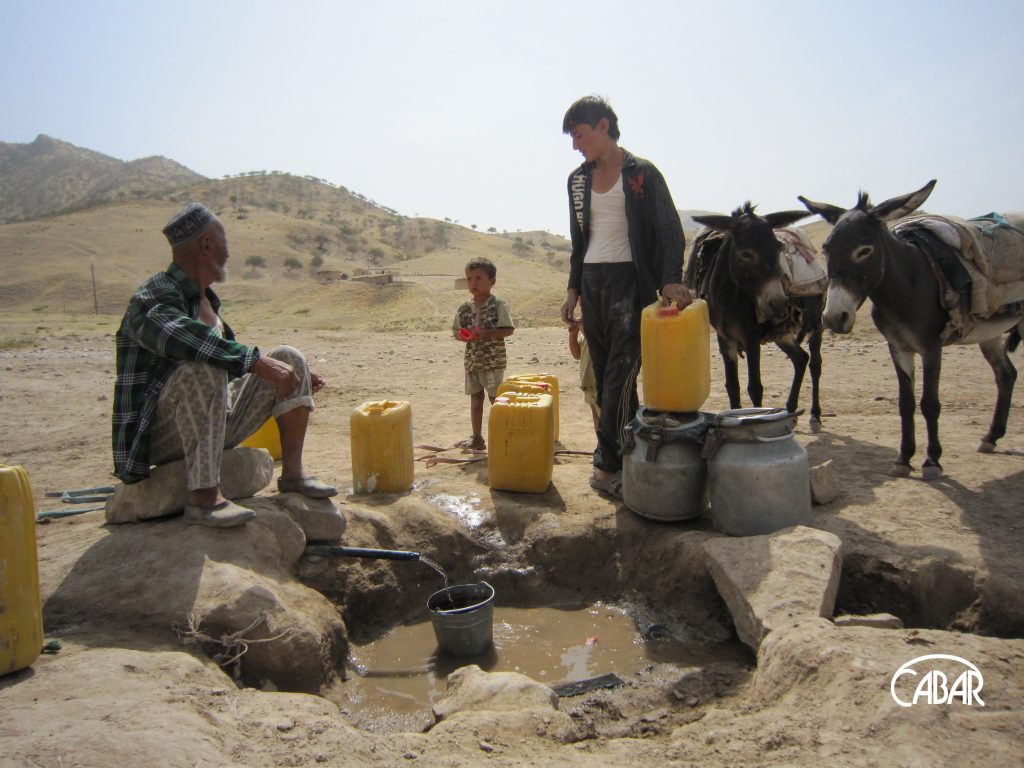
Asia-Plus reports that more than 10,000 hectares of irrigated land in Tajikistan's Khatlon region have not been irrigated due to the failure of pumping stations. Almost 900 hectares of irrigated land have fallen out of agricultural use. This situation was criticized by the country's president, Emomali Rahmon, at a meeting with leaders and civic figures from Khatlon region on May 25 . At the meeting in Dangara district Rahmon said: “We must increase the production of agriculture and agricultural products year by year, supply the consumer market of our country with food products at any time of the year, and constantly reduce the dependence of our country’s economy on the import of food products.” He also called on agriculture workers to fill the domestic consumer market with the most necessary goods, organizing its adequate backup, preventing unjustified price increases, establishing continuous operation of all sectors of the national economy, leaders, and responsible persons to approach with serious attitude and high responsibility. According to Rahmon, 18 pumping stations are not working in the Khatlon region, which has led to the dehydration of more than 5,000 hectares of land.

Fight Against Corruption Allows Kyrgyzstan to Increase State Budget

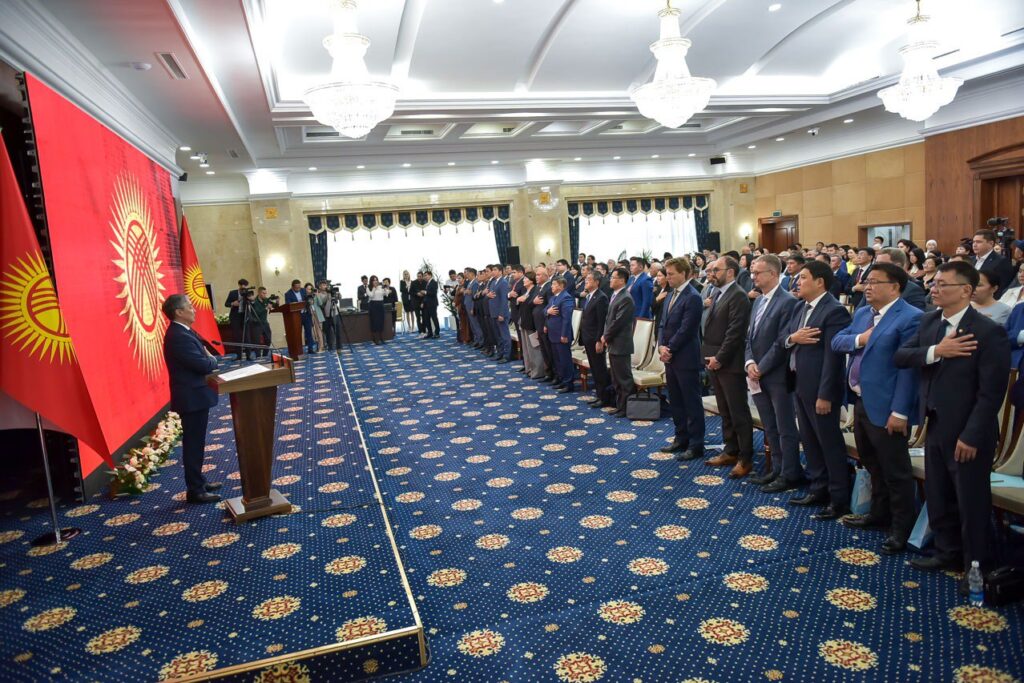
The head of the Kyrgyz Cabinet of Ministers, Akylbek Japarov, has said that thanks to the fruitful work of the government, “a new era in the financial sector of the Kyrgyz Republic has begun.” During a conference, which was attended by ministers, deputies, officials of various levels, representatives of the World Bank, Asian Development Bank, and other international organizations, Japarov spoke about the new monetary policy. According to him, in 2020, the consolidated budget amounted to 247.8 billion KGS ($2.8 billion), whereas in 2024, the budget is estimated at 670 billion KGS ($7.6 billion). In four years, the authorities were able to increase the state budget by almost 400 billion som ($4.5 billion). “The reason for such achievements was the elimination of corruption. The main disease was the Kumtor deposit. Dividends received from it from 1994 to May 2021 amounted to $100 million. Over the past two and a half years, we have made a profit of $300 million,” Japarov said. The head of the Cabinet emphasized that Kyrgyzstan's GDP has reached 1.4 trillion som ($15.9 billion), while at the time of the collapse of the USSR and independence, the republic's GDP was only 100 million som ($1.1 billion). “The growth of state budget revenues has become a solid basis for the implementation of policies to improve the socioeconomic situation of citizens,” Japarov summarized.  

The Geography of Labor: Where Do Central Asian Migrants Travel To?

Since February 2022, international observers have been predicting changes in labor migration in Central Asia. It is no secret that for 30 years Russia was the main attraction for labor resources in the region, and in the "noughties," Kazakhstan joined as a viable alternative. Over the past two years, the geography of labor migration from Central Asia has expanded somewhat, but still not to the extent that one could say that the region is slipping away from Moscow's economic influence. In Russia itself, despite growing anti-migrant sentiment after the terrorist attack at the Crocus City concert hall, the country's leadership has no intention of refusing to accept migrants from Central Asia. The current phase of Russia's economic development requires a constant inflow of labor resources, so Moscow is even talking about expanding the geography of sources of labor on an industrial scale, particularly to African countries. However, the movement of labor resources from Central Asia to the outside world is a process that benefits both the countries of origin of migrants and those who receive them. The region's countries shed their excess population, thus avoiding possible social explosions, while the receiving countries get workers willing to do low-paid and low-skilled labor. This is true for three of the five Central Asian countries. We do not consider Turkmenistan -- a republic closed to the outside world -- but labor migration from Kazakhstan is more like a "brain drain," which puts it on a par with Russia, which is experiencing similar problems. In the Central Asian republics, the topic of labor migration is still victimized, and the pejorative term "gastarbeiters" remains in common use. Thus, research on these processes is not permanent, which makes it difficult to work with statistical data. And since the largest receiving country is Russia, where chaos reigns regarding labor migration, we can only operate with approximate data. Uzbekistan Let us start with Uzbekistan, the most populous republic in Central Asia. Uzbekistan does not have the same opportunities as Kazakhstan with mineral resources, primarily oil. In Uzbekistan, the rate of labor migration abroad remains the fastest; only the pandemic has been able to affect it. Before the pandemic, in 2019, according to official data, more than 2.5 million Uzbek citizens were listed as labor migrants. In 2021, this number dropped to 1.67 million people, but now, the number of those who left for work has recovered. The main labor migration flows come from Russia - 71%, Kazakhstan - 12%, South Korea - 4% and Turkey - 3%. In the first quarter of 2024, cross-border remittances to Uzbekistan increased from $2.3 billion to $2.5 billion. Russia's share dropped to 68% (78-87% in previous years). Kyrgyzstan Russia, Turkey, and Kazakhstan are also the main destinations for migrants from Kyrgyzstan. South Korea and the UK have been added to the list recently. According to open-source data, in 2022, 1.2 million labor migrants from Kyrgyzstan were registered in Russia, with about 30,000 in Turkey and Kazakhstan. In Kyrgyzstan, labor migration has become important...