• KGS/USD = 0.01144 0%
  • KZT/USD = 0.00201 0%
  • TJS/USD = 0.10448 -0.19%
  • UZS/USD = 0.00008 0%
  • TMT/USD = 0.28490 0%
  • KGS/USD = 0.01144 0%
  • KZT/USD = 0.00201 0%
  • TJS/USD = 0.10448 -0.19%
  • UZS/USD = 0.00008 0%
  • TMT/USD = 0.28490 0%
  • KGS/USD = 0.01144 0%
  • KZT/USD = 0.00201 0%
  • TJS/USD = 0.10448 -0.19%
  • UZS/USD = 0.00008 0%
  • TMT/USD = 0.28490 0%
  • KGS/USD = 0.01144 0%
  • KZT/USD = 0.00201 0%
  • TJS/USD = 0.10448 -0.19%
  • UZS/USD = 0.00008 0%
  • TMT/USD = 0.28490 0%
  • KGS/USD = 0.01144 0%
  • KZT/USD = 0.00201 0%
  • TJS/USD = 0.10448 -0.19%
  • UZS/USD = 0.00008 0%
  • TMT/USD = 0.28490 0%
  • KGS/USD = 0.01144 0%
  • KZT/USD = 0.00201 0%
  • TJS/USD = 0.10448 -0.19%
  • UZS/USD = 0.00008 0%
  • TMT/USD = 0.28490 0%
  • KGS/USD = 0.01144 0%
  • KZT/USD = 0.00201 0%
  • TJS/USD = 0.10448 -0.19%
  • UZS/USD = 0.00008 0%
  • TMT/USD = 0.28490 0%
  • KGS/USD = 0.01144 0%
  • KZT/USD = 0.00201 0%
  • TJS/USD = 0.10448 -0.19%
  • UZS/USD = 0.00008 0%
  • TMT/USD = 0.28490 0%

Viewing results 1975 - 1980 of 2928

More Central Asian Companies Added To Russia-Related Sanctions Lists

On February 23 the U.S. government published a new package of sanctions, which this time included not only Russian enterprises, but also companies from Kazakhstan, Uzbekistan and Kyrgyzstan. The Ministry of Trade and Integration (MTI) of Kazakhstan said that the U.S. sanctions lists and a number of European countries included Elem Group LLP and Da Group 22 LLP. Elem Group LLP is registered as a company engaged in wholesale trade in electronic and telecommunications equipment and components. The LLP's goods, such as microchips, analog-to-digital converters, and the like are known to be re-exported. Da Group 22 was founded in 2022 and is a small business. Officially, the organization is engaged in wholesale trade of electronic and telecommunication equipment and its related componentry, and tax deductions for the year on average exceed 173 million tenge (~$385,000). The MTI noted that the companies' entry into the restricted lists was known in advance. "Kazakh companies have previously [been in] dialogue with external partners and expressed their interest in continuing cooperation," said the MTI's press service. It's also been clear that neither Elem Group LLP nor Da Group 22 LLP carried out any import and/or export trade since 2023. Moreover, Elem Group LLP is currently in the process of liquidation. Representatives of the MTI specified that Kazakhstani companies do not apply any sanctions towards Russia, but also try to avoid using their resources to circumvent Western sanctions. A Kyrgyz privately held company, UKON, also found itself on the new U.S. sanctions list. According to the Ministry of Justice of Kyrgyzstan, UKON was registered in August 2022, and its sole founder and manager is Mehti Gafar-Zade (aka Mehti Fikret). This is not the first company from Kyrgyzstan to be blacklisted by the U.S. for helping Russia circumvent sanctions. Last year, the companies Weitmann Handeln Allianz LLC, Tro.Ya, RM Design and Development, GTME Technologies, Progress Leader and Cargoline also fell under sanctions. The State Committee of National Security of Kyrgyzstan stated that neither the state nor any state structures or companies intentionally contribute to the violation of compliance regimes stemming from sanctions imposed on Russia. The special service also noted that private companies on the sanctions lists may not have known who the end users of their products were -- and thus may have been unknowingly involved in the supply of sanctioned goods to Russia. Among others, a company from Uzbekistan, Mvizion, has fallen under the restrictions. In November 2023 it had already fallen under US sanctions, and in December the UK also blacklisted it. Mvizion characterizes its activity as wholesale of electronic and telecommunication equipment and spare parts. It was registered in June 2022 in the name of Igor Ivlev. Last summer, a number of European countries had already imposed sanctions on Uzbek companies Alfa Beta Creative and GFK Logistic Asia. Two months before that, the U.S. Treasury Department imposed restrictions against them for purchasing goods for the Russian defense industry in circumvention of sanctions. The new U.S. sanctions list, which was published on February...

Kazakhstan Set to Drill World’s Deepest Well

Kazakhstan plans to become the country to set a new record for the deepest well in the world. Details regarding the project were revealed by Kazakhstan's Ministry of Industry and Construction of Kazakhstan, reports lsm.kz The specialized department said that the project called Eurasia is divided into three stages. The first was completed in 2022, at an expense of $5.9 million to the federal budget. Specialists then analyzed and revised all available geological and geophysical interpretations. Based on the results of the first phase, experts identified the most promising zones for further development. According to the Ministry, about $500-550 million more is needed to execute the next two stages of work. The second phase of drilling will last about three years and will be financed by investor capital. The third phase of the project will also last three years, and will be realized at the expense of private investors. At the same time, the specialized department reported that today they have not yet found an investor for the project. "Various options for attracting funds are being considered. So far, there are no specific options and amounts of funding for 2024," reported the Ministry. The Eurasia well will be 15 km deep, allowing for a more detailed study of geological sections, and assessment of the undiscovered resource potential of the Caspian Depression in the search for hydrocarbons. Currently, the world's deepest circular mine is considered to be a well in Russia at a depth of about 13 km, which is equal to the height of 15 Burj Khalifas, the Dubai skyscraper which considered to be the tallest in the world. Second place in terms of well depth is occupied by OP-11, which is also located in Russia. The depth of this is 12.3 kilometers. It was drilled in just two months and opened in January 2011, becoming the deepeat in the world at the time. In third-place is the BD-04A well in Qatar, which was drilled in May 2008 at the Al-Shaheen oil field in just 36 days. One other well worthy of mentioning is also located in Russia - the Kola ultra-deep well at 12.2 km, which was drilled back in 1970, in the days of the USSR. Initially, it was planned that the well would reach a depth of 15 km, but due to high temperatures of up to 230°C, drilling had to be stopped. Thanks to the Kola well, many pieces of unique scientific data were obtained, and the two-layer model of the Earth's crust structure was questioned. Now, the Kola ultra-deep was mothballed in 1995 due to a lack of funding.

The Development and Drivers of Transport and Logistics in Kazakhstan

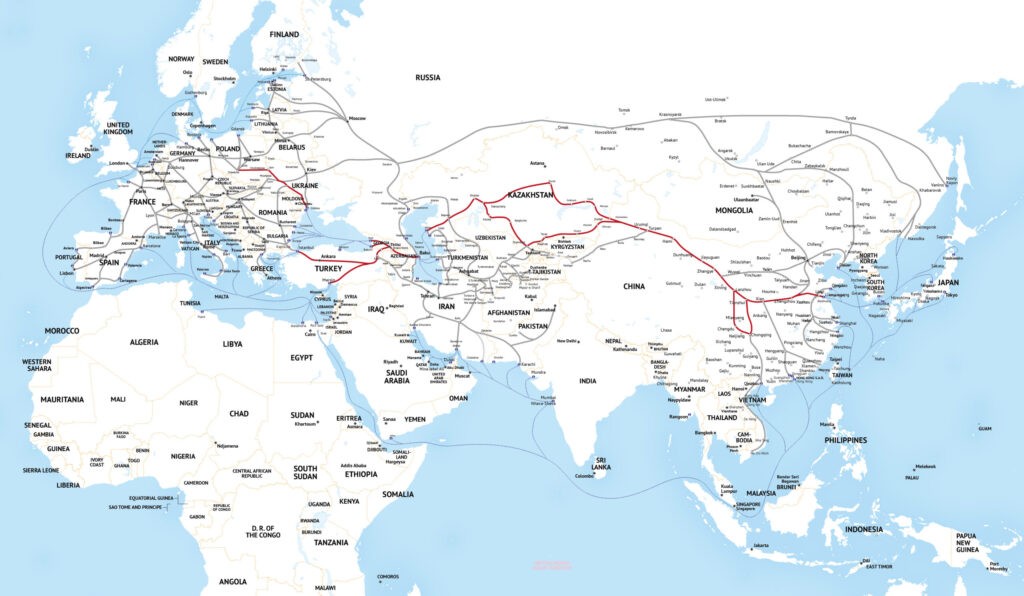
The challenging geopolitical situation in the region, combined with sanctions pressures, has ruptured traditional transport and logistics chains. Finding itself sandwiched, Kazakhstan has had to actively build new routes for transportation and freight, and to diversify its own suppliers. Measures previously taken to develop the transport and logistics industry has made it possible to solve these problems to some extent, though it still faces many challenges ahead. Kazakhstan’s transport and logistics industry plays an important role in the country’s economy and attracts cargo flows. To transform the country into a transport and transit hub – one of the government’s declared strategic objectives – a number of large-scale measures are being taken today, with investments in the industry of about KZT1.8 trillion (U$4 billion), which are already bearing fruit. Last year, about 29 million tons of freight passed through Kazakhstan, up 21% year-on-year, the lion's share of which was transported by rail. Indeed, railways are slated to lead the country’s transit development. To further increase cargo flow, boost efficiency and, most importantly, expand the capacity of railroads, three large-scale projects were launched in Kazakhstan last year: the construction of a railway line bypassing the Almaty station, as well as two other lines – Darbaza-Maktaaral and Bakhty-Ayagoz. Over the next three years, more than 1,300 km of new rail lines will be laid. The projects aim not only at increasing transit traffic through Kazakhstan, but also expanding the country’s export potential and removing existing bottlenecks. Besides modernizing infrastructure, the industry faces many other tasks to spur transit traffic, including updating rolling stock, putting in place modern digital services, establishing competitive tariff rates for the transport of transit freight, etc. To support cargo flows by road, the most used option, the construction and reconstruction of federal and local highways continues. In 2023, over 10,000 km of road was built or repaired. Such large projects as the BAKAD (Almaty ring road) and the Kandyagash-Makat and Usharal-Dostyk highways were completed. In the coming years, several road projects along federal and regional networks are planned, comprising a total length of about 9,000 km. More attention is to be paid to the quality of the roads under construction, which has been known to raise questions among motorists. Kazakhstan’s maritime transport industry has also seen much development. In this regard, in the near future the creation of a container hub is planned at the Aktau seaport, along with the reconstruction of its docks and an upgrade of handling equipment. Dredging work is also to be done. The port of Kuryk is also being developed through the construction of a multi-functional terminal. Taken together, this will boost the throughput capacity of Kazakhstan’s seaports by 10 million tons, with container capacity rising to 300,000 TEUs per year. This is especially important in the context of the active development of alternative trade routes, in particular the Trans-Caspian International Transport Route (TITR) and the International North-South Transport Corridor (INSTC), for which both seaports will be used. The potential of these routes is...

Kyrgyz Re-Exporters of Chinese Cars Will Soon Pay Higher Duties

The Russian authorities have introduced additional customs duties for cars imported from Eurasian Economic Union (EAEU) countries, according to the Ministry of Economy and Commerce of Kyrgyzstan. The ministry says that the Russian government amended the rules of collection, calculation, payment and recovery of the utilization fee for wheeled vehicles and trailers. From April 1st 2024, all citizens importing cars into Russia which were previously customs cleared in the EAEU countries will have to pay an additional utilization fee. This fee is charged for the ecological recycling of the vehicle at the end of its service life. "This approach will avoid situations where citizens and companies importing cars cleared in the EAEU countries receive unjustified advantages compared to car owners doing so in Russia and paying the taxes and fees established by law in full," reads a statement on a Russian government website. The EAEU includes five countries: Russia, Kyrgyzstan, Kazakhstan, Armenia and Belarus. The EAEU guarantees a single customs zone spanning the entire territory of these countries, meaning that import and customs clearance for a car in one of the EAEU countries means one can subsequently operate and sell it in any other EAEU country. Until now, Kyrgyz re-exporters of cars - mainly from China - have been successfully exploiting this loophole, as there is no utilization fee to pay when a car is cleared in Kyrgyzstan. As a result, cars imported from China and other countries cleared customs in Bishkek and were then freely shipped to automobile markets in major Russian cities. These cars imported to Russia from Kyrgyzstan are obviously cheaper than cars imported from other countries, including those imported directly by the manufacturer. The leader among countries importing new cars to Russia in 2023 was China, while Kyrgyzstan ranked second, despite the fact the Kyrgyz Republic does not have its own car manufacturing factories. According to Russian customs data, 13,600 cars were imported from Kyrgyzstan to Russia in December of 2023 alone. In total, Kyrgyzstan exported more than 70,000 cars to Russia last year. The so-called recycling fee was introduced by Russia in 2012, when the country joined the WTO. In August 2023, in order to protect Russian car manufacturers, the utilization fee in Russia was increased roughly nine-fold, forcing buyers to search for cheaper duty-free cars such as those imported via Kyrgyzstan.

Breaking Down Kazakhstan’s Claims Against International Oil Consortiums

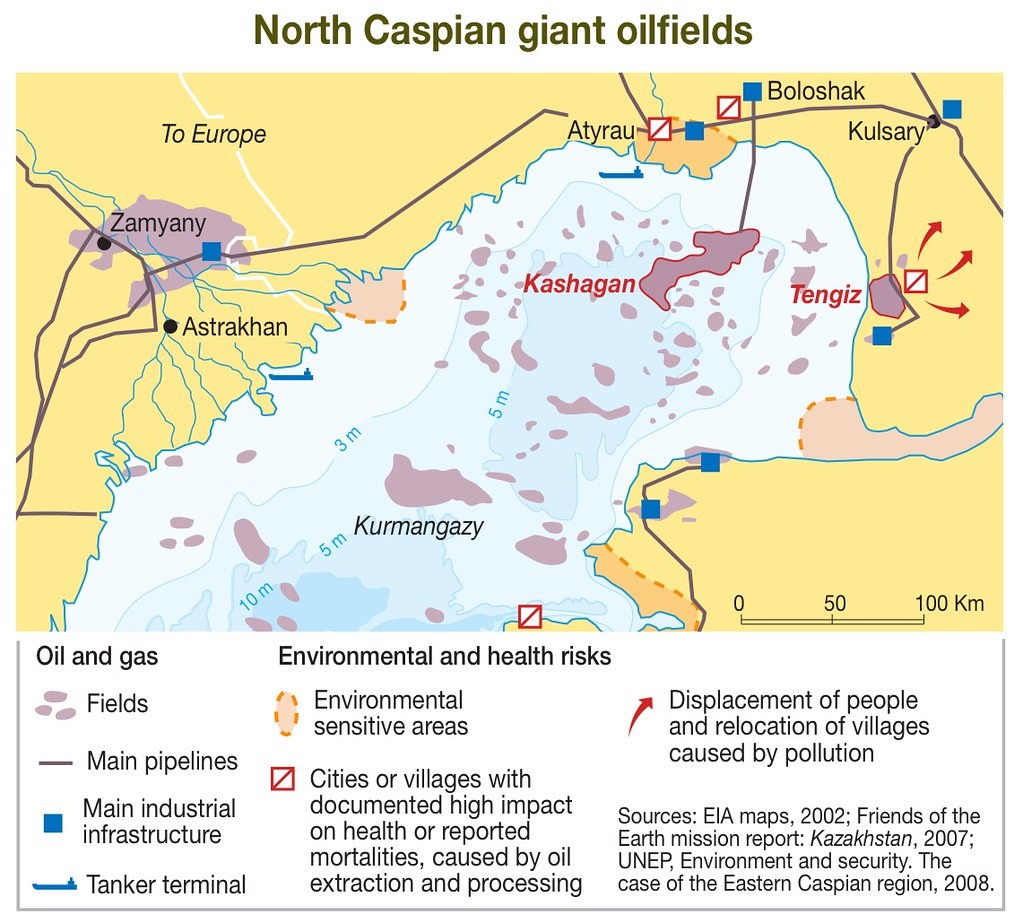
The total amount of claims brought against the consortiums, North Caspian Operating Company (NCOC) and Karachaganak Petroleum Operating (KPO) is the largest in the history of Kazakhstan. In March 2023, PSA LLP, the authorized state institution overseeing these projects, brought forward claims in international arbitration in relation to Kashagan and Karachaganak for $13.5 billion and $3.0 billion, respectively. In addition, the Atyrau Region environmental regulator filed a claim for $5.1 billion against the NCOC consortium for storing too much sulfur on site, discharging wastewater without treatment, etc. The claims of PSA LLP cover the period 2010-19 and relate to the oil consortiums’ costs for carrying out large projects, as well as tenders and insufficient work completed. The shareholders of NCOC, which is developing the offshore Kashagan Field, include: KMG Kashagan (16.877% stake), Shell Kazakhstan Development (16.807%), Total EP Kazakhstan (16.807%), Agip Caspian Sea (16.807%), ExxonMobil Kazakhstan (16.807%), CNPC Kazakhstan (8.333%) and INPEX North Caspian Sea (7.563%). Their total investments over the period have not been disclosed, but, according to various estimates, exceed $60 billion – meaning the state is currently calling into question about 23% of all costs. The KPO consortium is Shell (29.25%), Eni (29.25%), Chevron (18.0%), Russia’s Lukoil (13.5%) and Kazakhstan’s state-owned KazMunayGas (10.0%). Investments in this oil and gas condensate field are estimated at $27 billion, hence the filed claim is significantly smaller both in absolute terms and as a percentage of costs, standing at about 11%. A production sharing agreement was signed in 1997 for Karachaganak and in 1998 for Kashagan, with the contracts to be in effect for 40 years. In 2022, the sole participant in PSA LLP became Samruk-Kazyna Trust Corporate Fund, part of the state holding National Welfare Fund Samruk-Kazyna, while Kazakhstan’s Ministry of Energy is currently entrusted to run PSA LLP. NCOC and KPO dominate the industry through control of three fields. Tengiz, Kashagan and Karachaganak are the largest oil and gas fields in Kazakhstan. The country’s oil and gas condensate production in 2023 amounted to 89.9 million tons (about 1.8 million barrels per day), with the share of the “three whales” – as these projects are called – accounting for 67% of oil production: Tengiz with 28.9 million tons, down 1% versus the 2022 level; Kashagan with 18.8 million tons, a 48% increase; Karachaganak with 12.1 million tons, up 7% year-on-year. The stabilization contract for Tengiz was one of the first signed at the dawn of Kazakhstan’s independence in 1993, also for a term of 40 years, meaning it should be the first to expire in 2033. The shareholders of the Tengizchevroil JV are Chevron (50%), ExxonMobil (25%), KazMunayGas (20%) and Lukoil (5%). After completion of its FGP (Future Growth Project), Tengiz should produce about 900,000 barrels per day, a significant figure even by world standards. It is surprising that Kazakhstan has not yet raised or voiced any claims against TCO, even though the FGP budget has swelled from an initial $12 billion to $25 billion – due to the addition...

Peace Following Kyrgyz-Tajik Clashes Allows Hydro Engineers to Visit Tajikistan

For the first time since the start of armed clashes on the Kyrgyz-Tajik border, business cooperation between the two countries has begun to return. Kyrgyz Energy Minister Taalaibek Ibrayev and his delegation recently visited a pair of Tajikistan's energy facilities, the Rogun and Nurek hydroelectric power plants (HPP), according to the press service of the Kyrgyz Ministry of Energy. Tajikistan's Deputy Minister for Energy Halmukhamadzoda Sobron showed Kyrgyz colleagues how the Rogun HPP is being built, as well as some special underground facilities and tunnels under the plant. Sobron described problems faced by Tajik hydro construction workers when using construction equipment at the site, and detailed the integrated stage-by-stage approach to building the main structures of the hydropower plant. "More than 15,000 hydro construction workers are involved in the construction of the Rogun HPP, more than 300,000 machines and equipment are operated, and skillful planning allows dozens of contracting companies to work simultaneously," Tajik power engineers emphasized. The Kyrgyz side noted that the exchange of experience in the construction of such grandiose facilities will be useful in the construction of Kambar-Ata HPP-1 in Kyrgyzstan. During the three-day visit, Kyrgyz power engineers also visited plants responsible for the production of hydromechanical equipment and for  the production of electrical equipment. During the meetings it was emphasized that after the border issue is resolved, the sides are ready to cooperate with each other again on all issues. Kyrgyzstan and Tajikistan are usually connected by high-voltage power lines, which play an important role in the regular supply of electricity to local residents living in the border areas. However, these lines are now out of operation. The problem with the border between the two countries arose after the collapse of the USSR. Essentially both parties claimed land that's rich in water resources, as the issue of agricultural irrigation is very relevant in the arid region. More than 30 years have passed since then, and the parties still cannot agree on the disputed territories. Because of this, conflicts periodically arise between citizens of border villages -- as well as residents of enclaves and border guards of Kyrgyzstan and Tajikistan -- including with the use of heavy weaponry. The last such conflict took place in the Batken region of Kyrgyzstan and Sughd region of Tajikistan in September 2022 -- at which time there were hundreds of deaths on both sides and civilian infrastructure was destroyed. Since May 2021, transportation by land or air between the countries remains closed. Trade and all business contacts have been suspended. To date, the two countries have agreed to demarcate about 90% of the disputed territories. Rogun HPP is a hydroelectric power plant under construction on the Vakhsh River. It is the largest HPP in Central Asia. Construction of Rogun HPP began in the 1970s, but in the 1990s work was stopped due to the collapse of the Soviet Union and the outbreak of civil war in Tajikistan. Construction resumed only in 2010 with the support of the World Bank. The first...