• KGS/USD = 0.01144 0%
  • KZT/USD = 0.00207 0%
  • TJS/USD = 0.10465 0.1%
  • UZS/USD = 0.00008 0%
  • TMT/USD = 0.28490 0%
  • KGS/USD = 0.01144 0%
  • KZT/USD = 0.00207 0%
  • TJS/USD = 0.10465 0.1%
  • UZS/USD = 0.00008 0%
  • TMT/USD = 0.28490 0%
  • KGS/USD = 0.01144 0%
  • KZT/USD = 0.00207 0%
  • TJS/USD = 0.10465 0.1%
  • UZS/USD = 0.00008 0%
  • TMT/USD = 0.28490 0%
  • KGS/USD = 0.01144 0%
  • KZT/USD = 0.00207 0%
  • TJS/USD = 0.10465 0.1%
  • UZS/USD = 0.00008 0%
  • TMT/USD = 0.28490 0%
  • KGS/USD = 0.01144 0%
  • KZT/USD = 0.00207 0%
  • TJS/USD = 0.10465 0.1%
  • UZS/USD = 0.00008 0%
  • TMT/USD = 0.28490 0%
  • KGS/USD = 0.01144 0%
  • KZT/USD = 0.00207 0%
  • TJS/USD = 0.10465 0.1%
  • UZS/USD = 0.00008 0%
  • TMT/USD = 0.28490 0%
  • KGS/USD = 0.01144 0%
  • KZT/USD = 0.00207 0%
  • TJS/USD = 0.10465 0.1%
  • UZS/USD = 0.00008 0%
  • TMT/USD = 0.28490 0%
  • KGS/USD = 0.01144 0%
  • KZT/USD = 0.00207 0%
  • TJS/USD = 0.10465 0.1%
  • UZS/USD = 0.00008 0%
  • TMT/USD = 0.28490 0%

Viewing results 409 - 414 of 852

Tigers Return to Kazakhstan: A New Home for Bogdana and Kuma

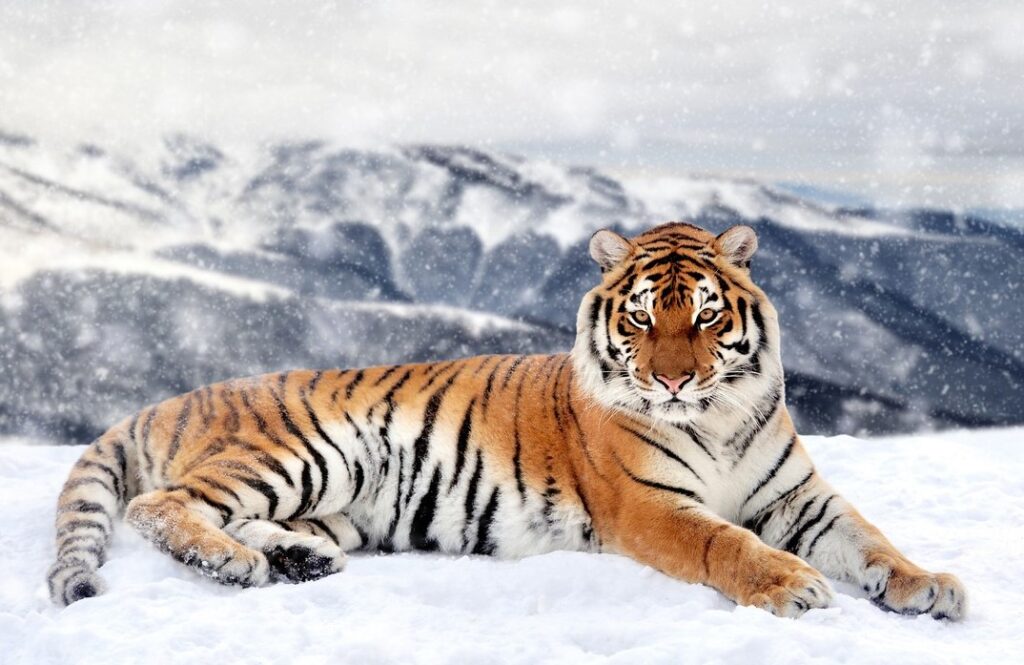
A pair of Amur tigers from the Netherlands has been brought to Kazakhstan; tigers are not the only animals that Kazakhstan is getting back. A few days ago, a long-awaited pair of tigers, bred in a special reserve in the Netherlands, arrived in Kazakhstan. Online, some worried that the tigers would not survive in the harsh climate, or would attack livestock and people. According to WWF Netherlands wildlife expert, Geert Poleta, these fears are unfounded. For several years now, the international NGO, the World Wildlife Fund (WWF), together with the Government of Kazakhstan, has been implementing a program to return tigers to Pribalkhashye. The Amur tiger is a relative of the extinct Turanian breed. Historically, the habitat of the Turanian tiger in the country was reed thickets and floodplain forests along the banks of the Ili and Syr Darya rivers. The extermination of the animal began during the time of the Russian Empire, and the last Kazakh tiger was killed in 1948. Decades later, wild cats are returning to Kazakhstan. As experts point out, this event is an essential step in restoring the ecosystem and lost biodiversity. Bogdana and Kuma, the names of the Amur tigers, flew for more than a day from the Dutch Holy Lion specialized center for predators at the Landgoed Hoenderdaell Zoo to the Ile-Balkhash State Nature Reserve. Permanent caretakers accompanied them. At the Dutch zoo, “the animals were kept in separate spacious enclosures with minimal contact with visitors," Gert Polet, a wildlife expert at WWF Netherlands explained. "Thanks to the spacious territory of the center, the tigers had their own area to live in the most natural conditions possible. In the summer of 2024, a Memorandum was signed between the Committee of Forestry and Wildlife of the Republic of Kazakhstan and the Dutch center, which provides for the free transfer of two tigers to Kazakhstan for further breeding and the release of their offspring.” There is no need to fear that the big cats will harm residents in their new and unfamiliar conditions, as they will be kept under strict supervision. “Zoo tigers cannot be returned to the wild. The arriving tigers will never leave the territory of their enclosure. They were brought in for breeding and raising offspring. If the tiger's birth project is successful, the adults will be moved to another enclosure, located at a center of the reserve which will be open to visitors,” Polet stated. He believes that Bogdana and Kuma have a 60% chance of having cubs. Tiger cubs born in the enclosure of the Ile-Balkhash reserve will be reared following international standards and protocols. At one and a half to two years old, they will be prepared for release into the wild. In addition, the new residents of the reserve will be monitored constantly by video and cared for by a dedicated member of staff. “Over the past year, a veterinarian from the Zholbarys Association has been trained in various clinics and zoos in Russia. She also visited the...
Mirziyoyev Proposes Green Energy Development Program for Central Asia

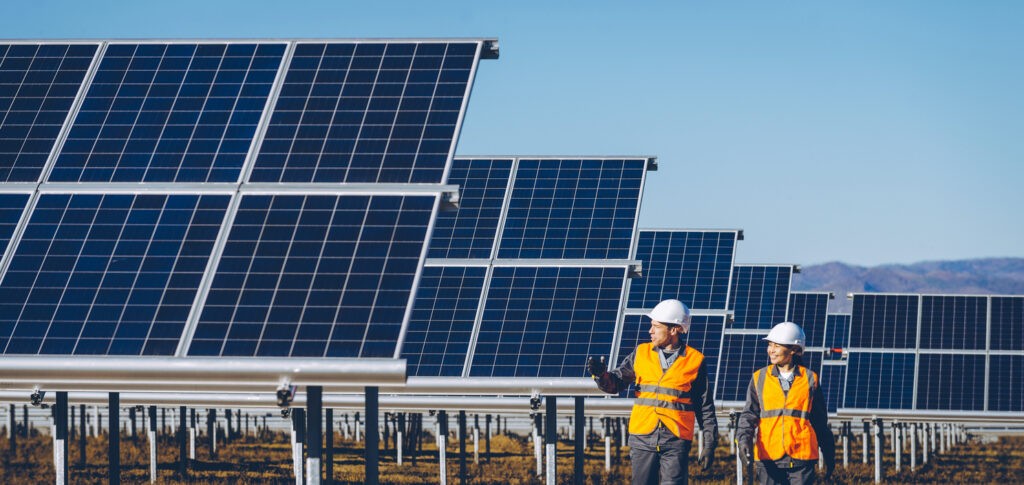
On September 25-26, the annual meeting of the Board of Directors of the Asian Infrastructural Investment Bank (AIIB) was held in Samarkand, Uzbekistan. The ninth meeting of the Board was devoted to the theme “Creating Sustainable Infrastructure for All.” Current issues on the agenda of the global economy were considered, and strategic programs and plans for infrastructure development in Asia and other regions of the world were discussed. About 2,000 representatives from more than 100 countries participated in the summit. Uzbekistan became a member of AIIB in November 2016, and in recent years, it has become one of the bank's biggest beneficiaries. Uzbek President Shavkat Mirziyoyev gave a speech on the first day of the meeting. “The complex geopolitical situation, global economic instability, food and energy resources scarcity, poverty, and environmental problems are becoming increasingly acute. For instance, the average global temperature is projected to rise by 1.5 degrees Celsius by 2040; however, we are concerned that, based on current trends, this could happen as early as 2030. A quarter of the world’s population lacks clean drinking water. As climate change accelerates, food shortages have become a global threat. As a result, about 800 million people in the world live in extreme poverty,” Mirziyoyev said. Mirziyoyev noted that the poverty rate in Uzbekistan has been reduced from 23% to 11%. This year, the aim is to reduce this indicator to 9%, and by 2030, it will be halved. Furthermore, in the last eight years, the enrollment of children in preschool education has increased from 27% to 74%, and higher education has increased from 9% to 38%. It plans to invest $2 billion to open 100 new schools of the most advanced standards in all cities and villages yearly. Another issue that Mirziyoyev paid attention to is logistics, interruptions in the product supply chain, and the increase in the price of raw materials and consumer goods. The head of state noted that all this will sharply increase the load on the existing infrastructure and will be a significant obstacle to global economic development. According to experts, by 2030, the world will need $15 trillion of investment for new infrastructure. Also, foreign investments have decreased by 10% over the past two years, and the value of financial resources globally has almost doubled. Mirziyoyev said that projects worth $200 million for developing medium-sized cities and $130 million for improving infrastructure in rural areas are launched in cooperation with the AIIB. To develop the “green” economy, it is aimed to reach 40% of “green” energy sources by 2030. In the coming years, another 18 gigawatts of solar and wind power, 3 gigawatts of hydropower plants, 5 gigawatts of energy storage capacity, and $5 billion worth of power grids will be implemented. “I would like to note that neighboring countries have also started major projects on renewable energy. We are taking great steps to make Central Asia, a rich renewable energy source, a major exporter of ‘green’ energy into world energy markets in the coming years....

Kazakhstan to Cooperate with China and Russia in Combating Floods

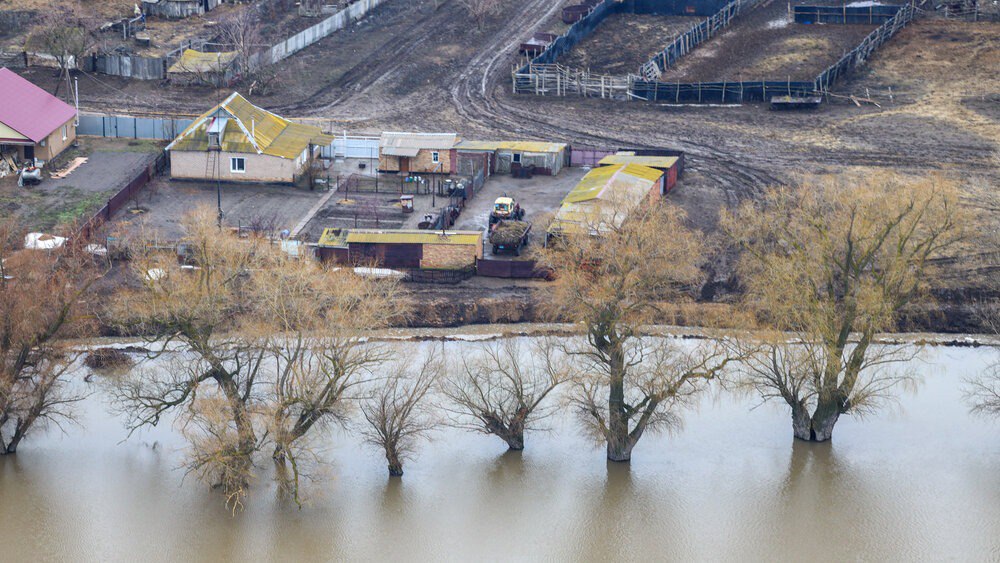
Kazakhstan’s Ministry of Water Resources and Irrigation will sign a memorandum of cooperation with the Ministry of Water Resources of China to combat future spring floods together. The Kazakh ministry has also agreed with Russia to create a joint working group to coordinate actions during spring flood periods. Kazakhstan’s Minister of Water Resources and Irrigation, Nurzhan Nurzhigitov, announced this at a government meeting on September 24. The conference addressed eliminating the consequences of unprecedented spring floods in the country’s northern and western regions and preparing for future spring floods. Massive floods in the spring of 2024, caused by the rapid snow-melt, destroyed thousands of homes and forced almost 100,000 people to evacuate from flood zones. Much of the spring flood water comes to Kazakhstan via trans-boundary rivers flowing from Russia and China. "To ensure the collection and safe passage of flood water in the future, the ministry plans to build 42 new reservoirs with a total capacity of 2.6 billion cubic meters, as well as to reconstruct 37 reservoirs with a total capacity of 3.7 billion cubic meters and about 14,500 km of irrigation canals. This year, the construction of two reservoirs in the Turkestan region and the reconstruction of three reservoirs in the Aktobe, Turkestan, and West Kazakhstan regions began," Nurzhigitov stated, adding that the spring floods led not only to negative consequences, but also allowed reservoirs to collect more than twelve billion cubic meters of water used for economic needs. As of the beginning of September 2024, 8.4 billion cubic meters of that water were used for agricultural purposes. Nurzhigitov reported that the reservoirs of Kazakhstan's northern, central, eastern, and western regions are now 80% full and added that the spring floods have also helped improve the environmental situation by directing excess water to places where it had not flowed for a long time. For example, 80 million cubic meters of flood waters were directed to the Kamysh-Samar lakes of the West Kazakhstan region. For the first time in decades, water arrived in the lakes of the Kyzylorda region through the Sarysu River. Since the beginning of the year, twelve billion cubic meters of water have been sent to Lake Balkhash, and 7.4 billion cubic meters to the Caspian Sea. Nurzhigitov also stated that, together with the Ministry of Digital Development, Innovation, and Aerospace Industry, work is underway to create an information system for forecasting and modeling floods, which will be launched before the end of the year. "This information system will allow for flood forecasting to make strategic decisions. It will show potential flood risk zones on the map," Nurzhigitov explained. At the same meeting, Deputy Prime Minister Kanat Bozumbayev reported that the 2024 spring floods had affected more than 120,000 people across 12 regions. Bozumbayev emphasized that new housing for families affected by the flood was constructed in an unprecedentedly short space of time. In under four months, 2,576 new houses were built, and 5,767 houses and apartments were purchased on the secondary market. In addition,...

Kazakhstan and Uzbekistan Agree To Establish Stations for Syr Darya Water Measurement

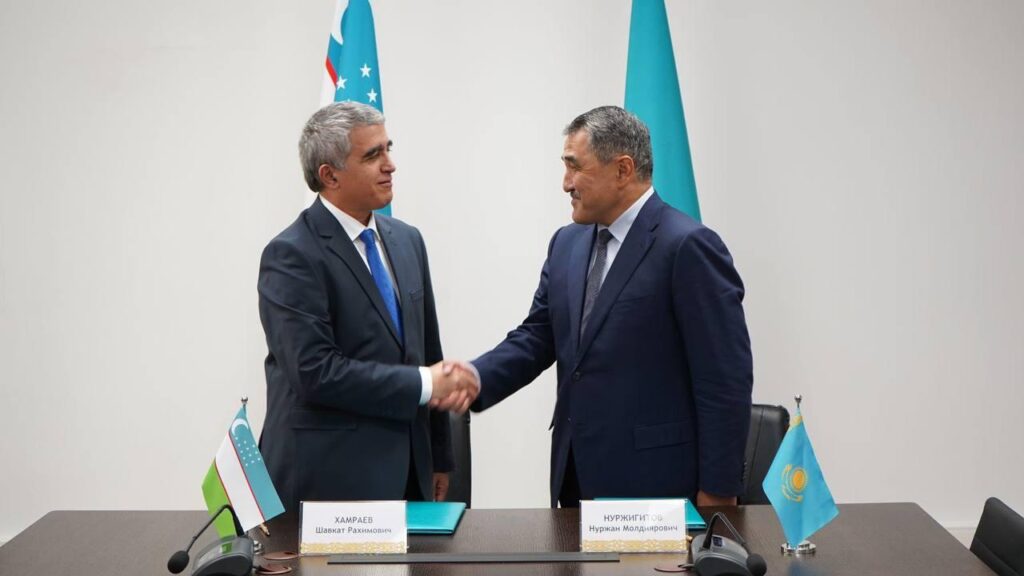
The press service of the Ministry of Water Management and Irrigation of Kazakhstan reports that Kazakhstan and Uzbekistan have agreed to install ten automated measuring stations in Syr Darya to accurately measure water resources. Shavkat Hamroyev, the Minister of Water Management of Uzbekistan, met with Nurzhan Nurzhigitov, his counterpart in Kazakhstan, with the two reportedly discussed automating measuring stations and digitizing water accounting in Syr Darya. Nurzhigitov emphasized that negotiations with international financial organizations and companies are in progress for the joint implementation of the project. The ministers also discussed the modes of operation of the Norin-Syr Darya cascade reservoirs for next year’s pre-irrigation season. “Many thanks to our colleagues from Uzbekistan for their active participation in the International Fund for Saving the Aral Sea (IFSA) meeting and the proposals voiced," Nurzhigitov stated. "Over the year, we have become convinced that our joint work produces positive results, so we intend to continue close bilateral cooperation. We have common views on many issues. This allows us to resolve most of the existing issues on a mutually beneficial basis.” In return, Hamroyev expressed Uzbekistan’s desire to strengthen cooperation within the IFSA. “Uzbekistan fully supports Kazakhstan’s chairmanship of the International Fund... We want to strengthen cooperation in this direction and work on joint projects. For example, preserving the ecosystems of the Syr Darya and Amu Darya basins, providing residents with quality drinking water, restoring small and local water bodies.” In addition, the parties discussed developing a regional strategy for the use of water resources. In May of this year, Hamroyev told a parliamentary hearing that watersheds from the Amu Darya and Syr Darya rivers are forecasted as being favorable this year.

From Test Sites to Power Plants: Kazakhstan’s Journey Towards a Nuclear Referendum

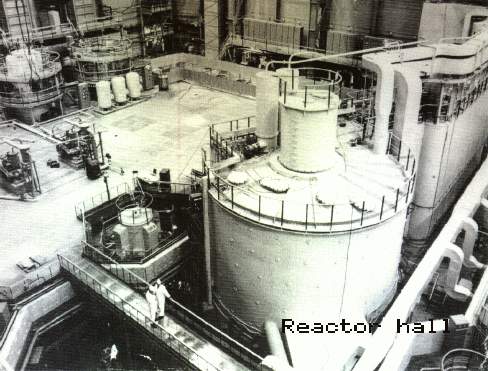
The history of nuclear power in Kazakhstan has many chapters: the arms race, the suffering of people due to test sites, the highest achievements in the name of science, and the service of the nuclear industry for the benefit of society are closely intertwined here. On the eve of the referendum on Kazakhstan's first atomic power plant, it is necessary to revisit these pages in history.   A dark past Construction of the Semipalatinsk nuclear test site began in the Kazakh Soviet Socialist Republic in 1947. The test site is located on the border of the Semipalatinsk (now Abay), Pavlodar, and Karaganda regions, 130 kilometers northwest of Semipalatinsk (now Semey), on the left bank of the Irtysh River. On its territory is the previously closed city of Kurchatov, renamed as such in honor of Soviet-era physicist, Igor Kurchatov. The first nuclear weapons test held in the Soviet Union was conducted at this site on August 29, 1949. The power of the bomb totaled 22 kilotons. From 1949 to 1989, at least 468 nuclear tests were conducted at the Semipalatinsk nuclear test site. The long-term operation of this site and its negative impact on residents' health and the surrounding environment help to explain the fear of nuclear energy in Kazakhstan. Two million people were affected across 300 square kilometers; with all agriculture banned, a vast swathe of land still remains off-limits. Pregnancies are still screened for possible termination, with 6% of babies born “polygon” (the name for the "closed zone".) [caption id="attachment_23475" align="aligncenter" width="1200"] Polygon baby, National Museum of Kazakhstan, Astana; image: TCA, Stephen M. Bland[/caption]   Shutdowns and shortages On August 29, 1991, Kazakhstan's first president, Nursultan Nazarbayev, closed the Semipalatinsk test site. Prior to this, citizens had held rallies protesting against nuclear testing and its development. By 1994, Kazakhstan had voluntarily relinquished its part of the USSR's nuclear arsenal. On May 15, 1992, the National Nuclear Center in the city of Kurchatov was established based on the complex of the former Semipalatinsk test site. The Center deals with eliminating the consequences of nuclear tests and also conducts active and multidisciplinary scientific activities on the remaining research reactors in Kurchatov. Scientific research occurs internationally and touches upon safety technologies, the space program, and more. In 1957, the Institute of Nuclear Physics of the Kazakh SSR Academy of Sciences was founded near Almaty (then Alma-Ata), where the VVR-K reactor, which is still operating today, was launched in 1967. The reactor was shut down in the late 1980s after the Chernobyl disaster and the earthquake in Spitak (Armenia); it was restarted in 1997, and the complex underwent safety and seismic reinforcement modernization. The Institute owns eight experimental facilities: the VVR-K research reactor, a "Критический стенд" lit. "critical stand," and six charged particle gas pedal complexes. In 1972, a unique fast neutron reactor BN-350 was launched in Aktau (then Shevchenko) at the Mangistau Atomic Energy Combine (MAEC). The reactor provided the Mangistau Peninsula with electricity and heat, and supported the operation of desalination plants...

Kazakhstan Chairs International Fund for Saving the Aral Sea

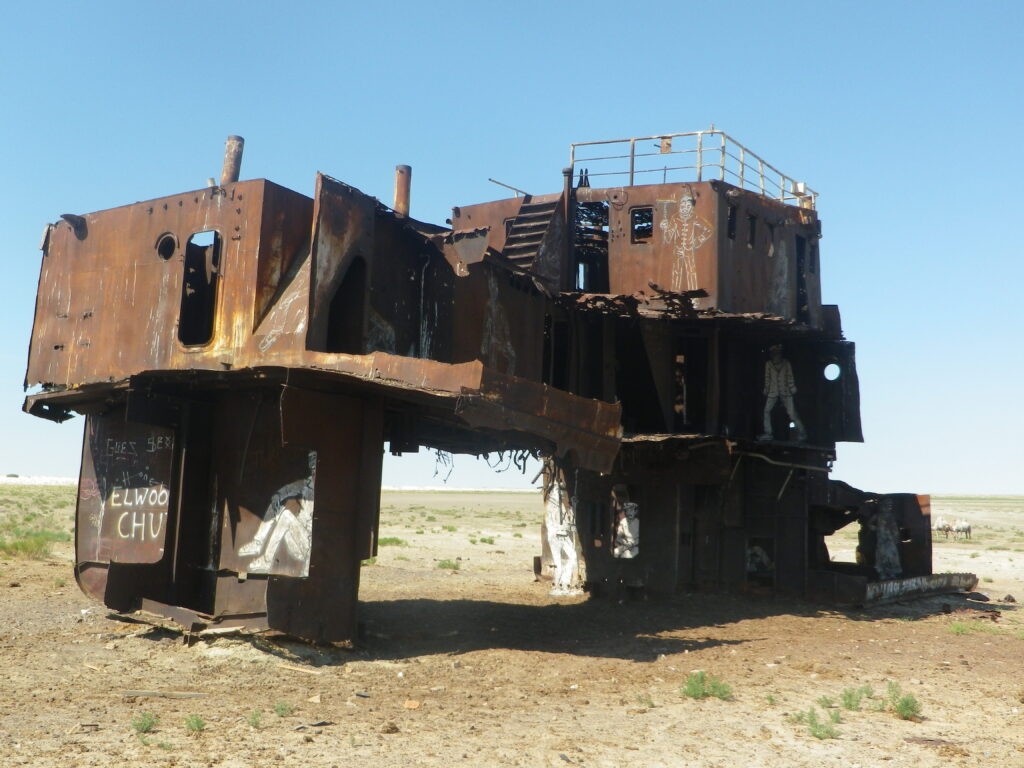
Since the beginning of 2024, 1.9 billion cubic meters of water have been sent to the North Aral Sea, raising its volume to 22 billion cubic meters. This announcement was made by Kazakhstan’s Minister of Water Resources and Irrigation Nurzhan Nurzhigitov  at the first meeting of the Board of the International Fund for Saving the Aral Sea (IFAS) on September 18, attended by delegations from  Kazakhstan, Tajikistan, Turkmenistan, Uzbekistan, and Kyrgyzstan ( as an observer country). The IFAS was established in 1993 to unite efforts by participating countries to mitigate the negative impact of the Aral Sea's desertification on the natural environment and the region's population. Discussions focused on progress on two large-scale projects: a program to assist the Aral Sea basin countries, and the Regional Environmental Protection Program for Sustainable Development in Central Asia, which aims to develop the principles of green economy and adaptation to climate change. The meeting commended Kazakhstan's commitment to working in close cooperation with other Central Asian states on preserving the Aral Sea and approved plans for work to be undertaken by the IFAS under President Kassym-Jomart Tokayev chairmanship from 2024-'26. "At the height of this year's irrigation period, up to 80 cubic meters of water per second flowed into the sea along the Syr Darya River, compared to only six cubic meters per second last year. In recent years, the volume of water in the North Aral Sea has been decreasing, but since the beginning of 2024, it has increased again and reached 22 billion cubic meters," stated Nurzhigitov. " To ensure a further increase -  we are strengthening water diplomacy and developing the second phase of the North Aral Sea conservation project." The North Aral Sea, the portion of the former Aral Sea fed by the Syr Darya River, split from the South Aral Sea in 1987–'88 when water levels dropped due to water diversion for agricultural use. According to the Kazakh Ministry of Water Resources, 75% of the flow of the Syr Darya River comes from Kyrgyzstan, 20% from Uzbekistan, and 5% from Kazakhstan.