• KGS/USD = 0.01144 0%
  • KZT/USD = 0.00204 0%
  • TJS/USD = 0.10415 -0.19%
  • UZS/USD = 0.00008 0%
  • TMT/USD = 0.28571 0%
  • KGS/USD = 0.01144 0%
  • KZT/USD = 0.00204 0%
  • TJS/USD = 0.10415 -0.19%
  • UZS/USD = 0.00008 0%
  • TMT/USD = 0.28571 0%
  • KGS/USD = 0.01144 0%
  • KZT/USD = 0.00204 0%
  • TJS/USD = 0.10415 -0.19%
  • UZS/USD = 0.00008 0%
  • TMT/USD = 0.28571 0%
  • KGS/USD = 0.01144 0%
  • KZT/USD = 0.00204 0%
  • TJS/USD = 0.10415 -0.19%
  • UZS/USD = 0.00008 0%
  • TMT/USD = 0.28571 0%
  • KGS/USD = 0.01144 0%
  • KZT/USD = 0.00204 0%
  • TJS/USD = 0.10415 -0.19%
  • UZS/USD = 0.00008 0%
  • TMT/USD = 0.28571 0%
  • KGS/USD = 0.01144 0%
  • KZT/USD = 0.00204 0%
  • TJS/USD = 0.10415 -0.19%
  • UZS/USD = 0.00008 0%
  • TMT/USD = 0.28571 0%
  • KGS/USD = 0.01144 0%
  • KZT/USD = 0.00204 0%
  • TJS/USD = 0.10415 -0.19%
  • UZS/USD = 0.00008 0%
  • TMT/USD = 0.28571 0%
  • KGS/USD = 0.01144 0%
  • KZT/USD = 0.00204 0%
  • TJS/USD = 0.10415 -0.19%
  • UZS/USD = 0.00008 0%
  • TMT/USD = 0.28571 0%

Viewing results 457 - 462 of 831

World Bank to Provide Additional Support for Kambarata-1 Hydropower Project in Kyrgyzstan

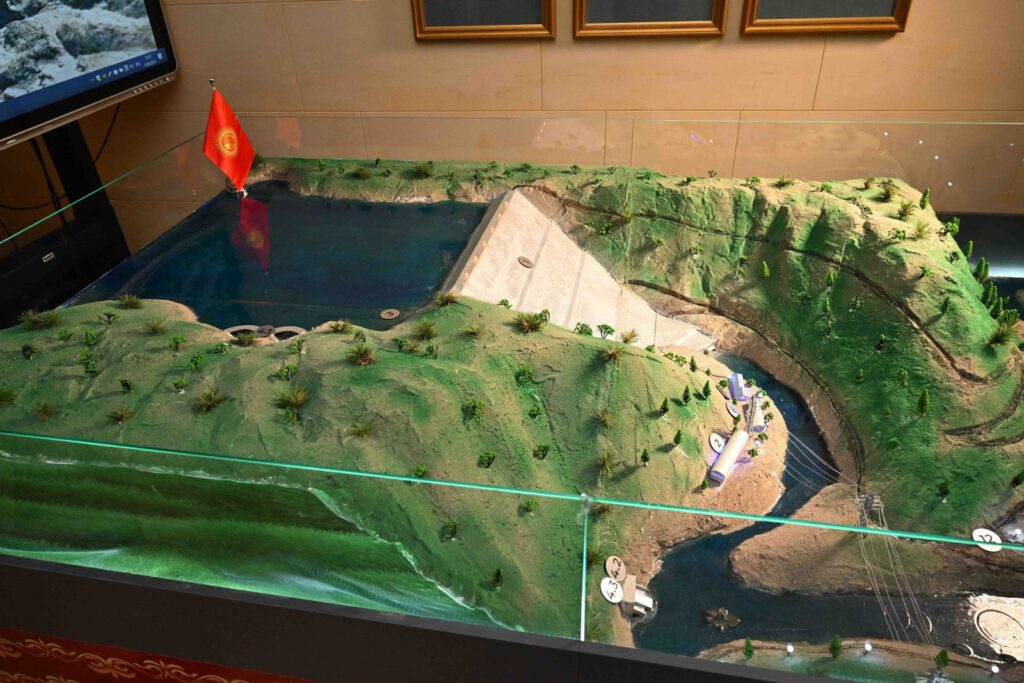
The World Bank announced on July 11 that its Board of Executive Directors has approved $13.6 million in additional financing for the Kambarata-1 Hydropower Plant (HPP) Project in Kyrgyzstan. This additional funding will supplement the ongoing $5 million Technical Assistance Fund. The World Bank is aiming to support the government of the Kyrgyz Republic in preparing the Kambarata-1 HPP project in an environmentally, technically, financially, and commercially sustainable manner. Hugh Riddell, World Bank’s Country Manager for the Kyrgyz Republic, commented: “The World Bank is assisting the Kyrgyz Republic in developing its vast clean energy potential, which would be key to realizing the country’s and region’s bold initiatives on clean energy transition and enhanced regional cooperation on energy and water. World Bank support will help the government of the Kyrgyz Republic to comprehensively prepare the Kambarata-1 HPP Project in a sustainable and bankable way.” The ongoing Technical Assistance for the Kambarata-1 Hydropower Plant Project has made significant progress since its approval in the fall of 2023. The project feasibility update has commenced, and environmental and social reports are being prepared. In addition, a Donor Coordination Committee was established during the International Energy Investment Forum held in Vienna in June 2024. This additional financing is needed to ensure comprehensive and in-depth implementation of several critical activities, including establishing panels of experts on dam safety, environmental, and social concerns. The funding will also help in designing a benefit-sharing plan, structuring the project’s financing plan and commercial framework, and establishing a company to run the dam upon its completion. The additional financing is to be provided on highly concessional terms and comprises $11 million of credit at zero percent interest, with repayments eased over 50 years and a 10-year grace period. In addition to this credit, there is a $2.6 million grant from the Central Asia Water and Energy Program (CAWEP), which requires no repayment. The CAWEP is a multi-donor partnership between the World Bank, the European Union, Switzerland, and the United Kingdom, which is aimed at strengthening regional cooperation on water and energy security in Central Asia, which is facing  a climate emergency. The Donor Coordination Committee for the construction of Kambarata-1 HPP was established at the Kyrgyz Republic International Energy Investment Forum, which was held in Vienna on June 10. The Committee comprises major international financial institutions and development partners, including the World Bank, the OPEC Fund, the Asian Development Bank, the Asian Infrastructure Investment Bank, the Islamic Development Bank, and the European Bank for Reconstruction and Development. Speaking at the Vienna forum, Chairman of the Cabinet of Ministers of the Kyrgyz Republic Akylbek Japarov said that the Kambarata-1 HPP project has broad economic, environmental, and social benefits and prospects for both Kyrgyzstan and the rest of Central Asia. The project will provide Kyrgyzstan and Central Asia with clean energy at the lowest possible cost. The Kambarata-1 HPP will be situated in the upper reaches of the Naryn River in Kyrgyzstan. Its installed capacity will be 1,860 megawatts, and its average annual...
Central Asia’s Water Crisis

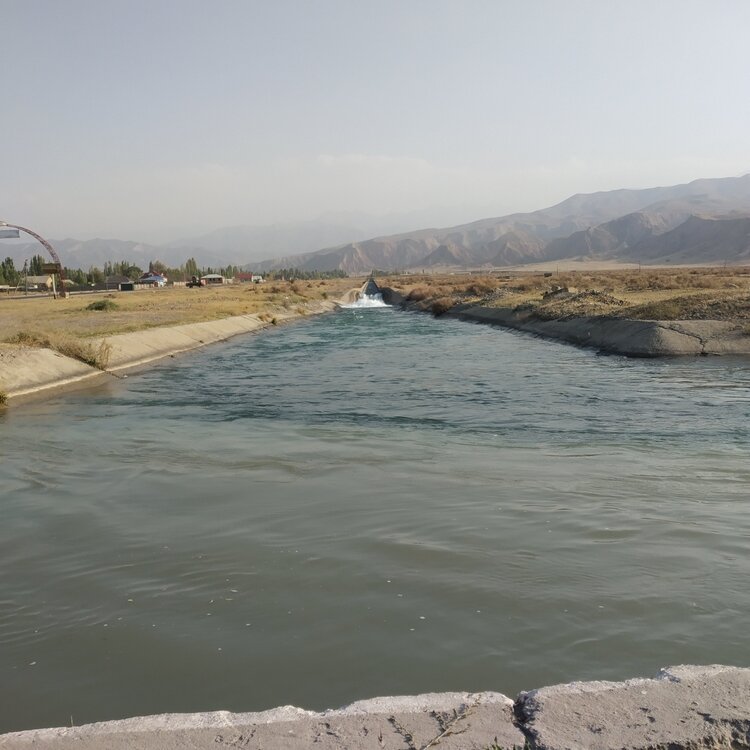
Over 80% of Central Asia’s available water is spent on irrigation, 40% of which is lost during delivery and directly in the fields. Over the coming years, the problem of water shortage will inevitably worsen and with the commission of the Qosh Tepa Canal in Afghanistan, will become chronic from 2028. The stark warning was issued by Evgeny Vinokurov, Eurasian Development Bank’s (EDB) Deputy Chairman of the Board and Chief Economist during the  “Water, Energy and Food in Central Asia: Partnerships and Projects for Sustainable Development” session at the EDB 2024 Annual Meeting and Business Forum on 27–28 June in Almaty. The challenges of the Central Asian water and energy complex are too great to be tackled independently by the region’s countries. Historically, Central Asia’s five states have been closely linked by the region’s two largest transboundary rivers, the Amu Darya and the Syr Darya which flow into the Aral Sea basin, home to 80% of the population. Hence, the need for close a intersectoral relationship (nexus) concerning water, energy and food and deep regional cooperation for the effective use of shared water and energy resources to overcome the crisis. At the session, Askhat Orazbai, Chairman of the Executive Committee of the International Fund for Saving the Aral Sea, stressed the central role played by IFAS in building essential regional dialogue. The Fund is the only regional organization with membership of all five Central Asian states and according to its mandate, was designed to address the region’s complex water-energy nexus. For over 30 years, the Fund has been the key platform for decisions on water resources management at the highest level. Currently being reformed, the Fund’s full potential will soon be fully unlocked. The session emphasized the urgent need for increased funding to deal with challenges posed by water scarcity. Modernization of the existing irrigation infrastructure is extremely capital-intensive but budgetary funds are inadequate and private investors have shown no interest in the sector. The contribution of multilateral development banks is therefore critical and encouragingly, over recent years, most of the region’s  MDBs have given special priority to water projects. The EDB's Chief Economist Vinokurov pointed out that conservation is key to solving the problem of water scarcity. Highlighting the importance of digital accounting and the introduction of effective irrigation technologies, Vinokurov suggested creating a regional cluster of irrigation equipment. Considering that the region spends from $150 million to $300 million annually on the above, the EDB plans to actively support this sector's development. Michael Detlefsen, a UNIDO representative, expressed confidence in the future formation of a regional cluster of irrigation equipment in Central Asia. Over the last two years, the region has seen increased activity from manufacturers from Turkey, China, Israel, and the United States on the organization of local assembly lines. In this regard, the UNIDO representative stressed the importance of working together with the EDB to form such a cluster.  

Nuclear Race: Will Central Asia Build a Nuclear Power Plant?

The answer to the question posed in the title remains uncertain. While Uzbekistan has plans to construct a nuclear power plant and Kazakhstan is set to hold a referendum this fall to gauge public opinion on building one, progress is sluggish. Tashkent has postponed the start of construction, and the issue sparks heated debate in Kazakhstan. The First Nuclear Power Plant in Central Asia Historically, Central Asia did host a nuclear facility. Located on the shore of the Caspian Sea in Kazakhstan, this was not a conventional nuclear power plant but a fast neutron reactor known as BN-350. The reactor was the core of the Mangistau Nuclear Power Plant, designed to transform the Mangyshlak Peninsula by providing energy to the city of Aktau (formerly Shevchenko) and powering large-scale desalination plants that supplied drinking water to the arid region. [caption id="attachment_20031" align="aligncenter" width="366"] BN-350[/caption] Operational from 1973 until its shutdown in 1999, the BN-350 reactor was decommissioned due to the allocation of U.S. funds for new desalination and heating equipment and the disposal of its remaining fuel. The extensive maintenance and decommissioning work on the BN-350 have given Kazakhstani nuclear physicists significant experience with such complex and hazardous technology. However, younger generations in Kazakhstan are largely unaware of the BN-350 reactor’s existence. Their knowledge of nuclear physics is often limited to the harrowing stories passed down about nuclear warhead tests at the Semipalatinsk test site and their devastating effects. Fear and Nuclear Power: Kazakhstan's Dilemma The societal fear surrounding nuclear energy in Kazakhstan is deeply intertwined with political concerns. For a long time, the leadership in Kazakhstan has hesitated to move beyond merely discussing the need for a nuclear power plant (NPP) to actually initiating the project. President Kassym-Jomart Tokayev recently announced that a referendum would take place in the fall of 2024. However, Ministry of Energy's officials avoided mentioning the word "referendum" until the last moment, previously asserting it was unnecessary. Public hearings were held last year in the village of Ulken, Zhambyl district, Almaty region, a proposed site for the nuclear plant. The Ministry of Energy’s press release stated that the local populace supported developing nuclear power, highlighting its significance for regional socio-economic growth. However, media reports revealed that the hearings were contentious, with opposing viewpoints almost disrupting the speech of Nurlan Ertas, the head (akim) of the Zhambyl district. Activists even displayed banners and posters against the plant's construction. Certain groups have exploited the population's fear of another disaster like Chernobyl. Additionally, the government has struggled to convince the public that nuclear technologies are becoming safer. In contrast, Europe now includes nuclear power plants in its list of green energy sources, similar to other renewable energy sources (RES). In Kazakhstan, renewable energy accounts for only 5% of the total energy produced. The introduction of NPPs could significantly enhance the country’s position in reducing carbon emissions. The government faces a growing electricity shortage that can be addressed either harmfully or fearfully. The harmful options are coal-fired thermal power plants...

UN: Central Asia’s Big Youth Population is Key to Progress

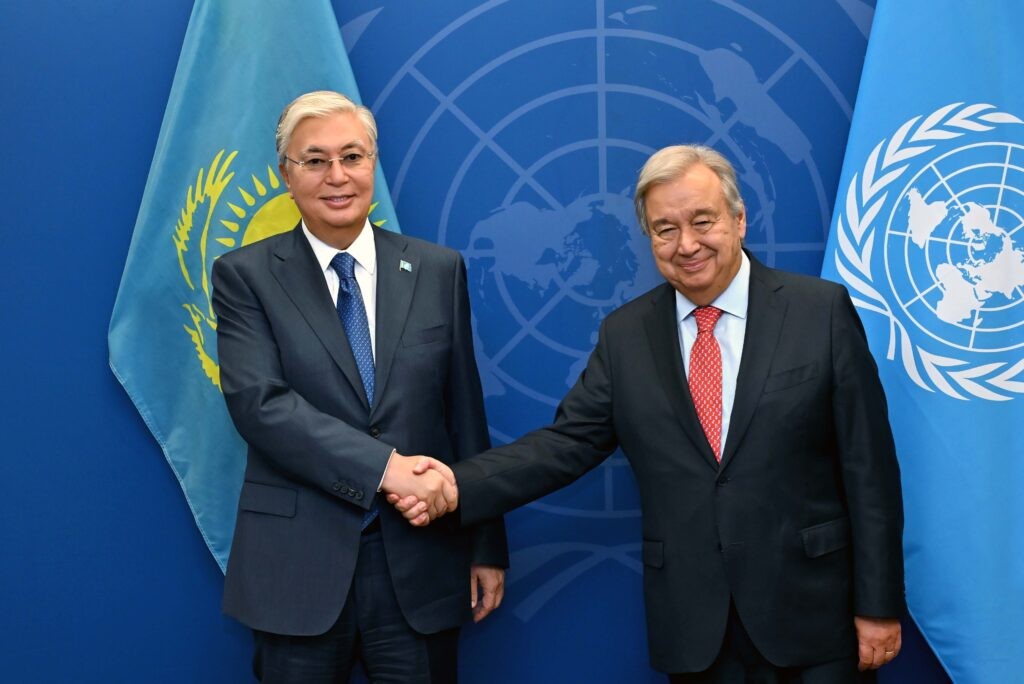
U.N. Secretary-General António Guterres shook hands with presidents and addressed dignitaries in ornate halls during a tour of Central Asia last week. But he also spent a lot of time with young people, saying “their potential is largely untapped” in a region where, by United Nations estimates, people under 30 years old make up more than 50% of the population. Guterres, a former prime minister of Portugal, met young climate activists in Kyrgyzstan and students in Turkmenistan. In Tajikistan, the U.N. chief said 70% of that country’s population is under 30 and told young people at a school there to hold elders to account on the pressing challenge of climate change. “You have the moral authority to talk to others - as those that suffered the impacts of climate change and are not contributing essentially to it,” Guterres said at a school established by UNICEF with funding from the European Union. “You are the victims of climate change. So, you have the right to tell the others, ‘Behave.´ Because they are not behaving.” Think globally, Guterres told the students. “It’s not Tajikistan or Uzbekistan,” he said. “No, it’s everything together.” The U.N.’s focus on young people having a say in Central Asia stems from a sense of possibility in what could shape up as an increasingly strong labor and leadership pool, as well as concern that young people with few prospects drift into unemployment and disenchantment, fueling social pressures and instability. The fertility rate in the wider region comprising Europe, North America and Central Asia has dropped in numerous countries in the last decade, while the “five Central Asian countries, Georgia, Israel and Monaco are the only countries in the region with a total fertility rate at or above replacement level,” the United Nations Economic Commission for Europe said in a report in October. At the same time, the report said, the Central Asian states are among the countries in the region that have “experienced negative net migration” since 2015, while countries receiving the largest numbers of migrants in that period were the United States, Russia, and Germany. The total population of the five Central Asian countries is about 76 million. Some of those countries, especially Tajikistan and Kyrgyzstan, rely heavily on remittances from nationals who struggle to find work at home and seek opportunities abroad, particularly in Russia. The alleged involvement of several Tajiks in a deadly terror attack in the Moscow area in March led to a backlash of harassment and intense scrutiny aimed at many Central Asian migrants in Russia. At a regional health forum in Kyrgyzstan last month, the Europe director of the World Health Organization, a U.N. agency, noted that Central Asia has a “significant young and educated population” at a time when European populations are aging. “This will – if the youth potential is maximized – give Central Asia an edge in the decades ahead,” the director, Dr. Hans Kluge, said.

Top Kazakh Businessman Denies Allegations about Greek Island Fire

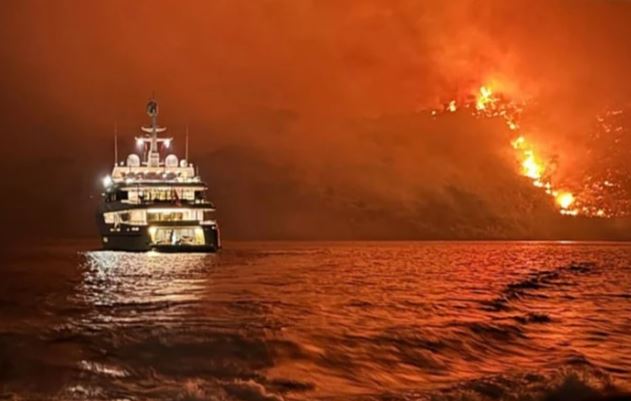
One of Kazakhstan’s wealthiest business executives has denied any wrongdoing in connection with a forest fire that was allegedly caused by fireworks on the Greek tourist island of Hydra. Daniyar Abulgazin, who has shares in multiple Kazakh energy and other companies, said he had rented the luxury boat named Persefoni I that has been linked by Greek prosecutors to the fire on June 21. However, he said he and his group left Greece as previously scheduled on June 22 after speaking with “representatives of the Greek authorities,” who made no claims against them in connection with the fire. Some of his guests had already left Greece on the morning of June 21, according to Abulgazin. “It came as a complete surprise to us to learn of the allegations that followed in the press upon our return, and I categorically deny any wrongdoing,” Abulgazin, who had returned to Kazakhstan, said in a statement that was released by DRD Partnership, a London-based communications firm. Greek prosecutors have charged the captain and 12 crewmembers of the boat with arson and eight Kazakh passengers who were on the vessel face charges of complicity in arson, according to Greek media reports. Several reports said Greek investigators found the remains of firecrackers on a Hydra beach and concluded that passengers from the Persefoni I were on the beach around the time of the fire, which burned an estimated 300 acres. The case has stirred anger in Greece, which is enduring high summer temperatures and a string of forest fires. Some commentators questioned how the Kazakh tourists were able to leave Greece before an investigation of the fire had barely begun. Some Greek media outlets said prosecutors were investigating the initial handling of the matter by Greek authorities. They have also mentioned Abulgazin and the names of some of the other Kazakh passengers on the boat in their reports, posting photos of them on broadcasts and websites. Abulgazin referred to “incorrect and misleading” media reports, expressed regret about the fire and promising to cooperate with the Greek investigation. “Neither I nor my guests performed any actions that could lead to a fire. We strictly followed the fire safety rules established on the yacht. Neither I nor my guests asked the crew of the yacht or other third parties to take any actions that could lead to a fire,” he said. Abulgazin has shares in Qazaq Oil, SinoOil and Gas Energy gas station networks as well as other operations and his worth is estimated at $380 million, according to Forbes Kazakhstan. His wife, Aidan Suleimenova, has interests in fashion companies and shopping centers in Kazakhstan. DRD Partnership, the firm that released Abulgazin’s statement about the fire, says it focuses on “building value for our clients and protecting their reputations at moments of challenge and change.”

Qosh Tepa Canal Threatens Water Balance in Central Asia

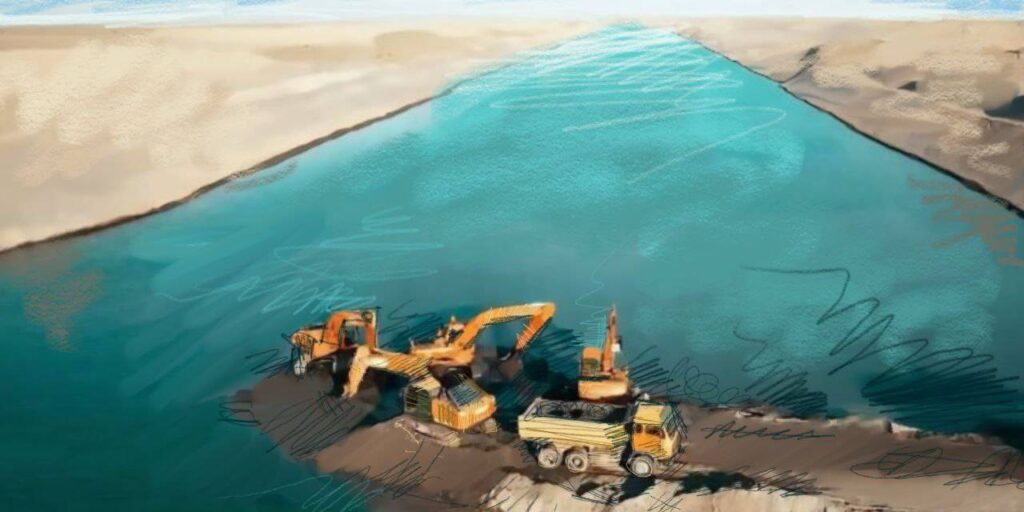
The construction of the Qosh Tepa Canal may threaten Central Asia's water balance and the region must address the issue. The warning, given by Nikolay Podguzov, Chairman of the Board of the Eurasian Development Bank which is involved in projects affecting the region's water balance, was reported  by AKI press. According to experts, the Qosh Tepa Canal, currently under construction in Afghanistan, receives ten cubic kilometers of water per year from general drainage, and also, the Amu Darya river. Marat Imonkulov, Secretary of the Kyrgyz Security Council, said that a reduction of water in the Amu Darya will inevitably lead to an increase in water taken from the Syr Darya river for agriculture and other needs. Some analysts claim that under such a scenario, Central Asia will face a chronic water shortage. Although not one of its members, the EDB, reminded Afghanistan that the construction of the canal is being implemented by the state on its territory and Podguzov stressed, “The states mutually resolve issues related to relations through diplomatic channels. But we have to solve the problem together. I believe that the countries will agree." Analysts seek to resolve the situation by developing digital water accounting, water conservation, and proper treatment of the region's resources. The Qosh Tepa Canal project, conducted by the Taliban and currently underway in northern Afghanistan, is a significant initiative in managing the Amu Darya's water resource but during its first phase, has raised concerns among Central Asian countries. Heeding specialists' forecasts, the President of Uzbekistan, Shavkat Mirziyoyev, said that the construction of the Qosh Tepa Canal will change the water regime and balance in Central Asia.