• KGS/USD = 0.01144 0%
  • KZT/USD = 0.00211 0%
  • TJS/USD = 0.10460 0.19%
  • UZS/USD = 0.00008 0%
  • TMT/USD = 0.28490 0%
  • KGS/USD = 0.01144 0%
  • KZT/USD = 0.00211 0%
  • TJS/USD = 0.10460 0.19%
  • UZS/USD = 0.00008 0%
  • TMT/USD = 0.28490 0%
  • KGS/USD = 0.01144 0%
  • KZT/USD = 0.00211 0%
  • TJS/USD = 0.10460 0.19%
  • UZS/USD = 0.00008 0%
  • TMT/USD = 0.28490 0%
  • KGS/USD = 0.01144 0%
  • KZT/USD = 0.00211 0%
  • TJS/USD = 0.10460 0.19%
  • UZS/USD = 0.00008 0%
  • TMT/USD = 0.28490 0%
  • KGS/USD = 0.01144 0%
  • KZT/USD = 0.00211 0%
  • TJS/USD = 0.10460 0.19%
  • UZS/USD = 0.00008 0%
  • TMT/USD = 0.28490 0%
  • KGS/USD = 0.01144 0%
  • KZT/USD = 0.00211 0%
  • TJS/USD = 0.10460 0.19%
  • UZS/USD = 0.00008 0%
  • TMT/USD = 0.28490 0%
  • KGS/USD = 0.01144 0%
  • KZT/USD = 0.00211 0%
  • TJS/USD = 0.10460 0.19%
  • UZS/USD = 0.00008 0%
  • TMT/USD = 0.28490 0%
  • KGS/USD = 0.01144 0%
  • KZT/USD = 0.00211 0%
  • TJS/USD = 0.10460 0.19%
  • UZS/USD = 0.00008 0%
  • TMT/USD = 0.28490 0%

Viewing results 481 - 486 of 867

Central Asian Countries Gather to Share Air Pollution Solutions

On June 19th a political and regional forum was organized in Tashkent under the slogan “Building a Clean Air Future in Central Asia”. The forum was organized in partnership with the Uzbek Ministry of Ecology, the World Bank, and the United Nations Environment Program (UNEP). Participants included senior officials from the governments of Kazakhstan, Kyrgyzstan, Tajikistan, Turkmenistan, and Uzbekistan. The forum was created to allow the countries of Central Asia to exchange knowledge on how to prevent air pollution. Air quality in both urban and rural areas is affected by transboundary pollution, caused by emissions from burning fossil fuels in industry, the heating sector, and transport. Another source of pollution in cities is sand and dust storms. Most air quality-related illnesses and premature deaths in Central Asia are attributable to delicate particulate matter 2.5 microns or less in diameter (PM2.5). Their concentration in large cities is often several times higher than the permissible air quality parameters recommended by the World Health Organization. This is especially noticeable during winter, when the heating sector uses coal and gas for power. According to the IQAir portal, which monitors global air quality, Central Asian cities are often among the most polluted cities in the world. The participants at “Building a Clean Air Future in Central Asia” studied each other's measures and practices in air quality management. They then defined some priority directions for accelerating regional cooperation on these issues. Valerie Hickey, the World Bank's global director for environment, natural resources and the blue economy, commented: “Air quality management is a complex challenge that requires understanding where the pollution comes from and prioritizing actions in those sectors. This will take better data and stronger regulations harmonized across borders, credible institutions, and clean infrastructure. Working together, the countries can clean the air across Central Asia.” Sylvie Motar, deputy director of the European office of the UNEP, added: “Air pollution knows no borders, so cooperation between Central Asian countries in this area is essential. This dialogue will help increase investments in clean air to protect the health of the people of Central Asia.”

One Dead in Mudflows in Southern Kyrgyzstan

Mudflows in Kyrgyzstan's southern Jalal-Abad region have forced 300 families to evacuate their homes, and a 10-year-old child has died, the country's Ministry of Emergency Situations reports. On June 18th, after heavy rain, a mudflow descended in several villages, flooding over 50 buildings. According to the Ministry, police, doctors, and civil protection officers are working to repair the damage from the disaster. Deputy Minister for Emergency Situations Edelbek Kulmatov said that the Kochkor-Ata water basin is 15-20 kilometers from the affected villages. "Water accumulates, and the stream rushes down the mountain hollow, traveling over 20 kilometers. Unfortunately, some cowsheds and families live 16 kilometers away from the settlement. The mudflow carried away a 10-year-old child, who died," Kulmatov said. During the day, rescuers used heavy special equipment to clear 16 households from mudflows. Flooded internal roads were also cleared and put back into operation. Doctors are on duty at the site to monitor residents' health. Currently, the Ministry of Emergency Situations employees are conducting disinfection procedures within the two villages in the Jalal-Abad region. A section of the Bishkek-Osh highway is temporarily blocked due to the mudflows. However, residents of some evacuated houses are returning to their homes despite many buildings still being damaged by flooding.

Focus on Central Asia’s Acute Shortage of Drinking Water

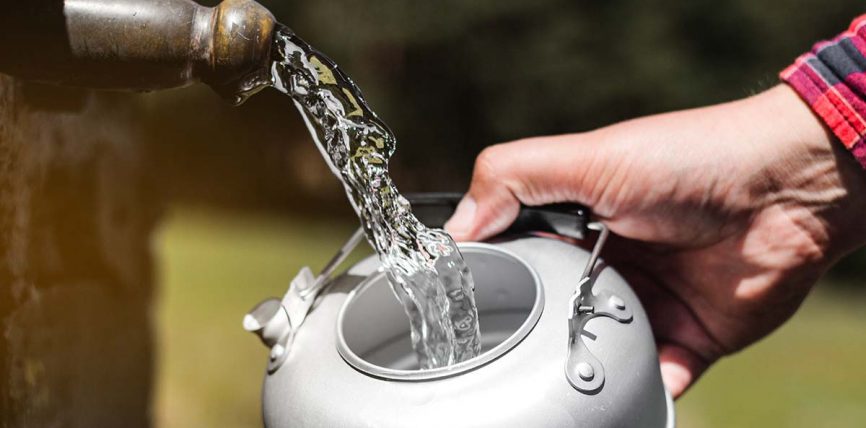
The Eurasian Development Bank (EDB) has declared water availability a particularly acute challenge in Central Asia, given that 10 million people, or 14% of the region’s population, currently lack access to safe drinking water. Between 1994 and 2020, water withdrawals for municipal and domestic needs doubled to 8.6 cubic kilometres. However, since investment in drinking water falls short of meeting the growing demand, the infrastructure for the supply and treatment of water has severely deteriorated. The challenges facing the sector highlight the need for large-scale investment in water supply and sanitation in Central Asia. The annual funding deficit to meet the targets of the United Nations’ Sustainable Development Goal 6 (to ensure the availability and sustainable management of water and sanitation for all) is estimated to reach US $2 billion by 2025–2030. In response, EDB analysts have prepared a report to assess the level of investment required by the region to achieve the UN Sustainable Development Goal by 2030, including proposals for practical steps to secure the necessary funding. Titled “Water and Sanitation in Central Asia”, the report will be launched on 28 June at the Eurasian Development Bank’s Business Forum in Almaty, Kazakhstan.  

Kyrgyzstan’s Eco-Activists Question Official Data on Rare Animals

According to the state gold mining company Kumtor,  operating near the Sarychat-Ertash high-mountain reserve, the number of red-listed animals has increased significantly as a result of ecological  improvements to their environment.  Local ecologists, however, believe that the data has been intentionally exaggerated. In its report, Kumtor said, "Annual monitoring of the state of biodiversity, conducted by the company, allows us to accurately track the ecological situation on the ground. Care for ecology and the environment is also evident in the increasing numbers of argali, ibex, and snow leopards. For example, the number of argali in the Sarychat-Ertash reserve increased from 750 to 2,500, making it the country's largest population. Capricorns, argali, and snow leopards have also increased in number." Environmental scientists at the National Academy of Sciences of Kyrgyzstan (NAS KR) state that whilst a rough count of red-listed animals in hunting farms and state nature reserves shows an increase in all argali and snow leopard subspecies,  the state authorities have not provided an accurate calculation for 14 years. "All hunting farms of the republic every year give the state structures data on the number of argali, ibex, and other red-listed animals. According to their data, the number of animals is growing, but how much this data can be believed remains a question. They are interested parties and may present distorted data,” Askar Davletbayev, an ecologist with the National Academy of Sciences, told The Times of Central Asia. In Kyrgyzstan, the state protects argali and snow leopards. During the hunting season, however, authorities issue a yearly license to shoot the animals. A popular and lucrative  sport, it attracts visitors from all over the world who willingly pay around 10 thousand dollars to bag an argali. According to eco-activist Vlad Ushakov, the fact that predatory animals living on high mountain ranges have begun to descend to the lower reaches to hunt, has also impacted the figures. "This does not speak of an increase in snow leopards but rather a lack of prey; the forage base has been undermined. In the gorges, where wild animals traditionally used to graze, there is now mass grazing. The snow leopard will not voluntarily change its natural habitat. Ten years ago, we were told there were 300-350 leopards in Kyrgyzstan; today, the same figures apply. Perhaps these are just invented figures with no basis,” Ushakov explained to TCA.

By 2025, All of Kazakhstan Will Have Access to Clean Drinking Water

The Prime Minister of Kazakhstan, Olzhas Bektenov, has said at a government meeting where issues of water supply services to urban and rural settlements were addressed that the entire population will have access to clean drinking water within eighteen months. At the end of last year, access to water supply services in Kazakhstan's cities amounted to 98.9%, and in rural settlements, 96.6%. Full coverage of the urban population has been achieved in nine regions, with the lowest level of provision noted in the Abai and Pavlodar regions. To improve the situation in the regions with low indicators, funds are being allocated on a priority basis. Twenty-nine projects to construct and reconstruct pipelines in nine oblasts are being implemented, with plans to reconstruct and develop 2,000 kilometers of water pipelines, providing water supply to 437 settlements. A connection to a centralized water supply will be made in 44 of these, with a total population of 92,000 people. Five projects are under development and will be implemented after receiving state expertise; their implementation will improve the water supply in 200 settlements. In 2024, 218 billion tenge was bookmarked from the republican budget to fund the construction and reconstruction of water supply and sewage systems. The Prime Minister emphasized that by the end of 2025, 100% of the population must have access to quality drinking water. "This is one of the most socially important tasks. Only one-and-a-half-years are left for its fulfillment. Despite the high percentage of fulfillment, akimats (local authorities) should intensify work to achieve the plans to bring the relevant infrastructure to villages and towns. All works on the water supply should be prioritized. The implementation of water supply networks within settlements should be synchronized with the plans to bring the infrastructure of group water conduits to the borders of villages", said Bektenov.

Donor Coordination Committee Established for Kyrgyzstan’s Kambarata HPP-1 Project

The Kyrgyz Republic International Energy Investment Forum, held in Vienna, on June 10, concluded with the establishment of a Donor Coordination Committee for the construction of Kambarata HPP-1 hydropower plant in Kyrgyzstan. The Kyrgyz Cabinet of Ministers said that the doors are open to interested parties but to date, the committee comprises major international financial institutions and development partners, including the World Bank, the OPEC Fund, the Asian Development Bank, the Asian Infrastructure Investment Bank, the Islamic Development Bank, and the European Bank for Reconstruction and Development. The Committee’s first meeting is scheduled for autumn this year. An inter-ministerial agreement on cooperation on the Kambarata HPP-1 project was also signed by the Ministries of Energy of the Kyrgyz Republic, Kazakhstan, and Uzbekistan. Summarizing the outcome of the forum, Chairman of the Cabinet of Ministers of the Kyrgyz Republic Akylbek Japarov announced: “We have made significant progress in establishing contacts and a common understanding of further actions. I am confident that the created Donor Coordination Committee will be a continuation of actions to implement the national project — the construction of Kambarata HPP-1.” Japarov told forum participants that “According to experts, by 2050 the population in Central Asia will increase by 27%, the demand for food by 35%, and the consumption of drinking water by 50%. At the same time, water is the main artery of life in the countries of the Central Asian region. Countries located at the sources of large rivers account for 80.7% of the region’s total water flow.” Regarding different countries’ priorities for water usage - downstream Kazakhstan and Uzbekistan use water in irrigation mode in summer, and upstream Kyrgyzstan and Tajikistan, in energy mode in winter -he warned “This situation affects the energy and food security in the region.” He then provided a more detailed report on the Kambarata HPP-1 project: “Kambarata HPP-1 is located at the source of the glaciers. Effective operation of this power plant will allow the accumulation and rational use of water resources of the Toktogul reservoir. The Kambarata HPP-1 construction project has broad economic, environmental, and social benefits and prospects for both Kyrgyzstan and the Central Asian region. The project will provide the Kyrgyz Republic and Central Asia with clean energy at the lowest cost, which entails lower costs of the energy transition in the region. Electricity generation at hydroelectric power plants will reduce emissions of pollutants into the atmosphere.” Reiterating the project’s key importance in meeting the growing demand for energy and increasing energy security in the region, Japarov continued: “The power plant will be sited in the upper reaches of the Naryn River. Its installed capacity will be 1,860 megawatts with an average annual generation of 5.6 billion kilowatt-hours of electricity. The preliminary construction estimate is more than $4 billion. The master plan of Kambarata HPP-1 includes a rock-fill dam, a hydroelectric power plant building with four hydraulic units, construction and operational spillways and transport tunnels, a residential village [for personnel], a reservoir and water treatment facilities.” He confirmed...